
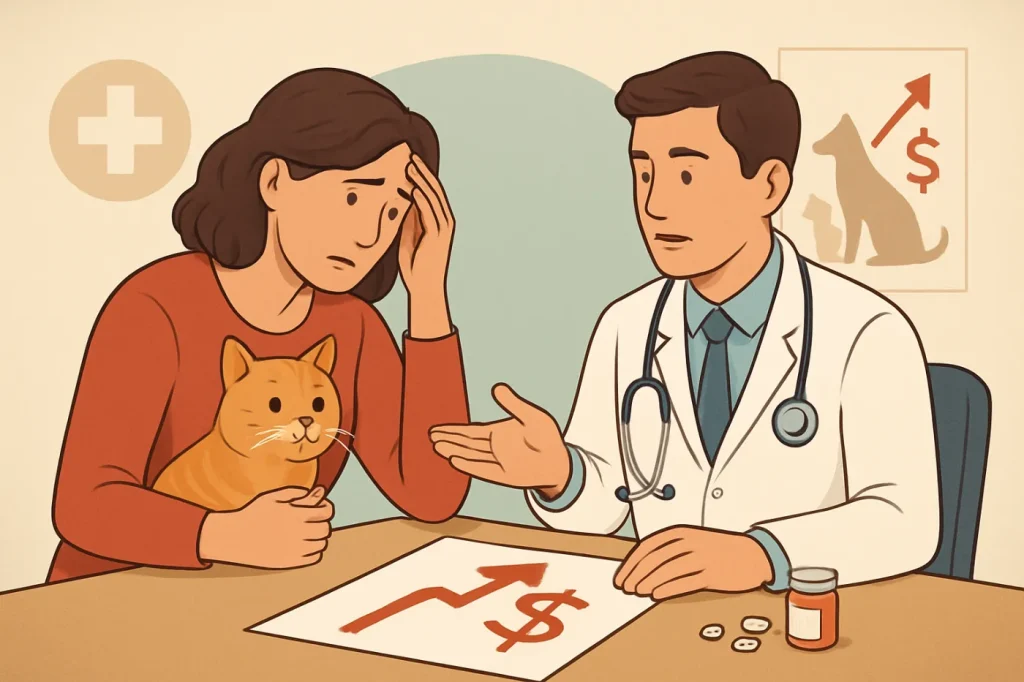
Struggling with vet costs does not make you a bad pet parent. It means you are living in the real world of tight budgets and expensive care. The key is to plan ahead, know your options, and use every realistic tool to keep your dog or cat healthy without going into a financial crisis.
Why regular vet care actually saves you money
Skipping routine vet visits can feel like saving money, but it usually does the opposite. Many serious problems in dogs and cats start small and cheap to treat, then turn into emergencies that cost far more.
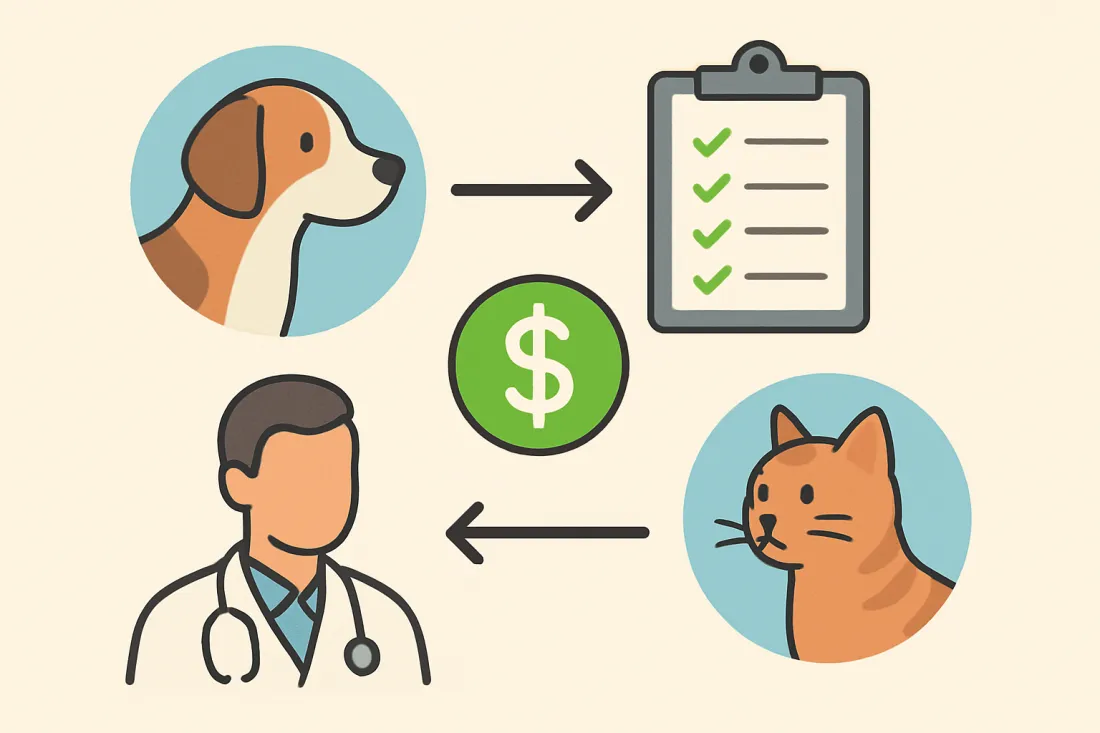
Regular care helps you:
- Catch problems early – Issues like dental disease, kidney problems, diabetes, and arthritis often show up first as subtle changes that a vet can spot before they become emergencies.
- Prevent avoidable illnesses – Core vaccines, parasite prevention, and spay/neuter reduce the risk of infections, some cancers, and life-threatening emergencies such as uterine infections or severe parvovirus.
- Get realistic cost expectations – Annual checkups are a chance to ask your vet what your dog or cat is likely to need in the next year so you can budget instead of being blindsided.
- Build a relationship with your clinic – Clients who come regularly are often more likely to be offered payment options or flexible solutions when something big happens.
If you want a sense of what “normal” care looks like over a year, it can help to review an annual vet care schedule for dogs and cats USA and then adapt it to your pet and budget.

Typical vet cost patterns in the US you should plan around
Exact prices vary widely between states, cities, and even neighborhoods, but most US pet owners face similar patterns of cost:
- Predictable annual costs – Wellness exam, core vaccines, parasite tests, and ongoing flea/tick and heartworm prevention.
- Occasional but expected costs – Dental cleanings, minor illnesses (ear infections, skin issues, stomach upset), and age-related screening tests.
- Unpredictable emergencies – Accidents, sudden severe illness, or surgery that can be several times higher than a routine visit.
Instead of trying to guess exact dollar amounts, use these patterns to build a plan:
- Ask your vet for a 12-month estimate for your specific dog or cat: vaccines due, likely lab work, dental needs, and any chronic meds.
- Check a realistic cost overview such as an annual vet costs for dogs and cats in the US to see where your pet might fall (puppies, kittens, and seniors usually cost more).
- Plan an emergency buffer – Even a small monthly amount set aside is better than nothing when something sudden happens.
Planning and budgeting so vet bills do not crush you
Think of vet care like rent or utilities: a regular bill you plan for, not a surprise. Here is a practical way to build a pet health budget that fits real-life finances.
1. List your pet’s likely care for the next 12 months
Use your vet’s advice plus your own notes. Include:
- Annual wellness exam and vaccines
- Parasite prevention (flea/tick, heartworm, deworming)
- Any chronic medications or prescription diets
- Dental cleaning if your vet expects one soon
- Follow-up visits for existing conditions (allergies, arthritis, etc.)
2. Turn that into a monthly “pet health” amount
Once you have a rough yearly total from your vet, divide it by 12. That number becomes your monthly pet health fund. Even if you cannot hit the full amount, commit to a realistic number you can keep up with.
3. Create a separate place for pet money
To avoid accidentally spending it, keep pet funds separate:
- A basic savings account labeled “Pet Vet Fund”
- An envelope or cash box at home (if you are disciplined about not touching it)
- A prepaid card you only use for vet care
4. Automate small, steady contributions
Set up an automatic transfer on payday, even if it is a small amount. Many pet owners find that a modest monthly transfer hurts less than trying to find a large lump sum during a crisis.
5. Decide in advance how you will handle emergencies
Before an emergency happens, decide:
- How much you can realistically put on a credit card without risking rent or food money
- Whether you are open to third-party payment options like medical credit lines or installment plans
- Which family members or friends you could ask to temporarily help if the worst happens
Having this plan written down reduces panic when you are emotional and your pet is in trouble.
Using wellness plans and pet insurance wisely (without the sales pitch)
Wellness plans and pet insurance can help, but they are not magic and they are not always a good deal. The key is to understand what they actually cover and when they make sense.
Wellness plans: when they help and when they do not
Wellness plans usually bundle routine services (exams, vaccines, basic tests) into a monthly fee. They may offer discounts on additional services.
They can be helpful if:
- You struggle to save on your own but can handle a predictable monthly payment
- Your pet needs all the included services (for example, a puppy or kitten needing multiple visits and vaccines)
- You read the contract and are sure you will use most of what is included
They may not be worth it if:
- Your pet already had most of the vaccines or services the plan includes
- You are likely to move or change vets soon and the plan is tied to one clinic
- There are cancellation fees or penalties that would hurt if your finances change
Pet insurance: key decision criteria
Pet insurance usually helps with unexpected illness and injury, not routine care. Policies differ a lot, so focus on these points:
- What is covered – Accidents only, accidents and illnesses, or also some preventive care?
- What is excluded – Pre-existing conditions, certain breeds, hereditary issues, or specific procedures.
- Deductible and reimbursement – How much you pay before coverage starts and what percentage is reimbursed.
- Annual or lifetime limits – Is there a cap on how much the insurer will pay in a year or over your pet’s life?
Insurance tends to make more sense when:
- You get it while your pet is young and generally healthy
- You could afford monthly premiums but not a large emergency bill
- Your breed is prone to expensive conditions and you want protection from worst-case scenarios
It may not be the best fit when:
- Your pet already has several diagnosed chronic issues that would be excluded
- Your budget is so tight that premiums would force you to cut back on basic care or food
- You are disciplined at saving and can build your own emergency fund instead
Comparison table: saving strategies for vet bills
| Strategy | Best for | Main benefit | Key risk or limitation | What to check before using |
|---|---|---|---|---|
| DIY pet health savings fund | Owners who can set aside a small amount monthly | Full control; money can be used at any clinic for any need | Requires discipline; easy to dip into for non-pet expenses | Choose a separate account or envelope and automate transfers |
| Clinic wellness plan | Pets needing multiple routine visits (puppies, kittens, seniors) | Spreads routine costs into predictable monthly payments | Usually tied to one clinic; may include services you do not use | Read contract, cancellation rules, and what is actually included |
| Pet insurance (accident/illness) | Young or middle-aged pets without major existing conditions | Helps with large, unexpected bills from accidents or serious illness | Does not usually cover pre-existing issues; premiums can rise over time | Check exclusions, waiting periods, reimbursement %, and annual limits |
| Low-cost clinics and nonprofits | Owners with limited income needing vaccines, spay/neuter, or basic care | Lower prices for routine services; sometimes payment help for urgent needs | May have long wait times or limited services; not ideal for complex cases | Confirm qualifications, what is included, and who handles emergencies |
| Payment plans or third-party financing | Unexpected emergencies when savings are not enough | Lets you treat now and pay over time | Interest or fees can add up; missed payments hurt credit | Ask for total cost, interest, late fees, and whether there is a no-interest period |
Practical ways to save on routine care, vaccines, and prevention
Routine care is where you have the most control. Small changes here can free up money for emergencies.
1. Prioritize the highest-impact preventive care
If you cannot afford everything at once, ask your vet to rank what is most important right now. Often, the highest-impact items are:
- Core vaccines (especially for puppies and kittens, or pets that go outdoors)
- Heartworm prevention in areas where heartworm is present
- Flea and tick prevention if your region has a high parasite risk
- Spay/neuter if your pet is intact and at risk of pregnancy or roaming
Ask your vet, “If I can only do two things today, what should they be?” and schedule the rest over the next few months.
2. Use generic medications when safe
For many common conditions, there are generic or alternative medications that are much cheaper than brand-name versions. Ask:
- “Is there a generic version of this medication?”
- “Is there a different drug that is safe for my pet but more affordable?”
- “Can I fill this at a human pharmacy with a written prescription?”
Never switch medications on your own; always confirm with your vet that the alternative is safe for your specific dog or cat.
3. Shop smart for preventives
Preventive medications (flea/tick, heartworm) are ongoing costs. To keep them manageable:
- Ask your vet if buying a larger supply at once lowers the per-dose cost.
- Compare different brands or combinations (for example, one product that covers multiple parasites versus separate products).
- Ask whether your vet will price-match reputable pharmacy prices if you show them a quote.
4. Keep your pet at a healthy weight
Obesity in dogs and cats increases the risk of arthritis, diabetes, and other expensive conditions. Keeping your pet lean:
- Reduces long-term vet bills
- Often means feeding slightly less food, which also saves money
- Makes it easier to spot early signs of illness (sudden weight loss or gain)
Ask your vet what your pet’s ideal weight is and how much you should feed based on that, not just what is on the bag.
5. Invest in basic home care
Simple habits at home can prevent costly problems:
- Regular tooth brushing or dental chews (approved by your vet) to slow dental disease
- Routine grooming to spot lumps, skin issues, or parasites early
- Safe exercise to keep joints and muscles healthy
- Pet-proofing your home to reduce poisoning or injury risks
Building these into your routine is part of responsible pet ownership and can reduce the number of urgent vet visits over your pet’s life.
When and how to use low-cost clinics or nonprofits
Low-cost clinics, mobile vaccine events, and nonprofit organizations can be a lifeline when money is tight, especially for:
- Spay/neuter surgeries
- Core vaccines
- Basic exams and parasite prevention
- Help with food or supplies during financial hardship
How to find legitimate low-cost options
To locate help in your area:
- Search for local animal shelters or humane societies and check if they offer public clinics
- Ask your regular vet if they know of any trusted low-cost programs nearby
- Call your city or county animal services to ask about community pet care resources
Many areas also have pet food pantries or community programs that help with basic supplies, freeing up money for vet care.
What to expect from low-cost clinics
These clinics usually focus on high-volume, basic services. You can expect:
- Shorter, more focused visits
- Limited time for complex discussions
- Referral to a full-service clinic if your pet needs advanced diagnostics or surgery
They are often a good fit for straightforward needs like vaccines or spay/neuter, but not always for complicated, ongoing medical problems.
Warning signs of unsafe or unethical low-cost care
Low-cost does not have to mean low-quality, but there are red flags to watch for. Be cautious if you notice:
- No physical exam – Medications or vaccines are given without anyone actually examining your pet.
- No medical history questions – Staff do not ask about previous reactions, current medications, or existing conditions.
- Pressure to buy add-ons – You feel pushed into extra services or products that are not clearly explained.
- No written records – You are not given a copy of vaccines, test results, or discharge instructions.
- Unwillingness to answer basic questions – Staff get annoyed or vague when you ask what a procedure is for or what risks exist.
Quality clinics, even low-cost ones, will:
- Explain what they are doing and why
- Let you ask questions within reason
- Provide basic paperwork for your records
- Tell you when your pet needs more advanced care than they can provide
How to talk to your vet about money, estimates, and payment plans
Many pet owners feel embarrassed talking about money with their vet, but clear communication can open up options you did not know existed.
Ask for written estimates and options
Before agreeing to treatment, say something like:
- “Can I have a written estimate with a breakdown of costs?”
- “Are there different levels of care, like ‘ideal’ versus ‘essential’?”
- “What absolutely has to be done today, and what could safely wait a week or a month?”
A written estimate helps you see where the money is going and decide what you can afford now versus later.
Discuss payment options early
If the estimate is more than you can handle, say so as soon as possible:
- “This is more than I can afford today. Are there any payment plans or lower-cost alternatives?”
- “If we focus on pain relief and stabilizing my pet today, what would that look like?”
Some clinics offer:
- In-house payment plans for established clients
- Third-party financing options
- Discounts for paying in full or for certain services
- Referrals to nonprofits that might help with specific conditions
Be honest but firm about your limits
It is okay to say, “My absolute limit today is around this amount; what can we do that is safe and humane within that?” A good vet will work with you to prioritize your pet’s comfort and safety within your budget.
What vets may do when you truly cannot afford recommended care
Every clinic and situation is different, but when owners are upfront about financial limits, vets may:
- Offer a “minimum care” plan that focuses on pain control and stabilizing the pet
- Suggest lower-cost diagnostics or treatments that still give useful information
- Refer you to a low-cost clinic or nonprofit that might help
- Discuss humane options, including palliative care, if curative treatment is not possible
Vets are generally trying to balance your pet’s welfare with your reality. The more open you are about money early in the visit, the more options they can suggest.
Structured checklist: budget planning for the next 12 months of vet care
Use this step-by-step checklist to build a realistic plan for your dog or cat.
- Gather information
- Find your pet’s last vet invoice and vaccine record.
- List any current medications, supplements, or special diets.
- Note your pet’s age, breed, and any chronic health issues.
- Ask your vet for a 12-month care outline
- Schedule a wellness exam if your pet has not had one in the last year.
- During the visit, ask: “What care do you expect my pet will need in the next 12 months?”
- Request a rough cost range for: vaccines, lab tests, dental care, refills, and rechecks.
- List expected routine costs
- Write down each expected service (exam, vaccines, tests, preventives, dental, meds).
- Next to each, note the approximate cost range your vet gave you.
- Add a small buffer for price changes or unexpected minor issues.
- Set an emergency target
- Decide a realistic emergency fund goal for the year (even a modest amount helps).
- Divide that goal by 12 to see how much you would need to save each month.
- If the number is too high, lower the goal but keep something in place.
- Calculate your monthly pet health amount
- Add your estimated routine yearly costs and your emergency fund goal.
- Divide the total by 12 to get a monthly target.
- Compare that target to your budget and adjust to an amount you can actually pay.
- Choose your tools
- Decide whether you will use: a savings account, wellness plan, insurance, or a mix.
- If considering wellness plans or insurance, read the details and compare them to your pet’s likely needs.
- Write down which tool covers which type of cost (routine, emergencies, or both).
- Automate and separate the money
- Set up an automatic transfer each month into your pet fund or savings.
- If you join a wellness plan or buy insurance, schedule the payments on a predictable date.
- Keep pet money separate from everyday spending to avoid using it accidentally.
- Plan for known “big” events
- Note any big costs coming up (spay/neuter, dental cleaning, senior screening).
- Count how many months you have before each event.
- Divide the expected cost by the number of months and add that to your monthly savings until it is covered.
- Review every 6–12 months
- At least once a year, repeat the conversation with your vet about upcoming needs.
- Adjust your monthly amount if your pet develops a new condition or finishes an expensive treatment.
- Re-check whether your insurance or wellness plan still matches your pet’s age and health.
- Prepare a “crisis script”
- Write down what you will say at the front desk in an emergency, for example: “I am worried about my pet and my budget is limited. I need an estimate and the most essential options first.”
- Keep a list of nearby low-cost clinics or nonprofits that might help if your regular vet is out of reach.
- Share your plan with any family members who help with pet care or finances.
Common mistakes that make vet bills harder to afford
Avoiding a few frequent pitfalls can make a big difference over your pet’s lifetime.
- Waiting until something is an emergency – Ignoring early signs like limping, bad breath, or weight loss often leads to more expensive, intensive treatment.
- Skipping preventive care to “save money” – Forgoing vaccines or parasite prevention can result in serious diseases that cost far more to treat than to prevent.
- Not asking about costs up front – Agreeing to tests and treatments without an estimate can lead to shock at checkout and missed chances to choose more affordable options.
- Relying entirely on high-interest credit – Putting every vet bill on a card without a payoff plan can create long-term debt that makes future care even harder.
- Choosing a pet that does not match your budget – Some breeds and species are much more likely to need expensive care. Researching before adopting is part of responsible pet ownership.
FAQ about affording vet bills for dogs and cats in the US
What do vets do when you cannot afford vet bills?
Vets cannot work for free, but many will try to help within limits if you are honest about your budget. They may offer a scaled-down treatment plan that focuses on pain relief and stabilizing your pet, suggest lower-cost diagnostics, or spread care over several visits. Some clinics can connect you with low-cost programs or charities for specific conditions. In very serious cases where effective treatment is completely out of reach, they may discuss palliative care or humane euthanasia to prevent suffering.
What should I do right away if I cannot afford the vet?
If your pet needs care now and money is a problem, start by calling your regular vet, explaining the situation clearly, and asking for an estimate and essential-only options. If the cost is still too high, ask whether they know of any trusted low-cost clinics, mobile vaccine events, or nonprofits nearby. Check whether you have any room on a low-interest credit card or access to a small loan that will not put your housing or food at risk. If the situation is urgent or life-threatening, focus on getting your pet seen somewhere as soon as possible and discuss payment options before treatment goes beyond what you can manage.
How do low-income families manage vet costs for dogs and cats?
Many low-income families rely on a mix of strategies: using low-cost clinics for vaccines and spay/neuter, setting aside small but regular amounts in a pet fund, choosing generic medications when possible, and asking vets to prioritize essential care. Some also use community pet food pantries or assistance programs to free up money for medical needs. The most important step is to be proactive—build a small emergency cushion over time and talk openly with vets about financial limits before problems become crises.
How can I pay for an emergency vet visit with no money and bad credit?
When savings and credit are both limited, options are tighter, but there are still steps to try. Call several clinics to ask about payment plans, low-cost emergency options, or partnerships with charities. Ask whether the vet can provide immediate pain relief and stabilization while you explore help from family, friends, or community groups. Some owners turn to crowdfunding, but that is not guaranteed and takes time. In the moment, be very clear with the vet about your maximum possible payment and ask for the most humane, essential care within that limit. If curative treatment is completely unaffordable and your pet is suffering, discuss palliative options honestly with the vet.
How can I prevent future vet bills from becoming unmanageable?
The most effective steps are to keep up with preventive care, build even a small monthly pet savings habit, and choose financial tools that match your situation, such as a wellness plan or insurance for a young, healthy pet. Keep your dog or cat at a healthy weight, practice basic home care, and schedule checkups so problems are caught early. Review your pet budget at least once a year and adjust as your pet ages or develops new conditions. Planning ahead does not remove all risk, but it makes sudden bills far less likely to derail your entire budget.
Next steps to make vet care more affordable
Affording vet bills is about planning, not perfection. You do not need a huge emergency fund overnight; you just need to start.
- Book a wellness visit and ask your vet for a 12-month care outline and cost range.
- Use the checklist above to set a monthly pet health amount you can realistically maintain.
- Decide whether a savings fund, wellness plan, insurance, or a mix fits your situation best.
- Look up low-cost clinics or nonprofits in your area and keep their contact details handy.
- Review your plan every 6–12 months as part of your overall pet care routine.
With a simple plan, honest conversations, and a few smart habits, you can protect both your pet’s health and your budget over the long term.