
Fast game plan for dog and cat urine on carpet
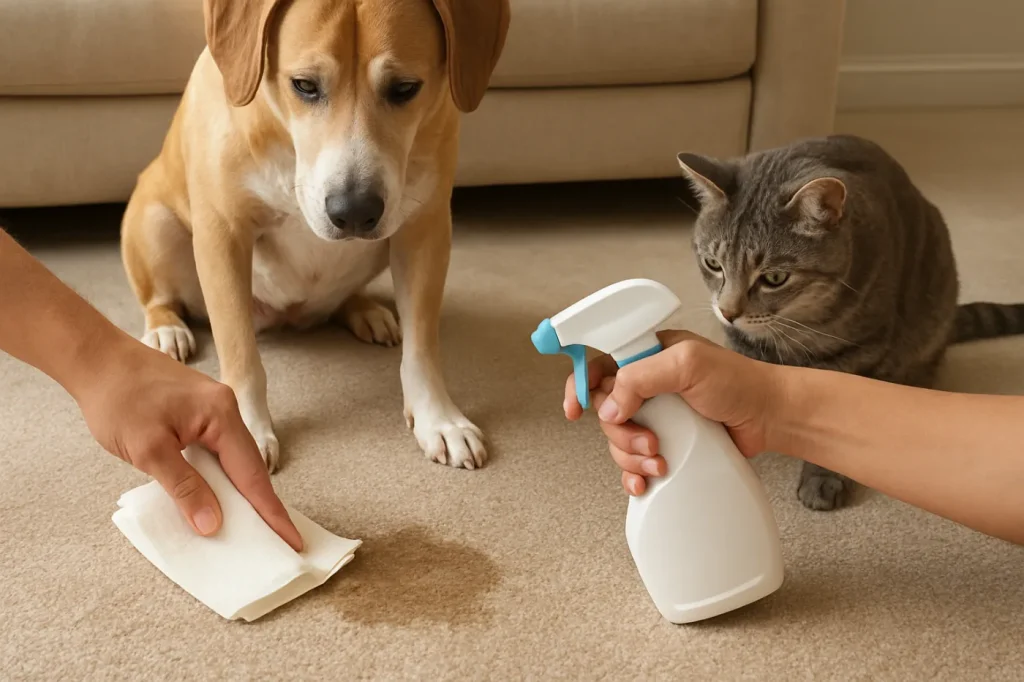
If your dog or cat has an accident on carpet, act in this order:
- Blot up as much liquid as possible with paper towels or a clean cloth (do not rub).
- Rinse lightly with cool water to dilute the urine without soaking the pad.
- Apply a pet-safe enzymatic cleaner and let it stay damp for the full time on the label.
- Blot again and dry completely with airflow or a fan so no moisture is trapped.
For dried stains, add one step before the cleaner: re-wet the spot with cool water so dried urine crystals dissolve and the enzyme can reach them.
The same logic works for poop and vomit: remove solids, blot, rinse, treat, then dry, adjusting the cleaner to match the surface (carpet, rug, upholstery, mattress, or car seat).
Why dog and cat messes smell and keep coming back
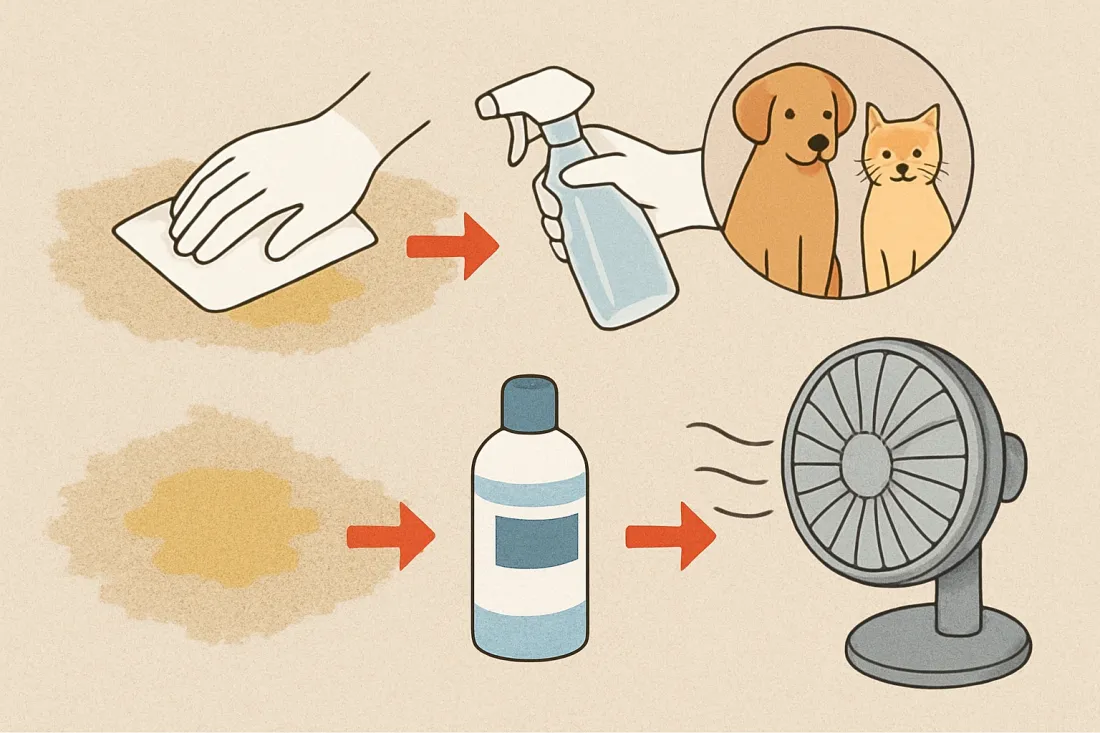
Understanding what you are dealing with helps you choose the right method and avoid setting stains.
- Fresh urine is mostly water plus urea, salts, and other organic compounds. At first it may not smell strong.
- Dried urine leaves behind crystals and compounds that bacteria break down into strong ammonia-like odors. Cat urine often smells more intense and can linger for days or weeks if not removed from padding.
- Poop carries bacteria, fats, and pigments that can stain and leave odor even after the visible mess is gone.
- Vomit is acidic and often contains food dyes, bile, and stomach acids that can bleach or discolor fibers within minutes if not handled correctly.
On soft surfaces like carpet, rugs, and furniture, liquid can soak through the top fibers into the backing and padding. If you only clean the surface, dried urine in the pad can keep smelling and even encourage repeat accidents in the same spot. That is why enzymatic cleaners are so important: they help break down the organic compounds in urine, poop, and vomit so they can be removed instead of just covered with fragrance.
Step-by-step: fresh dog or cat urine on carpet
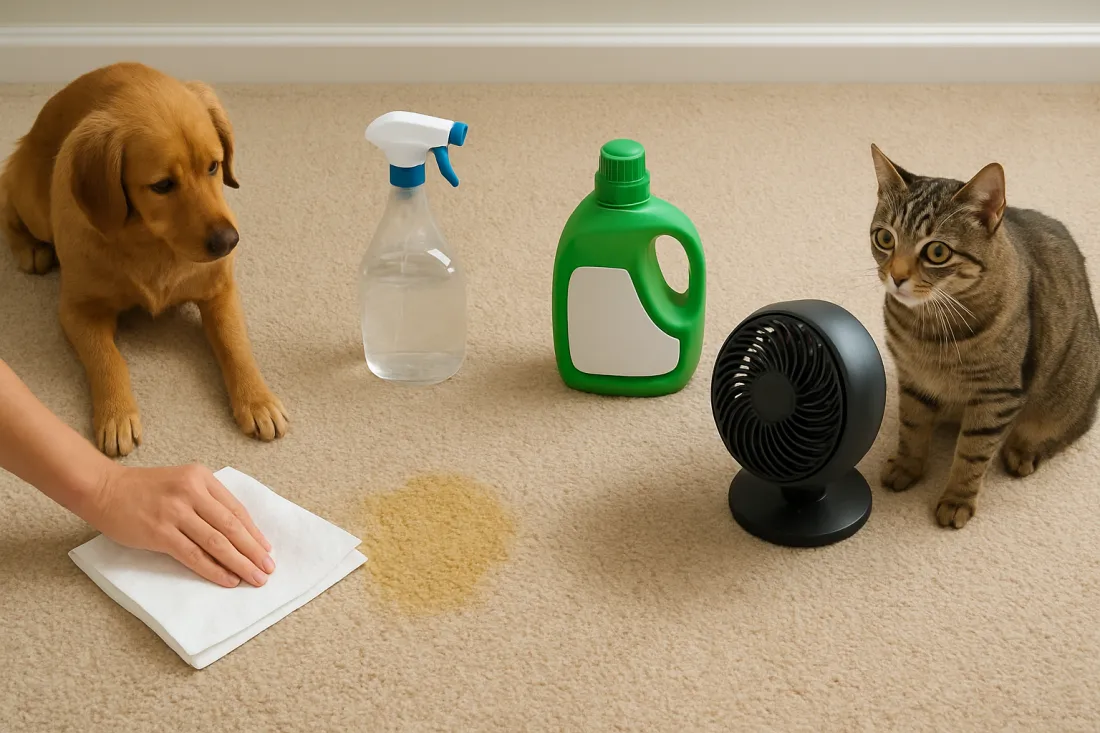
Use this process as soon as you notice the accident.
What you need on hand
- Paper towels or clean white cloths
- Small bowl or spray bottle of cool water
- Enzymatic pet stain and odor remover labeled for carpets
- Optional: wet/dry vacuum or carpet cleaner
- Optional: fan to speed drying
Fresh urine on carpet without a carpet cleaner
- Act within the first 10–15 minutes if you can.
Urine spreads outward and downward quickly. The sooner you start, the less it reaches the pad. - Blot, do not rub.
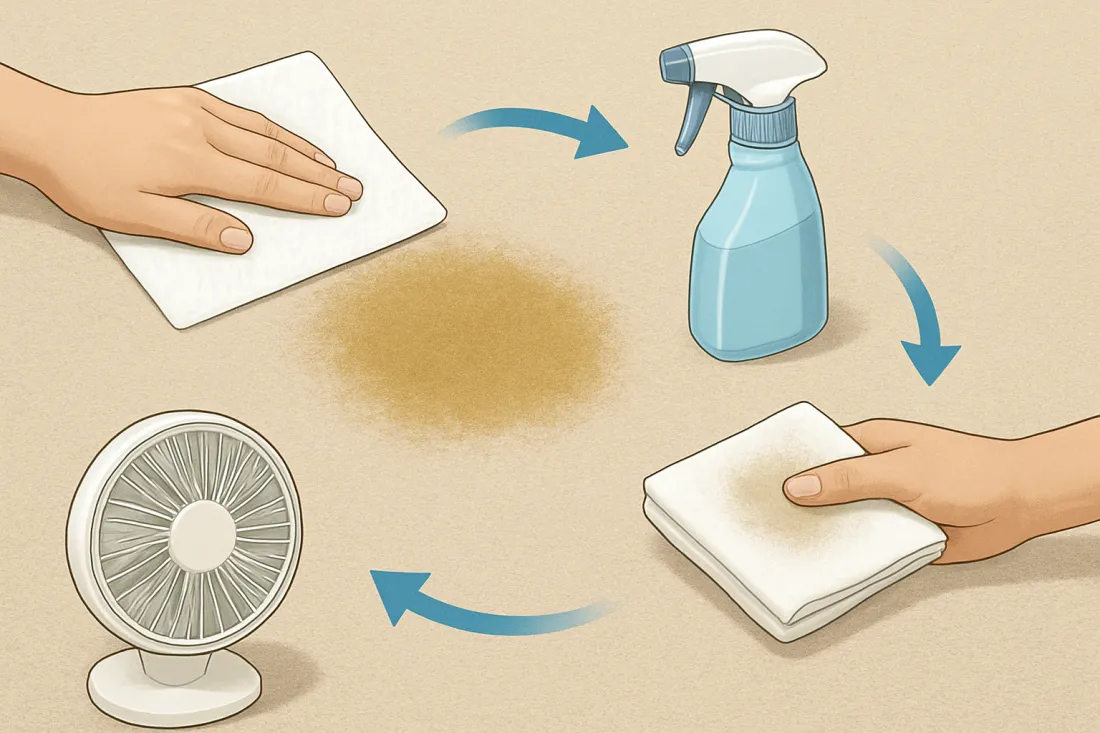
Place a thick layer of paper towels or a clean cloth over the wet spot. Press down firmly with your hands, feet, or something flat. Replace with dry towels and repeat until very little moisture transfers to the towel. - Lightly rinse with cool water.
Pour or spray a small amount of cool water on the area to dilute remaining urine. A rough guide is 1–3 tablespoons of water per small spot rather than a full cup. Do not flood the carpet. Blot again with fresh towels to pull up the diluted urine. - Apply enzymatic cleaner.
Follow the product label. Usually you will:- Saturate the area so the cleaner reaches the same depth as the urine (often about the size of the visible spot plus an extra 1–2 inches around the edge).
- Gently work it in with your fingers or a soft brush if the label allows.
- Let it sit for the full dwell time.
Many enzymatic cleaners need at least 10–15 minutes, and some recommend longer for urine. Check the label and resist the urge to wipe it up too soon. - Blot out excess cleaner.
After the dwell time, blot again with clean towels to remove as much moisture as possible. - Dry thoroughly.
Allow the area to air-dry completely. Point a fan at the spot or open windows to help. Depending on humidity, this can take several hours. Keep pets and kids off the damp area.
Fresh urine on carpet using a carpet cleaner or wet/dry vacuum
If you have a carpet cleaner designed for home use, you can adapt the steps:
- Blot first.
Even with a machine, blotting up the bulk of the urine reduces how much spreads when you add water. - Rinse with plain water.
Use the machine with plain water only for the first passes. Extract thoroughly until the recovery tank shows mostly clear water. - Apply enzymatic cleaner.
Many enzyme products are meant to be sprayed directly on the carpet, not run through the machine. Check the label and, if needed, apply by hand after the water extraction. - Let the enzyme work.
Give it the recommended time, then do a final water-only extraction if the label allows, or simply blot and dry.
Avoid using hot water or steam on fresh urine, especially before using an enzymatic cleaner, because heat can set some stains and odors deeper into fibers.
Step-by-step: dried urine and set-in stains on carpet
Dried urine is tougher because crystals and odor compounds have already formed and may be deep in the padding.
How to find old urine spots
- Smell test: Get close to the carpet and sniff along baseboards and favorite pet hangouts.
- Look for discoloration: Yellowish or darker patches can signal old urine.
- Optional UV flashlight: Some pet owners use a UV/blacklight in a dark room to help locate old urine spots.
Cleaning dried urine from carpet
- Re-wet the area with cool water.
Lightly saturate the stained area with cool water to dissolve dried urine crystals. Aim for enough water to dampen the fibers and upper padding, not to soak through to the subfloor. - Extract or blot.
Use a wet/dry vacuum or carpet cleaner to pull up as much liquid as possible. If you do not have a machine, press thick towels into the area and replace them as they become damp. - Apply enzymatic cleaner generously.
Old stains often need more product and more time. Follow the label for set-in stains and make sure the cleaner reaches the pad if the urine did. - Keep it damp for the working time.
Some people place a damp cloth or plastic wrap over the treated area to keep it from drying out too quickly while the enzymes work. Only do this if the product label allows it. - Blot and dry.
After the recommended time, blot thoroughly. Use a fan to help the area dry completely. - Repeat if needed.
Deep or older stains may need several rounds of enzyme treatment over a few days. If odor improves but does not disappear, another round is usually worthwhile.
If, after several careful treatments, the smell is still strong, the urine may have soaked deeply into the padding or subfloor. In that case, you may need a professional carpet cleaner or, in severe cases, replacement of the pad or a section of carpet.
Cleaning poop and vomit from carpets, rugs, and furniture
Dog and cat poop and vomit require slightly different handling because of solids and potential bacteria.
General safety first
- Wear disposable gloves if possible.
- Avoid touching your face while cleaning.
- Open a window for ventilation if the odor is strong.
- Wash your hands thoroughly afterward.
Poop on carpet or rugs
- Remove solids carefully.
Use a paper plate, cardboard, or a plastic bag turned inside out to lift solid pieces. Avoid pressing them deeper into the fibers. - Scrape gently.
If some residue is stuck, use a dull knife or spoon to gently lift it away from the fibers. - Blot, do not rub.
If the area is damp, blot with paper towels to remove moisture. - Pre-treat with a mild cleaner.
Use a pet-safe carpet cleaner or a small amount of mild dish soap diluted in water (for example, 2–3 drops in 1 cup of water). Test on an inconspicuous area first. Apply to the stain and gently work it in, then blot. - Rinse with cool water.
Lightly rinse the area and blot again to remove soap residue. - Finish with an enzymatic cleaner.
Apply an enzyme product designed for pet stains to break down remaining organic matter and odor. Let it sit as directed, then blot and dry.
Vomit on carpet or rugs
Vomit can be acidic and may contain dyes from food or treats.
- Remove solids quickly.
Lift off chunks with a paper plate or cardboard. Avoid smearing. - Blot up liquid.
Use paper towels to absorb as much as possible. Do not rub, as this can push pigments deeper. - Neutralize carefully.
Because vomit is acidic, some people use a small amount of baking soda to help neutralize it. If you do, sprinkle a light layer over the damp area, let it sit for 5–10 minutes, then vacuum up once dry. Always test baking soda on a hidden area first, as it can leave residue on some fabrics. - Clean with a mild solution.
Use a pet-safe carpet cleaner or a mild dish soap solution. Apply sparingly, gently work into the fibers, and blot. - Rinse and blot.
Rinse with a small amount of cool water and blot again until the water you blot up looks clear rather than colored. - Use an enzymatic cleaner if odor remains.
Apply as directed, then blot and dry.
Poop or vomit on upholstered furniture
Always check the care tag on your furniture (often labeled with codes such as W, S, or W/S) and follow manufacturer guidance.
- Remove solids gently with a spoon, paper plate, or cardboard.
- Blot liquids with paper towels or a clean cloth.
- Use a cleaner that matches the care code (water-based, solvent-based, or both).
- Test any cleaner on a hidden area first and wait a few minutes to check for color change.
- Work from the outside of the stain toward the center to avoid spreading.
- Finish with a pet-safe enzymatic cleaner if the fabric and care instructions allow it.
Enzymatic cleaners: how they work and how to use them correctly
What enzymatic cleaners do
- They contain enzymes that help break down proteins, starches, and other organic compounds in urine, poop, and vomit.
- Many include beneficial bacteria that continue digesting residues for a period of time.
- Instead of masking odors with fragrance, they help remove the source of the smell.
How to use enzymatic cleaners effectively
- Choose the right product. Look for a cleaner labeled for pet urine and safe for the surface you are treating (carpet, upholstery, hard floors, etc.).
- Test first. Try it on a hidden area to check for colorfastness.
- Saturate to the same depth as the mess. If urine soaked into the pad, the cleaner needs to reach that depth too. For thick carpets, that often means applying more than you expect.
- Respect dwell time. Enzymes need time to work. Many products specify a minimum of 10–15 minutes and longer for old stains. Follow the label.
- Avoid mixing with other chemicals. Bleach, strong disinfectants, or some detergents can reduce enzyme effectiveness. If you used another cleaner first, rinse with water and blot before applying the enzyme.
- Allow thorough drying. Many enzyme products keep working as they dry. Good airflow helps.
DIY vs store-bought solutions: what is safe and what to avoid
Common DIY options
- Plain water: Safe and essential for rinsing and diluting fresh messes. Use small amounts to avoid soaking padding.
- Mild dish soap solution: A few drops of clear, mild dish soap in about a cup of water can help lift grease and dirt. Always rinse thoroughly afterward so soap does not attract more dirt.
- Baking soda: Can help absorb odors and moisture. Sprinkle lightly on a dry or nearly dry area, let sit for at least 15–30 minutes, then vacuum. Test first.
- White vinegar (diluted): Some people use a mix of white vinegar and water to help with odors. However, vinegar has a strong smell and may not fully remove urine odor on its own. It can also affect some dyes and finishes, so test before use.
Products and habits to be cautious with
- Bleach: Can discolor fabrics and does not remove urine crystals from carpet padding. Use only on appropriate hard, non-porous surfaces if the label allows, and never mix with other cleaners.
- Ammonia-based cleaners: Urine already smells like ammonia. Using ammonia can make the odor worse and may encourage pets to mark the area again.
- Steam cleaners on fresh or untreated urine: High heat can set stains and odors into carpet fibers and padding.
- Strong fragrances alone: Sprays that only add scent may temporarily cover smells but do not remove the source. Pets can still detect the underlying odor.
Store-bought enzymatic cleaners are often the most reliable choice for urine, poop, and vomit on soft surfaces, especially when you want to prevent repeat accidents.
Special cases: mattresses, car seats, and crates
Dog or cat urine on a mattress
Mattresses are thick and absorbent, so fast action matters.
- Strip bedding immediately.
Wash sheets, mattress protectors, and blankets according to their care labels. You can add a pet-safe enzymatic laundry additive if desired. - Blot the mattress.
Use towels to absorb as much urine as possible. Press firmly; do not rub. - Lightly rinse with cool water.
Use a spray bottle or small amount of water to dampen the area, then blot again. Avoid soaking the mattress; deep moisture can take 24 hours or more to dry. - Apply an enzymatic cleaner safe for mattresses.
Follow the label carefully. Allow it to penetrate but do not saturate the mattress to the point where it cannot dry. - Let it work, then blot.
Give it the recommended time, then blot out excess moisture. - Dry thoroughly.
Allow plenty of time for the mattress to dry. Use fans and open windows if possible. Do not put bedding back on until it is fully dry to the touch on the surface and edges.
For older or severe mattress stains, you may need to repeat the process several times.
Urine on car seats and car carpet
Car interiors combine fabric, foam, and sometimes leather or vinyl.
- Fabric seats and car carpet:
- Blot up as much urine as possible.
- Lightly rinse with cool water and blot again.
- Apply an enzymatic cleaner labeled safe for automotive fabrics.
- Allow dwell time, then blot and let dry with windows open if weather allows.
- Leather or vinyl seats:
- Blot immediately with a soft cloth.
- Use a cleaner recommended for leather or vinyl, not a harsh household cleaner.
- Wipe gently and dry.
- If odor remains, use a product designed for leather that also targets odors, or consult a professional detailer.
Accidents in crates and carriers
Crates and carriers are usually plastic, metal, or fabric.
- Plastic or metal crates:
- Remove bedding and wash it separately.
- Rinse the crate with warm water.
- Clean with a pet-safe cleaner or mild dish soap solution.
- Rinse thoroughly and dry.
- Use an enzymatic spray on any lingering odor spots.
- Soft-sided carriers:
- Remove any removable pads or liners and wash them.
- Spot-clean the fabric with a mild cleaner safe for that material.
- Use an enzymatic spray if the label says it is safe for fabrics.
- Allow the carrier to air-dry completely before storing.
Comparison table: DIY methods vs enzymatic cleaners vs professional cleaning
| Option | When it fits best | Strengths | Limitations and risks | Good next step |
|---|---|---|---|---|
| DIY basic cleaning (water, mild soap, baking soda) | Fresh, small accidents on colorfast carpet, rugs, or upholstery | Low cost, products already at home, good for first response and surface cleaning | May not fully remove urine crystals in padding, risk of residue if not rinsed, some DIY mixes can set stains if misused | Use as first step, then follow with a pet-specific enzymatic cleaner if any odor remains |
| Store-bought enzymatic pet cleaner | Fresh and dried urine, poop, and vomit on most household fabrics and carpets | Targets organic matter and odor source, designed for pet messes, often safe on multiple surfaces when used as directed | Requires proper dwell time, may need repeat applications for old stains, some products have strong fragrances | Keep a bottle on hand for future accidents and use it after basic blotting and rinsing |
| Professional carpet or upholstery cleaning | Large areas, repeated accidents, or deep odors that do not respond to home treatment | Stronger equipment, experience with different fibers, can treat padding and larger sections | Higher cost, may require scheduling and drying time, results vary by situation | Ask about their experience with pet stains and what methods they use before booking |
Common mistakes when cleaning pet urine, poop, and vomit
Avoiding a few frequent errors can save your carpet and furniture.
- Rubbing instead of blotting. Rubbing spreads the stain and pushes it deeper into fibers.
- Using too much water. Over-soaking can drive urine deeper into the pad and make drying difficult.
- Skipping the enzyme step. Surface cleaning alone often leaves behind odor that pets can still smell.
- Using ammonia-based cleaners. These can make the area smell more like urine to your pet.
- Not testing cleaners first. Some products can discolor or damage certain fabrics and dyes.
- Stopping after the smell fades for humans. Pets have a stronger sense of smell; if they can still detect urine, they may return to the same spot.
- Ignoring repeated accidents. Frequent accidents in the same area can signal a medical issue or a house-training problem that needs attention.
Structured checklist: emergency pet accident clean-up steps
Use this checklist as your go-to response plan whenever your dog or cat has an accident.
- Identify the mess type.
- Is it urine, poop, vomit, or a mix?
- Is it fresh and wet, or dried and set-in?
- Check the surface.
- Carpet, rug, upholstery, mattress, car seat, crate, or hard floor?
- Look for care tags or manufacturer instructions if available.
- Protect yourself and the area.
- Put on gloves if you have them.
- Keep pets and kids away from the spot.
- Remove solids and excess liquid.
- Lift solids with a plate, spoon, or bag.
- Blot liquids with paper towels or cloths until little moisture remains.
- Rinse lightly with cool water.
- Use just enough water to dilute the mess without soaking the padding or foam.
- Blot or extract again.
- Choose your cleaner.
- For urine: prioritize an enzymatic pet cleaner.
- For poop or vomit: mild cleaner first, then enzyme for odor.
- Check labels for surface compatibility.
- Test in a hidden spot.
- Apply a small amount of cleaner to an inconspicuous area.
- Wait a few minutes to check for color change.
- Treat the stain.
- Apply cleaner as directed.
- Work gently into fibers if allowed.
- Give it the full recommended dwell time.
- Blot and dry.
- Remove as much moisture as possible.
- Use fans or open windows to speed drying.
- Monitor for repeat accidents.
- If your pet returns to the same spot, re-treat for odor and review house-training or litter box setup.
- If accidents become frequent, consider a vet check to rule out medical issues.
What to do after cleaning: preventing repeat accidents
Once the mess is cleaned, a few extra steps can help protect your home and your pet.
- Watch for patterns. If accidents happen at certain times (for example, overnight or when you are away), adjust walk schedules, litter box access, or confinement areas.
- Make the bathroom spot easy to use. For dogs, that means regular outdoor breaks and praise for going in the right place. For cats, that means clean, accessible litter boxes.
- Protect high-risk areas. Use washable rugs, waterproof mattress protectors, or crate pads where accidents are more likely.
- Address stress and changes. New pets, moves, or schedule changes can trigger accidents. Extra attention, routine, and patience help many pets adjust.
- Prepare for future pets. If you are still thinking about bringing home a new dog or cat, learning about adoption and responsible ownership can help you prepare for training and accident management. You might explore resources such as should I adopt a dog or buy from a breeder or what to know before adopting a cat from a shelter so you know what to expect.
FAQ about cleaning dog and cat urine from carpet and furniture
What is the most important thing to understand about cleaning dog and cat urine from carpet?
The key is that urine often soaks below the visible surface into the carpet backing and padding. If you only wipe the top, odor-causing compounds can remain underneath, leading to lingering smells and repeat accidents. Thorough blotting, controlled rinsing, and an enzymatic cleaner that can reach the same depth as the urine are essential.
What mistakes should I avoid when cleaning pet urine from carpet and rugs?
Avoid rubbing the stain, using too much water, relying only on strong fragrances, or using ammonia-based cleaners. These habits can spread the stain, drive urine deeper, or make the area more attractive for your pet to mark again. Skipping the enzyme step is another frequent mistake that leaves behind odor your pet can still detect.
Can I use only vinegar and baking soda instead of an enzymatic cleaner for dog or cat urine?
Vinegar and baking soda can help with some surface odor and staining, but they usually do not remove all of the urine compounds in carpet padding or thick fabrics. They are best used as part of a broader approach: blot, lightly rinse, use an enzymatic cleaner, then, if needed, use baking soda on the dry surface to help with any remaining odor. Always test these ingredients on a hidden area first.
How do I know when it is time to call a professional carpet cleaner for pet stains?
Consider professional help if you have large areas of soiling, repeated accidents in the same spot, strong odors that persist after several careful enzyme treatments, or delicate rugs and upholstery you are afraid to damage. A professional with experience in pet stains can often reach deeper layers and treat larger sections more effectively than home equipment.
What should I do next after learning how to clean pet messes from carpet and furniture?
Put together a small pet accident kit with paper towels, gloves, a spray bottle of water, and a trusted enzymatic cleaner so you can respond quickly next time. Review your pet’s routine, bathroom access, and any recent changes that might be contributing to accidents. If you are planning to adopt a new pet, reading about topics such as how does adopting from an animal shelter work can help you prepare for training, including handling the occasional accident calmly and effectively.