Immediate steps when your dog has diarrhea on the carpet
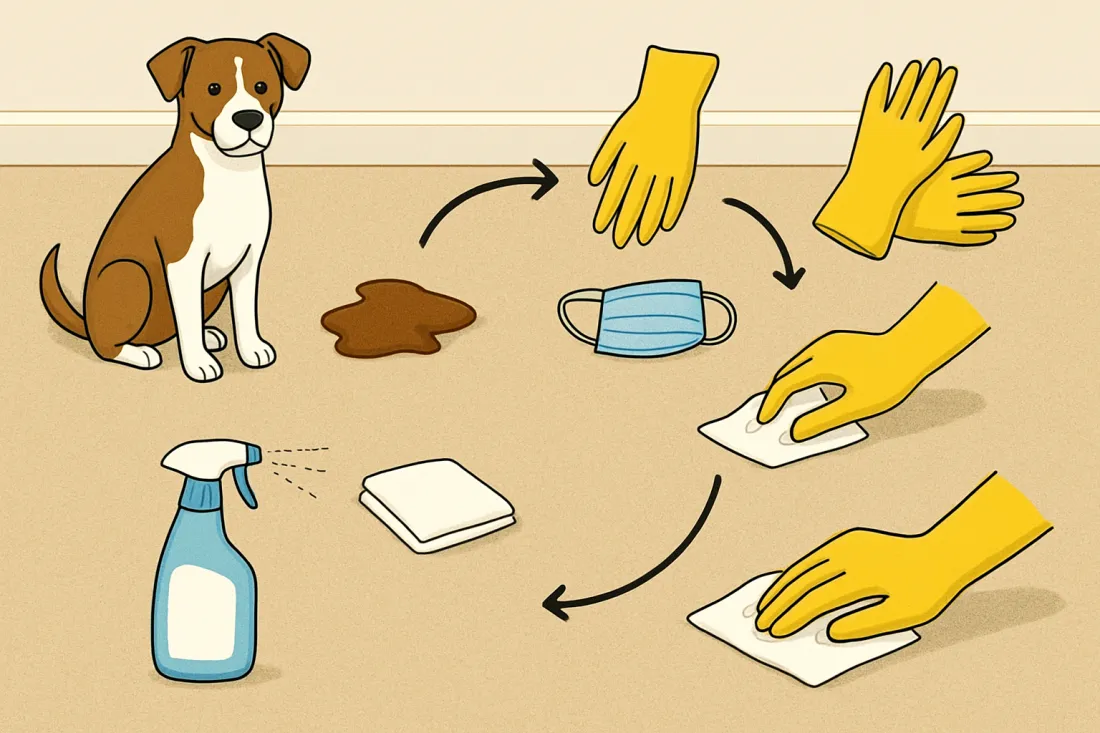
Dog diarrhea on carpet is messy, smelly, and stressful, but you can usually save the carpet and protect your family’s health if you act calmly and quickly. Follow this practical sequence right away:
- Keep everyone off the area so no one tracks the mess through the house.
- Put on disposable or washable gloves and, if you have one, a simple face mask.
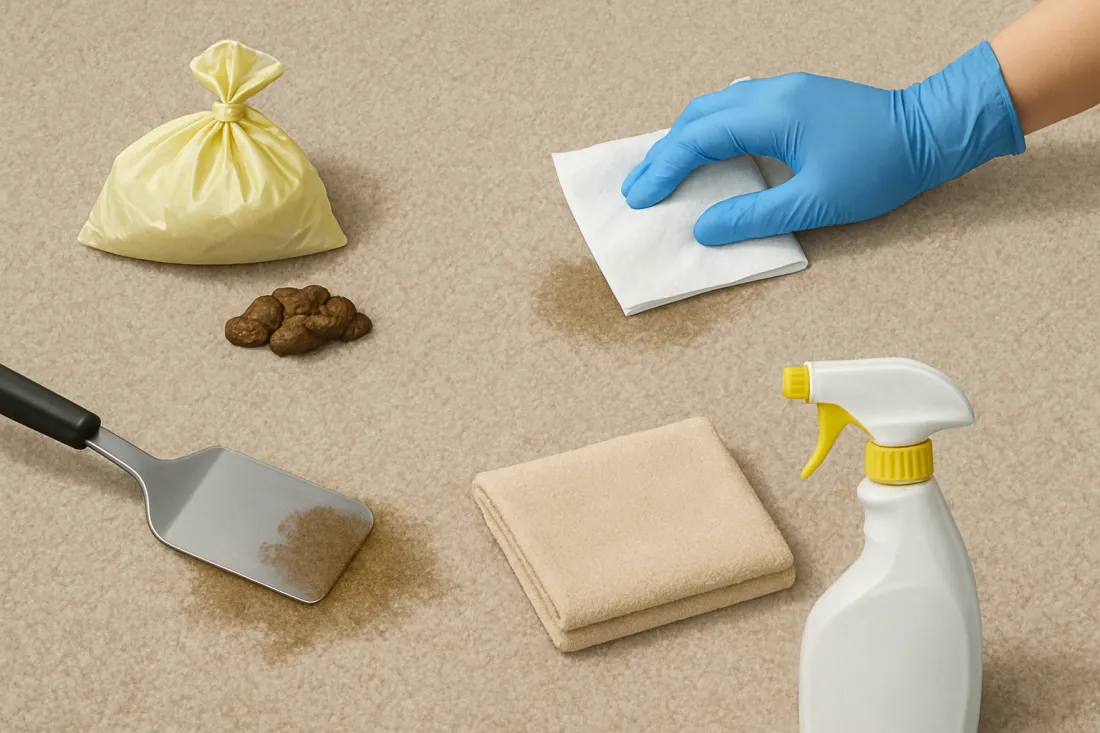
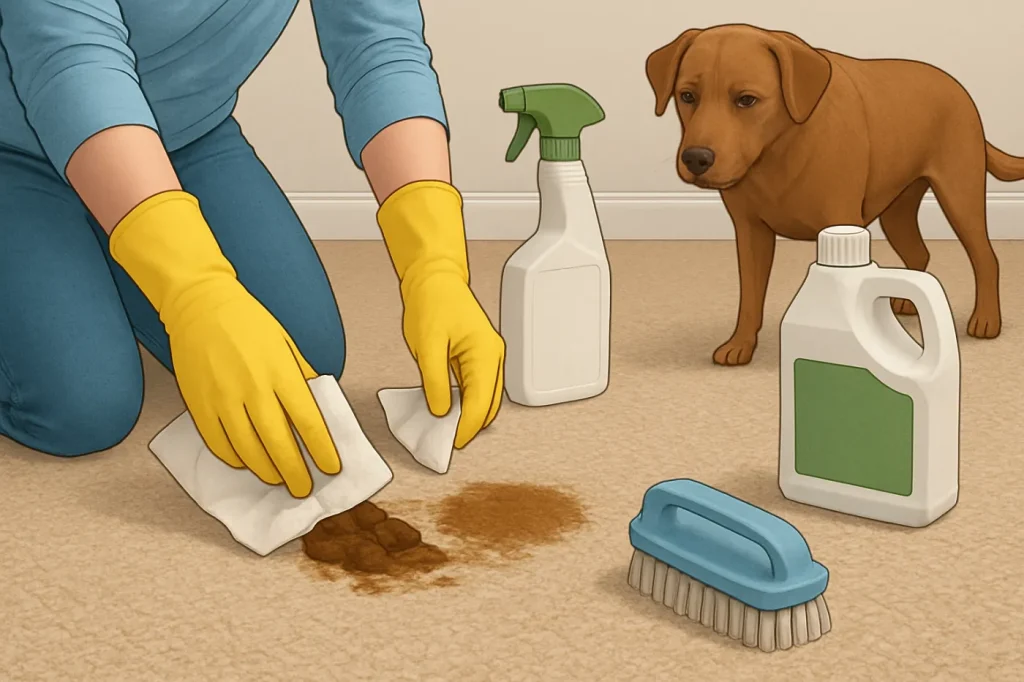
- Lift solids gently with paper towels or a plastic scraper, picking up instead of rubbing.
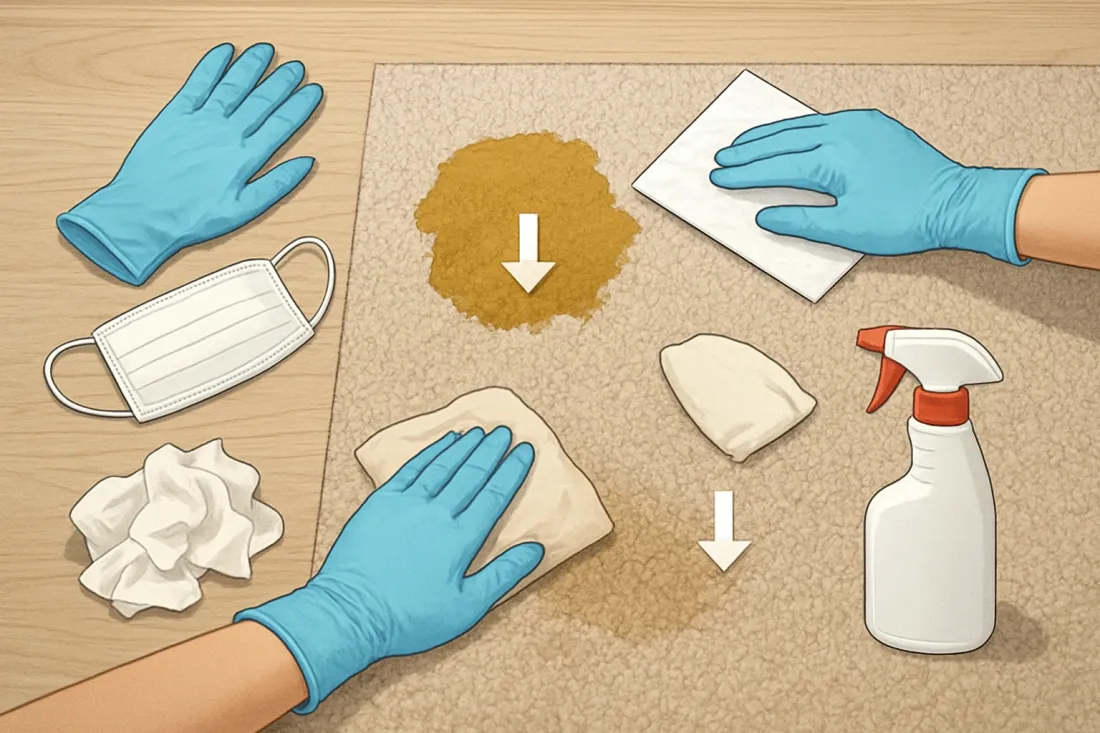
- Blot up moisture with paper towels or old cloths until the area is only slightly damp.
- Apply a pet-safe cleaner or mild DIY solution, working from the outside of the stain toward the center.
- Blot, do not scrub, repeating light treatments until the stain is gone or much lighter.
- Rinse lightly with clean water and blot again to remove cleaner residue.
- Disinfect and deodorize with a pet-safe product, then let the carpet dry completely.
- Wash your hands thoroughly and monitor your dog for ongoing diarrhea or other illness signs.
this guide explains how to do each step safely, which products and homemade solutions work best, what mistakes to avoid, and when diarrhea might mean your dog needs a vet.
Health and safety precautions before you start cleaning
Dog diarrhea can contain bacteria, viruses, and parasites that may spread to people and other pets. Treat every mess as potentially infectious and protect yourself, your family, and your home. Protect yourself first
- Wear disposable gloves (or washable rubber gloves) before touching anything near the mess.
- Use a simple mask or cover your nose and mouth with a cloth if the smell is strong or you are sensitive.
- Avoid touching your face, phone, or door handles while cleaning.
- Open windows or turn on a fan to improve ventilation in the room.
Protect your home and other pets
- Block off the area with a baby gate, laundry basket, or chairs so no one walks through the mess.
- Keep kids and pets out of the room until cleaning, disinfection, and drying are fully finished.
- Use separate cleaning cloths for the mess and for other household tasks. Wash them on a hot cycle afterward.
- Dispose of waste safely: double-bag solids, used paper towels, and gloves in a trash bag and take it outside promptly.
Protect the carpet
- Test any cleaner (store-bought or homemade) on a hidden patch of carpet first to check for discoloration or damage.
- Do not use very hot water on fresh diarrhea stains; heat can set proteins and make stains harder to remove.
- Avoid harsh chemicals like undiluted bleach on carpet; they can damage fibers and backing and may be unsafe for pets.
- Limit how wet the carpet gets so moisture does not soak the pad and subfloor.
Supplies you need to clean dog diarrhea off carpet
You do not need a closet full of specialty products, but a few basics make the job faster, safer, and more effective. Basic safety and cleanup supplies
- Disposable gloves or washable rubber gloves
- Paper towels or old absorbent cloths you do not mind staining
- Plastic scraper, dustpan, or stiff piece of cardboard
- Plastic bags for waste (ideally two for double-bagging)
- Small bucket or bowl for mixing cleaning solutions
- Soft brush or old toothbrush for stubborn stains (optional)
Cleaning and stain-removal products You can use either store-bought pet cleaners or simple homemade solutions.
- Pet-specific enzymatic cleaner (labeled safe for carpets and for pet messes)
- Mild dish soap (fragrance-free or lightly scented)
- White distilled vinegar
- Baking soda (for odor control)
- Hydrogen peroxide 3% (optional, for light-colored carpets only and spot-tested first)
- Pet-safe disinfectant or a disinfecting cleaner labeled for household surfaces and safe around animals once dry
Helpful extras
- Spray bottle (for applying solutions evenly)
- Wet/dry vacuum or carpet cleaner (optional but helpful for deep cleaning)
- Small fan or dehumidifier to speed drying
Step-by-step process to remove dog diarrhea from carpet
This is the detailed process for diarrhea specifically. If vomit is also involved, the same general approach applies, with a few differences covered in the next section.
1. Contain the mess and remove solids
- Put on gloves and, if needed, a mask.
- Place paper towels or old cloths around the stain to prevent spreading when you step or kneel nearby.
- Use a plastic scraper, dustpan, or stiff cardboard to lift solid or semi-solid material straight up. Avoid pushing it deeper into the fibers.
- Place solids directly into a plastic bag. Do not flush them unless your plumbing and local rules clearly allow it.
- Gently lay a paper towel over any remaining soft spots and lift again. Repeat until only a damp stain remains.
2. Blot up as much moisture as possible
- Place several layers of paper towels or a folded cloth over the stain.
- Press down firmly with your hand or step gently on the towels to absorb liquid. Do not twist or rub.
- Replace with fresh towels as they become saturated.
- Continue until the area feels only slightly damp to the touch.
Removing moisture early reduces staining and odor and makes the next steps more effective.
3. Choose the right cleaning solution
You have two main options: a commercial pet cleaner or a simple DIY mix.
- Enzymatic pet cleaner: Often the best choice because it breaks down organic material and odors. Follow the label exactly.
- DIY mild soap solution: Mix a few drops of mild dish soap into a cup of cool or lukewarm water. This is gentle and safe for many synthetic carpets.
- Vinegar solution: Mix equal parts white vinegar and water. This helps with odor and light staining but has a noticeable smell while drying.
Always test your chosen solution on a hidden corner of carpet first.
4. Treat the stain without spreading it
- Apply your cleaner to a clean cloth or spray lightly onto the stain. Avoid soaking the carpet backing.
- Work from the outside edge of the stain toward the center. This keeps it from spreading.
- Gently blot and dab. If you use a brush, keep motions light and in one direction to avoid fraying fibers.
- Let the cleaner sit for the time recommended on the label, or for about several minutes for a DIY solution, so it can break down residue.
- Blot again with a clean, dry cloth to lift loosened material.
If the stain remains, repeat the application and blotting cycle. Several light treatments are safer than one aggressive scrubbing.
5. Rinse and remove cleaner residue
Leftover soap or cleaner can attract dirt and leave a sticky patch.
- Lightly spray or dab the area with clean, cool water.
- Blot with a fresh cloth to remove moisture and cleaner.
- Repeat once or twice until the water you blot up looks clear and the area feels clean, not slippery.
6. Disinfect and deodorize the area
After visible dirt is gone, you still need to address germs and lingering odor.
- Apply a pet-safe disinfectant according to the label. Many products need a certain contact time on the surface to work effectively.
- Allow the area to air-dry or blot lightly if the carpet is very wet.
- Once damp, sprinkle a thin layer of baking soda over the area to absorb odors.
- Let the baking soda sit until completely dry, then vacuum thoroughly.
If odor persists, a second round with an enzymatic cleaner can help, especially if diarrhea soaked into the carpet pad.
7. Dry the carpet thoroughly
A damp carpet can develop musty smells or even mold in some conditions.
- Point a fan at the cleaned area or run a dehumidifier in the room.
- Avoid walking on the spot until it is fully dry.
- If possible, gently lift a corner of the carpet near the stain to check that the backing and pad feel dry.
How vomit cleanup on carpet differs from diarrhea cleanup
Many dog owners face both problems at some point. The overall approach is similar, but vomit has a few quirks. Extra challenges with vomit
- It often contains stomach acid that can discolor some carpet fibers.
- Food dyes and colored treats may leave bright stains.
- It can be thicker in some spots and watery in others, so it spreads unevenly.
Key differences in the cleaning process
- Neutralize acid quickly: After removing solids and blotting, a mild baking soda and water paste can help neutralize acid before deeper cleaning.
- Avoid scrubbing colored chunks: Lift them carefully to avoid grinding dyes into the fibers.
- Use enzymatic cleaner if the vomit contains food, bile, or blood; it can help break down complex stains and odors.
For a broader overview of handling different pet messes on carpet, you may also find guidance on how to clean dog and cat urine from carpet helpful.
Comparison table: cleaning options for dog diarrhea on carpet
| Cleaning option | When it fits best | Main benefits | Risks or limitations | What to check before using |
|---|---|---|---|---|
| Enzymatic pet cleaner | Fresh or set-in diarrhea stains, strong odors, multi-pet homes | Targets organic material and odors, usually safe for pets once dry | May require several applications; must follow label exactly | Confirm it is labeled for carpets and safe around pets when dry; spot-test for colorfastness |
| Mild dish soap + water | Fresh, small-to-medium stains on many synthetic carpets | Low cost, easy to mix, gentle on fibers | Too much soap can leave residue that attracts dirt | Use only a few drops per cup of water; rinse thoroughly and blot dry |
| Vinegar + water solution | Light stains and mild odors; when you prefer simple household ingredients | Helps neutralize some odors; no strong chemicals | Vinegar smell can linger; not ideal for all carpet types | Spot-test on hidden area; avoid over-wetting the carpet backing |
| Hydrogen peroxide 3% | Stubborn stains on light-colored carpets only | Can brighten discoloration and break down organic stains | May lighten or bleach darker fibers; not for wool or delicate carpets | Test on an inconspicuous area; use sparingly and avoid mixing with other cleaners |
| Professional carpet cleaning | Large areas, repeated accidents, or deep odors that keep returning | Deep cleans carpet and pad; can refresh entire room | Higher cost; requires scheduling and drying time | Ask about pet-safe products and drying time; confirm they handle pet waste cleanup |
Common mistakes when cleaning dog diarrhea off carpet
Avoiding a few frequent errors can save your carpet and reduce health risks.
- Rubbing or scrubbing aggressively: This pushes waste deeper into fibers and spreads the stain. Always blot and lift.
- Using very hot water: Heat can set proteins and make stains more difficult to remove. Use cool or lukewarm water instead.
- Skipping gloves: Direct contact increases the chance of spreading germs to your face, phone, or other surfaces.
- Over-soaking the carpet: Too much liquid can soak the pad and subfloor, leading to lingering odors and potential mold in some conditions.
- Mixing random chemicals: Combining cleaners (for example, bleach and ammonia-based products) can create dangerous fumes. Stick to one product at a time.
- Ignoring the backing and pad: If diarrhea was very watery or the mess sat for a while, it may have soaked through. Surface cleaning alone may not remove the smell.
- Letting pets back on the area too soon: If the carpet is still damp or smells like waste, some dogs may re-soil the same spot.
- Not addressing the cause of diarrhea: Repeated accidents are often a sign your dog needs a vet check or a change in diet or routine.
When to worry about your dog’s health after diarrhea
A single loose stool can happen to any dog, especially after a diet change or minor stomach upset. But some patterns suggest a bigger problem. Pay close attention and contact your vet if you notice:
- Frequent diarrhea over a short period, such as several episodes in a day or over multiple days.
- Blood in the stool or very dark, tar-like diarrhea.
- Vomiting plus diarrhea, especially if your dog cannot keep water down.
- Lethargy, weakness, or collapse.
- Signs of fever such as warm ears and body, shivering, or a measured temperature above the range your vet considers normal.
- Signs of pain such as whining, restlessness, or a tight, hard belly.
- Diarrhea in very young, very old, pregnant, or medically fragile dogs.
If you need to call the vet, note:
- When the diarrhea started and how often it happens.
- Any changes in food, treats, or access to trash or outdoor areas.
- Whether there is vomiting, blood, or mucus.
- Any new medications or supplements.
You can also take a photo of the stool or, if your vet suggests it, bring a small sample in a sealed container for testing.
Structured checklist: cleaning dog diarrhea off carpet safely
Use this checklist during or after an accident to make sure you cover the essentials.
- Secure the area
- Keep kids and pets away from the mess.
- Open a window or turn on a fan for ventilation.
- Protect yourself
- Put on disposable or washable gloves.
- Optional: wear a simple mask if the smell is strong or you are sensitive.
- Remove solids and excess moisture
- Lift solids with a scraper, dustpan, or cardboard.
- Double-bag solids and heavily soiled towels.
- Blot remaining moisture with paper towels or cloths until only slightly damp.
- Apply cleaner
- Choose enzymatic cleaner or DIY solution (soap or vinegar mix).
- Spot-test on a hidden carpet area.
- Apply cleaner from the outside of the stain toward the center.
- Let it sit for several minutes or as the label directs.
- Blot and rinse
- Blot with a clean cloth until the stain lightens.
- Lightly rinse with clean water.
- Blot again to remove residue and moisture.
- Disinfect and deodorize
- Apply a pet-safe disinfectant and allow proper contact time.
- Sprinkle baking soda on the damp area for odor control.
- Vacuum thoroughly once the baking soda is completely dry.
- Dry and restore the area
- Use a fan or dehumidifier to speed drying.
- Check that the carpet and pad feel dry.
- Remove barriers once the area is fully dry and odor-free.
- Monitor your dog
- Note any repeated diarrhea or other symptoms.
- Contact your vet if you see worrying signs such as blood, vomiting, or lethargy.
Decision criteria: when home cleaning is enough and when to escalate
Sometimes a careful home cleanup is all you need. Other times, calling a professional cleaner or your vet is the better choice. Home cleaning is usually enough when:
- The diarrhea is a one-time accident or very rare.
- The stain is small and fresh and you can clean it right away.
- Your dog is otherwise acting normal: eating, drinking, and playing as usual.
- The carpet looks and smells normal after cleaning and drying.
Consider a professional carpet cleaner when:
- The diarrhea covers a large area or multiple rooms.
- Accidents have happened repeatedly in the same spot and odors keep coming back.
- The carpet pad or subfloor seems soaked or smelly even after careful cleaning.
- Someone in the household has allergies, asthma, or immune concerns and you want a deeper clean.
Contact your vet promptly when:
- Diarrhea is frequent, severe, or long-lasting.
- You see blood, black stool, or worms.
- Your dog also has vomiting, fever, or signs of pain.
- Your dog is a puppy, senior, pregnant, or has other health issues.
FAQ: cleaning dog diarrhea off carpet and staying healthy
What should I understand first about how to clean dog diarrhea off carpet?
You are dealing with both a stain and a potential health risk. Protect yourself with gloves and good ventilation, then focus on lifting, not rubbing the mess. Blot up as much moisture as possible, use a pet-safe cleaner that suits your carpet, and give disinfectants enough contact time. If you act quickly and avoid over-wetting the carpet, you can usually remove both the mess and the odor without damaging the fibers.
What mistakes should I avoid when cleaning dog diarrhea off carpet?
The biggest mistakes are scrubbing the stain, using very hot water, and soaking the carpet. Scrubbing pushes waste deeper into the fibers and spreads the stain. Hot water can set proteins and make discoloration harder to remove. Heavy soaking can drive contamination into the pad and subfloor, causing long-lasting odors. It is also risky to skip gloves or mix multiple cleaning products. Instead, work gently, use cool or lukewarm water, stick to one cleaner at a time, and blot thoroughly.
What should I do next after I finish cleaning the diarrhea from the carpet?
After cleaning, disinfecting, and drying the carpet, focus on hygiene and your dog’s health. Wash your hands thoroughly, even if you wore gloves. Wash any reusable cloths on a hot cycle and clean tools like scrapers or dustpans. Check the area over the next day or two for any returning odors or dampness. Just as important, watch your dog: note whether stools return to normal and look for any signs of ongoing diarrhea, vomiting, or behavior changes. If problems continue or worsen, contact your vet and describe what you have observed.
How can I reduce the chance of future diarrhea accidents on carpet?
Prevention starts with routine and supervision. Introduce new foods or treats gradually, keep trash and outdoor hazards out of reach, and maintain regular feeding times. Make sure your dog has frequent chances to go outside, especially after meals or excitement. Clear house rules and consistent supervision help too; if you are working on routines, guidance on house rules every responsible dog owner should have can support your training. If diarrhea becomes a pattern, work with your vet to rule out medical causes and discuss diet or medication options.
Is it safe for kids to play on the carpet after a diarrhea accident?
It can be safe once you have fully cleaned, disinfected, and dried the area, but take your time. Make sure all visible staining is gone, there is no lingering odor, and the carpet feels completely dry. Vacuum thoroughly to remove dried baking soda or cleaner residue. If you have young children who crawl or put their hands in their mouths, you may want to keep them off the cleaned area for an extra day and vacuum again before allowing normal play. If you are unsure, you can place a washable rug or mat over the spot as an extra barrier once it is dry.