
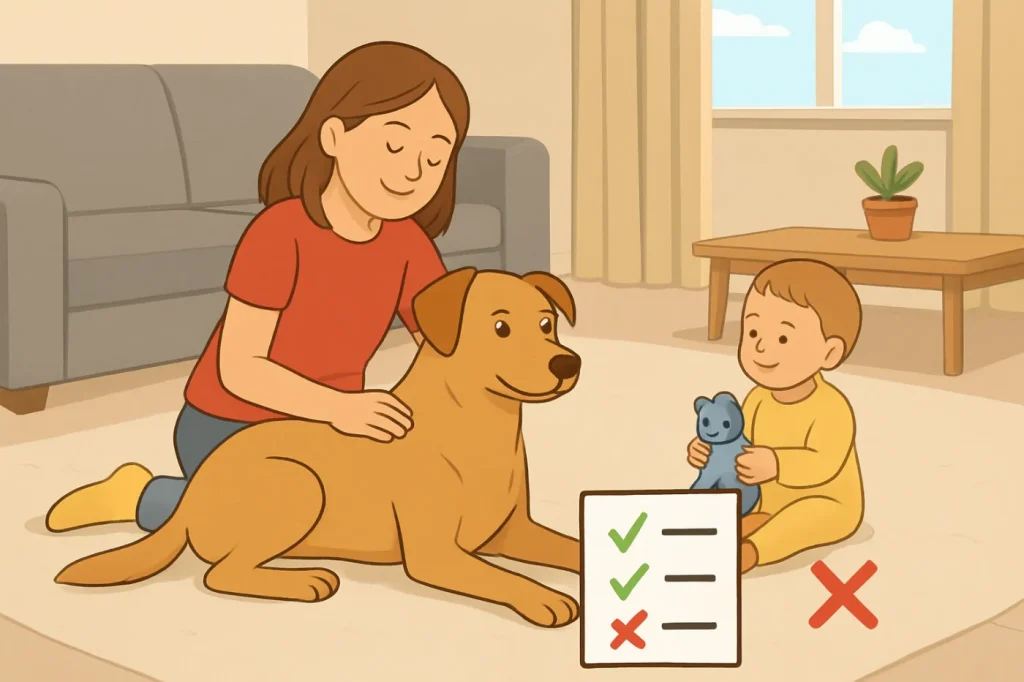
Choosing a “kid friendly” pet is not just about picking a cute dog or cat that likes people. It is about matching a specific animal’s temperament to your children’s ages, energy levels, and behavior so everyone stays safe and happy.
Kid friendly pet temperament in one practical checklist
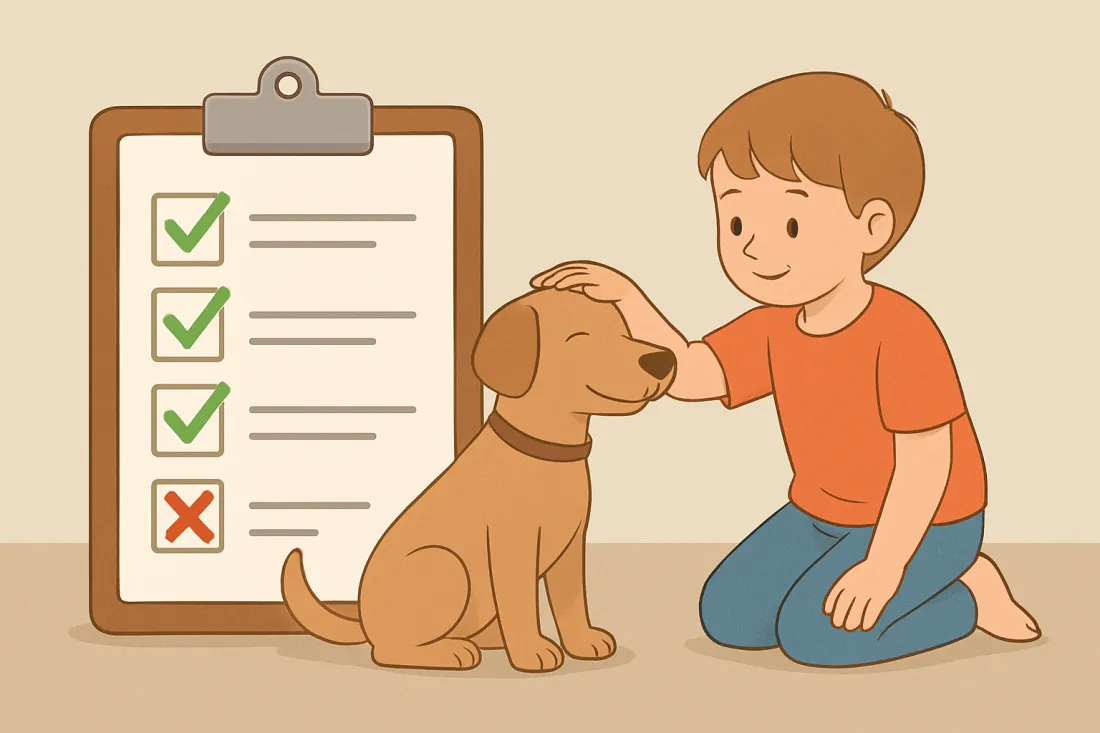
Before you bring a dog or cat into a home with kids, look for these green flags and red flags in temperament:
- Green flags for families
- Calm or moderate energy, not frantic or hyper most of the day
- Enjoys gentle touch and handling, relaxes after a moment instead of stiffening
- Recovers quickly after a surprise (dropped toy, sudden noise)
- Shows curiosity, not panic, around new people and environments
- Shares toys or food without growling, freezing, or snapping
- Can settle on a bed or mat when asked, not constantly demanding attention
- Shows no history of biting, serious scratching, or chasing children
- Red flags around children
- Growling, hissing, freezing, or snapping when touched while eating or resting
- Extreme fearfulness: hiding, shaking, or trying to escape from normal household sounds
- Intense chasing or herding of moving kids, nipping at heels or clothes
- Guarding toys, beds, or people from others in the home
- Very high, nonstop energy that is hard for adults to manage
- History of aggression toward children or visitors
Use the detailed checklist and comparison table below to decide whether a specific dog or cat is a good fit for your family right now.
Why not every “friendly” pet is truly kid-friendly
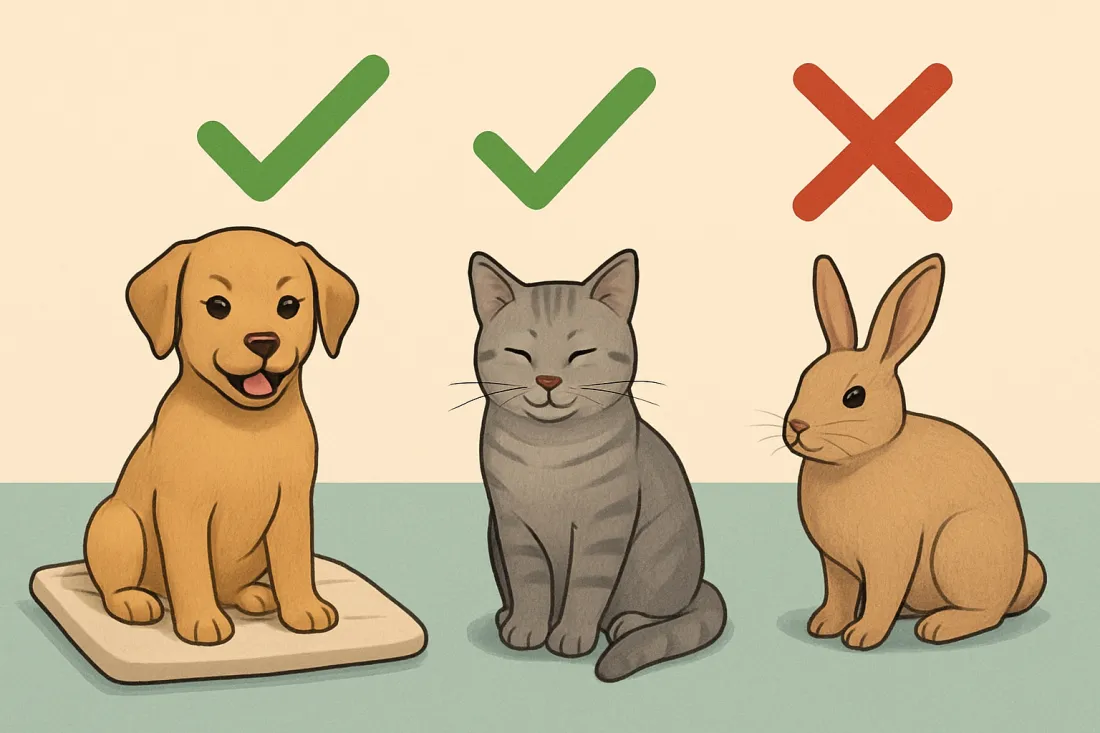
Many animals are friendly with adults but struggle with the noise, speed, and unpredictability of children. A dog that happily greets visitors at the door may still snap if a toddler grabs its tail. A cat that loves sitting on an adult’s lap may panic when a preschooler runs toward it.
Key reasons a generally friendly pet may not be kid-friendly:
- Different body language from kids: Children move quickly, stare directly, and squeal. Some pets read this as a threat or prey behavior.
- Unpredictable touch: Kids may hug tightly, pull fur, or poke sensitive areas. Even a tolerant animal can reach its limit.
- Noise and chaos: Loud toys, playdates, and sports in the living room can overwhelm animals that do fine in calm homes.
- Limited impulse control: Young children cannot always follow rules like “leave the dog alone when it is on its bed.”
- Past experiences: A pet that has been scared or hurt by children before may react defensively even to kind kids.
Instead of asking “Is this breed friendly?” focus on the individual animal: how it behaves under stress, how it recovers, and how it handles handling.
Temperament traits that work best with children
For homes with babies, toddlers, or school-age kids, certain temperament traits make daily life safer and smoother.
1. Tolerance for handling and mistakes
Children will make handling mistakes, even with good coaching. Look for a pet that:
- Allows gentle petting on back, sides, and chest without tensing or moving away
- Does not react strongly if accidentally bumped while resting
- Accepts brief hugs or close contact, then calmly moves away instead of snapping or scratching
- Shows soft body language: loose muscles, relaxed ears, normal breathing
During a meet-and-greet, watch how the animal responds when an adult gently touches paws, tail base, or collar. A kid-friendly pet should show mild discomfort at most, not panic or aggression.
2. Low to moderate reactivity
Reactivity is how strongly and quickly a pet responds to triggers like noise, movement, or strangers. For families, lower reactivity is usually safer.
- Dog: Startles at a loud sound but quickly checks in with a person and settles.
- Cat: Ears flick or tail twitches at sudden noise, but the cat stays in the room instead of bolting or attacking.
Highly reactive animals may bark, lunge, hiss, or swat when kids run, shout, or drop toys. That can be stressful for everyone.
3. Moderate, manageable energy
Energy level needs to match your family’s lifestyle and the adults’ capacity to exercise and train the pet.
- Good fit: Enjoys play and walks, but can relax on a bed or couch for long stretches.
- Risky: Needs constant intense activity, jumps on people, and struggles to calm down even with exercise.
Very high-energy dogs can accidentally knock over toddlers or nip during rough play. Over-aroused cats may pounce on moving feet or hands.
4. Stable, curious social behavior
Look for a pet that:
- Approaches new people with relaxed curiosity or chooses to observe calmly from a distance
- Does not show prolonged fear (hiding for hours) or aggression (growling, hissing, lunging) in normal situations
- Can be redirected with treats or toys when excited
Curious, stable animals are easier to integrate into a busy family home than those that are either extremely shy or pushy.
Traits that can be risky around kids
Some temperament traits require very careful management or may be unsafe in homes with young children.
1. Resource guarding
Resource guarding is when a pet protects food, toys, beds, or people by growling, freezing, snapping, or biting. Around kids, this can escalate quickly because children often do not recognize early warning signs.
Warning signs include:
- Stiffening or hovering over a bowl or toy when someone approaches
- Growling or hissing if a person reaches toward food, a bone, or a favorite resting spot
- Snapping if a child walks near while the pet is chewing or eating
If you notice these behaviors, work with a qualified trainer or behavior professional before allowing children to interact closely.
2. Fearfulness and anxiety
Fearful pets may hide, shake, or try to escape. When cornered or overwhelmed, they may bite or scratch to protect themselves.
Red flags:
- Dog: tail tucked, ears pinned back, avoiding eye contact, refusing treats in new places
- Cat: flattened ears, dilated pupils, crouching low, hiding for long periods after normal household noises
Very fearful animals often do better in quiet, predictable homes without young children.
3. Intense herding or prey drive
Some dogs and cats are strongly triggered by fast movement. They may chase, nip, or pounce on running children.
- Dog: circles kids, nips at heels or clothing, barks and chases when kids run.
- Cat: stalks and pounces on moving feet or hands, especially during high-energy play.
These behaviors can sometimes be managed with training and structured outlets, but they are a concern in homes with toddlers or very active kids.
4. Low frustration tolerance
Some pets go from mildly annoyed to very upset in seconds. Signs include:
- Growling or hissing after just one or two seconds of unwanted touch
- Snapping or swatting without clear warning
- Overreacting to small changes in routine
With children, a higher tolerance for small mistakes is safer.
Age considerations: puppies, kittens, adults, and seniors with kids
Age affects energy, patience, and training needs. There is no perfect age for every family, but each stage has pros and cons.
| Pet age | When it can fit well with kids | Main benefits | Main challenges and risks |
|---|---|---|---|
| Puppies (under ~1 year) | Families with time for daily training and supervision; school-age kids who can follow rules | Can be socialized early with children; grow up with the family; training can shape behavior | Teething, mouthing, jumping, house training; may knock over toddlers; require multiple short training sessions and potty breaks each day |
| Kittens (under ~1 year) | Homes where adults can supervise play and teach kids gentle handling | Adaptable, playful, can learn to enjoy handling and family routines | Sharp claws and teeth; may pounce or scratch during play; can be overwhelmed by rough handling |
| Young adults (about 1–5 years) | Most families, if temperament is already stable and kid-friendly | Energy for play without baby-stage chaos; house training often complete; personality more predictable | May have existing habits (good or bad); still need consistent exercise and training |
| Mature adults (about 5–8 years) | Families wanting a calmer companion; good for school-age kids | More settled, often less destructive; may be used to household routines | May be less tolerant of rough handling; possible early health issues that need budgeting and care |
| Seniors (around 8+ years, varies by breed) | Quieter homes, older kids who respect boundaries and can be gentle | Often very calm; may be content with short walks and cuddles | May have pain or mobility issues that reduce tolerance for touch; vet care needs can increase |
Age is only one factor. A calm senior cat in pain may be less kid-friendly than a healthy, tolerant young adult.
Structured checklist: evaluating a dog or cat for a home with kids
Use this step-by-step checklist when you meet a potential pet from a shelter, rescue, breeder, or private home. Repeat parts of it on a second visit if possible.
You are considering a specific dog or cat for a home with children and want to decide if its temperament is truly kid-friendly. You have access to the animal for at least one meet-and-greet and can observe it in a relatively calm space with at least one trusted adult present.
Before the visit, list your children’s ages, typical noise level, and how well they follow rules. Decide which behaviors are non‑negotiable (for example, no history of biting, no severe fear of children). Bring small, soft treats (if allowed) and a toy to test play style.
During the visit, move through these steps:
- Observe from a distance
- Watch how the pet behaves in the room before you approach: relaxed, curious, or tense and withdrawn.
- Note body language: loose vs. stiff, tail position, ear position, breathing.
- Approach calmly as an adult
- Walk toward the pet at a normal pace, sideways rather than head‑on.
- Offer your hand low for sniffing (dog) or sit and let the cat choose to approach.
- Look for relaxed interest, not cowering, lunging, or freezing.
- Test gentle handling
- Stroke the back, chest, and sides gently.
- Briefly touch paws, collar, or tail base while watching for stiffening, growling, or hissing.
- Stop if the pet shows clear stress signals and note them.
- Check reaction to mild surprises
- Drop a soft object from a short height or clap once at a normal volume.
- Observe startle response and recovery: does the pet settle within a few seconds with reassurance?
- Evaluate play style
- Offer a toy and see how the pet plays: gentle or rough, grabbing hands or focusing on the toy.
- For dogs, see if they can sit or pause between throws with help from the handler.
- Ask about history
- Ask caregivers about any known behavior around children, strangers, food, or toys.
- Ask if there have been any bites, serious scratches, or incidents that required medical care.
- Introduce a child only if safe
- If staff or the current owner agrees the pet is comfortable, have one calm child enter.
- Coach the child to move slowly, avoid hugging, and offer a hand or treat under supervision.
- Watch closely for stress signals and end the interaction if the pet looks overwhelmed.
After the visit, review your notes. A kid-friendly candidate should show mostly relaxed or mildly cautious body language, recover quickly from small surprises, and accept gentle handling without strong negative reactions. If you saw growling, hissing, snapping, or prolonged hiding, or if staff report past aggression toward children, treat that as a serious warning and consider another pet or seek a professional behavior assessment before deciding.
Quick temperament checklist by category
- Handling
- Allows gentle petting without moving away or stiffening
- Tolerates brief touch of paws, tail base, or collar without strong reaction
- Noise and movement
- Startles at loud sounds but calms within a short time
- Does not chase or lunge at fast movement across the room
- Play
- Plays with toys rather than grabbing hands or clothing
- Can pause or stop play when the adult asks
- Sharing resources
- No growling, hissing, or freezing when people move near food or toys (within safe limits set by staff)
- Recovery
- After a surprise, returns to normal behavior reasonably quickly
Dog vs. cat for kids: temperament comparison table
Both dogs and cats can be wonderful with children. The better choice depends on your family’s routines, space, and willingness to train and supervise.
| Aspect | Kid-friendly dog temperament | Kid-friendly cat temperament | Family fit notes |
|---|---|---|---|
| Typical interaction style | Seeks active engagement: walks, games, training sessions | Often prefers shorter, calmer interactions on their own terms | Very active kids may enjoy a dog’s energy; quieter kids may prefer a cat’s pace |
| Handling tolerance | Good family dogs accept gentle petting, basic grooming, and some clumsy touch | Good family cats tolerate gentle petting and brief handling, then move away calmly | Cats may need more protected “no kid” zones; dogs need clear rest areas too |
| Energy and exercise | Needs daily walks and play; energy level varies widely by individual | Short play bursts with toys; exercise mostly indoors | Busy families with limited outdoor time may find a calm cat easier to manage |
| Risk of accidental injury | Can knock over toddlers, scratch with nails, or nip during rough play | Can scratch or bite if overhandled or startled | Supervision and teaching kids to read signals are essential for both |
| Training and structure | Benefit from obedience training, socialization classes, and clear rules | Benefit from routine, safe hiding spots, and gradual introductions | Dogs often need more formal training time; cats need thoughtful environment setup |
| Space and lifestyle | Needs space for movement and outdoor access for walks | Can thrive in smaller spaces if given vertical areas and enrichment | Apartment families may lean toward cats or smaller, calmer dogs |
If you are leaning toward a cat and want help matching personality, a dedicated cat breed temperament guide can help you narrow down traits that fit your home.
Who should choose which type of pet for kids
Use these scenarios to think through what fits your family best.
- Busy family with toddlers and limited time
- Better fit: Calm adult cat or lower-energy adult dog with proven kid history.
- Why: Less training and exercise demand than a puppy; more predictable temperament.
- Active family with school-age kids who want to participate in training
- Better fit: Well-matched young adult dog or carefully chosen puppy.
- Why: Kids can help with walks, games, and basic training under adult supervision.
- Quiet household with older children or teens
- Better fit: Mature adult or senior dog or cat that enjoys calm companionship.
- Why: Older kids can respect boundaries and help with gentle care.
- First-time pet family unsure about long-term commitment
- Better fit: Foster-to-adopt arrangement or adopting an adult pet with a clear behavior history.
- Why: You can see how the pet fits your home before making a permanent decision.
How to safely introduce pets and children based on temperament
Even with a great temperament match, introductions matter. Plan them as carefully as you would plan bringing a new baby home.
Step-by-step introduction plan
- Prepare the environment first
- Set up a safe zone for the pet: crate, bed, or room where children are not allowed to follow.
- For cats, provide vertical spaces and hiding spots where kids cannot reach.
- Remove or secure items that could cause conflict, such as scattered toys or food bowls on the floor.
- If you are also adjusting your home for a new pet, a guide on how to set up a pet friendly home can help you plan ahead.
- Teach kids the rules before the pet arrives
- Use simple phrases: “Let the pet come to you,” “No chasing,” “No touching while eating or sleeping.”
- Practice gentle petting on a stuffed animal so kids understand where and how to touch.
- First meeting: one child at a time
- Keep the pet on a leash (dog) or in a controlled space (cat) with an adult handler.
- Have one calm child sit and let the pet approach at its own pace.
- Reward the pet for calm behavior with treats or praise.
- Short, positive sessions
- End the first few interactions after a few minutes while things are going well.
- Give the pet a break in its safe zone with no kid access.
- Gradually add more activity
- Once the pet is comfortable, allow kids to move around more, still under supervision.
- Watch for stress signals and step in early to give the pet space.
House rules for kids to respect pet boundaries
Clear, consistent rules protect both children and pets. Adjust the language to your kids’ ages, but keep the rules firm.
- Rule 1: No touching while the pet is eating or chewing
- Explain that bowls, bones, and special treats are off-limits.
- Feed pets in a kid-free area when possible.
- Rule 2: Let sleeping pets sleep
- Teach kids that beds, crates, and favorite chairs are “do not disturb” zones.
- Show them how to call the pet from a distance instead of grabbing.
- Rule 3: No chasing, riding, or grabbing
- Make it clear that pets are not toys or furniture.
- Offer alternative games like fetch (for dogs) or wand toys (for cats).
- Rule 4: Gentle hands only
- Demonstrate soft petting on the back and sides, avoiding face, tail, and paws.
- Use a simple “one hand, one direction” rule for very young kids.
- Rule 5: Ask an adult first
- Kids should ask before approaching or picking up a pet.
- Adults can check the pet’s mood and decide if it is a good moment.
Reinforce these rules daily, especially in the first weeks. Praise kids when they follow them well.
Decision checklist: are you ready for a kid-friendly pet?
Use this checklist before committing to a dog or cat. If you answer “no” to several items, consider delaying or adjusting your plan.
- An adult in the home is willing to be the primary caregiver and trainer.
- You can supervise interactions between pets and young children consistently, especially in the first months.
- You have time for daily pet care: feeding, cleaning, exercise, and play.
- You are prepared for ongoing costs such as food, supplies, and veterinary care. A pet expense checklist for the year can help you budget.
- Your home has space for a pet-only safe zone where kids are not allowed.
- You are open to training, behavior support, or adjusting routines if issues appear.
- You are willing to walk away from a pet that is not a good fit, even if you feel emotionally attached.
When to reconsider or delay getting a pet for the family
Sometimes the most responsible choice is to wait. Consider delaying if:
- Your children are very young and unpredictable
- If you cannot reliably prevent chasing, grabbing, or rough play, a pet may be at risk.
- There is no adult with time for training and supervision
- Pets should not be children’s sole responsibility, especially in the first years.
- Someone in the home is uncomfortable with animals
- Fear or resentment can affect how the pet is treated and increase stress for everyone.
- Your housing situation is unstable
- Frequent moves, uncertain pet policies, or limited space can make pet ownership harder.
- You notice serious temperament red flags
- If a potential pet shows aggression, severe fear, or intense guarding, seek professional advice before adopting—or choose a different animal.
Waiting until your children are older, your schedule is more stable, or you have more support can set everyone up for a better experience.
FAQ about kid-friendly pet temperament checklists
What should parents understand about a kid-friendly pet temperament checklist?
A kid-friendly pet temperament checklist is a tool to evaluate how a specific dog or cat is likely to cope with real-life family situations. It focuses on how the animal handles noise, touch, surprises, and sharing space with children, not just whether it seems friendly in a brief meeting. Use the checklist to look for patterns—calm recovery from startle, tolerance for gentle handling, and low guarding behavior—so you can make a thoughtful decision instead of relying on breed labels or first impressions.
What common mistakes do families make when choosing a pet for kids?
Frequent mistakes include choosing based on looks or breed reputation alone, assuming any puppy or kitten will “grow out of” problem behaviors, and skipping questions about the pet’s history with children. Families also sometimes underestimate the time needed for training and supervision, or they ignore early warning signs like growling, hiding, or chasing kids. Using a structured temperament checklist and being honest about your household’s noise level, routines, and limits can prevent many of these problems.
What should families do next after using a kid-friendly temperament checklist?
After working through a temperament checklist, compare your notes to your non‑negotiables for safety and lifestyle. If the pet fits well, plan the next steps: confirm adoption or purchase details, set up a safe zone at home, and review house rules with your children. If the fit is uncertain, ask for another visit, request more information about the pet’s history, or consult a trainer or behavior professional. If the pet clearly is not a match, keep looking—there are many animals whose temperament will better suit your family.
How can I tell if a shelter dog or cat has a history of problems with children?
Ask staff or the current owner direct, specific questions: Has this pet lived with children before? What ages? How did it react when kids ran, shouted, or tried to touch it while eating or sleeping? Were there any bites or serious scratches that needed medical attention? Also ask how the pet behaves around visiting children at the shelter or home. Combine these answers with your own observations during a meet-and-greet to form a clearer picture.
Can training turn a not-so-kid-friendly pet into a safe family pet?
Training and behavior work can improve many issues, such as jumping up, rough play, or mild guarding. However, deep-seated fear, severe aggression, or very low tolerance for handling may never be fully safe around young children. If a pet shows serious red flags, especially with kids, work closely with a qualified professional before deciding to bring that animal into a home with children, and be prepared to choose a different pet if safety cannot be reasonably managed.