
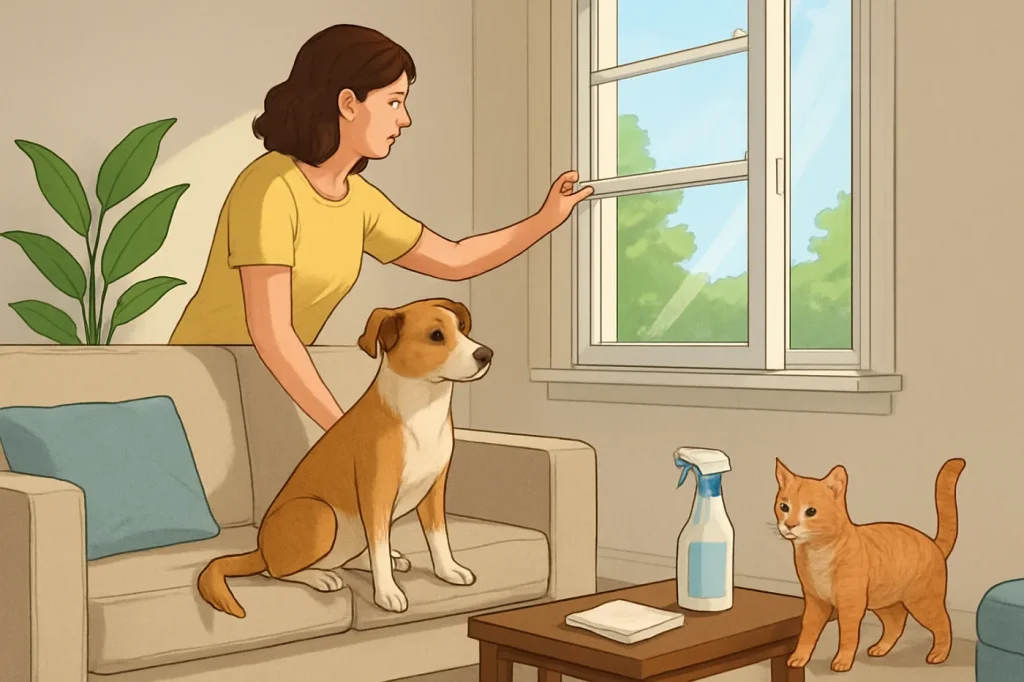
First actions that quickly reduce dog and cat smell in the house
If your home smells like dog or cat, start with one clear goal: remove as much odor at the source as you can in the first 24 hours, then switch to maintenance. A practical same-day reset looks like this:
- Air out the home for 15–30 minutes if weather and safety allow. Open windows on opposite sides of the home to create a cross-breeze.
- Strip and wash all pet bedding and throws on a warm or hot cycle, following fabric labels. Run an extra rinse if items are heavily soiled.
- Vacuum carpets, rugs, and upholstery slowly (about 1–2 minutes per square yard) with a brush or pet-hair attachment.
- Spot-treat any visible accidents with an enzyme cleaner made for pet messes. Let it sit for the full dwell time on the label before blotting.
- Empty and scrub litter boxes and dog crates with mild soap and water, then dry fully before refilling.
- Wash food and water bowls in hot, soapy water and wipe the floor around feeding areas.
This reset will not erase every deep or old smell, but it gives a cleaner baseline so you can tell where odors are still coming from and which rooms need deeper work.
Where dog and cat smells really come from in the house
To get lasting results, you need to know what you are actually smelling. Most dog and cat odors come from a mix of the animal’s body and the environment.
Coat and skin as an odor source
Dogs and cats naturally produce skin oils. These oils, plus dust, saliva, and outdoor debris, build up in the coat and on the skin. Common coat and skin odor patterns:
- “Wet dog” smell: When a dog’s coat gets wet, natural microbes on the skin release stronger odors. You often notice this within 5–10 minutes of a dog coming in from the rain.
- Oily or “rancid” smell: Can be linked to infrequent bathing, over-bathing that irritates skin, or underlying skin conditions.
- Cat coat smell: Healthy cats usually smell mild, but overweight, elderly, or arthritic cats may not groom well and can develop greasy, smelly fur, especially along the back and base of the tail.
If your sofa or blankets smell like your pet’s coat, the odor is being transferred from fur to fabrics and then released back into the room.
Ears that can make a whole room smell
Ears are a very common hidden odor source, especially in dogs with floppy or hairy ears. Typical signs:
- Yeasty or sweet smell: Often linked with ear infections.
- Strong, rancid odor: Can be due to wax buildup, infection, or trapped moisture after swimming or bathing.
- Head shaking, scratching at ears, or rubbing them on furniture.
- Redness, discharge, or sensitivity when touched.
Ear problems can be strong enough that you smell them as soon as the dog or cat walks into the room.
Mouth and breath odors
Bad breath is not just unpleasant; it can signal health issues. Examples:
- Mild “doggy breath” after eating: Often normal and short-lived.
- Persistent foul odor: Can be linked to dental disease, tartar, gum inflammation, or other health problems.
- Metallic or very unusual smell: May indicate a more serious medical issue that needs a vet’s attention.
If you can smell your pet’s breath from a few feet away, it is usually time to talk to your vet about dental care.
Litter box and bathroom areas
For cats, the litter box is one of the strongest odor sources in a home. For dogs, indoor potty pads, accidents, or a poorly cleaned yard can also contribute. What often causes strong smells:
- Ammonia-like smell: Often from concentrated urine in litter boxes or on carpets.
- Lingering feces odor: From boxes that are not scooped often enough or from accidents that were not fully cleaned.
- “Phantom” smells: Old stains in carpets, baseboards, or subfloor that were never properly treated.
If cat urine smell is a particular problem, it can help to follow more detailed guidance on how to get rid of cat urine smell in house alongside the steps here.
Bedding, soft furnishings, and “pet zones”
Anything that absorbs oils and moisture will hold onto pet smell:
- Pet beds, blankets, and crate pads.
- Sofas, armchairs, and cushions where pets nap.
- Carpets and rugs in favorite resting or play areas.
- Car interiors, especially fabric seats and trunk areas used for transport.
These items slowly re-release odors into the air, even after you clean the floor. If you clean the room but leave a smelly bed or blanket, the smell usually comes back quickly.
Health checklist: when pet odors mean a vet visit
Some smells are a normal part of living with animals. Others are warning signs. Use this checklist to decide when to call your vet.
Health issues that can cause bad odors
- Skin problems: Red, flaky, or greasy skin; constant scratching or licking; bald patches; or a strong, musty or sour smell.
- Ear infections: Strong yeasty or rotten smell from the ears; head shaking; scratching; redness; discharge; or pain when touched.
- Dental disease: Persistent bad breath; drooling; pawing at the mouth; difficulty chewing; or visible tartar and red gums.
- Anal gland issues: Fishy or very pungent smell, often when the dog or cat is excited or has just been sitting; scooting on the floor; licking under the tail.
- Urinary or digestive issues: Sudden change in urine or stool smell; accidents from a previously house-trained pet; straining; or visible blood.
- Reduced grooming in cats: Matted or greasy fur; dandruff; strong odor around the rear; often linked to pain, obesity, or illness.
When to see a vet about dog and cat smells
Book a vet appointment if you notice any of the following:
- Odor appears suddenly and is strong or unusual for your pet.
- Smell does not improve after a week of basic grooming and cleaning.
- Your pet seems uncomfortable, in pain, or is behaving differently (lethargy, hiding, aggression).
- There is visible discharge, bleeding, or open sores anywhere on the body.
- Bad breath is strong enough to smell from a distance or is accompanied by eating problems.
If you are unsure whether a smell is normal, call your vet’s office and describe what you are noticing. They can advise whether it sounds urgent or can wait for a routine visit.
Grooming habits that actually reduce dog and cat odor
Good grooming does more than make pets look nice; it removes the oils, dirt, and loose hair that trap smells and spread them around the house.
Bathing dogs and cats without overdoing it
- Dogs: Many healthy dogs do well with regular baths spaced out enough to avoid drying the skin. Frequency depends on coat type, lifestyle, and skin health. Outdoor, active, or very oily dogs may need more frequent baths than indoor, short-haired dogs.
- Cats: Most healthy cats groom themselves and do not need frequent full baths. Exceptions include hairless breeds, very long-haired cats, or cats that cannot groom properly due to age, weight, or illness.
Bathing tips that help with odor:
- Use a pet-safe shampoo, not human products, to avoid irritating skin.
- Rinse thoroughly; leftover shampoo can cause itchiness and odor.
- Dry completely, especially for thick-coated dogs, to prevent damp smells.
- Introduce baths slowly and positively to reduce stress and resistance.
Brushing and coat care
Regular brushing helps in several ways:
- Removes loose hair that would otherwise trap oils and dust in your home.
- Distributes natural oils more evenly, which can reduce “hot spots” of odor.
- Lets you spot skin problems, mats, or parasites early.
Practical brushing rhythm:
- Short-haired dogs and cats: A quick brush several times a week.
- Long-haired or double-coated breeds: Often daily brushing to prevent mats and tangles.
Ear and paw care
- Ears: Ask your vet or groomer to show you how to clean ears safely with a pet ear cleaner. Do not insert cotton swabs deep into the ear canal.
- Paws: Wipe paws after walks, especially in wet or muddy weather, to reduce outdoor smells and dirt tracked inside.
Dental care for fresher breath
Dental hygiene is one of the most effective ways to reduce pet mouth odor.
- Introduce tooth brushing with a pet-safe toothpaste and soft brush or finger brush.
- Use dental chews or toys that are designed to help reduce plaque, following package guidance.
- Ask your vet how often your pet may need professional dental cleanings.
If bad breath persists despite home care, schedule a dental checkup to rule out deeper problems.
How to set up an odor-smart home
An odor-smart home is arranged so smells do not build up in the first place. Focus on ventilation, surfaces, and air filtration.
Ventilation and airflow
- Open windows regularly when weather and safety allow to let fresh air circulate.
- Use exhaust fans in bathrooms and kitchens to remove humidity and cooking smells that can mix with pet odors.
- Place fans to move air through pet-heavy rooms, not just around in circles.
Choosing fabrics and surfaces that do not trap smell
Some materials hold onto smells more than others.
- More odor-resistant choices: Washable slipcovers, tightly woven fabrics, leather or faux leather furniture, hard floors like tile or sealed wood.
- Higher-risk choices: Thick carpets, shag rugs, heavy curtains, and non-washable cushions in areas where pets sleep or spend most of their time.
Where possible:
- Use washable rugs in high-traffic pet areas.
- Choose pet beds with removable, machine-washable covers.
- Keep one or two “pet blankets” on sofas that you can wash frequently.
Air filters and purifiers
Air purifiers and HVAC filters can help reduce pet dander and some odors.
- Use an air purifier sized for the room where your pets spend the most time, and follow the manufacturer’s filter replacement schedule.
- Change central HVAC filters regularly, especially if you notice more dust or if family members have allergies.
- Place purifiers away from litter boxes or beds where they might blow smells around instead of capturing them.
Structured odor audit: room-by-room checklist
Use this odor audit once for a full reset, then repeat it every few months or whenever you notice smells returning.
Living room and family areas
Checklist:
- Sniff-test the sofa, chairs, and cushions up close.
- Lift rugs and check for stains or discoloration on the floor underneath.
- Look for hidden pet zones: behind furniture, under tables, near windows.
- Check blankets and throws for visible hair and marks.
Actions:
- Vacuum upholstery and rugs slowly, using upholstery tools and crevice tools along seams.
- Wash removable covers and blankets on a suitable cycle.
- Spot-treat stains with an enzyme cleaner, following label directions.
Bedrooms
Checklist:
- Check pet beds and any spots where pets sleep on human beds.
- Inspect under the bed for hair build-up or hidden accidents.
- Smell closets or laundry piles where pets may nap.
Actions:
- Wash bedding regularly, including mattress protectors if washable.
- Vacuum under beds and along baseboards.
- Rotate or replace pet beds that stay smelly after washing.
Kitchen and dining areas
Checklist:
- Check around food and water bowls for spills, slime, or mold.
- Look under mats or feeding stations for trapped moisture.
- Smell trash cans and recycling bins that may hold pet food packaging.
Actions:
- Wash bowls daily with hot, soapy water.
- Clean feeding mats and the floor underneath.
- Empty trash regularly and rinse bins as needed.
Litter box and bathroom areas
Checklist:
- Check litter boxes for clumps stuck to sides or bottom.
- Smell around the box, not just inside it; walls and baseboards can absorb odors.
- Look for stray litter and stains nearby.
Actions:
- Scoop at least once daily, more often for multiple cats.
- Wash the box with mild soap and water on a regular schedule.
- Replace boxes that are scratched or permanently stained.
Entryways and hallways
Checklist:
- Check for wet or muddy paw prints and lingering damp smells.
- Inspect doormats and runners for hair and stains.
Actions:
- Wash or hose off mats as appropriate for the material.
- Keep a towel near the door to wipe paws before pets enter.
Comparison table: odor-control product types for dog and cat homes
| Product type | Best use | What to look for | Limitations and cautions |
|---|---|---|---|
| Enzyme-based cleaners | Fresh and old urine, feces, and vomit stains on soft surfaces | Clearly labeled for pet messes; safe for your surface type; instructions for full saturation and dwell time (often 10–20 minutes) | Need time to work and may require repeat applications on old or deep stains; always test on a small hidden area first |
| Odor-neutralizing sprays | Light smells on fabrics, pet beds, and upholstery between washes | Formulas that neutralize rather than just add fragrance; pet-safe ingredients | Do not replace proper cleaning; may only give temporary relief if the source remains; avoid heavy use near sensitive pets |
| Air purifiers | Reducing airborne dander and general pet smell in main living areas | Size matched to room; filter type suitable for pet dander; clear filter replacement guidance (often every few months) | Do not remove odors trapped in fabrics or from active messes; filters must be changed regularly to stay effective |
| Litter additives and deodorizers | Helping control litter box smell between full changes | Compatible with your litter type; acceptable to your cat (some dislike strong scents) | Cannot compensate for infrequent scooping or box cleaning; introduce gradually to avoid litter box avoidance |
| Pet-safe floor and surface cleaners | Routine cleaning of hard floors and surfaces in pet areas | Safe for pets and your specific flooring; clear dilution instructions | Need regular use; not all are suitable for urine neutralization, so check labels and use enzyme products when needed |
| Washable pet bedding and covers | Creating easy-to-clean pet rest areas on furniture and floors | Removable covers; machine-washable labels; durable stitching | Still require frequent washing; very old beds may hold odors even when washed and may need replacing |
Myths about pet odor control that waste time
Several common ideas about pet smell control are misleading or incomplete.
- Myth: Strong air fresheners solve pet odors. Heavy fragrances may briefly cover smells but do not remove the source. Once the scent fades, the pet odor returns.
- Myth: If you cannot see a stain, it is gone. Urine can soak into padding, subfloor, or grout and remain invisible while still smelling, especially in warm or humid weather.
- Myth: More baths always mean less smell. Over-bathing can dry and irritate skin, sometimes making odors worse. Bathing frequency should match your pet’s needs, not just your nose.
- Myth: Cats are always clean, so they cannot be the source. Cats with pain, obesity, or illness may groom poorly and develop strong odors, especially around the rear and under the tail.
- Myth: Bleach is the best way to clean pet messes. Some strong cleaners can set stains or leave residues that encourage pets to re-mark the area. Many are also not safe for all surfaces or for use around pets without careful rinsing and ventilation.
- Myth: Odor means your home is dirty. Even well-kept homes can develop pet smells. The goal is to build habits and systems that keep them under control, not to feel ashamed.
You live with one or more dogs or cats and notice a persistent pet smell, especially in one or two rooms. You have already done basic cleaning at least once, but the odor keeps coming back and you are not sure whether the main problem is your pet’s health, your cleaning routine, or the way your home is set up.
Choose the single room that smells the strongest. Note how many pets you have, whether they are dogs or cats, where they usually sleep in that room, and whether they have ever had accidents there. Gather a vacuum with upholstery tools, a pet-safe enzyme cleaner, a trash bag, laundry access, and a notepad or phone to jot down what you find.
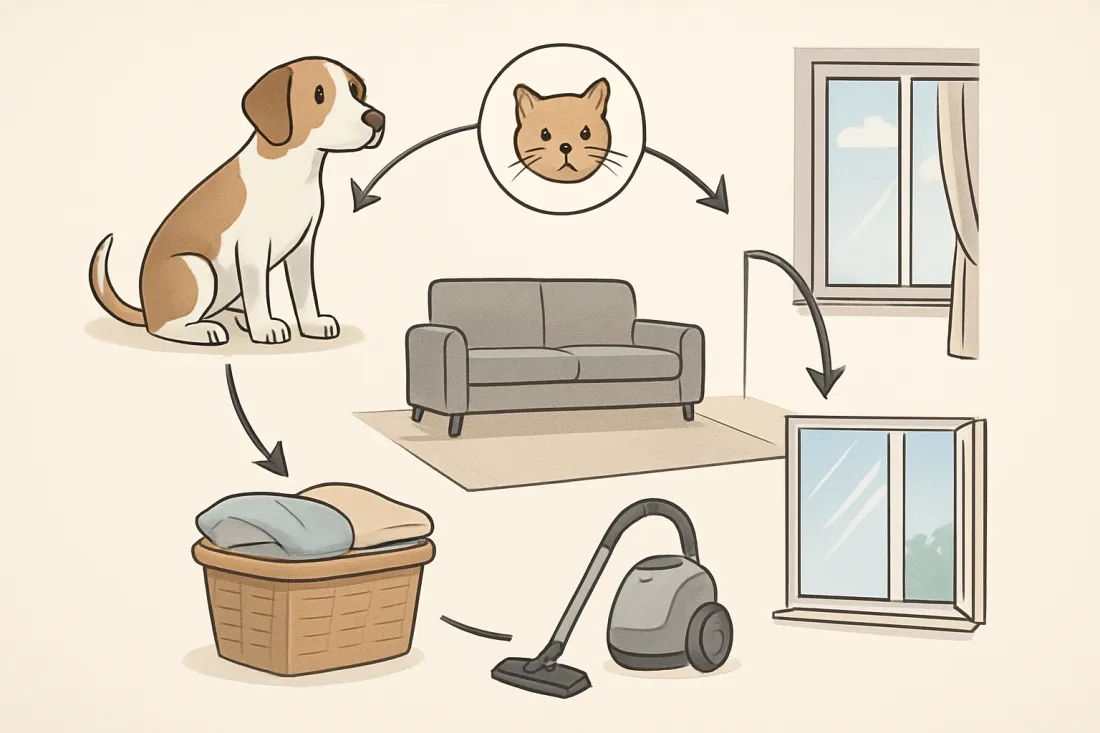
First, remove all soft items your pets use in that room (beds, blankets, cushion covers) and start a wash cycle appropriate for the fabric. While they wash, vacuum the room slowly, spending at least 30–60 seconds on each chair or sofa cushion and running the crevice tool along seams and baseboards. Next, do a “nose-level walk”: smell the sofa, rugs, corners, and around doors from a distance of a few inches to locate any strong spots. Mark each smelly area on your notepad. Treat every marked spot with enzyme cleaner according to the label, allowing the full dwell time before blotting. Finally, smell your pet’s coat, ears, and breath up close. If one area is clearly strong, plan grooming (bath, brushing, ear cleaning, or tooth brushing) within the next day or two.
After everything is dry and back in place, leave the room for at least 10–15 minutes, then re-enter and notice the overall smell. If the odor is clearly reduced, repeat the same process in the next most affected room over the coming days. If the smell remains strong despite careful cleaning, or if it seems to come mainly from your pet’s body rather than the environment, confirm by smelling near the pet again and schedule a veterinary check or professional grooming. Use your notes to adjust your weekly routine, focusing extra attention on the specific furniture, rugs, or litter areas that showed the worst odors.
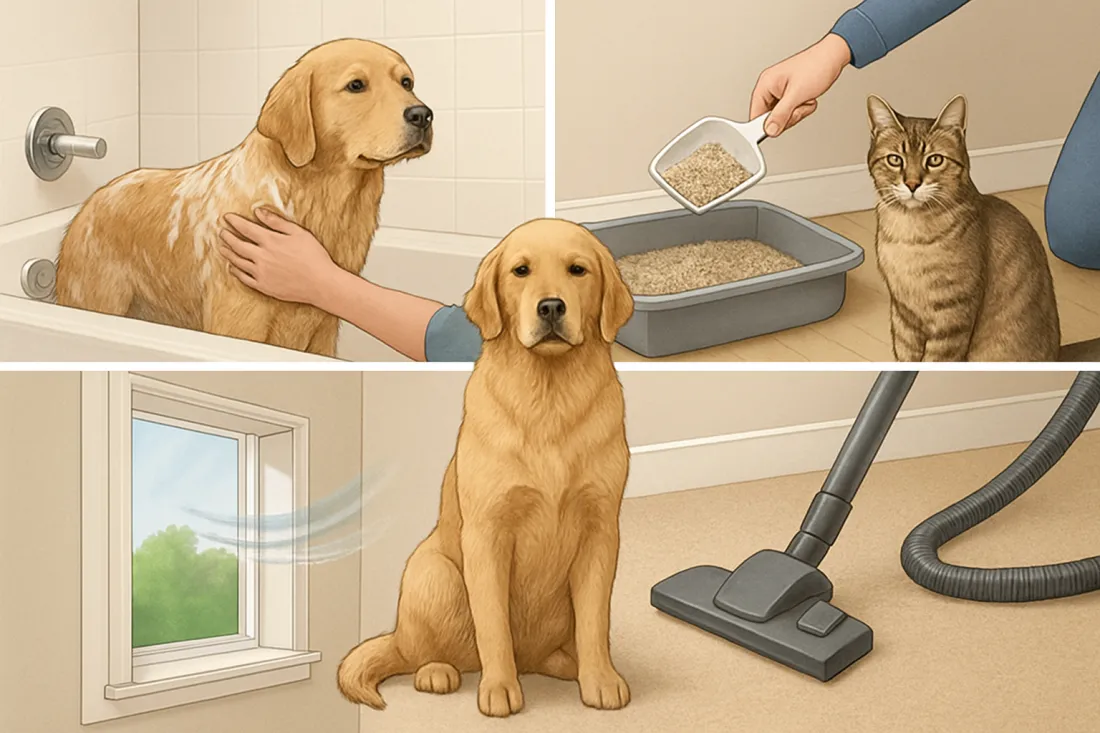
Checklist: common mistakes to avoid when fighting pet odors
Avoid these pitfalls that often keep homes smelling like dog or cat despite lots of effort.
- Relying only on scented sprays instead of cleaning the actual source.
- Using hot steam or harsh cleaners on urine stains before applying an enzyme product, which can set the smell.
- Ignoring old stains under rugs or furniture that continue to smell in warm or humid weather.
- Washing pet bedding too rarely, or using too little detergent for heavily soiled items.
- Skipping regular brushing, which lets oils and loose hair build up.
- Assuming litter box smell is “normal” and not adjusting scooping frequency, litter type, or box placement.
- Not checking ears, teeth, and skin when a new smell appears.
- Waiting until the house smells strong before doing any maintenance cleaning.
- Letting pets have full access to every room even when you feel overwhelmed by cleaning, instead of setting easier-to-clean zones.
- Focusing only on the house and not on training or house rules, which can lead to repeat accidents and constant odor. Resources on house rules every responsible dog owner should have and house training mistakes to avoid with dogs and cats can help reduce new messes.
Maintenance schedule to keep dog and cat odors under control
Once you have done a deep clean, a simple schedule helps prevent smells from building up again.
Daily tasks
- Scoop litter boxes and dispose of waste.
- Check for and clean any fresh accidents promptly with an enzyme cleaner.
- Shake out or quickly vacuum high-traffic rugs and pet blankets if heavily used.
- Wash food and water bowls.
- Do a quick sniff-check of main living areas and address any new smells.
Weekly tasks
- Wash pet bedding, crate pads, and frequently used blankets.
- Vacuum carpets, rugs, and upholstery thoroughly.
- Mop hard floors in pet zones with a pet-safe cleaner.
- Wipe down litter box exteriors and surrounding walls or baseboards if needed.
- Brush your dog or cat several times during the week, depending on coat type.
Monthly or regular tasks
- Wash litter boxes with mild soap and water on a regular schedule.
- Wash or replace air purifier filters as recommended by the manufacturer.
- Wash curtains or cushion covers in rooms where pets spend a lot of time, if the fabric allows.
- Do a mini odor audit: walk through each room and check the main pet zones.
- Check ears, teeth, and skin for any changes in smell or appearance.
Seasonal or as-needed tasks
- Schedule professional grooming for breeds that need it.
- Plan a deeper whole-house clean, including moving furniture to check for hidden stains.
- Review and replace worn-out pet beds, scratching posts, or toys that hold odors.
- Consider a vet checkup if you notice new or persistent odors from your pet.
- Review house rules and boundaries if cleaning feels unmanageable; adjusting where pets sleep or roam can make odor control easier.
FAQ about getting rid of dog and cat smell in the house
What should I understand first about getting rid of dog and cat smell in the house?
The key idea is that lasting odor control comes from changing what causes the smell, not from stronger fragrances. That means checking your pet’s health and grooming, cleaning and treating the exact places where smells start, and setting up your home so fabrics are washable and air can move. When you see odor control as a routine part of responsible pet ownership, it becomes easier to keep the house fresh.
What are the biggest mistakes people make when trying to remove dog and cat smells at home?
Common mistakes include relying only on scented sprays, cleaning visible stains but ignoring what has soaked into padding or subfloors, over-bathing pets instead of brushing regularly, and letting litter boxes or pet beds go too long between cleanings. Another frequent error is overlooking health issues like ear infections or dental disease that create strong smells no amount of floor cleaning can fix.
What should I do next after I finish my first deep clean for dog and cat odors?
After your first deep clean, choose a simple maintenance plan you can realistically follow. Decide how often you will scoop litter, wash bedding, vacuum, and brush your pets, and add those tasks to your weekly routine. Then schedule a quick monthly odor audit to catch new problems early. If any smell keeps returning despite your efforts, focus on that area and consider a vet visit or a change in house rules to prevent repeat messes.
How can I tell if the dog or cat smell is coming from my pet or from the house itself?
Step into a different room or go outside briefly, then come back in and smell near your pet’s coat, ears, and mouth. If the strong smell is right on the animal, focus on grooming and a vet check. If your pet smells fairly neutral up close but certain rooms or fabrics smell bad, the main problem is likely in carpets, furniture, or litter and potty areas, and you can focus on deep cleaning and better ventilation there.
Is it realistic to expect a completely pet-smell-free house with dogs and cats?
Most homes with pets will always have a faint animal scent if you sniff closely, especially in areas where pets sleep. The realistic goal is a home that feels clean and comfortable, where guests are not hit with a strong dog or cat smell when they walk in. With consistent grooming, smart cleaning routines, and attention to health issues, many households reach a point where pet odors are mild and easy to manage.