
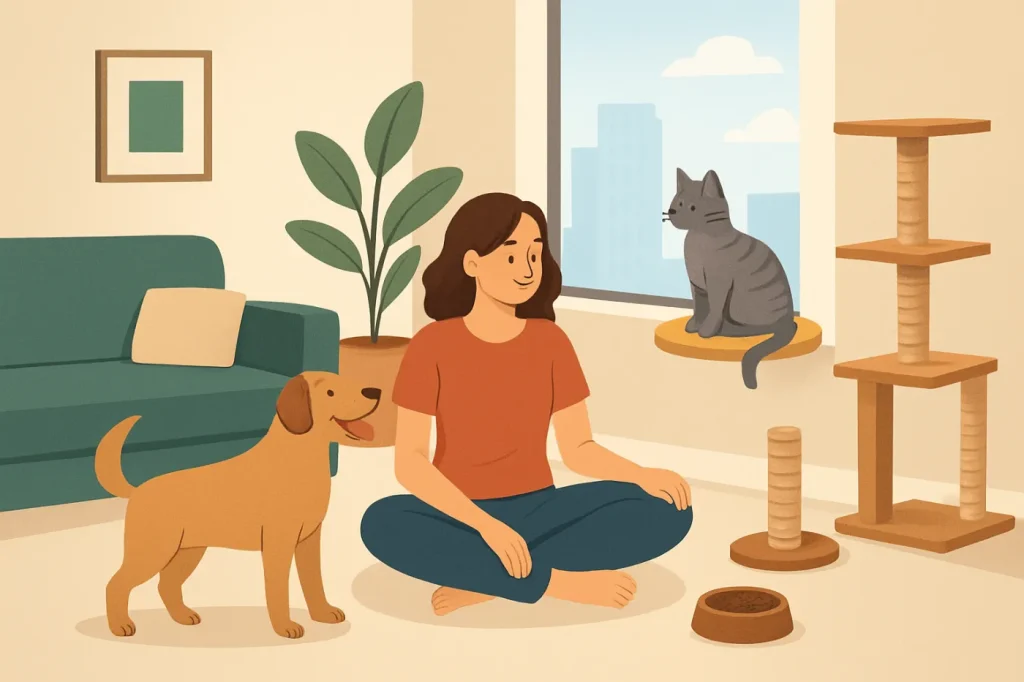
Managing pets in small apartments is absolutely possible when you design the space and routine around your dog’s or cat’s needs. Think in zones (sleep, play, potty), build in short but frequent activity, and stay ahead of noise, damage, and odors. With a realistic plan, many pets can live comfortably even in a studio or one‑bedroom.
Core principles for managing pets in small apartments
Before changing furniture or buying new gear, anchor your decisions in a few practical principles:
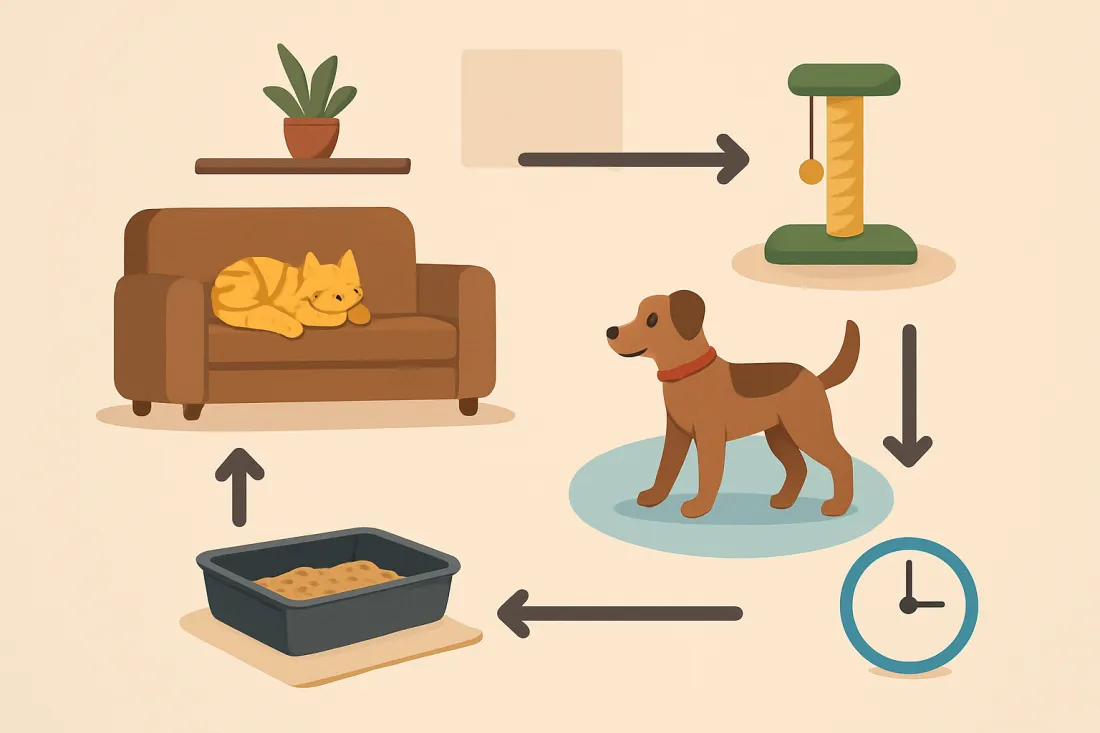
- Routine matters more than square footage. A predictable schedule for walks, meals, play, and quiet time usually beats having an extra room.
- Vertical space counts as territory. Cat trees, shelves, and raised beds effectively add “floor space” without changing the lease.
- Short, frequent sessions work. Several 5–10 minute play or training blocks spread through the day can tire a pet more than one long burst.
- Prevention is cheaper than repairs. Pet‑proofing and early training reduce scratched doors, ruined floors, and complaints.
- Match the pet to the lifestyle. Age, health, and temperament matter as much as breed when deciding if your apartment setup is fair.
Challenges of pets in small U.S. apartments
Small apartments and condos in the United States often share the same pain points:
- Thin walls and shared ceilings. Barking, running, and litter box smells can reach neighbors quickly.
- Limited outdoor access. Elevators, stairwells, and busy streets can make every bathroom break a mini trip.
- Strict building rules. Many leases limit pet size, number, or type and may require extra fees.
- Minimal storage. Crates, litter, food bags, and carriers can swallow a studio if you do not plan ahead.
- Few hiding spots for cats. Without vertical or covered spaces, some cats stay on edge.
Managing these challenges is less about perfection and more about building a system you can keep up every single day.
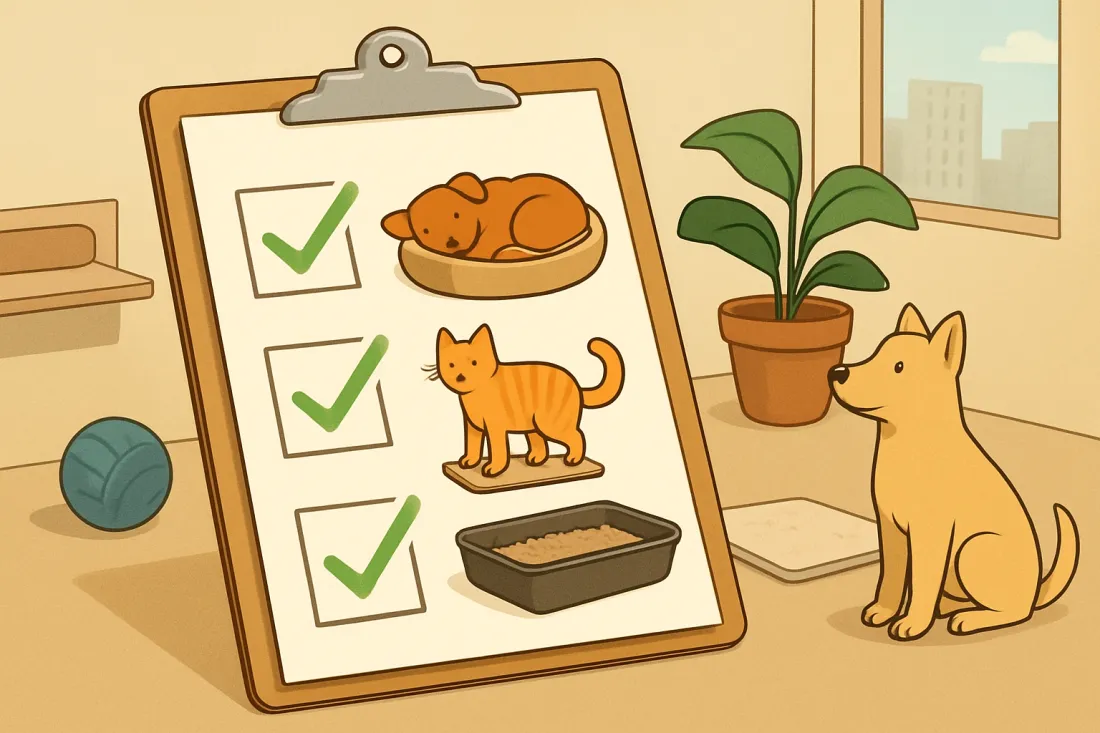
Planning space for dogs and cats: sleep, play, and potty zones
Even in a studio, clear zones help pets understand where to rest, play, and go to the bathroom. These zones can be corners of the same room as long as they are consistent.
Sleep and calm zones
- Pick the quietest corner. Avoid placing beds right against the front door or a wall shared with a noisy hallway or elevator.
- Use dens for dogs that like caves. A crate or covered bed can feel safe if introduced with positive training and never used as punishment.
- Give cats vertical retreats. A cat tree, top of a wardrobe, or sturdy shelf with a blanket lets them rest above the action.
- Separate sleep from bathroom areas. Most pets prefer not to sleep next to litter boxes or potty pads.
Play and activity zones
- Clear a simple runway. A hallway or space between couch and TV can become a fetch or chase lane if you remove fragile items.
- Use multi‑purpose furniture. A coffee table can double as a tunnel base with a blanket; a window ledge can be a bird‑watching station.
- Rotate toys. Keep a small basket and swap toys weekly so the space stays tidy but interesting.
- Think vertical for cats. Tall scratching posts and wall shelves add climbing without eating floor space.
Potty and litter zones
- Choose low‑traffic but accessible spots. Avoid placing pads or litter boxes right by the sofa or dining table.
- Prioritize airflow. Corners of bathrooms, ventilated closets with the door propped open, or a hallway nook can work if they do not trap smells.
- Keep distance from the front door. Strong odors near the entry can bother you and anyone passing by.
- Plan for easy cleaning. Make sure you can scoop, mop, or replace pads without moving heavy furniture every time.
Comparison table: small‑apartment pet setups and trade‑offs
Use this table to compare common small‑apartment setups and decide what fits your situation.
| Pet & apartment setup | When this setup can work | Key risks in a small space | What you should put in place |
|---|---|---|---|
| Small or lower‑energy dog in a studio | You can provide several short walks daily and quiet time during typical quiet hours (for example, late evening and early morning). | Barking at hallway noise, accidents if walks are delayed, and clutter if gear is not stored well. | Wall hooks for leashes, a simple walk schedule (morning, midday, evening), soft rugs to reduce noise, and basic obedience training. |
| High‑energy dog in a one‑bedroom | You have flexible time for exercise and access to safe outdoor areas within a reasonable walking distance. | Restlessness, destructive chewing, and neighbor complaints if exercise or training is inconsistent. | Daily exercise plan (for example, several 10–15 minute play or training sessions), puzzle feeders, and backup help such as a walker if your schedule changes. |
| Single indoor cat with vertical space | You can add at least one tall cat tree or shelf and provide daily play sessions. | Scratching furniture, boredom, and weight gain if play and scratching outlets are limited. | Multiple scratching posts, a window perch, 5–10 minutes of wand play once or twice a day, and a consistent feeding routine. |
| Two or more cats in a small apartment | Cats are reasonably compatible and you can fit several resting spots and litter boxes. | Tension, spraying, and fights if resources are scarce or cats cannot avoid each other. | Separate hiding spots, more than one feeding area, extra litter boxes where possible, and gradual introductions instead of sudden mixing. |
Noise and neighbor considerations: barking, running, scratching
Noise is one of the fastest ways to damage relationships with neighbors and landlords. Plan for it from day one.
Reducing dog barking in apartments
- Block visual triggers. Use curtains, frosted film, or furniture so your dog cannot see every passerby or delivery person.
- Teach a quiet cue. Reward your dog for a few seconds of silence after a bark, gradually asking for longer quiet periods.
- Mask hallway sounds. A fan or white‑noise machine near the door can soften footsteps and elevator dings.
- Limit long alone time without a plan. If your dog must be alone for many hours, look into a dog walker, dog‑friendly work days, or occasional daycare and budget for it in advance.
Softening running and jumping noise
- Add rugs and runners. Even a few small rugs with non‑slip pads can noticeably reduce the sound of paws on hard floors.
- Schedule high‑energy play for daytime. Save fetch and zoomies for hours when neighbors are less likely to be sleeping.
- Use quieter games in the evening. Food puzzles and training games tire pets mentally without loud running.
Protecting walls and doors from scratching
- Offer legal scratching outlets. Place cat scratchers near furniture you want to protect and by doorways cats already target.
- Use door guards or mats. For dogs that scratch at doors, clear plastic guards or mats can protect surfaces while you train calmer greetings.
- Trim nails regularly. Shorter nails make less noise and cause less damage. Ask a groomer or vet team to demonstrate if you are unsure.
Indoor exercise ideas when outdoor space is limited
Even without a yard, you can give your pet meaningful exercise. Focus on variety and consistency.
Indoor exercise for dogs
- Hallway fetch or tug. Use soft toys and keep sessions short and fun.
- Hide‑and‑seek. Have your dog stay, hide in another room, then call them. This builds recall and burns energy.
- Stair workouts (if safe). If your building has stairs and your dog’s joints are healthy, brief, controlled stair climbs can help. Check with your vet if your dog has joint or heart concerns.
- Training drills. Practice sit, down, stay, come, and tricks like spin or bow. A few minutes of focused training can be surprisingly tiring.
Indoor exercise for cats
- Interactive wand play. Simulate hunting with a feather wand or string toy, letting your cat catch the toy regularly.
- Chase the moving toy. Use a moving toy in short sessions, avoiding shining lights into eyes.
- Climbing circuits. Arrange shelves, cat trees, and furniture so your cat can move in a loop around the room.
- Food hunts. Hide small portions of kibble or treats in different safe spots to encourage exploring and movement.
Mental enrichment activities that use minimal space
Mental exercise is crucial in small apartments. A mentally tired pet is usually quieter and more relaxed.
Food‑based enrichment
- Slow feeders and puzzle bowls. Turn mealtime into a short puzzle instead of a 30‑second gulp.
- Stuffed toys or lick mats. Spread a safe, vet‑approved soft food on a mat or inside a toy and freeze it for longer‑lasting enrichment.
- Scatter feeding. For dogs and some cats, scatter part of their meal on a washable mat or snuffle mat so they have to sniff it out.
Training and scent games
- Teach new tricks. Simple behaviors like touch (nose to hand), spin, or high‑five require almost no space.
- Find‑it games. Hide treats in a few boxes or cups and encourage your pet to sniff them out.
- Rotate challenges. Change the type of puzzle or game every few days to keep things interesting.
Litter box and indoor potty area placement in small homes
Bathroom setup can make or break small‑apartment pet life. Good placement and maintenance help prevent odors, accidents, and complaints.
Litter box tips for cats in tight spaces
- Use enough boxes for your space. Many behavior experts suggest more than one box for multiple cats. In very small homes you may not reach the ideal, so compensate with extra cleaning and careful placement.
- Avoid cramped, noisy spots. Try not to place the box next to a loud washer, dryer, or constantly slamming door.
- Use mats and high sides if needed. A litter mat catches tracking; high sides or covered boxes can reduce scatter if your cat tolerates them.
- Scoop daily. In a small home, even mild odors feel stronger. Frequent scooping and regular full litter changes are essential.
Indoor potty areas for dogs
- Choose between pads, turf, or balcony setups. If you use a balcony, make sure it is safe, secure, and allowed by building rules.
- Keep the location consistent. Always take your dog to the same spot and reward them immediately after they go.
- Protect floors. Use waterproof trays or mats under pads or turf to help prevent leaks onto hardwood or carpet.
- Plan for odor control. Regularly clean or replace pads and wash any reusable surfaces to avoid lingering smells.
Managing pet hair, odor, and cleanliness in tight spaces
In a small apartment, a little mess feels like a lot. A simple routine keeps things livable for you, your pet, and your neighbors.
Hair control
- Brush regularly. A few minutes of brushing most days can noticeably reduce shedding on furniture and floors.
- Use washable covers. Throws or slipcovers on couches and beds make it easier to keep fur under control.
- Vacuum high‑traffic areas often. Focus on the entryway, around litter boxes, and your pet’s favorite resting spots.
Odor management
- Wash bedding on a schedule. Choose machine‑washable beds and blankets and clean them regularly.
- Ventilate daily. Open windows when weather and safety allow to refresh the air.
- Spot‑clean accidents immediately. Blot, then clean with an appropriate cleaner to help reduce staining and smells.
General cleanliness
- Keep a small cleaning caddy. Store pet‑safe cleaning supplies together so quick cleanups are easy.
- Wipe paws after walks. A mat and towel by the door can reduce dirt tracked through the apartment.
- Store food securely. Use sealed containers to help prevent pests and keep smells down.
Structured checklist: apartment pet‑proofing and daily upkeep
Use this checklist to set up and maintain a small apartment that works for both you and your pet.
Pet‑proofing setup checklist
- Walk through each room at pet eye‑level and remove or secure loose wires, small objects, and toxic plants or chemicals.
- Install baby gates or close doors to block off unsafe areas like cluttered storage rooms or open balconies.
- Secure trash cans with lids or place them in cabinets to prevent rummaging.
- Anchor tall furniture like bookcases if your cat may climb them.
- Provide at least one safe resting spot per pet where they will not be disturbed.
- Set up scratching posts or pads near furniture you want to protect.
- Place litter boxes or potty areas in accessible, low‑traffic locations with easy cleaning access.
- Check windows and screens to ensure they close securely and cannot be pushed out by a curious pet.
Daily upkeep checklist
- Scoop litter boxes and check indoor potty areas; clean or replace pads as needed.
- Do a brief brushing session if your pet sheds heavily.
- Wipe up any tracked litter, mud, or food spills.
- Provide at least one focused play or training session for each pet.
- Refresh water bowls and check food storage for spills or pests.
- Walk dogs on a consistent schedule, adjusting for age and health.
- Scan for new chew marks, scratches, or damage so you can address causes early.
Dealing with landlord and building pet rules in the United States
Responsible pet ownership in an apartment includes respecting your lease and building policies. Rules vary widely, so always read your specific agreement carefully.
Before bringing a pet home
- Confirm pet policies in writing. Check allowed species, size limits, number of pets, and any restricted types.
- Ask about fees and deposits. Many buildings charge pet deposits, monthly pet rent, or cleaning fees. Factor these into your budget.
- Clarify noise and damage expectations. Understand how complaints are handled and what counts as excessive noise or damage.
Living with a pet under a lease
- Keep your pet’s ID and vaccination records organized. Some buildings may request proof of vaccinations or registration.
- Use leashes and carriers in common areas. Hallways, elevators, and lobbies are shared spaces; follow posted rules.
- Clean up immediately in shared outdoor areas. Leaving waste is one of the fastest ways to trigger complaints.
- Communicate proactively. If you are working on barking or anxiety, let close neighbors know and share what you are doing to improve it.
For long‑term planning, it can also help to think ahead about veterinary costs and how they fit your apartment budget. Resources on affordable preventive care for pets and unexpected annual vet bills for pets can give you a sense of what to prepare for.
When an apartment setup may not be fair to your pet
Not every pet will thrive in every apartment. It is important to be honest about your situation and your pet’s needs.
Warning signs for dogs
- Frequent destructive behavior (chewing doors, walls, or furniture) despite training and enrichment efforts.
- Persistent barking or howling when left alone, leading to repeated neighbor complaints.
- Noticeable weight gain or restlessness because regular exercise is not happening.
- Signs of stress such as pacing, excessive licking, or withdrawal that do not improve with routine and enrichment.
Warning signs for cats
- Regular inappropriate urination or defecation outside the litter box after medical issues have been ruled out.
- Frequent hiding, aggression, or over‑grooming that suggests chronic stress.
- Conflict between multiple cats that does not improve with added resources and gradual introductions.
If you see these patterns, consider:
- Adjusting your routine to add more exercise, play, or training.
- Rearranging the apartment to create more hiding spots, vertical space, or quiet zones.
- Consulting a veterinarian to rule out medical causes and discuss behavior support.
- Talking with a qualified trainer or behavior professional for a tailored plan.
- In some cases, reassessing whether your current home or schedule can meet this particular pet’s needs.
Common mistakes in managing pets in small apartments
Avoiding a few frequent mistakes can make apartment pet life much smoother.
- Choosing a pet based only on appearance. Ignoring energy level, size, and temperament often leads to mismatches in small spaces.
- Underestimating mental exercise. Physical walks alone may not be enough; many pets need puzzles and training to feel satisfied.
- Skipping early training. Waiting until barking or scratching is a big problem makes it harder to fix.
- Overcrowding with multiple pets. Adding another pet without enough resources or space can increase stress for everyone.
- Neglecting landlord communication. Hiding a pet or ignoring rules can risk fines or even losing your housing.
Key takeaways and quick wins for small‑space owners
If you remember nothing else, focus on these quick wins:
- Create clear zones for sleep, play, and potty, even if they are just corners of the same room.
- Build a simple daily routine that includes walks or play, mental enrichment, and short training sessions.
- Use vertical space for cats and small dogs to add interest without cluttering the floor.
- Stay ahead of noise, odor, and damage with regular cleaning, nail trims, and appropriate outlets for energy.
- Know and follow your building’s pet rules, and communicate early if issues arise.
- Plan ahead for health costs so you can afford preventive care and unexpected vet visits in a small‑space budget. Guides on managing long term medication and prescription diet costs for pets can help you think through long‑term responsibilities.
FAQ about managing pets in small apartments
What should I understand first about managing pets in a small apartment?
The most important point is that your daily routine and setup matter more than the exact square footage. Pets need predictable structure: regular bathroom breaks, exercise or play, mental enrichment, and a safe place to rest. If you can reliably provide those within your building’s rules, many dogs and cats can be comfortable in a small apartment.
What mistakes should I avoid when keeping a dog or cat in a small apartment?
Common mistakes include choosing a high‑energy pet without enough time for exercise, skipping early training for barking and manners, letting litter boxes or potty pads get dirty, and ignoring neighbor or landlord concerns until they escalate. Another frequent issue is not providing enough vertical space and hiding spots for cats, which can lead to stress and behavior problems.
What should I do next after reading about managing pets in small apartments?
Start by walking through your apartment and marking where sleep, play, and potty zones will go. Pet‑proof obvious hazards, then build a realistic daily schedule for walks, play, and cleaning that fits your work and sleep hours. Review your lease and building rules, and line up basic support such as a local veterinarian and, if needed, a dog walker or pet sitter so you are prepared before problems arise.
How can I tell if my current pet is coping well with apartment life?
A pet that is coping well generally eats and sleeps normally, uses the litter box or potty area reliably, and shows relaxed behavior most of the time. Short bursts of energy or playfulness are normal, but constant pacing, vocalizing, hiding, or destructive behavior suggest that something is off. If you see ongoing signs of stress, adjust your routine, enrich the environment, and consult a veterinarian or behavior professional for guidance.