
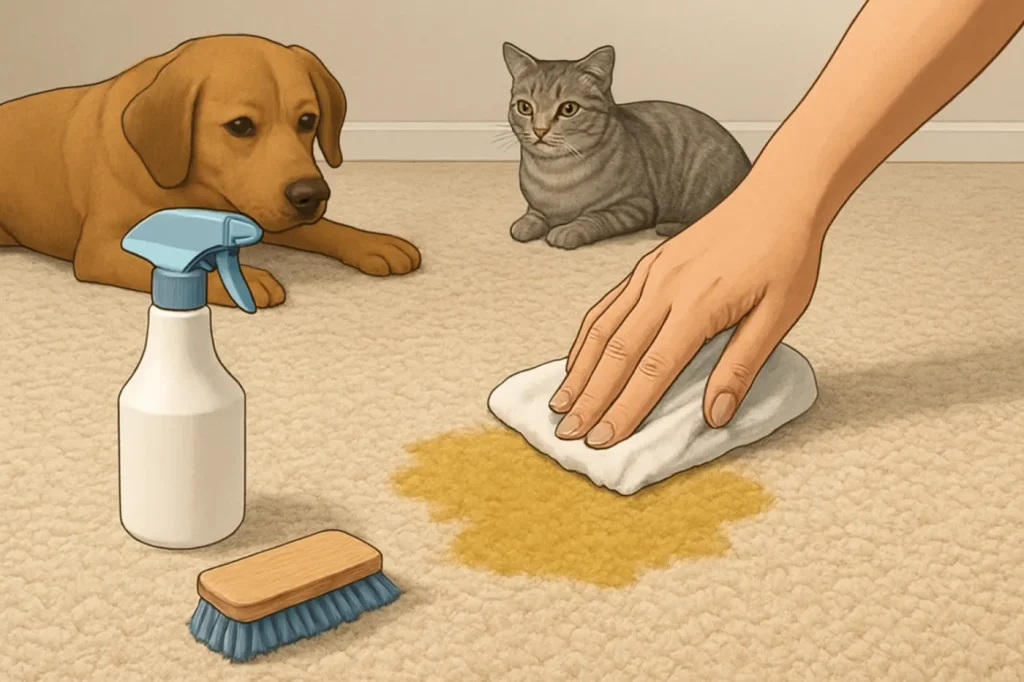
Fast game plan for removing dog and cat urine stains and odours
When a dog or cat pees where they should not, you need to act fast, use the right cleaner for the surface, and finish with an odour-removal step or the smell and marking can come back. For fresh accidents, blot up as much urine as possible, rinse with cool water if the surface allows, then treat the area with an enzyme-based cleaner made for pet urine. For older stains or strong smells, you often need repeated enzyme treatments and, on some surfaces, deeper rinsing or extraction.
The key decisions are:
- Surface type: Carpet, hardwood, tile, concrete, fabric, and mattresses all need different handling.
- Stain age: Fresh puddles are easier; dried, yellowed spots and long-term odours need more work.
- Cleaner choice: Enzyme cleaner for most jobs, with gentle DIY options as backup where safe.
- Odour control: You must remove the urine, not just cover the smell, or pets may re-mark.
Once you know the surface and how old the stain is, follow the step-by-step method for that material, then finish with prevention so the same spot does not become a permanent bathroom.
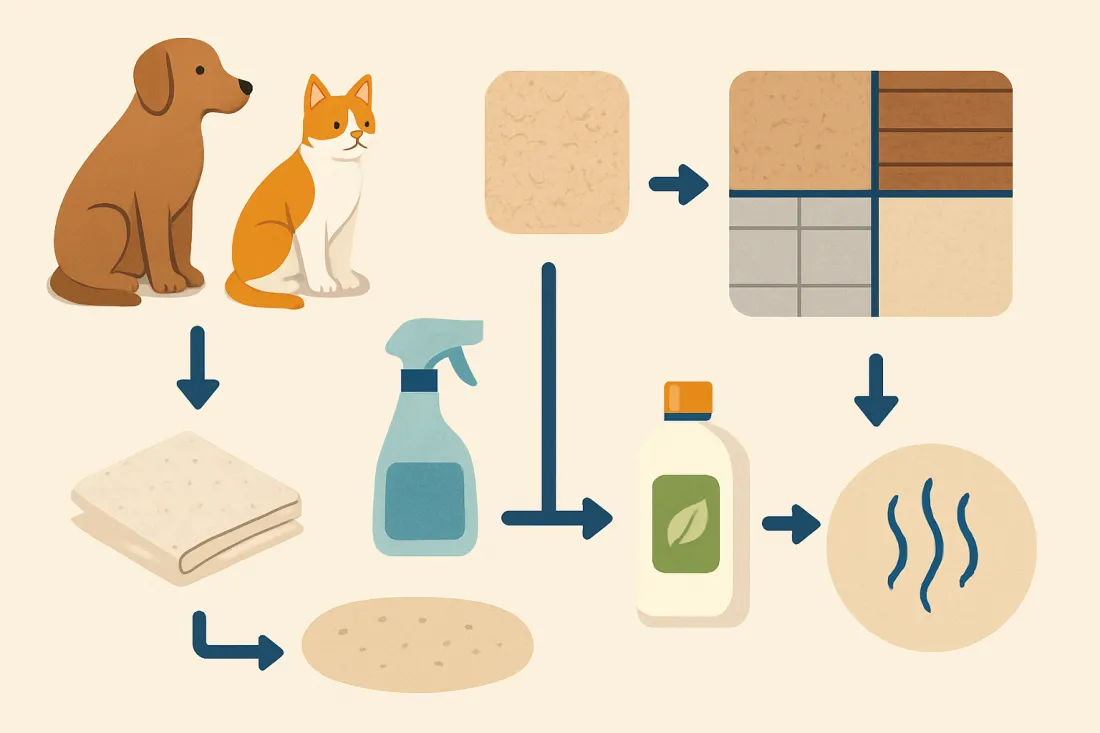
Why dog and cat urine is so hard to remove completely
Pet urine is more than just water and a bit of yellow color. It contains urea, uric acid, salts, and organic compounds that bacteria love. As urine dries, water evaporates but crystals and residues stay behind in carpet backing, grout lines, porous concrete, and even tiny gaps in hardwood finishes. Bacteria break these residues down and release strong-smelling gases, which is why a room can smell worse on warm or humid days even if the floor looks clean.
Several factors make dog and cat urine especially stubborn:
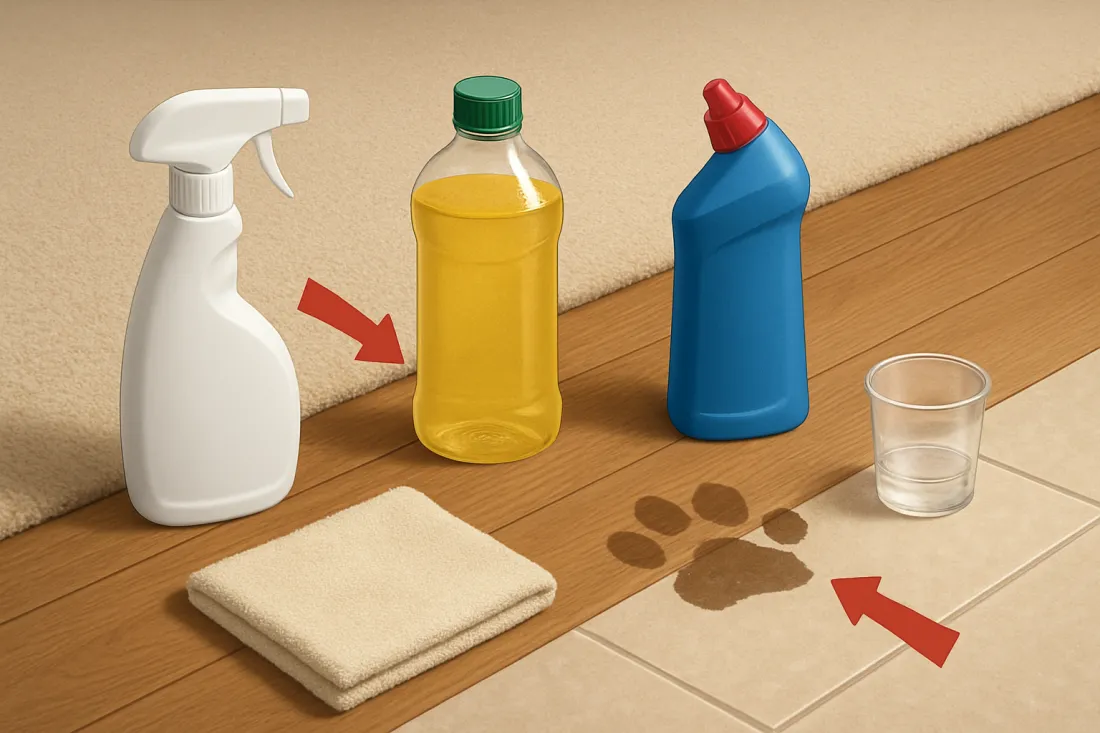
- Crystals and salts: Dried urine can re-activate with moisture. A rainy day or steam cleaning can make old smells come back if the residue is still there.
- Porous surfaces: Carpet padding, unfinished wood, concrete, and mattresses soak up urine like a sponge, so surface-only cleaning is not enough.
- Strong scent markers: Pets use urine to mark territory. If any odour remains, they may keep returning to the same spot.
- Household cleaner conflicts: Some common cleaners (especially those with ammonia or strong bleach) can set stains, damage surfaces, or even make the smell more attractive to pets.
Because of this, effective cleanup usually needs two stages: physical removal of as much urine as possible, then chemical breakdown of what is left using the right product for the surface.
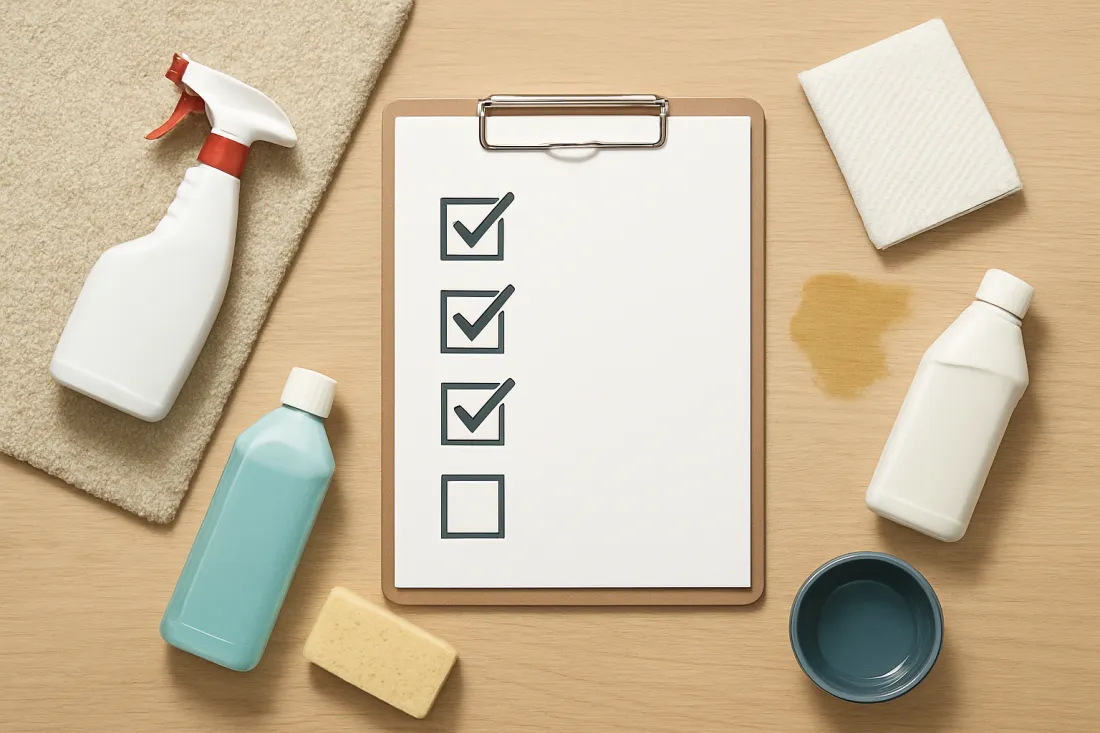
Checklist: supplies to keep at home for urine accidents
Having a small “pet accident kit” ready saves time and prevents permanent damage. Use this checklist to stock what you need and keep it in one easy-to-grab spot.
- Absorbent materials
- Plain white paper towels or clean white cotton towels (colored towels can bleed dye)
- Old cotton T-shirts or rags for heavy blotting
- Disposable puppy pads (useful under rugs or on mattresses while treating)
- Cleaning tools
- Spray bottles (labeled for different solutions)
- Soft-bristle brush or old toothbrush (for grout and textured surfaces)
- Small measuring cup or spoon (for mixing DIY solutions)
- Wet/dry vacuum or carpet extractor if you have a lot of carpet or rugs
- Safe cleaning solutions
- Pet-specific enzyme cleaner for urine (check label for surfaces it is safe on)
- Mild, fragrance-free dish soap
- Plain white distilled vinegar
- Baking soda (for carpets and some fabrics, not for wet hardwood)
- Hydrogen peroxide 3% (only for light-colored, colorfast materials and spot-tested first)
- Protection and safety
- Disposable gloves
- Small trash bags for used towels and gloves
- Mask or good ventilation if you are sensitive to smells
- Detection and prevention
- UV/blacklight flashlight (helps you find old dried spots in dark corners)
- Washable waterproof mattress protector if pets sleep on beds
- Spare washable throw blankets to protect sofas and chairs
Comparison: DIY urine cleaners vs commercial enzyme products
Both DIY solutions and commercial products can help with dog and cat urine, but they are not equal in every situation. Use this comparison to decide what to reach for first.
| Option | Best for | Pros | Limitations and risks |
|---|---|---|---|
| DIY vinegar and water solution | Fresh accidents on tile, sealed stone, some fabrics, and as a first rinse on carpet | Inexpensive, easy to mix, helps neutralize some odor, widely available ingredients | Does not fully break down urine crystals, strong vinegar smell, not ideal for some natural stone or delicate fabrics; always spot-test |
| DIY baking soda (dry sprinkle) | Deodorizing carpets and some fabrics after initial cleaning | Helps absorb lingering odors, easy to vacuum up when dry | Can leave residue if overused, not for wet hardwood or damp areas where it can form a paste, may clog some vacuums if not fully dry |
| DIY hydrogen peroxide mix (diluted) | Light-colored, colorfast carpets and fabrics with stubborn yellowing | Can help lighten stains and reduce odor when used carefully | May bleach or discolor fabrics and wood finishes; must be spot-tested and used sparingly; not for dark or delicate materials |
| General-purpose household cleaner (non-enzyme) | Hard, non-porous surfaces after urine is removed | Good for general sanitation, leaves surfaces visibly clean | Often does not remove deep urine odor; some formulas contain ammonia or strong fragrances that can encourage remarking or irritate pets and children |
| Pet-specific enzyme cleaner (ready-made) | Most dog and cat urine stains and odors on carpet, rugs, fabric, mattresses, and many hard floors | Designed to break down urine components, targets odor at the source, usually safe for multiple surfaces when used as directed | Requires proper dwell time and sometimes multiple applications; must follow label carefully; some products are not suitable for all surfaces |
| Professional-grade enzyme or oxidizing treatments | Severe, long-term contamination, large areas, or deep padding and subfloor issues | Can reach deeper layers and handle heavy contamination | Often requires professional equipment or services; may not be necessary for small, occasional accidents |
For most homes, a pet-specific enzyme cleaner plus simple DIY helpers like vinegar and baking soda cover everyday accidents. Reserve stronger DIY mixes and professional help for older, stubborn stains or when large areas are affected.
How enzyme cleaners work and how to use them correctly
Enzyme cleaners are usually the most effective way to remove both stains and odours from dog and cat urine. They contain enzymes and beneficial bacteria that digest the organic components of urine instead of just masking the smell. When used properly, they can greatly reduce the chance that pets will return to the same spot.
General principles for using enzyme cleaners:
- Choose the right product: Look for a cleaner labeled specifically for pet urine and check the surfaces it is safe for (carpet, upholstery, hardwood, etc.).
- Test in a hidden area: Especially on delicate fabrics, rugs, or wood, test for colorfastness and finish safety.
- Remove excess urine first: Blot or extract as much liquid as possible before applying the enzyme cleaner so it can work on what is left.
- Saturate thoroughly: On absorbent surfaces like carpet and mattresses, apply enough product to reach the same depth the urine reached.
- Allow proper dwell time: Many products need several minutes or longer to work. Follow the label; some recommend keeping the area damp with the solution for a set period.
- Air dry completely: Enzymes usually keep working as the area dries. Avoid rinsing immediately unless the label instructs you to.
- Repeat for old stains: Deep or long-standing odours may need multiple treatments over a day or more.
Always follow the instructions on the specific product you are using, and keep pets and children away from wet treated areas until they are fully dry.
Step-by-step: removing urine from carpet and rugs
Carpet and rugs are common targets for accidents and can hold onto both stains and odours if not treated correctly.
Fresh urine on carpet
- Blot immediately: Place thick layers of paper towels or a clean white towel over the puddle. Press down firmly, standing on the towel if needed. Replace with dry towels until they come up only slightly damp.
- Optional cool water rinse: If the carpet and backing can handle moisture, pour a small amount of cool water on the area, then blot again to dilute and remove more urine. Do not soak the carpet so much that the pad is saturated.
- Apply enzyme cleaner: Spray or pour enough enzyme cleaner to cover the stained area and reach into the fibers. Gently work it in with your fingers (wear gloves) or a soft brush.
- Let it sit: Follow the product’s recommended dwell time. This may range from several minutes to longer. Keep the area damp with the solution during this time if instructed.
- Blot and air dry: Blot up excess cleaner with clean towels, then allow the area to air dry completely. Keep pets and kids off the spot until dry.
- Deodorize if needed: Once dry, if a faint smell remains, lightly sprinkle baking soda, let it sit for several hours, then vacuum thoroughly.
Dried or old urine stains on carpet
- Locate all affected areas: Use your nose and, if available, a UV flashlight to find all dried spots. Mark them with small pieces of tape or paper.
- Pre-dampen the area: Lightly mist the stained spots with cool water to help loosen dried residues.
- Saturate with enzyme cleaner: Apply enough product to soak through the carpet into the padding where the urine likely reached.
- Cover and let work: You can lay a damp towel over the area to keep it moist for the recommended time. Some tough stains benefit from several hours of contact.
- Extract or blot: Use a wet/dry vacuum or blot thoroughly with towels to remove as much liquid as possible.
- Repeat as needed: For very stubborn odours, repeat the treatment after the area has mostly dried.
- Consider professional help: If the smell persists over a large area or has soaked into the subfloor, a professional cleaner or partial carpet replacement may be needed.
For more carpet-specific guidance and edge cases like wool rugs or large contaminated areas, see how to clean dog and cat urine from carpet.
Step-by-step: cleaning urine from hardwood floors
Hardwood floors can be damaged by both urine and aggressive cleaning. The goal is to remove the urine quickly without soaking the wood or stripping the finish.
Fresh urine on sealed hardwood
- Wipe up immediately: Use paper towels or a cloth to absorb as much urine as possible. Do not push liquid into gaps between boards.
- Lightly clean the surface: Use a cleaner recommended for your type of hardwood floor, or a small amount of mild dish soap in water on a damp (not wet) cloth. Wipe the area, then dry it thoroughly.
- Apply enzyme cleaner sparingly: If your enzyme product is labeled safe for sealed hardwood, lightly mist the area and wipe with a cloth. Avoid puddling the cleaner on the floor.
- Dry completely: Use a dry cloth to remove any remaining moisture and allow the area to air dry.
Dried urine or odour on hardwood
- Check the finish: If the finish is cloudy, peeling, or the wood looks darkened, urine may have penetrated. Surface cleaning alone may not fully fix the problem.
- Clean gently: Use a hardwood-safe cleaner to remove surface residues. Avoid abrasive pads or harsh chemicals.
- Target odour: If your enzyme cleaner is safe for hardwood, apply lightly and wipe, repeating as needed. Keep moisture to a minimum.
- Assess damage: If dark stains or strong odours remain, the wood or finish may be permanently affected. In that case, refinishing or replacing boards may be the only full solution. Consult a flooring professional if needed.
For more detail on protecting finishes and dealing with recurring accidents on wood, see cleaning pet urine from hardwood floors safely.
Step-by-step: removing urine from tile, grout, and concrete
Tile and concrete seem easy to clean, but grout lines and porous concrete can trap odours.
Tile and grout
- Blot or wipe: Remove fresh urine with paper towels or a cloth.
- Rinse with cool water: Wipe the area with a damp cloth to remove surface residue.
- Apply enzyme cleaner: Spray the affected tile and grout lines generously with an enzyme cleaner safe for hard surfaces.
- Work into grout: Use a soft brush to gently scrub the grout where urine may have soaked in.
- Let sit and wipe: Allow the cleaner to sit for the recommended time, then wipe up any excess and let the area air dry.
- Repeat if needed: Stubborn odours in grout may need several treatments.
Concrete (garages, basements, patios)
- Identify all spots: Use smell and, if available, a UV light to find all urine areas.
- Pre-rinse: If outdoors or in a space that can handle water, rinse the area with water and remove standing liquid with a squeegee or wet vacuum.
- Apply enzyme cleaner: Use a product labeled safe for concrete or hard surfaces. Apply generously so it can soak into the pores.
- Allow long dwell time: Concrete often needs a longer contact time. Follow the label; some treatments may need to sit for an extended period.
- Rinse and dry: Rinse with clean water if recommended, then allow the area to dry completely.
- Consider sealing: Once fully clean and dry, sealing concrete can help prevent future odours from soaking in as deeply. Check with a local contractor or hardware specialist for suitable sealers.
Step-by-step: treating urine on fabric, upholstery, and mattresses
Soft furnishings and bedding need careful handling so they are cleaned thoroughly without damage.
Washable fabrics (blankets, pet beds, some cushion covers)
- Blot excess urine: Press with paper towels or a cloth to remove as much liquid as possible.
- Rinse with cool water: Rinse the stained area under cool running water or in a basin until most of the urine is flushed out.
- Pre-treat with enzyme cleaner: Apply an enzyme product safe for fabrics to the stain and let it sit for the recommended time.
- Machine wash: Wash on the warmest setting safe for the fabric using a mild detergent. Avoid fabric softener on the first wash, as it can trap odours.
- Air dry and sniff test: Air dry if possible and check for any remaining smell. Heat from a dryer can set odours, so avoid high heat until you are sure the smell is gone. Repeat treatment if needed.
For more detail on bedding and frequent wash cycles, see how to clean pet bedding and remove odour.
Upholstered furniture
- Check the care tag: Look for cleaning codes (such as W, S, WS) to know what kind of cleaners are safe.
- Blot, do not rub: Remove as much urine as possible with towels, pressing firmly.
- Spot-clean with water-based solution (if allowed): For fabrics that allow water-based cleaning, use a small amount of mild dish soap in water to gently clean the area, then blot.
- Apply enzyme cleaner: Use a fabric-safe enzyme cleaner, following label directions. Avoid over-wetting cushions that cannot be fully dried.
- Dry thoroughly: Use fans or open windows to help the area dry. If cushions have removable covers, treat both the cover and the inner cushion if urine has soaked through.
- Assess for deep contamination: If odour persists or the cushion core is soaked, replacement of the filling may be necessary.
Mattresses
- Act quickly: Blot up as much urine as possible with thick towels, pressing firmly.
- Pre-treat with cool water: Lightly mist the area with cool water and blot again to dilute the urine without soaking the mattress.
- Apply enzyme cleaner: Use a mattress-safe enzyme cleaner and apply enough to reach the depth of the stain, but avoid saturating the entire mattress.
- Let it work: Allow the cleaner to sit for the recommended time. You can cover the area with a clean towel to keep it damp if needed.
- Blot and air dry: Blot out as much moisture as possible, then allow the mattress to air dry completely. Use fans or open windows to speed drying.
- Deodorize: Once dry, sprinkle baking soda over the area, let it sit for several hours, then vacuum thoroughly.
- Protect for the future: Use a waterproof mattress protector to prevent future accidents from soaking in.
You have a fresh or recent dog or cat urine accident on a surface in your home and want to remove both the stain and odour without damaging flooring or fabrics or encouraging your pet to re-mark the same spot.
Identify the surface (carpet or rug, hardwood, tile or concrete, fabric or upholstery, mattress), note whether the urine is fresh or dried, and gather basic supplies: absorbent towels, a pet-safe enzyme cleaner suitable for that surface, cool water, and protective gloves.
First, blot up as much urine as possible without rubbing. Next, if the surface allows, lightly rinse or dampen with cool water and blot again. Then apply the enzyme cleaner according to its label, using enough to reach as deep as the urine went. Allow it to sit for the recommended time, keeping the area slightly damp with the product if needed, then blot or extract the liquid and let the area air dry fully. For porous surfaces or older stains, repeat the enzyme treatment after drying until the odour is gone.
After the area is completely dry, smell the cleaned spot up close and, if possible, check with a UV light in a dark room. If there is no noticeable odour and no visible staining under normal light, the cleanup was likely successful. If you still detect smell or your pet shows renewed interest in the area, repeat the enzyme treatment or, for large or deeply soaked areas, consult a professional cleaner or your veterinarian for further guidance.
Preventing repeat marking and lingering odours
Even after a thorough cleanup, dogs and cats may return to the same spot if any scent remains or if there is an underlying behavior or health issue.
To reduce repeat marking:
- Eliminate odour completely: Use enzyme cleaners and repeat treatments until you cannot smell urine at all. Pets have more sensitive noses than humans, so aim for zero detectable odour.
- Block access temporarily: Use baby gates, closed doors, or furniture rearrangement to keep pets away from recently cleaned areas while you are working on odor removal and behavior.
- Change the meaning of the spot: Once fully clean and dry, place a bed, feeding station, or play area over former accident spots where appropriate. Many pets avoid eliminating where they eat or sleep.
- Improve bathroom options: Ensure dogs have regular outdoor breaks and cats have enough clean litter boxes in quiet locations. A common guideline is at least one box per cat plus one extra, but adjust based on your household and veterinary advice.
- Address stress and routine: Changes in schedule, new pets, or household disruptions can trigger accidents. Provide predictable routines, safe hiding spots for cats, and adequate exercise and mental stimulation for dogs.
- Check for medical issues: Sudden changes in toileting habits can signal urinary tract infections, kidney problems, or other health concerns. Consult your veterinarian if accidents are new, frequent, or accompanied by other symptoms.
Safety notes for homes with kids and other pets
Cleaning up urine safely matters as much as removing the smell. Keep these points in mind when you share your home with children and multiple animals.
- Choose pet- and child-safe products: Read labels and follow directions. Avoid mixing cleaners, especially those containing bleach and ammonia, which can create dangerous fumes.
- Ventilate the area: Open windows or use fans when using any cleaner with noticeable fumes, and keep children and pets out of the room until surfaces are dry.
- Store products securely: Keep all cleaners, including DIY ingredients like vinegar and hydrogen peroxide, out of reach of children and pets.
- Use gloves and wash hands: Wear disposable gloves when handling urine-soaked materials and wash hands thoroughly afterward.
- Handle contaminated laundry carefully: Wash urine-soiled items separately on an appropriate cycle and dry them completely before reuse.
- Watch for skin sensitivities: Some pets and people can react to residues from strong cleaners. If you notice irritation, rinse the area with plain water (if safe for the surface) and consider switching to a milder product.
Common mistakes when cleaning dog and cat urine
A few well-intentioned habits can make stains and odours worse or harder to remove.
- Using ammonia-based cleaners: Ammonia can smell similar to urine to pets and may encourage them to re-mark the same spot.
- Rubbing instead of blotting: Scrubbing can push urine deeper into fibers and spread the stain.
- Over-soaking carpets and mattresses: Too much water or cleaner can carry urine deeper into padding and stuffing, making odours harder to remove and increasing the risk of mold.
- Stopping after the surface looks clean: Odour can remain even when the stain is no longer visible. Without enzyme treatment, smells often return.
- Using hot water or steam on fresh urine: Heat can set stains and odours in some materials, especially carpets and fabrics, making them more difficult to remove.
- Ignoring repeated accidents: Frequent urination in the same area can indicate a medical or behavioral issue. Cleaning alone will not solve the underlying problem.
Decision checklist: choosing the right urine removal method
Use this quick checklist when you discover a dog or cat urine accident.
- 1. Identify the surface
- Is it carpet, rug, hardwood, tile, concrete, fabric, upholstery, or a mattress?
- 2. Check stain age
- Is the area still wet or only slightly damp? Treat as a fresh accident.
- Is it completely dry, discolored, or only noticeable by smell? Treat as an old stain.
- 3. Decide on cleaner type
- For most surfaces: pet-specific enzyme cleaner.
- For quick pre-rinse on hard surfaces: cool water and mild dish soap.
- For deodorizing after cleaning: baking soda on carpets or fabrics (once dry).
- 4. Plan moisture level
- Hardwood: minimal moisture, quick drying.
- Carpet and mattresses: enough cleaner to reach urine depth, but not so much that drying takes excessively long.
- 5. Protect the area
- Keep pets and children away until cleaning is complete and surfaces are dry.
- Use barriers or covers to prevent re-marking while you finish odour removal.
- 6. Reassess after drying
- Smell the area up close and check for visible staining.
- If odour or staining remains, repeat enzyme treatment or consider professional help for large or deeply soaked areas.
FAQ about removing dog and cat urine stains and odours
What is the most important thing to understand about removing dog and cat urine stains and odours?
The most important point is that you must remove or break down the urine itself, not just cover the smell. That means acting quickly to blot up fresh accidents, using an enzyme cleaner that can reach as deep as the urine went, and allowing enough time for the product to work. If any urine residue or odour remains, pets are likely to keep returning to the same spot, and smells can come back later, especially in warm or humid conditions.
What common mistakes should I avoid when cleaning pet urine?
Avoid using ammonia-based cleaners, scrubbing instead of blotting, over-soaking carpets and mattresses, and relying only on fragrance or general-purpose cleaners to hide the smell. Do not use hot water or steam on fresh urine stains, as heat can set odours and make them harder to remove. Also, do not ignore repeated accidents; if your pet is urinating in the house more often, talk with your veterinarian to rule out medical issues and get behavior advice.
How should I handle old, strong urine odours that will not go away?
For old or very strong odours, start by locating every affected area, using a UV light in a dark room if you have one. Treat each spot with a pet-specific enzyme cleaner, allowing generous dwell time and repeating treatments after the area dries. On carpets, a wet/dry vacuum can help remove deeper residues. If odours persist despite several careful treatments, the urine may have soaked into padding, subfloor, or furniture stuffing, and professional cleaning or partial replacement may be needed.
What should I do after reading this guide to stay prepared for future accidents?
Put together a small pet accident kit with absorbent towels, a pet-safe enzyme cleaner, mild dish soap, vinegar, baking soda, gloves, and a spray bottle, and store it where you can reach it quickly. Walk through your home and identify high-risk areas like favorite sleeping spots, entryways, and near litter boxes, and consider adding washable covers or waterproof protectors there. Finally, review your pet’s bathroom routine and litter box or outdoor schedule, and plan a vet visit if accidents are frequent or new for your pet.
Can I ever fully remove cat urine smell from my house?
In many cases, yes, especially if you find and treat all affected areas with enzyme cleaners and address any ongoing marking or medical issues. Cat urine can be particularly strong, and long-standing odours in carpets, walls, or subfloors may require repeated treatments and, in severe cases, professional help or material replacement. For whole-house odour issues, it helps to combine thorough spot treatments with regular cleaning, good ventilation, and behavior or litter box adjustments. For more cat-specific odour strategies, see how to get rid of cat urine smell in house.