
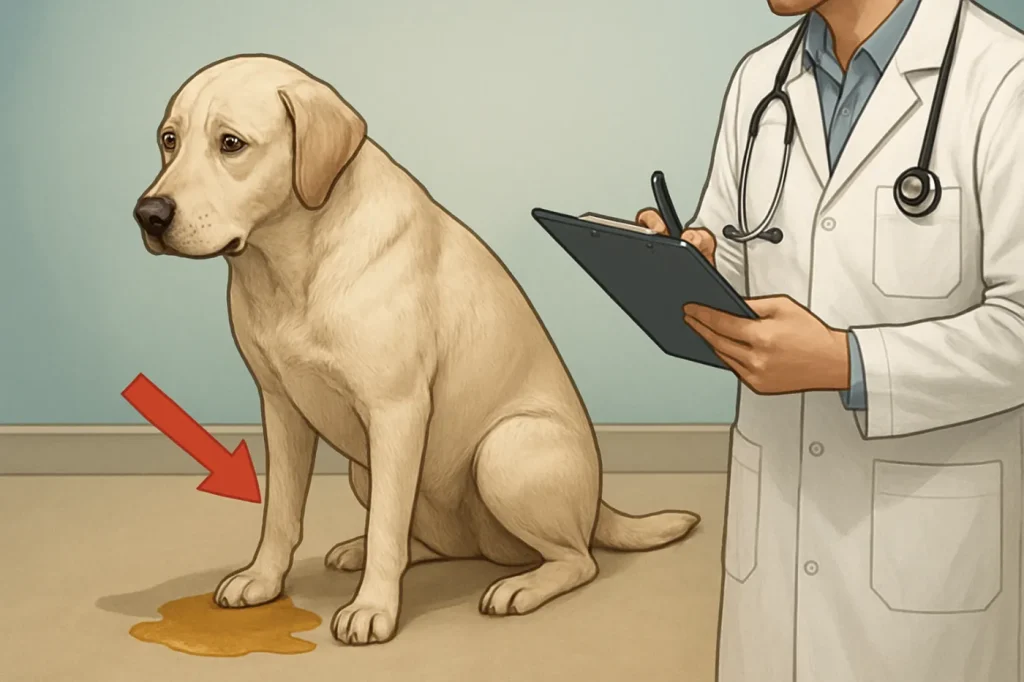
When a reliably house-trained adult dog starts peeing or pooping indoors, it is usually a sign that something is wrong in the body, not stubbornness or spite. The fastest way to help is to treat the accidents as a medical clue: notice what is changing, write it down, and involve your veterinarian early.
Medical vs behavioral house-soiling in adult dogs
Both medical and behavioral issues can cause an adult dog to have accidents in the house. Understanding the differences helps you decide what to do first.
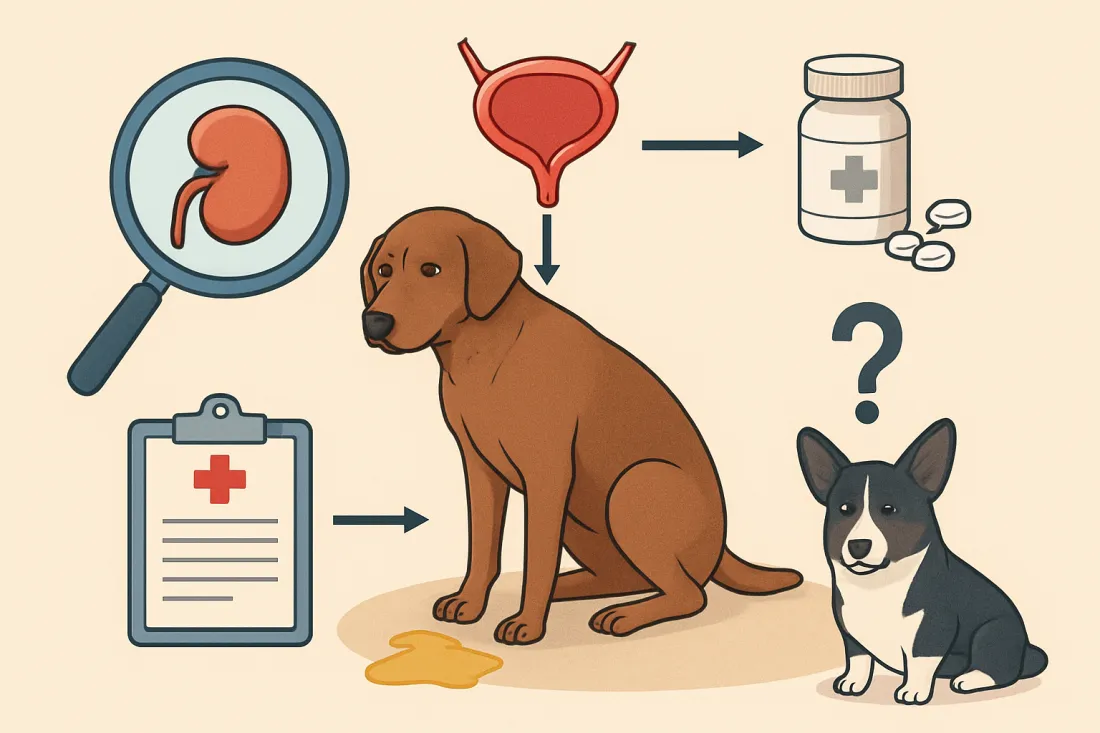
- Medical house-soiling usually shows up as a change from your dog’s normal pattern: more frequent urination, larger or smaller puddles, loose stool, straining, or leaking when asleep.
- Behavioral house-soiling is more often linked to routine, training, or emotions: anxiety when left alone, confusion in a new home, or never being fully house-trained.
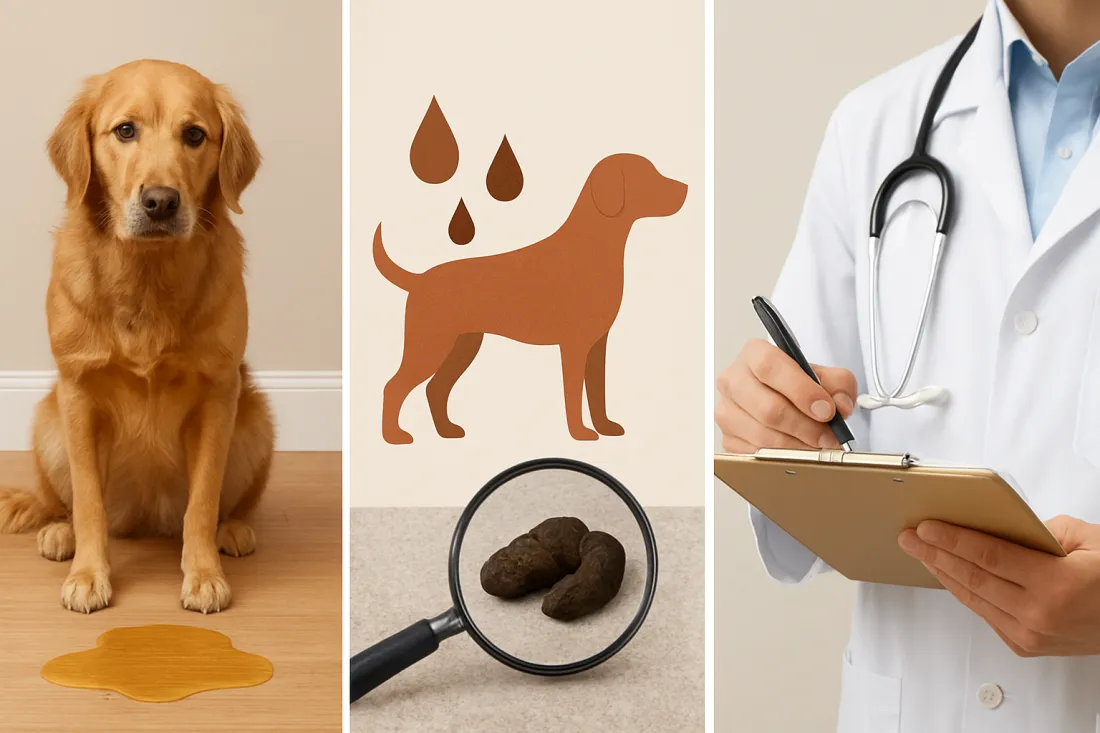
Clues that strongly suggest a medical cause include:
- Accidents that start suddenly in a dog that has been clean indoors for several months or more
- Needing to urinate more than about 6–8 times in 24 hours when your dog previously went fewer times
- Noticeable changes in water intake over several days (for example, needing to refill a typical bowl twice as often as before)
- Changes in urine or stool appearance (blood, mucus, very dark or very pale color, very loose or very hard consistency)
- Signs of discomfort or illness such as straining, licking the genital area, vomiting, or low energy
If you are unsure whether the cause is medical or behavioral, assume it could be medical and call your veterinarian. A health check can run in parallel with any behavior work and prevents missing a treatable disease.
Common medical causes of house soiling in adult dogs
Many body systems can affect where and how your dog pees or poops. Below are common medical categories that often lead to house-soiling.
Urinary tract infections and bladder irritation
Urinary tract infections (UTIs) and other forms of bladder inflammation are frequent reasons for sudden accidents, especially in spayed females but possible in any dog.
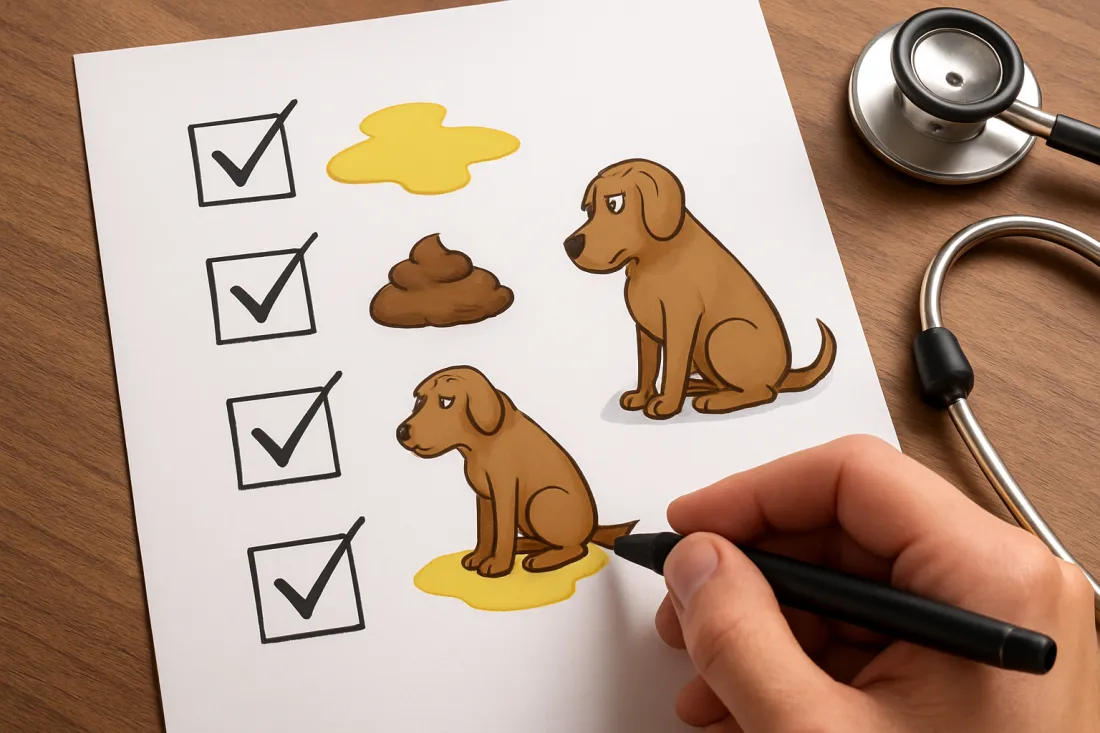
Typical signs that suggest a UTI or bladder irritation include:
- Needing to go out much more often than usual, sometimes every 30–60 minutes
- Passing only small amounts of urine each time, even though the urge seems strong
- Straining or taking a long time to start urinating
- Whining, restlessness, or licking the genital area
- Urine that looks cloudy, dark, or bloody, or has a stronger odor than normal
The urge to urinate can be so sudden and intense that even a well-trained dog may not reach the door in time.
Bladder or kidney stones and other urinary tract problems
Stones or crystals in the bladder or urinary tract can irritate the lining or partially block urine flow.
Possible signs include:
- Frequent, urgent attempts to pee with very little urine produced
- Visible blood in the urine
- Straining that may look like constipation but is actually urinary
- Accidents right after coming indoors because the bladder did not empty fully
A complete blockage of urine flow is an emergency. A dog that is repeatedly straining with little or no urine, especially if also uncomfortable or lethargic, needs immediate veterinary care.
Hormonal and endocrine diseases
Hormonal disorders can change how much your dog drinks and urinates or affect muscle tone in the urinary tract. These conditions often develop gradually, so owners sometimes notice the house-soiling before they recognize the underlying health changes.
Clues that a hormonal or endocrine issue may be involved include:
- Increased thirst over days to weeks, such as emptying a typical water bowl twice as fast as before
- Larger volumes of urine in the house or outside
- Weight changes despite a normal or increased appetite
- Changes in coat quality or skin
- Lethargy, restlessness, or other shifts in behavior
A dog that suddenly needs to urinate during the night or cannot hold it between normal walks may be signaling a systemic issue that needs blood and urine testing.
Incontinence and sphincter problems
Urinary incontinence means the dog is leaking urine without realizing it. This is different from choosing to pee indoors. It is especially common in middle-aged to older spayed females but can occur in any sex or age if there is nerve damage or structural problems.
Signs of incontinence include:
- Wet spots where the dog has been lying, especially after sleeping for an hour or more
- Dribbles of urine on the floor, bedding, or fur
- Redness or irritation on the skin around the genitals or inner thighs
- No obvious squatting or leg-lifting when the wetness appears
Incontinence is often treatable or manageable with medication or other strategies, but it requires a veterinary diagnosis to rule out infection, stones, or more serious causes.
Gastrointestinal issues and stool problems
Loose stool, diarrhea, constipation, or pain when defecating can all lead to indoor accidents. A dog may not be able to hold loose stool, or may associate outdoor toileting with pain and try to avoid it.
Common GI-related signs include:
- Diarrhea or very soft stool that loses shape
- Straining to defecate, with or without stool produced
- Mucus or blood in the stool
- Increased gas or signs of abdominal discomfort
- Vomiting, decreased appetite, or weight loss
Sometimes the only visible change is that the dog starts pooping indoors, often urgently or in small amounts several times a day. That still deserves a medical check.
Pain, mobility issues, and arthritis
Dogs with painful joints, back problems, or other mobility issues may struggle to reach the door in time or to assume their usual toileting posture. This is especially common in older dogs.
Clues that pain or mobility are contributing include:
- Hesitation to use stairs or jump into the car
- Stiffness after rest or exercise, especially after lying down for 30 minutes or more
- Slower walking pace or reluctance to go on walks
- Accidents that happen when the dog would need to move quickly to get outside
Improving pain control and making the environment easier to navigate can significantly reduce accidents for these dogs.
Cognitive decline and brain-related issues
Older dogs can develop cognitive changes that affect memory, awareness, and routines. A dog may forget where the door is, not recognize the signal to go outside, or lose the learned habit of holding urine or stool.
Signs that cognitive decline may be involved include:
- Getting stuck in corners or staring at walls
- Seeming disoriented in familiar places
- Changes in sleep-wake cycles (pacing at night, sleeping more in the day)
- Forgetting familiar commands or routines
- New anxiety or irritability
House-soiling is often one piece of a bigger picture of aging changes. While cognitive decline cannot always be reversed, there are ways to support these dogs and reduce stress for everyone.
Red-flag symptoms that need urgent vet care
Some signs that appear with house-soiling suggest a possible emergency. Contact a veterinarian or emergency clinic immediately if you notice:
- Repeated straining to urinate with little or no urine produced, especially over more than 1–2 hours
- Complete inability to urinate or a very swollen, painful abdomen
- Profuse watery diarrhea more than 3–4 times in a few hours, especially with blood or black, tarry stool
- Bloody urine or stool along with lethargy, vomiting, or obvious pain
- Sudden collapse, extreme weakness, or unresponsiveness
- Severe abdominal pain (crying, guarding the belly, refusing to move)
- Rapid onset of heavy drinking and urination combined with vomiting or not eating
Do not wait to see whether these signs improve on their own. Early treatment can be lifesaving and may prevent long-term damage.
What tests a vet may recommend and why
Your veterinarian will start with a history and physical exam, then may suggest tests to narrow down the cause of house-soiling. Knowing what to expect can make the visit smoother.
- Urinalysis: Checks for infection, crystals, blood, sugar, and concentration of urine. This helps identify UTIs, stones, and some hormonal diseases.
- Urine culture: Grows bacteria from a urine sample to confirm infection and choose an effective antibiotic when needed.
- Bloodwork: Evaluates organ function, hydration, and signs of systemic disease such as hormonal disorders or kidney issues.
- Fecal exam: Looks for parasites, abnormal bacteria, or other causes of diarrhea or stool changes.
- Imaging (X-rays or ultrasound): Helps detect stones, tumors, structural abnormalities, or changes in organs.
- Neurologic or orthopedic exam: Assesses nerves, spine, and joints if mobility or control issues are suspected.
Not every dog needs every test. Your vet will choose based on age, symptoms, and exam findings. Bringing clear notes about accidents and other changes helps them decide which tests are most important.
Comparison: medical vs behavioral house-soiling clues
The table below compares common patterns. It does not replace a veterinary exam but can guide what to mention first.
| Clue | More suggestive of medical cause | More suggestive of behavioral cause | What to do next |
|---|---|---|---|
| Onset of accidents | Sudden change in a dog that was clean indoors for 3+ months | Accidents present since adoption or training never fully solid | Sudden change: call vet first. Long-standing: still rule out medical, then review training. |
| Dog’s awareness | Seems surprised or unaware of wetness (leaks in sleep or while relaxed) | Squats or lifts leg in specific spots, often when upset or left alone | Unaware: discuss incontinence or medical issues. Aware and deliberate: also consider anxiety or marking. |
| Urine and stool appearance | Blood, mucus, very dark or very pale, very loose or very hard stool | Normal-looking urine and stool | Abnormal appearance: prioritize vet visit. Normal: still see vet if pattern is new or frequent. |
| Other health changes | Increased thirst, appetite changes, weight loss or gain, lethargy, vomiting | Only accidents, otherwise normal energy and appetite | Systemic changes: expect blood and urine tests. No other changes: vet may focus on urinary, GI, or behavioral causes. |
| Timing and triggers | Accidents at random times, including sleep, or even right after going outside | Accidents mainly when left alone, during storms, or after schedule changes | Random or sleep-related: think medical. Triggered by stress or routine: combine vet check with behavior support. |
How to track accidents, water intake, and stool quality at home
Good records can save time, reduce guesswork, and sometimes reduce the number of tests needed. Start tracking as soon as you notice a change.
What to record about accidents
- Date and time of each accident
- Location in the house (near the door, in bed, random spots)
- Type: urine, stool, or both
- Volume: small dribble, medium puddle, or large amount (for example, larger than your hand, larger than a dinner plate)
- Dog’s behavior: seemed urgent, looked uncomfortable, unaware it happened, or appeared normal
- What was happening just before: sleeping, playing, just came back from a walk, left alone, visitors over
Tracking water intake
Changes in drinking can be an important clue. A simple way to track it:
- Use a measuring jug or marked container to fill the water bowl.
- Note how much you put in at the start of the day (for example, 4 cups).
- At the end of the day, pour remaining water back into the jug and subtract from the starting amount.
- Write down the approximate total your dog drank that day and repeat for at least 3 days.
If you have multiple pets sharing a bowl, note that the measurement is approximate and mention it to your vet.
Describing stool quality
Use simple, consistent words to describe stool:
- Very hard, small pellets, or difficult to pass
- Normal formed logs that hold shape
- Soft-formed but still pick-up-able
- Loose or pudding-like
- Watery diarrhea
Also note any blood, mucus, worms, or foreign material, and how many times per day your dog defecates.
You have an adult dog that has started having accidents indoors, and you want to arrive at the veterinary appointment with clear, organized information so the vet can quickly narrow down possible medical causes.
For at least three days before the visit, keep a log that includes: date and time of each accident; whether it was urine, stool, or both; approximate volume (small dribble, medium puddle, large amount); what your dog was doing just before (sleeping, playing, alone, just came inside); any visible changes in urine or stool (color, blood, mucus, consistency); the number of times your dog urinates and defecates in 24 hours; and a daily estimate of water intake using a measuring jug.
Before the appointment, review your notes and highlight patterns, such as accidents mostly at night, mainly when your dog is resting, or always soon after drinking. Bring this written log, along with a fresh urine or stool sample if your vet has requested one, and be ready to show photos of any unusual urine or stool if you have them on your phone.
During the visit, check that your vet has seen your log and ask which details were most helpful. If they can clearly explain how your notes influenced the choice of tests or the working diagnosis, you have provided the right information. If not, ask what additional details would be useful to track over the next week so you can refine your log and support ongoing management.
Medication and management options for incontinence and chronic issues
For some dogs, house-soiling is part of a chronic medical condition that needs ongoing management rather than a one-time cure. Your veterinarian may suggest a combination of medical and practical strategies.
- Medications for urinary incontinence that improve sphincter tone or address hormone-related causes, often given once or twice daily
- Anti-inflammatory or pain medications for arthritis or spinal issues that make toileting difficult
- Diet changes for chronic GI problems, such as sensitive-stomach formulas or higher-fiber diets
- Supplements that support joint health, bladder health, or cognitive function, when appropriate
- Behavioral and environmental adjustments like more frequent potty breaks, easy access to the yard, or indoor potty options for specific cases
Management often involves trial and adjustment. Keep notes on what helps, how often accidents happen (for example, from daily accidents down to once a week), and share this with your vet so you can fine-tune the plan together.
Supporting an older dog with mobility or cognitive decline
Older dogs with arthritis, weakness, or cognitive changes need extra help to stay clean and comfortable.
- Make toileting easy to reach: Add ramps or non-slip mats, keep pathways clear, and avoid making your dog navigate stairs quickly to get outside.
- Increase potty opportunities: Offer more frequent, calm trips outside, such as every 2–4 hours during the day and shortly before bedtime.
- Use supportive gear: Consider harnesses with handles, non-slip booties, or orthopedic beds that are easy to get in and out of.
- Protect surfaces: Use washable rugs, waterproof mattress covers, and absorbent pads in favorite resting spots.
- Keep routines predictable: Dogs with cognitive changes often do better with consistent feeding, walking, and bedtime schedules.
- Be patient and gentle: Confusion and accidents are stressful for older dogs. Calm reassurance helps more than scolding.
Ask your vet whether pain control, cognitive-supportive diets, or medications might improve your dog’s comfort and awareness.
Structured checklist: symptom and accident log for vet visits
Use this checklist as a guide for what to note before your appointment. You can copy it into a notebook or notes app and fill it in over several days.
- Dog details
- Age, sex, spayed/neutered status
- Approximate weight and any recent changes you have noticed
- Current medications and supplements (name, dose, how often)
- Current diet (brand, type, treats, table scraps)
- Accident pattern
- When did accidents start? (exact date or “about 2 weeks ago”)
- How often do they happen (times per day or per week)?
- Are they getting better, worse, or staying the same?
- Mostly urine, stool, or both?
- Mostly small dribbles or large amounts?
- Context of accidents
- Happen during sleep or rest?
- Happen soon after drinking or eating?
- Happen when left alone or during stressful events?
- Happen even right after a walk or potty break?
- Urine details
- Any blood, cloudiness, or strong odor?
- Straining or discomfort when urinating?
- Increased frequency or volume compared with usual?
- Any leaking when lying down?
- Stool details
- Consistency (hard, normal, soft, loose, watery)
- Any blood, mucus, or foreign material?
- Number of bowel movements per day?
- Any straining or signs of pain?
- General health changes
- Changes in thirst or appetite?
- Weight gain or loss that you can see or feel?
- Energy level and willingness to exercise?
- Stiffness, limping, or difficulty with stairs?
- Confusion, disorientation, or changes in sleep patterns?
- Environment and routine
- Any recent changes at home (moves, new pets, schedule changes)?
- How often is your dog let outside each day?
- Any recent boarding, grooming, or stressful events?
Common mistakes to avoid when dealing with house-soiling
Certain well-meant reactions can make the problem worse or delay proper treatment.
- Assuming it is “spite” or bad behavior: Dogs do not soil the house out of revenge. Thinking this way can lead to punishment instead of help.
- Scolding after the fact: If you find a puddle later and punish your dog, they only learn to fear your reaction, not to avoid accidents. This can make them hide when they need to go.
- Delaying a vet visit: Waiting weeks or months “to see if it passes” can allow treatable conditions to worsen and accidents to become more frequent.
- Restricting water without veterinary guidance: Limiting water can be dangerous, especially if your dog has a condition that increases thirst.
- Stopping medication early: If your vet prescribes antibiotics or other drugs, finish the course unless your vet tells you otherwise, even if accidents seem to stop.
- Changing too many things at once: Switching food, schedule, and environment all at the same time makes it hard to know what helped or hurt.
Decision checklist: when to call the vet and what to ask
Use these decision points to plan your next steps and make the most of your appointment.
- Call your vet promptly if:
- Accidents are a new change in a previously house-trained adult dog
- You see blood, severe diarrhea, or signs of pain
- Your dog is drinking or urinating much more than usual over several days
- Your dog is older and accidents are increasing in frequency
- Seek emergency care if:
- Your dog cannot urinate or only produces a few drops despite repeated straining
- There is profuse bloody diarrhea or black, tarry stool with weakness
- Your dog collapses, is extremely lethargic, or has a very painful abdomen
- Questions to ask your vet about house-soiling:
- What medical causes are most likely for my dog’s accidents?
- What tests do you recommend now, and what will each test tell us?
- Are there conditions we can reasonably rule out based on my dog’s history and exam?
- If this turns out to be a chronic issue, what treatment or management options are available?
- What changes at home (schedule, environment, diet) would help most for my dog’s specific diagnosis?
- What signs should make me call you again or seek emergency care?
If anxiety or being left alone seems to trigger accidents, it can help to read more about separating stress-related peeing from medical causes in resources such as dog pees in house when left alone. For sudden changes in urination without an obvious trigger, a broader overview like adult dog suddenly peeing in house what to do can complement the medical information here.
FAQ about medical causes of house-soiling in adult dogs
What should I understand first about medical causes of house-soiling in my adult dog?
The key idea is that house-soiling is usually a symptom, not the main problem. A healthy, house-trained adult dog does not suddenly start peeing or pooping indoors without a reason. Medical issues such as urinary infections, stones, hormonal disorders, pain, digestive problems, or age-related changes are common culprits. Recognizing that your dog may be uncomfortable or unwell shifts the focus from blame to problem-solving with your veterinarian.
What mistakes should I avoid when my adult dog starts having accidents in the house?
Common mistakes include assuming the dog is being stubborn, punishing after finding a mess, and waiting too long to involve a vet. These reactions can increase stress and anxiety without addressing the underlying cause. Another frequent mistake is changing food, schedule, and environment all at once, which can upset the digestive system and make it harder for the vet to interpret what is going on. A calmer, more effective approach is to clean thoroughly, start a simple log of accidents and other symptoms, and schedule a medical check.
What should I do next after learning about medical causes of house-soiling?
First, quickly scan for any red-flag signs such as straining without urine, severe diarrhea, or obvious pain. If you see any of those, contact a vet or emergency clinic immediately. If there are no emergency signs, begin keeping a written log of accidents, water intake, and stool quality for several days. Then call your regular veterinarian to book an appointment, explaining that your adult dog has new or worsening house-soiling. Bring your notes, be ready to answer questions about your dog’s routine and health changes, and ask what tests and home adjustments they recommend.
Can medical house-soiling in adult dogs usually be cured, or is it more about long-term management?
It depends on the cause. Some medical issues, such as straightforward urinary infections or mild dietary upsets, can often be resolved with appropriate treatment and may not recur. Other conditions, like certain hormonal disorders, chronic GI sensitivities, incontinence, or age-related cognitive changes, are more about long-term management than a one-time cure. In those cases, the goal is to reduce accidents, protect your dog’s comfort, and keep your home manageable through a mix of medication, routine adjustments, and environmental support.
How can I tell if my adult dog’s house-soiling is mainly medical or mainly behavioral?
There is no perfect at-home test, but patterns can offer clues. Sudden changes, accidents during sleep, changes in drinking, abnormal urine or stool, or other health shifts strongly suggest a medical component. Accidents that mainly occur when your dog is left alone, during storms, or after big routine changes may have a behavioral or anxiety component. However, medical and behavioral causes can overlap, so a veterinary exam is still important even if you suspect stress or training issues. Your vet can help rule out or treat medical problems before you focus on behavior work.
Partnering with your vet for long-term management
House-soiling in an adult dog is frustrating, but it is also valuable information about your dog’s health. By noticing patterns, avoiding blame, and bringing organized details to your veterinarian, you become an active partner in solving the problem.
For many dogs, addressing a medical cause leads to clear improvement. For others, especially seniors or dogs with chronic conditions, success looks like fewer accidents, better comfort, and a home set up to handle the occasional mishap. With patience, good records, and ongoing communication with your vet, most families can find a workable plan that respects both the dog’s needs and the household’s sanity.