
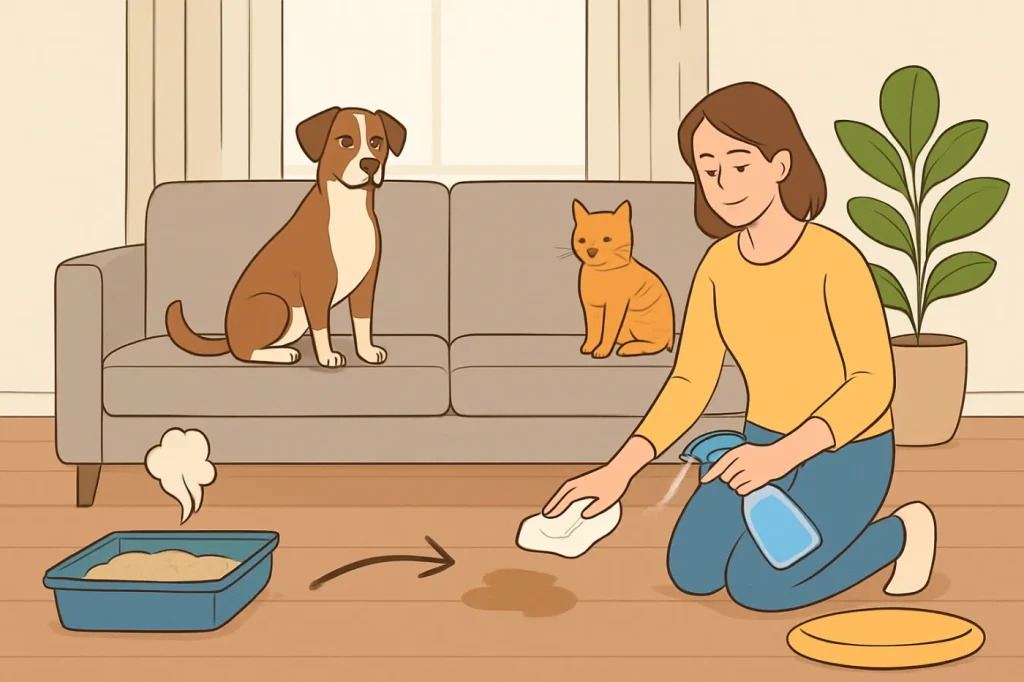
How to keep a house with pets smelling clean long-term
If your home smells like dog or cat, the only lasting fix is a routine that removes the source of the odor, not just covers it. That means:
- Cleaning urine, feces, and vomit with an enzymatic cleaner that breaks down odor-causing residues
- Washing pet bedding and soft furnishings regularly
- Vacuuming fur and dander from floors and fabrics
- Improving ventilation and, if needed, using air filtration
- Preventing new accidents with good house training and clear house rules
When you combine those habits into a daily, weekly, and monthly routine, a house with pets can smell as fresh as a pet-free home.
Why dog and cat odors linger in the house
Understanding what you are fighting makes it much easier to fix.
Biology behind pet smells
Dog and cat smells are not just “wet dog” or “litter box.” They usually come from:
- Urine – contains urea and other compounds that break down into ammonia-like smells and can soak deep into porous materials like carpet and wood.
- Feces – carries strong-smelling compounds and bacteria that cling to surfaces and fabrics.
- Vomit – acidic and often full of food residues that can sour and smell if not fully removed.
- Skin oils and dander – natural oils on fur and tiny skin flakes stick to upholstery, rugs, and walls.
- Saliva – drool on toys, blankets, and furniture can smell stale over time.
These materials can seep into layers you do not see: carpet padding, cracks in hardwood, baseboards, and the stuffing of furniture. If they are not broken down and rinsed out, they keep releasing odor for months.
Why regular cleaning sometimes does not work
Common reasons a house still smells like dog or cat even when you clean:
- Using the wrong cleaner – regular multipurpose sprays or bleach may disinfect but often do not break down the organic residues that cause pet odors.
- Only cleaning the surface – wiping the top of a carpet or couch cushion while urine has soaked into the padding or stuffing underneath.
- Masking instead of removing – heavy use of air fresheners, candles, or fabric sprays that add fragrance but leave the source untouched.
- Ignoring soft items – unwashed pet beds, throw blankets, and sofa covers can hold a lot of smell even if floors are spotless.
- Poor ventilation – closed windows and weak airflow let odors build up and linger in the air and on surfaces.
If you feel like you clean constantly but the smell returns, it usually means some of the odor sources are still hidden and untreated.
Daily, weekly, and monthly routines to keep pet odor under control
Odor control is much easier when you break it into small, repeatable tasks instead of occasional deep cleans.
Daily routine: 10–20 minutes that make the biggest difference
Focus daily on fresh messes, fur, and airflow.
- Deal with accidents immediately
Blot urine, pick up solids, and treat the area with an enzymatic cleaner as soon as you notice it. The longer it sits, the deeper it soaks in and the harder it is to remove. - Spot-clean high-traffic pet areas
Quickly wipe or mop around food bowls, litter boxes, and favorite resting spots. This prevents buildup of drool, crumbs, and tracked litter. - Quick fur and dander control
Use a handheld vacuum or lint roller on pet beds, favorite couch cushions, and entry rugs. Removing fur daily keeps it from becoming a deep, dusty layer that traps odor. - Air out the house
When weather and safety allow, open windows on opposite sides of the home for 10–15 minutes to create a cross-breeze. This helps flush out stale air and pet smells. - Check litter boxes and puppy pads
For cats, scoop solids and clumps at least once a day. For dogs using pads, replace soiled pads promptly and wipe the floor underneath if needed. If litter box odor is a recurring issue, learn more about how to keep litter box from smelling.
Weekly routine: deeper cleaning of surfaces and fabrics
Once a week, plan a slightly longer session to tackle the places that quietly collect odor.
- Vacuum floors and upholstery thoroughly
Use a vacuum with a brush or pet attachment on carpets, rugs, and soft furniture. Go slowly over pet paths and resting spots. Vacuuming removes fur, dander, and tracked-in dirt that can smell musty. - Wash pet bedding and blankets
Wash pet beds, crate pads, and any blankets your pets sleep on. Use a pet-safe detergent and the warmest water recommended on the care label. If the smell is stubborn, run a second rinse cycle to remove residue. - Mop hard floors in pet zones
Mop tile, vinyl, or sealed wood where pets eat, drink, and play. Use a cleaner that is safe for both pets and your flooring. Pay attention to corners and under furniture where hair and spills collect. - Wipe touchpoints
Clean door frames, walls near beds, and baseboards where pets rub or shake. A damp cloth with mild cleaner can remove skin oils and nose prints that hold odor. - Refresh litter boxes and trash
For cats, fully empty the litter box, wash it with mild soap and water, dry it, and refill with fresh litter as often as needed based on how many cats you have. Take out trash that contains pet waste or used pads before it starts to smell.
Monthly routine: deep odor checks and maintenance
Once a month, look for hidden odor sources and do maintenance tasks that keep smells from creeping back.
- Inspect for hidden accidents
Check under rugs, behind furniture, and in corners for old stains or dried puddles. If you suspect cat urine in particular, you may use a pet-safe UV flashlight to help locate dried spots, then treat them with an enzymatic cleaner. - Deep-clean carpets or rugs in problem areas
Use a carpet cleaner or rent a machine for rooms where pets spend the most time. Use a pet-safe solution and follow the instructions carefully so carpets dry fully and do not develop a musty smell. - Wash removable covers and curtains
Remove and wash sofa covers, cushion covers, and curtains in rooms where pets sleep or play. These fabrics can quietly hold a lot of odor. - Clean air pathways
Dust or gently vacuum vents and clean or replace HVAC filters as recommended by the manufacturer. Filters that are clogged with dust and dander can recirculate smells. - Review house rules and training
If you are still getting frequent accidents, revisit house training and household rules. You may find useful guidance in resources like house training mistakes to avoid with dogs and cats and house rules every responsible dog owner should have.
Structured checklist: habits that keep pet odor away
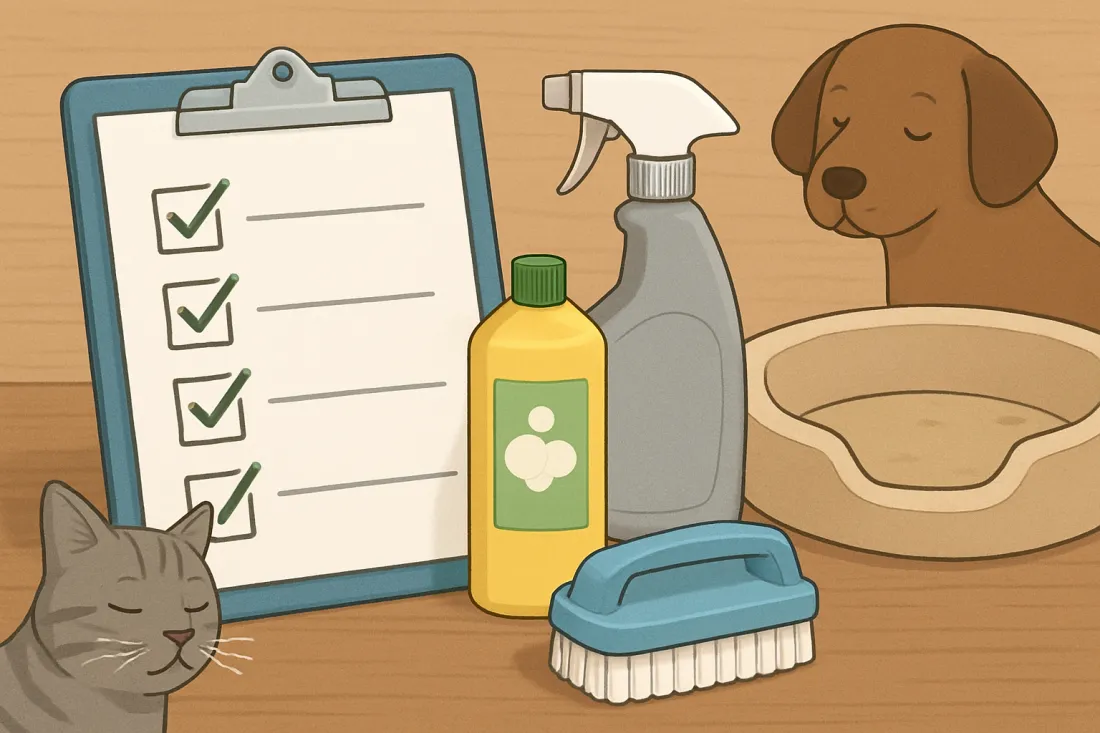
Use this checklist to build a routine that fits your home. You do not need to do everything at once; start with the items that address your biggest odor sources.
- Accident response
- Keep paper towels or clean cloths in an easy-to-reach spot.
- Store a pet-safe enzymatic cleaner where accidents usually happen.
- Blot, then treat every accident immediately.
- Floor and fabric care
- Vacuum main pet areas at least once a week.
- Spot-vacuum or lint-roll pet beds and favorite cushions daily or every other day.
- Mop hard floors in feeding and litter areas weekly.
- Pet bedding and soft items
- Wash pet beds and blankets weekly or as soon as they smell.
- Have at least one spare bed cover or blanket so you can rotate while one is in the wash.
- Wash sofa throws and cushion covers monthly in pet zones.
- Litter and potty areas
- Scoop litter boxes at least once daily.
- Fully change litter and wash boxes regularly based on how many cats you have.
- Replace puppy pads promptly and clean the floor underneath.
- Air quality
- Open windows for fresh air when weather and safety allow.
- Use kitchen and bathroom exhaust fans to remove humidity and smells.
- Consider an air purifier with a filter designed to capture pet dander and odors for rooms where smells linger.
- Pet hygiene
- Brush dogs and cats regularly to reduce shedding and dander.
- Bathe dogs as recommended for their coat type; avoid overbathing.
- Wipe paws after outdoor walks to reduce dirt and outdoor smells.
- Health and vet checks
- Notice any sudden change in urine or stool odor and talk to your vet if it continues.
- If an older pet or previously trained pet starts having accidents, ask your vet to rule out medical causes.
You share your home with one or more indoor dogs or cats, and you notice a persistent pet smell in at least one room, even after basic cleaning. You want a realistic starting plan you can follow this week to reduce the odor without replacing flooring or furniture.
List the top two rooms where the pet smell is strongest, note any visible stains or known accident spots in those rooms, and check what cleaning supplies you already have: a vacuum, a mop, a pet-safe enzymatic cleaner, laundry access, and access to at least one window you can open safely.
On day one, focus on the worst-smelling room: open a window for 10–15 minutes, vacuum the floor and soft furniture slowly, then wash any removable pet bedding or blankets from that room. Treat every visible stain with an enzymatic cleaner following the label directions. Over the next six days, repeat this process for the second room and add a 5–10 minute daily habit: scoop litter or pick up yard waste, spot-vacuum pet beds or favorite cushions, and briefly air out the home when possible.
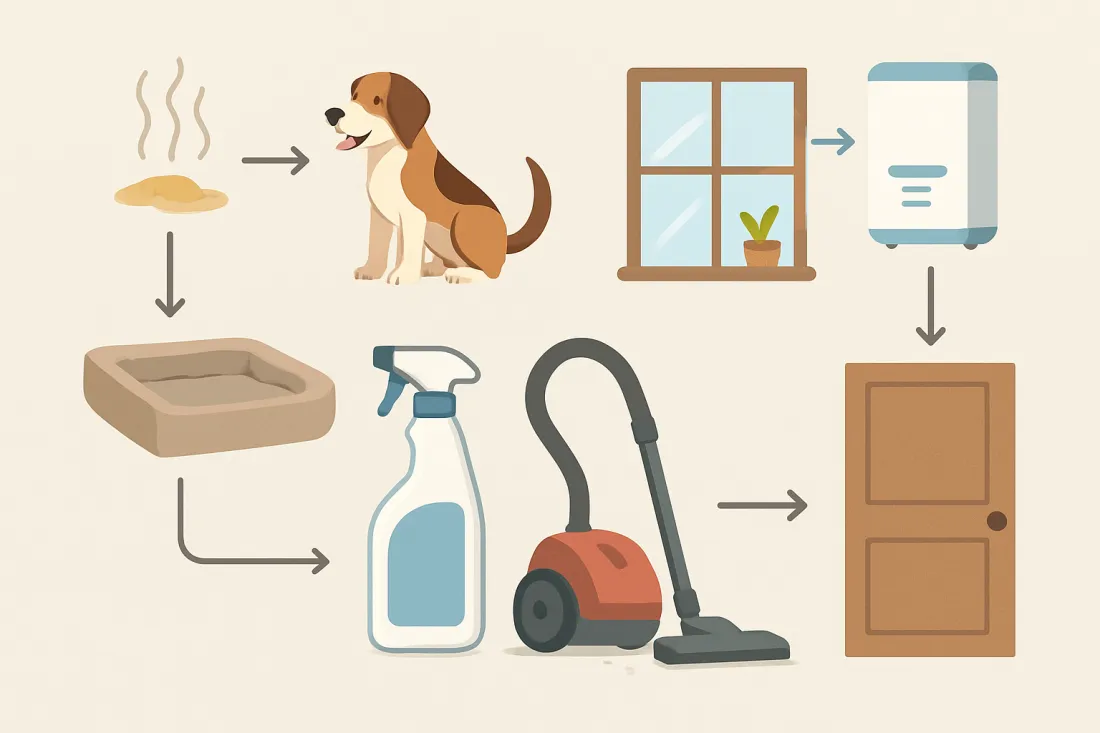
After seven days, walk into each target room from outside or from a hallway after being away for a few minutes. If the initial “pet smell” is noticeably weaker or gone and only a mild, clean scent remains, your routine is working. If a strong odor still hits you in specific spots, inspect those areas for hidden stains, consider a deeper carpet or upholstery cleaning, and adjust your weekly tasks to focus more on those problem zones.
Choosing and using enzymatic cleaners and deodorizers safely
Enzymatic cleaners are one of the most effective tools for pet odor because they break down the organic material that causes smells instead of just covering them.
How enzymatic cleaners work
Enzymatic cleaners contain enzymes that help break down proteins and other organic compounds in urine, feces, vomit, and other pet messes. Once those materials are broken down, bacteria have less to feed on, and the odor fades as the area dries.
Safe and effective use
To get the most from an enzymatic cleaner while keeping pets and people safe:
- Blot first, then treat
Remove as much liquid or solid material as possible with paper towels or cloths before applying the cleaner. This prevents dilution and helps the product reach deeper layers. - Saturate the area
Apply enough cleaner to soak the same depth as the original mess, especially on carpets and upholstery. If urine soaked into padding, the cleaner needs to reach that depth too. - Give it time
Follow the label’s recommended dwell time. Many products need several minutes or longer to work before you blot or let the area air-dry. - Test on hidden spots
Before using on delicate fabrics or finishes, test a small, hidden area to check for discoloration or damage. - Ventilate while cleaning
Open a window or run a fan to keep air moving, especially in small rooms. - Store safely
Keep all cleaners out of reach of children and pets, and never transfer them into unlabeled containers.
Deodorizers: when they help and when they do not
Deodorizers such as sprays, powders, candles, and plug-ins can make a room smell nicer, but they should be the last step, not the first.
- Use after cleaning, not instead of cleaning
Always remove the source of the odor first. A fresh scent on top of uncleaned urine or feces will fade quickly and can make it harder to notice lingering problems. - Choose pet-aware products
Look for products labeled as safe for use around pets, and follow directions carefully. Avoid spraying deodorizers directly on pets or their food and water dishes. - Watch for sensitivities
Some people and animals are sensitive to strong fragrances. If anyone in the home develops coughing, sneezing, or skin irritation after using a product, stop using it and ventilate the area.
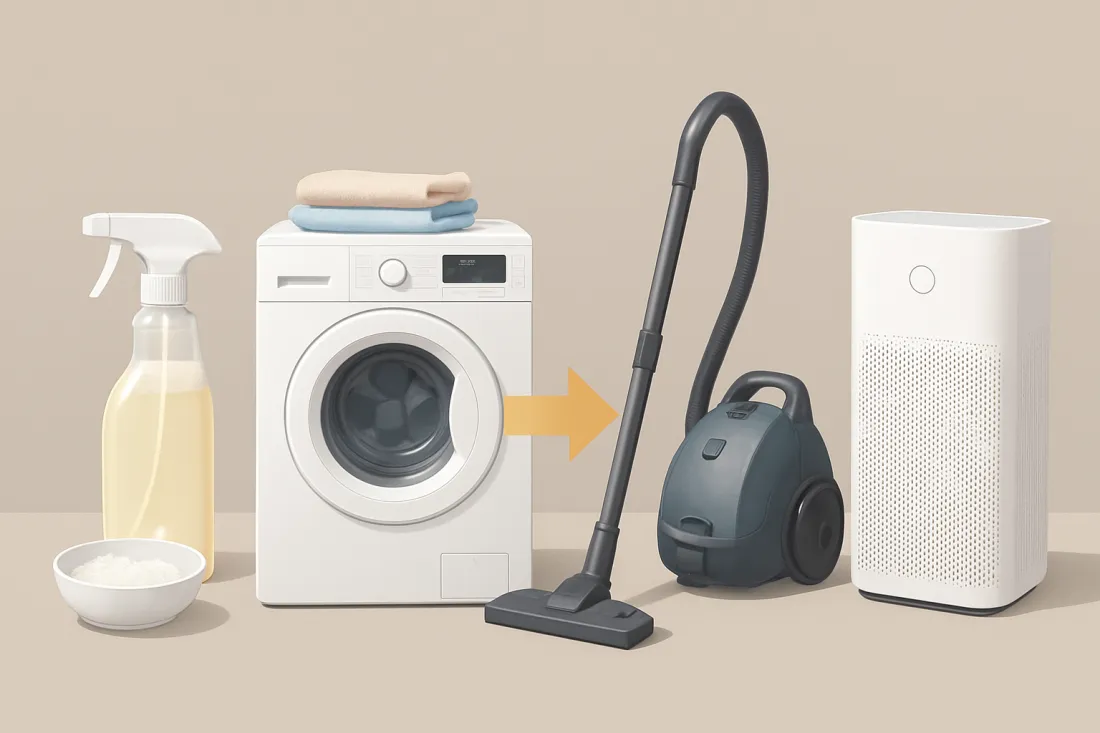
Laundering pet bedding and soft furnishings
Soft items hold a surprising amount of pet odor. Regular washing is one of the simplest ways to keep the house from smelling like dog or cat.
Pet bedding
- Check the label
Look for washing instructions on pet beds and crate pads. Many have removable covers that can be machine washed. - Shake out fur first
Shake or vacuum beds outdoors or over a trash can before washing to reduce fur in your washer. - Use appropriate water temperature
Wash in the warmest water recommended on the label to help break down oils and odors. - Extra rinse
Consider an extra rinse cycle to remove detergent and loosened residues fully. - Dry completely
Dry beds thoroughly to prevent musty smells. If the filling clumps or does not dry well, consider replacing the bed.
Blankets, throws, and slipcovers
- Rotate and wash regularly
Keep at least two sets of throws or covers so one can be in use while the other is in the wash. - Pre-treat stains
Use a pet-safe stain remover or a small amount of enzymatic cleaner on visible spots before washing. - Mind delicate fabrics
For delicate items, follow the care label and consider gentle cycles or professional cleaning if needed.
Upholstery and mattresses
If pets are allowed on beds or sofas without removable covers:
- Vacuum regularly with an upholstery attachment to remove fur and dander.
- Spot-clean accidents with an enzymatic cleaner designed for fabrics, following the directions closely.
- Consider protective covers that can be removed and washed, especially in homes with puppies, kittens, or elderly pets prone to accidents.
Ventilation and air filtration tips for homes with pets
Good air movement and filtration help prevent pet smells from becoming trapped.
Simple ventilation habits
- Cross-ventilate when possible
Open windows on opposite sides of the home for a short period to create a breeze that carries odors out. - Use exhaust fans
Run kitchen and bathroom fans during and after cooking or bathing pets to remove humidity and smells. - Avoid sealing in moisture
Dry wet areas quickly after cleaning or pet baths to prevent musty odors.
Air filtration and purifiers
- Maintain HVAC filters
Change or clean filters as recommended by the manufacturer, and consider filters designed to capture smaller particles like pet dander. - Consider room air purifiers
For rooms where smells linger, a purifier with a filter designed for odors and fine particles can help reduce pet-related smells and dander in the air. - Place purifiers wisely
Position them in areas where pets spend the most time, and follow manufacturer guidance on room size and filter replacement.
Comparison table: masking odors vs. removing sources
| Approach | What it does | When it helps | Limitations and risks | Better next step |
|---|---|---|---|---|
| Air fresheners and scented candles | Add fragrance to the air, making smells less noticeable for a short time. | Useful after thorough cleaning when only a faint residual smell remains. | Do not remove urine or feces residues; can irritate sensitive people or pets; smell returns when fragrance fades. | Use only after cleaning with appropriate products and improving ventilation. |
| Standard multipurpose cleaner | Cleans surface dirt and some bacteria on hard floors and counters. | Good for everyday wiping of food areas, paw prints, and general grime. | Often does not break down deeper urine or feces residues, especially in carpets and fabrics. | Combine with enzymatic cleaner on any area that has had pet accidents. |
| Enzymatic pet stain and odor remover | Breaks down organic materials that cause pet odors. | Best for fresh and old urine, feces, and vomit stains on carpets, upholstery, and some hard surfaces. | Requires proper application and dwell time; may need repeated treatments for old, deep stains. | Use as the primary treatment for accident spots, followed by ventilation and, if needed, gentle deodorizing. |
| Vacuuming and laundering | Removes fur, dander, dust, and some odor-trapping particles from floors and fabrics. | Essential for ongoing odor control in any home with pets. | Does not fully remove set-in urine or feces stains by itself. | Pair with spot treatment of stains and regular washing of pet bedding and covers. |
| Air purifiers and HVAC filters | Capture airborne dander and some odor particles, improving overall air freshness. | Helpful in rooms where pets spend a lot of time or for family members with allergies. | Cannot fix smells from uncleaned messes or saturated carpets and furniture. | Use alongside a solid cleaning routine and prompt accident cleanup. |
Health considerations for kids, elderly, and immunocompromised family members
Pet ownership can be very positive for families, but it is important to manage hygiene carefully when someone in the home is more vulnerable to infections or respiratory issues.
Why extra care matters
Children, older adults, and people with weakened immune systems can be more sensitive to:
- Bacteria and parasites that may be present in pet feces or contaminated surfaces
- Ammonia-like compounds from concentrated urine
- Dust, dander, and mold that can grow in damp, dirty areas
- Strong fragrances from some cleaning products and deodorizers
Practical steps to reduce risks
- Keep pet waste areas separate
Place litter boxes and puppy pads away from kitchens, dining areas, and bedrooms used by vulnerable family members when possible. - Handwashing habits
Encourage everyone, especially children, to wash hands after playing with pets, cleaning up accidents, or handling pet toys and bowls. - Safe cleaning product choices
Choose cleaners and deodorizers labeled as safe for use around pets and people, and avoid mixing cleaning products. - Extra attention to soft surfaces
Wash bedding, throws, and rugs more frequently in rooms used by vulnerable family members to reduce dander and dust. - Consult healthcare providers
If someone in the home has specific medical conditions, ask their healthcare provider for personalized advice on pet-related hygiene.
Common mistakes that keep a house smelling like dog or cat
Avoiding a few frequent mistakes can make your odor-control efforts much more effective.
- Waiting to clean accidents
Delaying cleanup lets urine and other messes soak deeper into surfaces, making odors harder to remove. - Using strong-scented products instead of proper cleaning
Heavy fragrance can hide the smell temporarily but does nothing to remove the source. - Ignoring hidden areas
Under furniture, behind doors, and under rugs are common places for unnoticed accidents and odor buildup. - Overbathing pets
Bathing dogs too often can dry out their skin, sometimes leading to more odor issues. Brushing and spot-cleaning are often more effective for routine care. - Letting litter boxes or outdoor waste build up
Even if the rest of the house is clean, a neglected litter box or yard can make the whole home smell. - Not addressing repeated accidents
Frequent accidents can signal training gaps, stress, or medical issues. Ignoring the pattern means the smell will keep returning.
FAQ about keeping a house from smelling like dog or cat
What is the most important thing to understand about keeping a house from smelling like dog or cat?
The key is that odor control is about removing the source, not covering it. That means cleaning every accident with an appropriate product, washing soft items regularly, and managing fur and dander with consistent vacuuming and ventilation. A simple routine done often is more effective than occasional heavy cleaning and lots of air fresheners.
Why does my house still smell like dog or cat even after I clean?
If your house still smells, there are usually hidden sources you have not reached. Urine may have soaked into carpet padding or furniture stuffing, pet beds and blankets may not be washed often enough, or litter boxes and outdoor waste areas may be contributing more than you realize. Revisit your routine with a focus on soft items, under and behind furniture, and any areas where accidents have happened before. For persistent cat urine smells, targeted steps like those in guides on how to get rid of cat urine smell in house can be especially helpful.
What mistakes should I avoid when trying to get rid of dog and cat smell in the house?
Avoid waiting to clean accidents, relying only on scented sprays, skipping regular vacuuming and laundry, and ignoring litter boxes or outdoor waste. Also avoid using harsh cleaners without checking labels, especially on fabrics and around pets and children. These mistakes let odor sources stay in place and can make smells harder to remove later.
What should I do next if I want my home to stop smelling like dog or cat?
Choose one or two rooms where the smell bothers you most and apply a focused one-week plan: vacuum thoroughly, wash all pet bedding and throws, treat any stains with an enzymatic cleaner, and air out the space daily when possible. At the same time, start a simple daily habit of prompt accident cleanup, litter or yard waste management, and quick fur control. If you still notice strong smells after that, consider deeper carpet or upholstery cleaning and review your pet’s house training and health with a professional if accidents are frequent.
Can a house with multiple pets ever really smell neutral?
A home with several dogs or cats can smell fresh if you consistently remove odor sources and manage air quality. It may take more frequent scooping, vacuuming, and laundry than in a single-pet home, and you might find air purifiers especially helpful in busy rooms. The goal is not to erase every trace that pets live there, but to prevent strong, unpleasant odors from building up.