Adult dog suddenly peeing in the house: what to do first
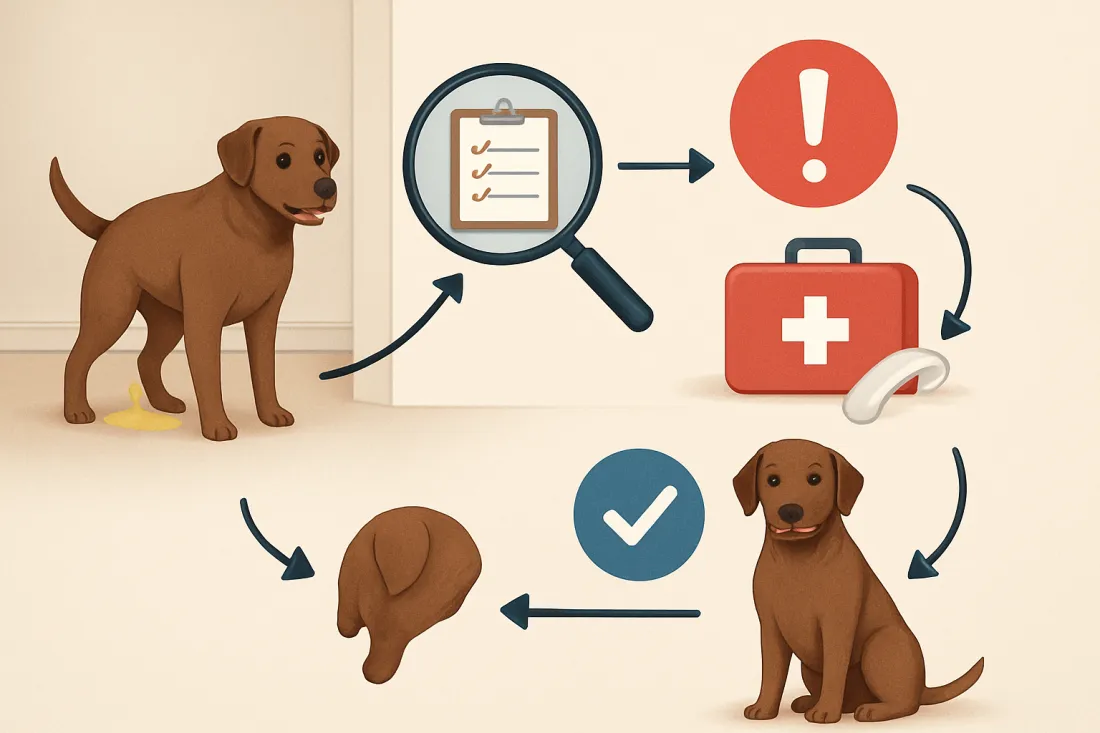
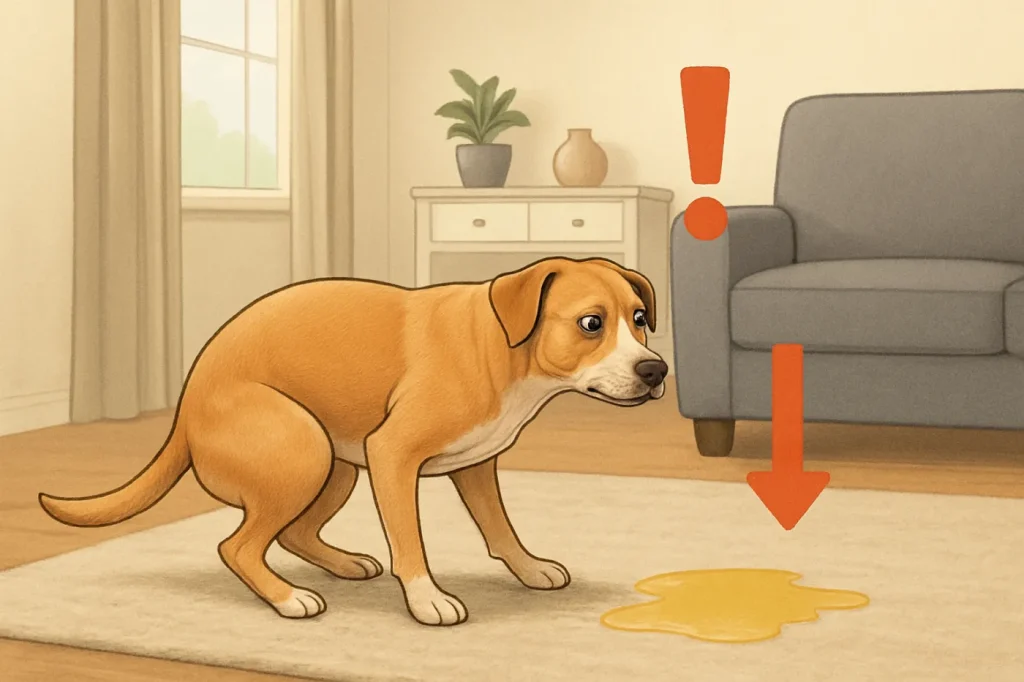
If a housebroken adult dog suddenly starts peeing in the house, treat it as a possible health problem first and a training problem second. Here is the immediate plan:
- Do a quick health check: note how often your dog pees, how much, any straining, blood, strong smell, or leaking when resting.
- Call your vet the same day if accidents are new, frequent, or your dog seems uncomfortable.
- Act fast on emergencies: go to an emergency vet if you see blood in urine, your dog cannot pee or only dribbles, seems very painful, weak, or vomits.
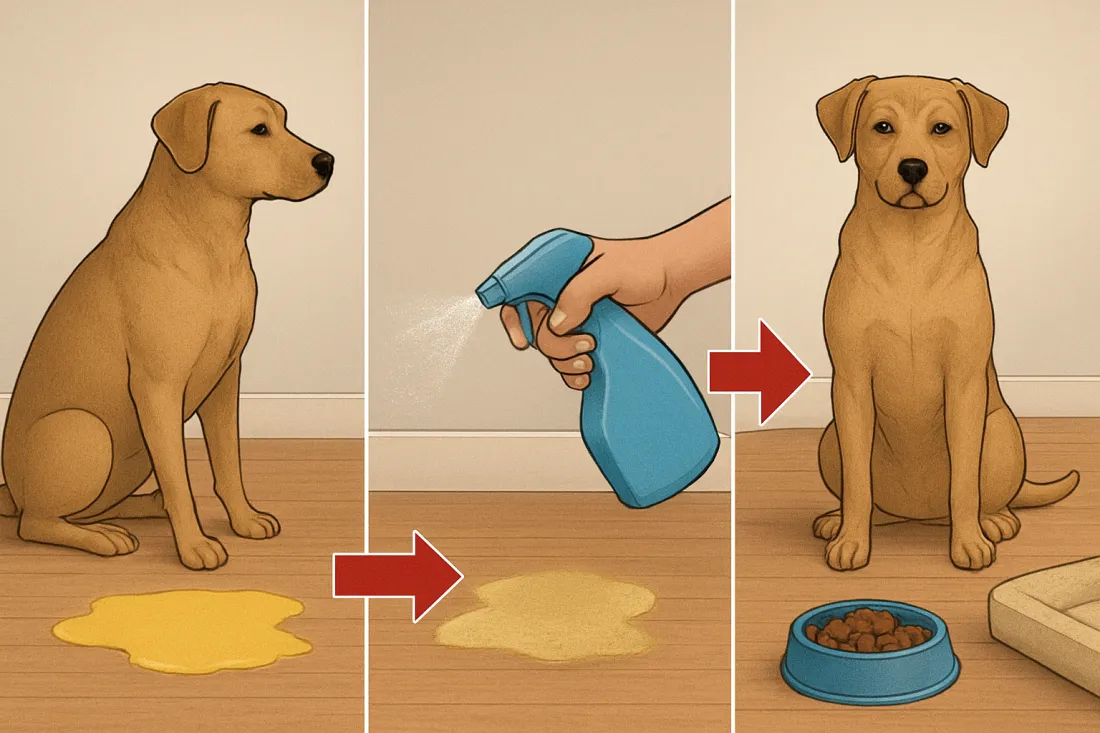
- Until you see the vet: take your dog out more often, supervise indoors, and clean every accident with an enzymatic cleaner so the smell does not invite repeat peeing.
- After medical issues are ruled out or treated: re-teach house training with a clear schedule, rewards, and controlled freedom.
This guide explains how to tell medical from behavioral causes, what to ask yourself before calling the vet, and how to build a step-by-step plan to stop accidents kindly and effectively.
Adult dog accidents vs puppy training: what is different
Puppy potty training is mostly about teaching a brand-new skill. With an adult dog that suddenly starts peeing indoors, the situation is different:
- Puppies usually have tiny bladders, limited control, and no history of being reliable indoors.
- Adult dogs already showed they can hold it and choose the right spot. New accidents usually mean something changed in their body, routine, or emotions.
Key differences when troubleshooting an adult dog:
- Health is a bigger concern. Sudden accidents in a previously clean dog can be linked to urinary or bladder infections, kidney or hormone changes, or other medical conditions. Only a vet can diagnose these.
- Habits are already formed. You are not starting from zero; you are repairing or updating an existing habit. Progress can be faster once the cause is addressed.
- Triggers are often specific. A move, a new baby, a schedule change, or a new pet can unsettle even a well-trained dog.
- Emotional factors matter. Adult dogs may pee from anxiety, fear, or marking, not just because they “do not know better.”
Thinking this way keeps you from just tightening up training and missing a health problem or stress trigger.
Medical vs behavioral causes: how to tell the difference
You cannot diagnose at home, but you can notice patterns that help your vet and guide your training plan.
Common medical patterns
Contact a vet promptly if you notice any of these:
- Sudden increase in frequency: your dog asks out much more often, or has accidents every couple of hours instead of holding it.
- Straining or discomfort: long squatting with little output, whining, licking the genital area, or pacing as if they cannot get comfortable.
- Changes in urine: very dark, cloudy, strong-smelling, or you see pink/red discoloration that could be blood.
- Leaking when resting: wet spots where your dog slept, or dribbling when they stand up, even though they tried to hold it.
- Changes in thirst or appetite: drinking much more or much less than usual, or eating poorly.
- Age-related changes: older dogs may develop conditions that affect kidneys, hormones, or cognition, which can show up as house-soiling.
These patterns often point to medical issues that need testing and treatment, not just more training.
Common behavioral or environmental patterns
Behavioral or environmental causes are more likely when:
- Accidents started after a clear life change: new baby, new roommate, move to a new home, change in work hours, or a family member leaving.
- Accidents happen in specific locations: near doors, on beds or couches, on new rugs, or where another pet has peed.
- Your dog seems worried or clingy: pacing, whining when left alone, shadowing you, or reacting strongly to noises.
- Marking behavior: small amounts of urine on vertical surfaces like table legs or door frames, often in multiple spots.
- Schedule slippage: fewer walks, long gaps between potty breaks, or inconsistent feeding times.
Even when the pattern looks behavioral, it is still important to rule out health problems, especially if the change was sudden.
Questions to ask yourself before calling the vet
Having clear information ready helps your vet decide how urgent the situation is and what tests to run. Ask yourself and write down:
- When did the accidents start?
Was it truly sudden (within the last few days), or has it been slowly getting worse over weeks? - How often is it happening?
Once a week, once a day, several times a day, or every time your dog drinks? - How much urine is there?
Puddles, small dribbles, or just a few drops in many places? - Where do accidents happen?
Always in the same room, near doors, on soft surfaces, or random spots? - What time of day?
Only at night, only when you are at work, right after excitement, or even when you are home and watching? - Any changes in drinking or eating?
More water, empty bowl quickly, or seems less interested in food? - Any other symptoms?
Vomiting, diarrhea, weight loss, lethargy, coughing, or changes in behavior? - Recent life changes?
New baby, move, new pet, different work schedule, visitors staying over, or loud construction nearby? - Any new products or medications?
New cleaning products, yard treatments, medications, or supplements?
Share this information with your vet. It can narrow down whether the problem is likely medical, stress-related, or both.
When peeing in the house is an emergency
Sometimes a dog peeing in the house is not just inconvenient; it can signal a serious medical emergency. Seek emergency veterinary care right away if you notice:
- Straining with almost no urine coming out or repeated attempts to pee with only a few drops.
- Obvious pain while trying to pee: crying, yelping, or hunching over.
- Blood in the urine or urine that looks like pure blood.
- Severe lethargy, collapse, or confusion along with accidents.
- Vomiting, refusal to eat, or a swollen, tight belly plus trouble urinating.
- Known history of urinary stones or blockage and now your dog cannot pee normally.
These signs can be life-threatening and should not wait for a routine appointment.
Home and life changes that trigger accidents in U.S. homes
Many American households go through big changes that can unsettle even a well-trained dog. Common triggers include:
- Schedule changes: new work hours, hybrid office days, or longer commutes can stretch the time between potty breaks more than your dog can handle.
- New baby or child: routines shift, attention is divided, and doors or baby gates may block your dog from their usual potty door.
- Moving to a new home or apartment: different flooring, new smells, shared hallways, elevators, or lack of a fenced yard can confuse your dog about where to go.
- Weather extremes: very hot summers, heavy rain, snow, or ice can make some dogs reluctant to go outside, especially if they associate it with discomfort.
- New pets or visitors: another dog or cat, roommates, or frequent guests can trigger marking or stress-related accidents.
- Changes in household rules: allowing the dog on beds or couches for the first time, or giving more freedom unsupervised, can blur boundaries.
If accidents started around one of these changes, address both the emotional side (reassurance, routine) and the practical side (clear potty access and training). For broader structure at home, you may find it helpful to review basic house rules for dogs and cats so your dog has consistent expectations.
Comparison: medical vs behavioral causes and what to do
| Pattern you notice | More likely medical or behavioral? | What to do first | Main risk if ignored |
|---|---|---|---|
| Sudden frequent peeing, large puddles, day and night | More likely medical | Call vet for prompt appointment; ask if you should bring a urine sample | Underlying disease can worsen and be harder or more costly to treat |
| Straining, little urine, signs of pain | Medical emergency | Go to emergency vet immediately | Possible blockage or severe infection, which can be life-threatening |
| Small amounts on vertical surfaces after new pet or move | Often behavioral (marking), but still rule out medical | Schedule vet check; then manage territory, supervise, and reward outdoor marking alternatives | Marking can become a strong habit and spread to more areas |
| Accidents only when left alone, dog seems anxious | Likely behavioral (separation-related) | Vet check to rule out medical; then work on gradual alone-time training, consider trainer/behaviorist | Anxiety can escalate into destructive behavior and chronic stress |
| Older dog forgets to ask out, seems confused at times | Medical or cognitive changes | Vet exam to assess health and cognition; adjust schedule and environment | Declining quality of life and more frequent accidents |
| Accidents after long workdays or skipped walks | Environmental/schedule | Increase potty breaks, hire a dog walker, or use dog daycare | Dog may start using the house as a regular toilet spot |
Step-by-step plan: re-teaching house training to an adult dog
Once your vet has addressed or ruled out medical issues, use a clear, gentle plan to rebuild good habits.
1. Reset the potty schedule
Aim for predictable potty opportunities:
- First thing in the morning
- After meals (within about 15–30 minutes)
- After naps or crate time
- After play or excitement
- Before bed
- Every few hours during the day, depending on your dog’s age and health
Take your dog to the same outdoor spot on leash, wait quietly, and reward generously when they pee outside.
2. Supervise like a puppy (without shaming)
For a few weeks, think of your dog as “in training” again:
- Keep them in the same room as you when loose, so you can see early signs of needing to go: sniffing, circling, heading toward the door, suddenly leaving play.
- Use baby gates or closed doors to limit access to carpeted rooms or favorite accident spots.
- Interrupt gently if you catch them starting to pee indoors: say a calm “uh-uh,” guide them quickly outside, and reward if they finish there. Do not yell or punish.
Punishment often makes dogs hide their peeing or become anxious, which can worsen accidents.
3. Use a crate or safe confinement area correctly
Confinement is not about punishment; it is about preventing mistakes when you cannot supervise.
- Choose the right size: your dog should be able to stand up, turn around, and lie down comfortably, but not have a separate “bathroom corner.”
- Introduce it positively: feed meals near or in the crate, toss treats inside, and let your dog explore with the door open at first.
- Use short, realistic durations: do not expect an adult dog to hold it all day. Arrange midday breaks if you work long hours.
- Alternative to crates: a small, puppy-proofed room with a bed, water, and chew toys can work for dogs that are crate-averse.
If your dog regularly pees in the crate, talk to your vet and a trainer; this can signal a medical issue, anxiety, or that the crate routine needs adjustment.
4. Reward the behavior you want, every time
For at least a few weeks, treat outdoor peeing as a big win:
- Use high-value treats your dog loves, given immediately after they finish peeing outside.
- Add praise and a short play session if your dog enjoys that.
- Be consistent: reward every successful outdoor pee, not just when you remember.
Dogs repeat behaviors that reliably lead to good things.
5. Gradually increase freedom
Once your dog has gone at least a couple of weeks with no accidents:
- Open access to one extra room while you are home and able to supervise.
- Keep the potty schedule steady even as you relax supervision.
- If an accident happens, step back a level: reduce freedom and tighten the schedule again for a week or two.
Think of this as rebuilding trust and habits step by step.
Using confinement and supervision without stressing your dog
Done well, confinement and supervision make dogs feel safe, not punished. To keep stress low:
- Pair confinement with good things: special chew toys, food puzzles, or stuffed Kongs that your dog only gets in their crate or safe room.
- Avoid long, boring stretches: break up alone time with walks, play, or a dog walker if needed.
- Keep routines predictable: similar wake-up, feeding, and walk times help dogs relax.
- Watch for stress signs: heavy panting, drooling, barking, or trying to escape confinement. If you see these, consult a trainer or behaviorist.
For broader household structure and consistency, you may also like house rules every responsible dog owner should have.
Accident clean-up and odor removal
Cleaning correctly is essential. If your dog can still smell urine, they are more likely to use that spot again.
On carpets and rugs
- Blot, do not rub: use paper towels or a clean cloth to soak up as much urine as possible.
- Use an enzymatic cleaner: these products break down urine proteins that cause lingering odor. Follow the label instructions carefully.
- Saturate the area: make sure the cleaner reaches the same depth as the urine, especially on thick carpets.
- Allow full drying time: this can take many hours. Keep your dog away from the area until it is dry.
- Avoid steam cleaning fresh urine: heat can set the stain and odor into carpet fibers.
On hard floors (tile, vinyl, sealed wood)
- Wipe up urine promptly with paper towels or a cloth.
- Clean with an enzymatic or pet-safe cleaner designed for urine.
- Rinse if needed according to the product directions.
- Check for seepage into cracks or unsealed wood; you may need extra cleaning or sealing later.
On bedding, blankets, and soft items
- Pre-treat with enzymatic cleaner before washing.
- Wash in the hottest water safe for the fabric, using a pet-safe detergent.
- Air-dry first to check if the smell is gone before using a dryer, which can set odors.
If a particular rug or item keeps being targeted, consider removing it temporarily while you retrain.
How long improvement should take and realistic expectations
Every dog and situation is different, but some general expectations help you stay patient and on track.
- After a simple medical issue is treated: you may see improvement within days, but full reliability can still take a few weeks of consistent routine.
- With stress or schedule-related accidents: many dogs improve noticeably within a few weeks of a solid training plan and predictable routine.
- With complex medical or anxiety issues: progress may be slower and more up-and-down. You may see good weeks and setbacks.
Signs you are on the right track include:
- Fewer accidents per week.
- Accidents getting smaller or closer to the door.
- Your dog starting to signal more clearly when they need to go out.
If you see no improvement at all after a few weeks of consistent effort, or if things get worse, check back with your vet and consider professional training or behavior support.
Structured checklist: troubleshooting adult dog accidents
Use this checklist to organize your next steps.
Health and vet checklist
- Note when accidents started and how often they happen.
- Observe urine: color, smell, amount, any blood or cloudiness.
- Watch for straining, pain, or changes in thirst or appetite.
- List any recent changes: home, schedule, new pets, stressors.
- Call your vet, share your notes, and schedule an exam.
- Follow through with any tests, medications, or diet changes recommended.
Home and routine checklist
- Set a consistent potty schedule (morning, after meals, after naps, before bed).
- Ensure your dog has enough chances to go out during your workday.
- Supervise indoors or use gates to limit access to problem areas.
- Introduce or adjust crate or safe-room use in a positive way.
- Reward every outdoor pee with treats and praise.
- Clean all accidents thoroughly with enzymatic cleaner.
Behavior and support checklist
- Notice if accidents cluster around stress (storms, fireworks, being left alone).
- Provide mental and physical exercise daily (walks, play, training).
- Keep household rules consistent for all family members.
- If anxiety or marking persists, research qualified trainers or behaviorists.
- Revisit your plan every week and adjust based on what is improving or not.
When to seek a trainer or behaviorist in the United States
Professional help is a good idea when:
- Medical issues have been treated or ruled out, but accidents continue.
- Your dog shows clear anxiety signs (destructive behavior, vocalizing, drooling, pacing) especially when alone.
- There is frequent marking after life changes like a move or new pet.
- You feel frustrated or stuck, or family members disagree on how to handle the problem.
When looking for help in the U.S.:
- Ask your vet for referrals to trainers or behavior professionals they trust.
- Look for positive, reward-based methods rather than punishment or harsh tools.
- Check credentials and experience with house-soiling and anxiety issues.
- Be ready to participate: the professional will guide you, but daily follow-through at home is what changes your dog’s habits.
You can also review house training mistakes to avoid with dogs and cats to make sure you are not accidentally reinforcing the problem.
Common mistakes that keep adult dog accidents going
Avoid these pitfalls while you work on the problem:
- Assuming it is “just spite.” Dogs do not pee indoors to get revenge; they respond to health, habits, and emotions.
- Skipping the vet visit. Waiting can allow a treatable medical issue to become serious.
- Yelling or rubbing their nose in it. This creates fear and can make dogs hide accidents instead of learning.
- Inconsistent rules and schedules. If some family members let the dog out often and others forget, progress will be slow.
- Using the wrong cleaners. Regular cleaners may leave behind odors your dog can still smell.
- Giving too much freedom too soon. Expanding access to the whole house before habits are solid often leads to setbacks.
FAQ: adult dog suddenly peeing in the house
Why is my housebroken dog suddenly peeing in the house?
A previously housebroken adult dog usually starts peeing indoors because something changed in their body, routine, or emotions. Common possibilities include urinary or bladder infections, other medical conditions that affect thirst or bladder control, pain that makes it hard to get outside, schedule changes that reduce potty breaks, stress from life changes like a move or new baby, or marking behavior after a new pet or visitor. Because health problems can look very similar to behavioral issues, the safest first step is a vet exam, followed by a structured training and management plan at home.
What should I do when my older dog starts peeing in the house?
With an older dog, do not assume accidents are “just old age.” Contact your vet to check for age-related conditions that can affect kidneys, hormones, joints, or cognition. In the meantime, make life easier by offering more frequent potty breaks, using non-slip paths to the door, adding night-time trips outside if needed, and confining your dog to easy-to-clean areas when unsupervised. Use the same reward-based potty training steps you would for a younger dog, but be extra patient and realistic about how long your senior can comfortably hold it.
How do I stop my adult dog from randomly peeing in the house?
To stop “random” accidents, turn them into a predictable pattern you can manage. First, rule out medical causes with your vet. Then, track when and where accidents happen, and give your dog more chances to go out before those times. Supervise closely indoors, limit access to favorite accident spots, and reward every outdoor pee. Clean all indoor accidents with enzymatic cleaner so the smell does not invite repeats. If you still see no clear pattern or improvement after a few weeks of consistent effort, bring your notes to a trainer or behaviorist for a tailored plan.
Why is my dog having pee accidents in the house all of a sudden at night?
Night-time accidents can be linked to drinking more in the evening, medical issues that increase urine production, difficulty holding it overnight due to age or illness, or anxiety about going outside in the dark or bad weather. Try offering the last big drink earlier in the evening (while still keeping water available), adding a late-night potty trip, and making the nighttime potty area well-lit and safe-feeling. If accidents continue, especially with other changes like increased thirst or lethargy, schedule a vet visit to check for underlying health problems.