
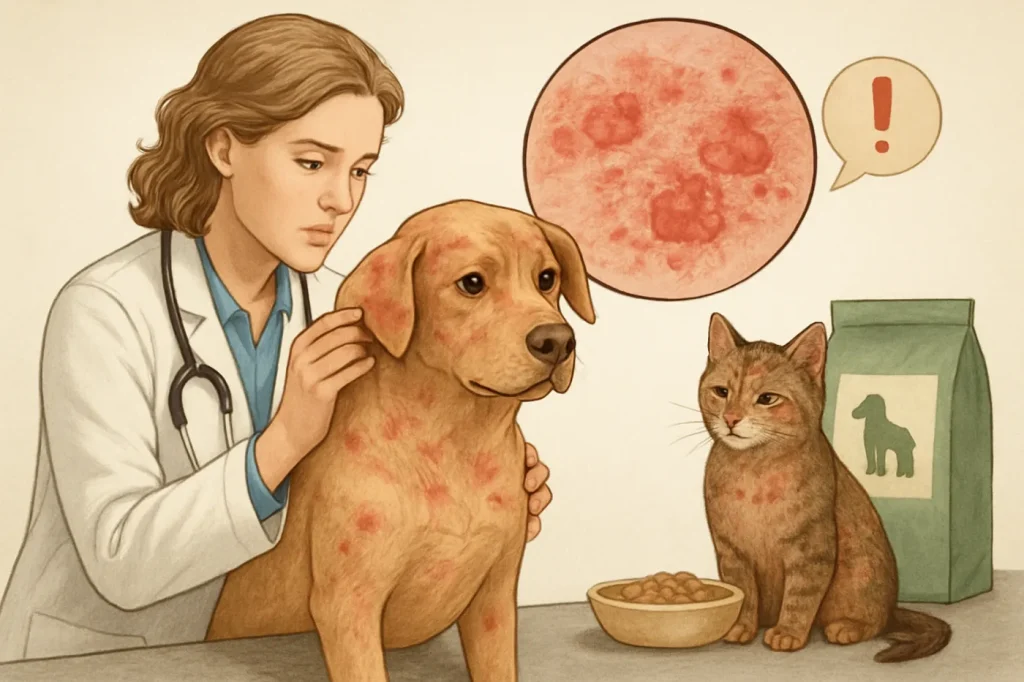
If your dog or cat is constantly itchy, licking their paws, or battling repeat ear or skin infections, food can be part of the problem – but it is rarely the only cause. To work out whether food allergies are driving your pet’s skin issues, you need a structured plan under veterinary guidance, not guesswork or rapid food hopping.
When food is likely contributing to your pet’s skin problems
Food is more likely to be involved when several of these points fit your pet:
- Itching, red skin, or ear infections are present all year, not just in one season.
- Symptoms started before age one or appeared in adulthood without a clear seasonal pattern.
- There are chronic or recurring ear infections, especially in both ears.
- Soft stool, gas, or occasional vomiting occur along with skin signs.
- Flea prevention is up to date and effective, but itching continues.
- Switching randomly to “grain free” or “limited ingredient” foods has not clearly helped.
Even when these clues point toward food, many pets also have environmental allergies (to pollen, dust, or molds). If your pet has obvious seasonal flares or sneezes and watery eyes along with skin issues, it can be helpful to read about environmental allergies in pets home management as well. A veterinarian can help you sort out how much of the problem is food versus environment.
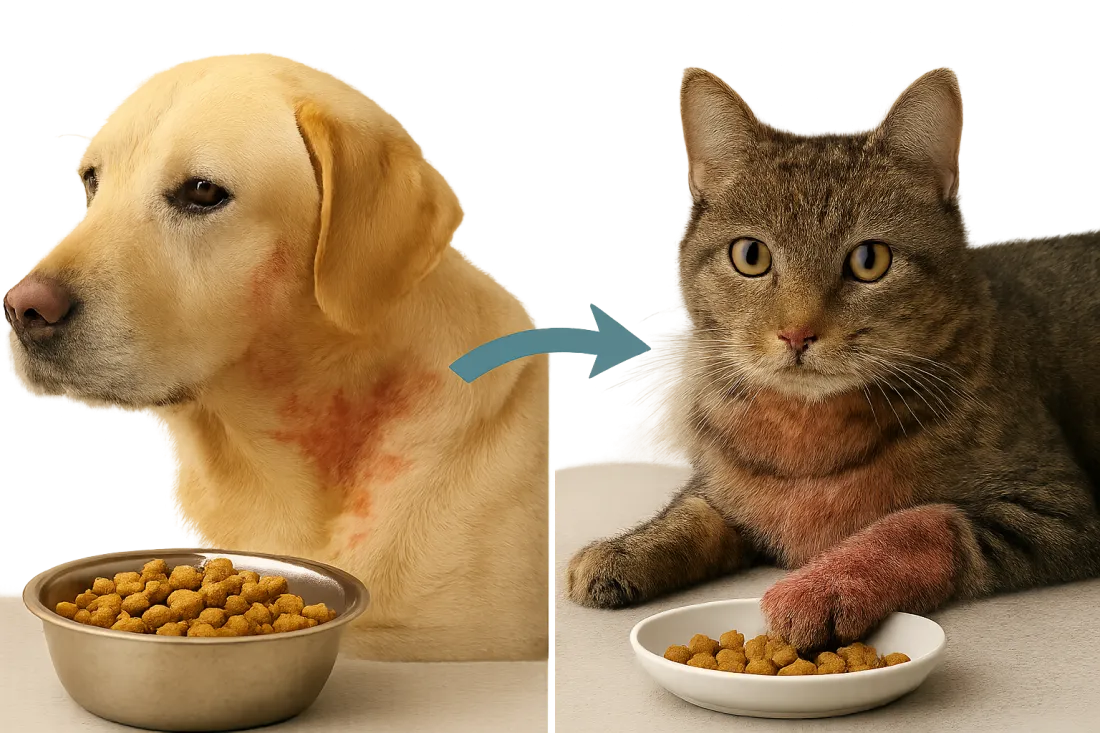
Food allergy vs intolerance vs sensitivity in pets
People often call any bad reaction to food an “allergy,” but the type of reaction matters for diagnosis and long-term management.
What a true food allergy is
A true food allergy is an immune system overreaction to a specific protein in the diet. The body treats that protein as a threat and mounts an inflammatory response. In pets, this usually shows up as:
- Itchy skin (especially paws, face, ears, belly, armpits, groin).
- Red, inflamed skin or rashes.
- Recurrent ear infections.
- Sometimes vomiting or diarrhea along with skin signs.
True food allergies tend to be lifelong. Once the immune system is sensitized to a particular protein, that trigger usually needs to be avoided long term.
Food intolerance in pets
Food intolerance is a non-immune reaction. The gut simply does not handle a certain ingredient well. Common examples include:
- Very fatty meals causing loose stool in some dogs.
- Lactose intolerance when pets are given milk or dairy treats.
- Certain additives or very rich treats causing gas or soft stool.
Intolerance usually causes digestive upset more than skin problems. It may depend on the amount eaten and sometimes improves if the portion is reduced or the ingredient is avoided.
Food sensitivity or adverse reaction
“Food sensitivity” is a broad, less precise term. Veterinarians may use “adverse food reaction” to cover both true allergies and intolerances when the exact mechanism is unclear. From a practical standpoint, if a particular food repeatedly leads to symptoms, it is safer to avoid it, regardless of the label.
Typical food allergy symptoms in dogs and cats
Food allergies in pets often look like other skin diseases, which is why structured diagnosis is so important. Common signs include:
- Itchy paws and chewing feet – licking or chewing between the toes, staining of fur from saliva.
- Itchy face and ears – rubbing the face on furniture or carpet, scratching at ears.
- Recurrent ear infections – smelly, waxy, or red ears that improve with treatment but keep coming back.
- Red belly, armpits, or groin – often with hair thinning or small bumps.
- Hot spots – moist, painful skin lesions from intense licking or chewing.
- Chronic anal gland issues – scooting, licking under the tail, or repeated anal gland problems.
- Digestive signs – intermittent vomiting, soft stool, or diarrhea along with skin problems.
In cats, food allergies can also cause:
- Overgrooming, especially on the belly or inner thighs.
- Small scabs or bumps around the head and neck.
- Patchy hair loss without obvious scratching.
These signs can also be caused by fleas, mites, infections, or environmental allergies. A veterinary visit is essential before assuming food is the main culprit.
Common food allergens in US pet diets
Any protein can become an allergen, but some ingredients appear more often in pets with food allergies simply because they are common in diets. Examples include:
- Beef
- Chicken
- Dairy ingredients (such as cheese treats or milk-based products)
- Egg
- Wheat or other grains in some pets
- Soy in some diets
- Fish in some cats and dogs
Because many commercial foods use similar protein sources, pets are often exposed to the same ingredients for years. Over time, some pets develop an allergy to one of these frequent proteins. Novel proteins (such as duck, venison, or others) or hydrolyzed diets are sometimes used in elimination trials because the pet is less likely to have been exposed to them before.
How veterinarians diagnose food allergies in pets
There is no simple blood test or cheek swab that reliably diagnoses food allergies in pets. Many marketed tests measure antibodies in blood, saliva, or hair, but these have not been shown to accurately identify problem foods. Veterinarians typically rely on a structured process:
- History and physical exam
They ask about diet (including treats, table scraps, flavored medications, and supplements), age of onset, seasonality, and previous treatments. They examine the skin, ears, and coat, and may recommend tests to rule out parasites or infections. - Rule out other causes
Fleas, mites, fungal infections, and bacterial skin infections can all cause itching and redness. These are often treated first or tested for, because they are common and easier to confirm. - Consider environmental allergies
If itching is clearly seasonal or linked to outdoor exposure, environmental allergies may be more likely. Sometimes both food and environmental triggers are present. - Vet-supervised elimination diet trial
This is the main tool for diagnosing food allergies. The pet is fed a carefully chosen diet with either a novel protein or hydrolyzed protein, with strict avoidance of all other foods, for a set period (often several weeks). If symptoms improve and then return when the old food is reintroduced, a food allergy is strongly suspected.
The elimination diet requires commitment from everyone in the household. Without strict control of what the pet eats, the results can be misleading.
Comparing elimination diet options for itchy pets
Veterinarians commonly recommend one of three broad diet types for an elimination trial. The best choice depends on your pet’s history, your budget, and how strictly you can control ingredients.
| Diet option | What it is | Best fit scenario | Main advantages | Key trade-offs and risks |
|---|---|---|---|---|
| Veterinary hydrolyzed protein diet | Commercial diet where proteins are broken into smaller fragments that are less likely to trigger the immune system. | Pets that have eaten many different proteins over time, or when previous trials with novel proteins did not help. | Highly controlled formula; convenient; designed specifically for allergy trials. | Usually costs more than standard food; must be fed exclusively; some pets may not like the taste. |
| Veterinary novel protein diet | Commercial diet using a protein and often a carbohydrate the pet has not eaten before. | Pets with a fairly simple past diet where a truly new protein can still be identified. | Convenient; balanced nutrition; easier to feed than home-cooked options. | “Novel” may not be truly novel if the pet has had similar treats; cross-contact between products is possible. |
| Home-cooked elimination diet | Owner prepares a simple recipe (usually one protein and one carbohydrate) under veterinary guidance. | Pets with very restricted ingredient needs or when commercial options are not tolerated. | Full control over ingredients; can avoid additives and flavorings. | Time-consuming; risk of nutritional imbalance if not formulated with professional input; harder to maintain long term. |
Step-by-step guide to a vet-supervised elimination diet
Always plan an elimination diet with your veterinarian, especially if your pet has other medical conditions. The general process usually looks like this:
- Gather a complete diet history
List every food, treat, chew, table scrap, flavored medication, and supplement your pet currently gets and has eaten regularly in the past. This helps identify which proteins to avoid. - Choose the trial diet with your vet
Based on your pet’s history, your vet will recommend a hydrolyzed diet, a novel protein diet, or a home-cooked recipe. Confirm how long the strict trial should last and what improvements to watch for. - Clear out conflicting foods
Put away or donate old foods and treats so they are not given by mistake. Remind all family members and visitors that the pet is on a medical diet trial. - Transition gradually to the new diet
To reduce digestive upset, many veterinarians suggest mixing the new diet with the old over several days, increasing the new diet portion each day until the pet is fully on the trial food. Follow your vet’s specific instructions. - Feed only the trial diet for the full period
During the trial, your pet should receive only the prescribed diet, approved treats made from the same formula or single-ingredient treats your vet has cleared, and plain water. Avoid table scraps, flavored medications (ask your vet for alternatives), dental chews, and any unapproved snacks. - Track symptoms daily
Use a simple daily log to rate itching, ear issues, stool quality, and any other signs. This helps you and your vet see trends over time. - Check in with your vet
Schedule follow-up visits or updates during the trial. Your vet may adjust medications for comfort while still allowing the diet trial to be meaningful. - Challenge with the old diet
After the trial period, if your pet has improved, your vet may recommend reintroducing the previous food to see if symptoms return. A clear flare after reintroduction strongly supports a food allergy diagnosis.
You have a dog or cat with chronic itching or skin problems, and your veterinarian has recommended an elimination diet to check for food allergies. You need a clear, practical way to run the trial at home without accidentally sabotaging the results.
Key inputs: the specific trial diet your vet prescribed (hydrolyzed, novel protein, or home-cooked), a list of all current foods, treats, and flavored medications, and a notebook or digital note where you can record daily symptoms such as itch level, ear condition, and stool quality.
Action steps: 1) Remove or store all non-approved foods and treats so they are not given by habit. 2) Inform every person who feeds or interacts with your pet that only the vet-approved diet and treats are allowed for the trial period. 3) Choose a clear start date and write it at the top of your log. 4) Each day at roughly the same time, rate your pet’s itch on a simple 0–5 scale, note any ear discharge or redness, and describe stool as firm, soft, or diarrhea. 5) If your pet accidentally eats something off-plan, record exactly what and when it happened and continue the trial, noting any symptom changes over the next few days.
How to verify results: At the end of the agreed trial period, review your log with your vet. Look for a consistent reduction in itch scores, fewer ear problems, and more stable stool compared with the first week. If symptoms clearly improved during strict feeding and then worsen again when the old diet is reintroduced under your vet’s guidance, that pattern strongly supports food as a significant trigger. If the log shows no meaningful change, your vet can use that evidence to pivot toward other diagnoses such as environmental allergies or skin infections.
Reading pet food labels and avoiding hidden ingredients
During an elimination diet, label reading becomes critical. Many products contain multiple protein sources or flavorings that can undermine the trial.
Key points when checking labels:
- Scan the full ingredient list – not just the front of the bag or can. Marketing terms like “with chicken flavor” or “beef dinner” do not reveal all ingredients.
- Look for multiple animal proteins – some foods combine chicken, beef, fish, and egg in one formula. These are not suitable for most elimination trials.
- Watch for generic terms such as “animal fat,” “meat by-products,” or “poultry by-product meal” if your vet wants you to avoid certain species. Ask your vet or the manufacturer if you are unsure what species are included.
- Check treats, chews, and toppers – many contain chicken, beef, or dairy even when the main flavor sounds different.
- Consider flavored medications – heartworm preventives, joint chews, and some tablets use beef or pork flavoring. Ask your vet which options are safe during the trial.
When in doubt, bring packages or photos of labels to your veterinarian so you can review them together.
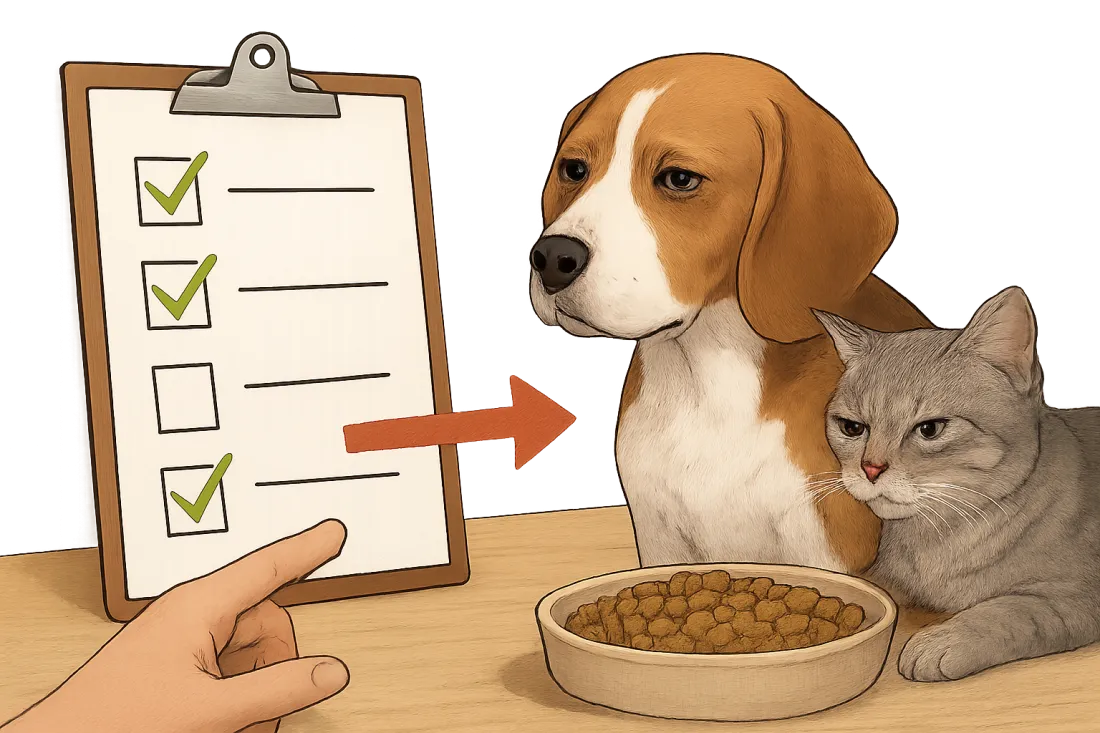
Structured daily checklist for elimination diet tracking
Use this checklist each day of the trial. It helps you stay consistent and gives your veterinarian clear information.
- Food and treats
- Fed only the prescribed elimination diet at each meal.
- Gave only vet-approved treats or skipped treats entirely.
- Did not offer table scraps, leftovers, or unplanned snacks.
- Medications and supplements
- Gave only medications and supplements cleared by the vet for the trial.
- Checked whether any new medication is flavored and confirmed with the vet if it is allowed.
- Accidental exposures
- Confirmed that the pet did not access trash, other pets’ food, or dropped food on the floor; if an accident happened, wrote down what was eaten and the time.
- Symptom tracking
- Recorded an itch score (0–5) for the day.
- Ear check: noted normal / red / smelly / discharge.
- Skin check: noted any new red areas, hot spots, or hair loss.
- Stool check: firm / soft / diarrhea; recorded any vomiting.
- Comfort and behavior
- Noted whether appetite was normal or changed.
- Noted whether energy level was normal or changed.
Bring this information to follow-up appointments so your veterinarian can see patterns over the full trial period, not just on the day of the visit.
Reintroducing foods and planning a long-term diet
If your pet improves on the elimination diet, the next step is to identify which ingredients are safe and which trigger symptoms. This is done through controlled food challenges.
How food reintroduction usually works
- Confirm improvement
Before adding anything new, your veterinarian will want to see that your pet’s symptoms have clearly improved and are relatively stable on the trial diet. - Challenge with the previous diet
Often, the first challenge is simply feeding the old diet again for a short period while monitoring for a flare in itching or other symptoms. A clear worsening suggests that something in that diet is a trigger. - Test single ingredients
Under veterinary guidance, you may then add one new protein or ingredient at a time to the safe base diet, usually for several days, while tracking symptoms. If a flare occurs, that ingredient is marked as a likely allergen and removed again. - Build a safe list
Over time, you and your veterinarian can create a list of tolerated proteins and carbohydrates. This list guides long-term diet choices and safe treat options.
Planning your pet’s long-term diet
Once triggers are identified, long-term management usually involves:
- Feeding a commercial diet that uses only tolerated ingredients, or continuing a carefully balanced home-prepared diet planned with professional input.
- Choosing treats and chews that match the safe ingredient list.
- Checking new foods or supplements with your veterinarian before introducing them.
- Monitoring for any new symptoms, especially if the diet changes.
Many pets with food allergies live comfortable lives once their diet is stabilized. Environmental allergies, if present, may still need separate management.
Common mistakes that derail food allergy investigations
A few frequent missteps can make it much harder to know whether food is really the problem.
- Changing foods too quickly or too often
Switching brands or formulas every few days makes it impossible to link symptoms to specific ingredients. Each trial needs enough time to see a pattern. - Allowing small “cheats”
Even tiny amounts of an allergenic protein can trigger a reaction. A single chicken-flavored treat or table scrap can confuse the results of weeks of careful feeding. - Relying on unproven test kits instead of a diet trial
Mail-in tests that claim to identify food allergies from hair, saliva, or blood have not been shown to reliably pinpoint problem foods. They can lead to unnecessary restrictions or false reassurance. - Ignoring non-food causes
Assuming food is the only issue can delay diagnosis of fleas, mites, infections, or environmental allergies that also need treatment. - Home-cooking without guidance
Long-term home-prepared diets that are not properly balanced can lead to nutrient deficiencies. Always involve your veterinarian if you plan to feed a home-cooked diet for more than a short trial.
How to decide your next step if your pet has skin problems
Use these decision points to choose what to do now:
- Your pet is itchy or has skin problems but has not seen a veterinarian yet
Book a veterinary appointment. Bring photos of flare-ups, a list of all foods and treats, and your questions about food allergies. - Your veterinarian suspects allergies but other causes have not been ruled out
Follow through with recommended tests or treatments for fleas, mites, or infections first. An elimination diet works best once these are addressed. - Your veterinarian has recommended an elimination diet
Commit to a clear start date, remove conflicting foods from the house, and use the daily checklist to track symptoms. - You completed a diet trial but saw no improvement
Share your tracking notes with your veterinarian. Ask whether the trial was strict enough and what other diagnoses should be considered, such as environmental allergies. You may find it helpful to review detailed guidance on the signs of allergies in dogs and cats so you can describe what you are seeing more precisely. - Your pet improved on the trial diet
Discuss a structured reintroduction plan with your veterinarian to identify specific triggers and design a sustainable long-term diet.
FAQ about food allergies and skin problems in pets
What should I understand first about food allergies and my pet’s itchy skin?
Food allergies are only one possible cause of itchy skin, and they often occur alongside other problems like fleas or environmental allergies. The most reliable way to confirm a food allergy is a carefully planned elimination diet, not a quick over-the-counter test. That diet must be strict and long enough for the skin to calm down, and it should always be designed with your veterinarian so your pet still receives complete nutrition.
What mistakes should I avoid when trying an elimination diet for my pet’s skin problems?
The biggest mistakes are allowing small “cheats,” not counting treats and flavored medications as part of the diet, and stopping the trial too early because improvement is slow. Another common error is switching to a food labeled “hypoallergenic” or “grain free” without checking whether it actually avoids the proteins your pet has eaten before. To keep the trial meaningful, feed only the agreed diet, track symptoms daily, and contact your veterinarian before changing anything.
What should I do next after learning about food allergies and skin problems in pets?
Next, schedule a veterinary visit if you have not already, and bring a full list of everything your pet eats and any skin or ear treatments used so far. Ask whether an elimination diet is appropriate now or whether other causes should be ruled out first. If your veterinarian recommends a diet trial, agree on the specific food, the length of the trial, and how you will measure progress. Set up your daily checklist and pick a start date so everyone in the household can support the plan.
Can food allergies cause only ear infections or only paw licking in pets?
Yes, some pets with food allergies mainly show repeat ear infections or focused paw licking rather than obvious full-body rashes. However, those signs can also come from environmental allergies, yeast or bacterial infections, or contact irritants. If your pet has isolated ear or paw problems, a veterinarian can examine the skin, treat any infection, and decide whether a food trial is worth pursuing.
How long does it usually take to see improvement in food-related skin problems?
Skin takes time to heal, and itching can persist for weeks even after the trigger is removed. Many veterinarians expect at least several weeks of strict feeding before judging whether the diet is helping. Some pets show earlier improvement, while others need more time, especially if they started with severe infections or inflammation. Consistent tracking with your daily checklist helps you and your veterinarian see gradual changes that might be easy to miss day to day.