Indoor-only vs indoor–outdoor cats in the U.S.: what actually keeps cats safer
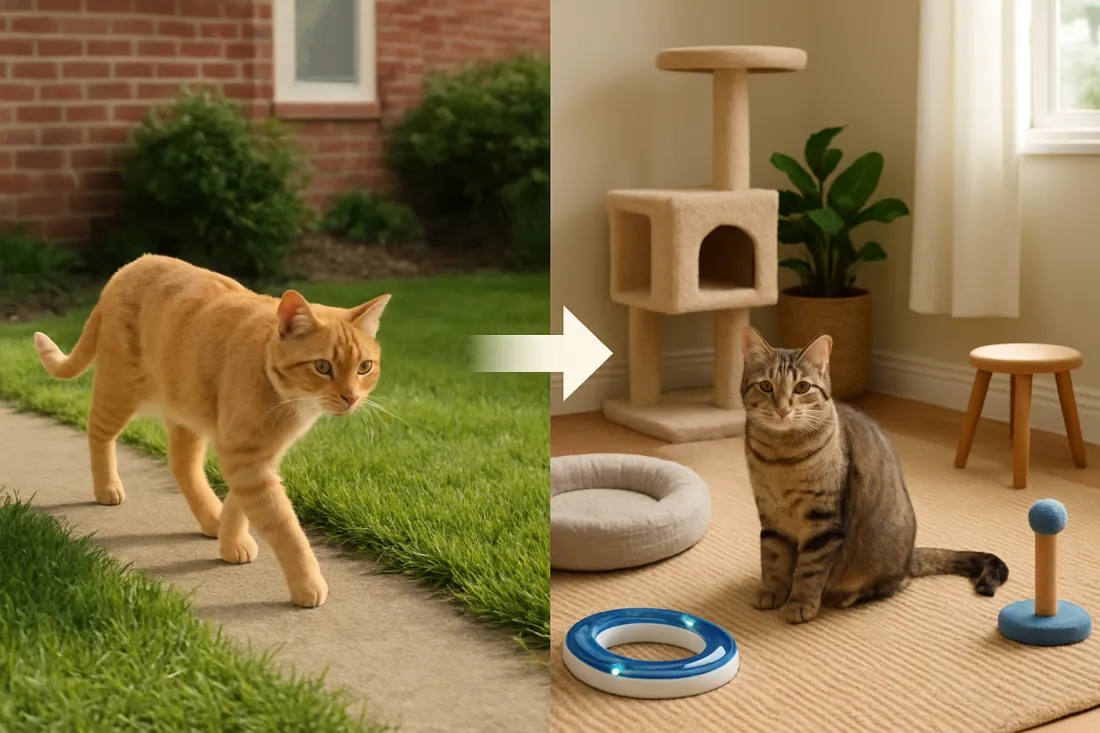
For most U.S. homes, a strictly indoor lifestyle is the safest option for cats and kinder to local wildlife. Outdoor access can feel “natural,” but it comes with real risks:
- Safety risks outdoors: traffic, predators (dogs, coyotes, birds of prey in some areas), getting lost, fights with other cats, toxins (antifreeze, lawn chemicals), and people who do not like cats.
- Health risks outdoors: higher exposure to parasites and contagious diseases, plus injuries that may go unnoticed.
- Wildlife impact: free-roaming cats can hunt birds, small mammals, and reptiles, even when well fed. Keeping cats indoors or in secure outdoor enclosures reduces this impact.
An indoor cat can be just as happy and usually lives longer, if you meet their physical and emotional needs with good setup, daily interaction, and enrichment.
Core welfare needs for a happy, healthy indoor cat
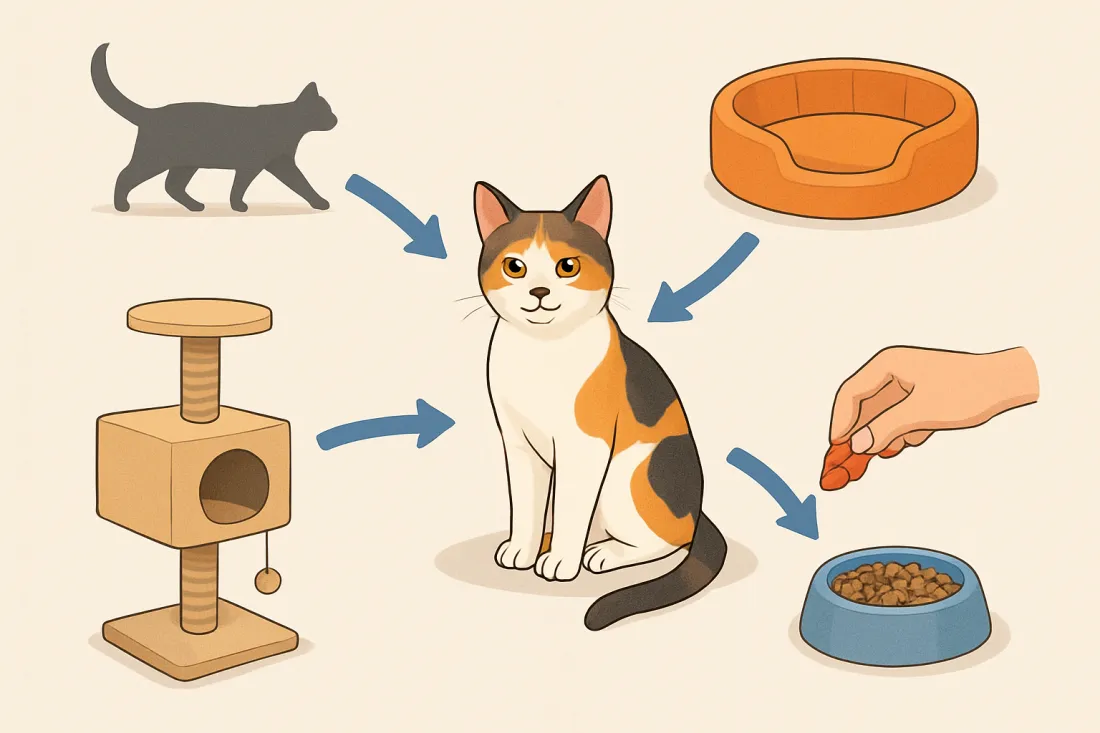
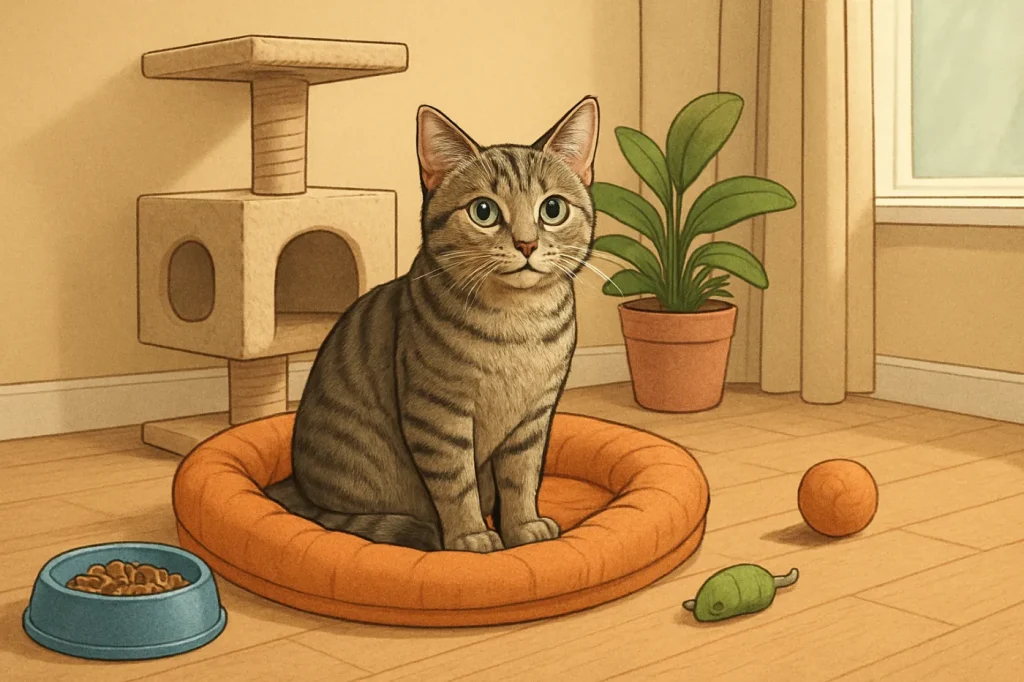
Think of your home from your cat’s point of view. A content indoor cat has all of these basics covered:
- Clean litter boxes: enough boxes, in quiet spots, scooped daily.
- Food that fits their age and health: measured meals, not endless refills, plus slow transitions when changing food.
- Fresh water: multiple bowls or a fountain, away from litter and food.
- Scratching options: vertical posts and horizontal scratchers in key locations.
- Climbing and perching: shelves, cat trees, or safe furniture access so they can get up high.
- Hiding and resting spots: cozy, semi-enclosed places where they feel safe.
- Daily play and mental stimulation: interactive play with you plus solo toys.
- Routine vet care: wellness exams, vaccines as recommended, parasite prevention, and dental checks.
If you want a deeper dive into health routines, see the daily care routine for indoor cats and the preventive care schedule for indoor cats.
Room-by-room indoor cat setup: how to use the space you already have
You do not need a huge house to keep an indoor cat happy. You do need to use vertical space and create a few “cat zones” in each area.
Entryway or hallway: safe transition zone
- Door management: use a baby gate, screen door, or a habit of closing inner doors before opening the front door to reduce door-dashing.
- Scent station: place a scratching post or mat near the entry so your cat can mark their territory with scent instead of spraying.
- Shoe and bag control: store shoes and bags out of reach if they may carry outdoor chemicals or plants.
Living room: main play and social area
Imagine a triangle: one corner is a cat tree, one is a hiding spot, and one is a play zone.
- Vertical highway: cat tree by a window, or shelves that let your cat move from couch back to bookcase top to a high shelf.
- Window entertainment: a window perch plus a bird feeder or plant pots outside the glass for safe “cat TV.”
- Hiding spots: a covered bed under a side table or a cardboard box with two cut-out doors.
- Play basket: keep wand toys, balls, and kicker toys in one basket so it is easy to grab for short play sessions.
Kitchen or feeding area: calm, predictable meals
- Separate food and litter: keep litter boxes in a different room if possible; many cats dislike eating near their toilet.
- Feeding station: use a mat under bowls, and consider a raised platform for older cats.
- Water variety: one bowl near food, another in a quiet spot elsewhere, or a fountain for cats who like running water.
- Food puzzles: rotate puzzle feeders or treat balls to turn meals into a hunting game.
Bedroom: safe sleep and bonding space
- Nighttime retreat: a soft bed on a chair, a shelf, or the foot of your bed gives your cat a predictable sleep area.
- Vertical escape: a shelf or dresser top where they can retreat if they feel overwhelmed.
- Quiet play: soft toys for gentle play before bed; avoid loud crinkly toys at night if you are a light sleeper.
Bathroom or laundry room: litter and grooming hub
- Litter corner: place boxes away from noisy appliances and not directly next to the toilet or shower if possible.
- Grooming caddy: store brush, nail clippers, and wipes in one basket so short grooming sessions are easy.
- Door policy: use a doorstop or a cat door so your cat is never accidentally locked away from their litter box.
Small apartment layout: simple “cat circuit”
In a studio or one-bedroom, aim for a loop your cat can walk and climb:
- Start at a window perch or cat tree.
- Move along the back of the couch to a shelf or bookcase.
- Drop down to a play rug with toys.
- Access a hideaway under a bed or table.
- Return to the window perch.
This circuit gives exercise, choice, and security even in a compact space. If you rent, ideas from how to pet proof an apartment for a cat can help you add enrichment without damaging walls.
Litter box best practices for indoor cats
Litter box issues are one of the most common indoor cat problems, and they are often fixable with setup changes.
- Number of boxes: many behaviorists suggest one box per cat, plus one extra. In a small apartment, use at least one large, easy-access box per cat.
- Size: a good rule is a box at least as long as your cat from nose to base of tail so they can turn around comfortably.
- Type: many cats prefer uncovered boxes because they feel less trapped. If you use a covered box, watch for signs your cat avoids it.
- Placement: quiet, low-traffic, always-accessible spots. Avoid next to loud appliances or right by food and water.
- Substrate: most cats like fine, soft litter. If you change brands, mix the new with the old over several days.
- Cleaning schedule: scoop at least once daily; fully change litter and wash the box with mild soap regularly based on odor and use.
If your cat suddenly stops using the box, contact a vet to rule out medical issues before assuming it is “behavioral.”
Enrichment ideas: DIY vs store-bought, and how often to rotate
Indoor cats need chances to stalk, chase, climb, scratch, and explore. Mixing homemade and store-bought options keeps things interesting without overspending.
Comparison table: DIY vs store-bought enrichment
| Enrichment type | DIY example | Store-bought example | Best for | How often to rotate or refresh |
|---|---|---|---|---|
| Hunting and food puzzles | Dry food in toilet paper rolls with holes cut out | Commercial puzzle feeder or treat ball | Cats who eat too fast or need mental work at mealtimes | Offer some form daily; rotate designs weekly to keep it novel |
| Chasing and pouncing | Ribbon or fleece strip tied to a stick (supervised only) | Wand toys with feathers or fabric lures | Daily interactive play sessions with you | Play 1–3 times a day; swap toy style every few days |
| Scratching | Cardboard scratch pad taped to a stable board | Sisal-covered scratching post or cat tree | Redirecting scratching from furniture | Keep available all the time; replace worn surfaces as needed |
| Climbing and perching | Cleared bookshelf levels with non-slip mats | Multi-level cat tree or wall-mounted shelves | Cats who like to observe from above | Keep permanent; move a bed or toy on and off shelves weekly |
| Hiding and burrowing | Cardboard box with two doors and a blanket inside | Covered cat cave or tunnel | Shy cats or those in busy households | Keep at least one hideout always available; rotate locations monthly |
| “Cat TV” and scent | Bird feeder outside a window, paper bags, and boxes | Cat-safe interactive toys and catnip or silvervine toys | Cats who enjoy watching or sniffing new things | Refresh boxes and bags weekly; offer catnip toys every 1–2 weeks |
Budget-conscious enrichment tips
- Save clean boxes and paper bags (handles removed) as tunnels and forts.
- Cut holes in a large box to make a multi-room “cat castle.”
- Use old blankets or towels to create new beds on different surfaces.
- Hide a few pieces of kibble around a room for a simple scent-hunting game.
- Rotate toys: put half away and swap every week so old toys feel new again.
- Use free videos of birds or fish on a screen for short supervised “TV” sessions if your cat enjoys them.
Sample daily interaction and play schedules for different households
Indoor cats do best with predictable routines. Below are sample patterns you can adjust to your lifestyle.
Single person working full-time away from home
- Morning (10–15 minutes)
- Short wand-toy play session before breakfast.
- Feed measured breakfast; use a puzzle feeder a few days a week.
- Quick litter scoop and water refresh.
- During the day
- Leave a window perch open and a few safe toys out.
- Hide a small treat or two before leaving for a mini “treasure hunt.”
- Evening (20–30 minutes total, can be split)
- Interactive play session when you get home: chase, pounce, and “catch” the toy.
- Calm petting or brushing if your cat enjoys it.
- Feed dinner; another quick play burst before bed if your cat is energetic.
Family with kids
- Before school: one child does a 5–10 minute play session while another checks water and helps scoop litter (with adult supervision).
- After school: supervised play with rules (no chasing the cat, let the cat walk away, use toys not hands).
- Evening: quiet bonding time on the couch; adults handle any grooming.
Teach children to read cat body language: relaxed tail and slow blinks mean “okay,” flattened ears or swishing tail mean “give space.”
Work-from-home adult
- Morning: play before breakfast, then let the cat settle in a bed near your workspace.
- Midday: 5–10 minutes of play or training (like teaching “sit” or “high five” with treats).
- Afternoon: short break to rotate toys or open a different window view.
- Evening: longer play session and cuddles if your cat likes them.
Aim for at least two interactive play sessions every day, more for young or very active cats.
Early signs your indoor cat is stressed or bored (and what to change)
Cats often show discomfort through behavior changes before they show obvious illness. Contact a vet for sudden or severe changes, and also review the environment.
Possible signs of stress or boredom
- Hiding more than usual or avoiding family members.
- Overgrooming, bald patches, or frequent scratching without clear cause.
- Sudden aggression toward people or other pets.
- Excessive meowing, especially at night.
- Scratching furniture more, or new destructive behavior.
- Changes in appetite or weight.
- Litter box accidents or spraying urine on vertical surfaces.
Practical changes to try
- Increase play: add one extra 10–15 minute interactive play session daily for at least a week.
- Add hiding and vertical spots: give your cat at least one more hideout and one more elevated perch.
- Improve predictability: feed and play at roughly the same times each day.
- Reduce conflict: if you have multiple pets, provide separate resources (bowls, beds, litter boxes) and safe escape routes.
- Quiet zones: create a no-children, no-dog room or corner where your cat can retreat.
- Consult professionals: if stress signs continue, talk with your vet; they may suggest medical checks or a behavior consultation.
Decision checklist: is your indoor setup meeting your cat’s needs?
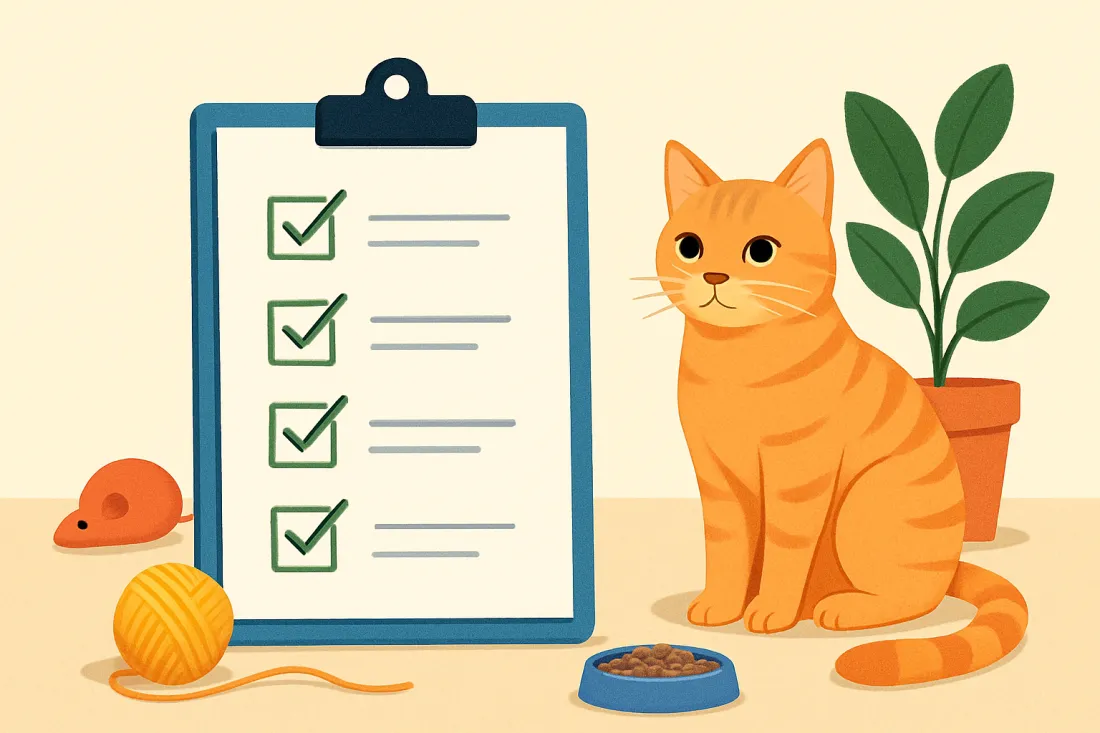
Use this quick checklist to spot gaps. If you answer “no” to any item, that is your next improvement project.
- Litter and hygiene
- Do you have enough litter boxes in quiet, accessible locations?
- Are boxes scooped at least once daily?
- Is your cat using the boxes consistently?
- Food and water
- Is your cat on a consistent feeding schedule with measured portions?
- Is fresh water available in at least two spots or in a fountain?
- Do you use food puzzles or hunting games at least a few times a week?
- Space and comfort
- Does your cat have at least one high perch and one safe hiding place?
- Is there a comfortable window view or other “cat TV” option?
- Are scratching posts or pads available in the rooms your cat uses most?
- Play and interaction
- Do you play interactively with your cat at least twice a day?
- Do you rotate toys weekly so they stay interesting?
- Do you respect your cat’s signals when they want space?
- Health and vet care
- Has your cat had a wellness exam in the last year (or as advised by your vet)?
- Are vaccines and parasite prevention up to date based on your vet’s guidance?
- Do you monitor weight, appetite, and litter habits for changes?
You can turn this into a printable home setup checklist by copying the items into your preferred notes app or planner and checking them off as you go.
Common mistakes that make indoor cats unhappy
Avoiding a few frequent errors can prevent many behavior and health problems.
- Assuming “indoors = automatically safe and happy”: indoor cats still need enrichment, vet care, and attention.
- Using one small, hidden litter box for multiple cats: this often leads to accidents and stress.
- Leaving food out all day for “free feeding”: can contribute to weight gain and makes it harder to notice appetite changes.
- Not providing scratching options: cats will scratch something; give them legal options or they will choose your furniture.
- Punishing normal cat behavior: yelling or spraying water can increase fear and stress. Redirect to appropriate behavior instead.
- Ignoring subtle changes: small shifts in activity, grooming, or litter habits can be early warning signs; do not wait for dramatic symptoms.
- Overcrowding without resources: multiple cats can live happily indoors, but only if there are enough boxes, beds, and hiding spots.
FAQ about keeping indoor cats happy and healthy
Can a single indoor cat be happy?
Yes. A single indoor cat can be very content if you provide daily interactive play, safe places to rest and hide, chances to climb and scratch, and regular social time on their terms. Some cats enjoy another cat companion, but others prefer being the only pet. Watch your cat’s behavior and discuss any big changes with your vet or a behavior professional.
What is the 3-3-3 rule for cats?
People sometimes use a “3-3-3” idea as a rough way to remember that many cats need time to adjust after a big change, such as adoption or moving:
- About 3 days to start coming out of shock and explore a little.
- About 3 weeks to settle into a routine and show more of their personality.
- About 3 months to feel fully at home and secure.
These time frames are only guidelines. Some cats relax faster, others take longer. Patience, predictable routines, and gentle interaction help the process.
What is “I love you” in cat language?
Cats show affection differently from humans. Common signs many cats use when they feel safe and bonded include:
- Slow blinking: soft eyes and a slow blink toward you often signal comfort. You can “say it back” by slowly blinking at your cat.
- Head bunting: gently bumping you with their head to share scent.
- Relaxed body and purring: especially when they choose to sit or lie near you.
- Following you around: staying close, even without wanting to be held.
Each cat has their own style; learn your cat’s personal “love language” by watching what they do when they are relaxed and content.
Can cats help reduce stress for people?
Many people feel calmer when they spend time with a cat. Quiet petting, listening to purring, or simply watching a relaxed cat can be soothing. If you are relying on a pet for emotional support, it is still important to look after your own health and seek professional help when needed.
How much play does an indoor cat really need?
Most healthy adult indoor cats benefit from at least two short interactive play sessions daily. Kittens and very active cats often need more frequent, shorter bursts. Watch for signs your cat is satisfied, such as catching the toy a few times and then walking away or grooming.
Putting it all together: a balanced indoor cat lifestyle
A happy indoor cat has a few key ingredients every day: clean litter, good food and water, places to climb and hide, regular play, and gentle, respectful interaction. Combine these with routine vet care and small, steady improvements to your home setup, and you give your cat the best chance at a long, comfortable, and emotionally rich life indoors.