
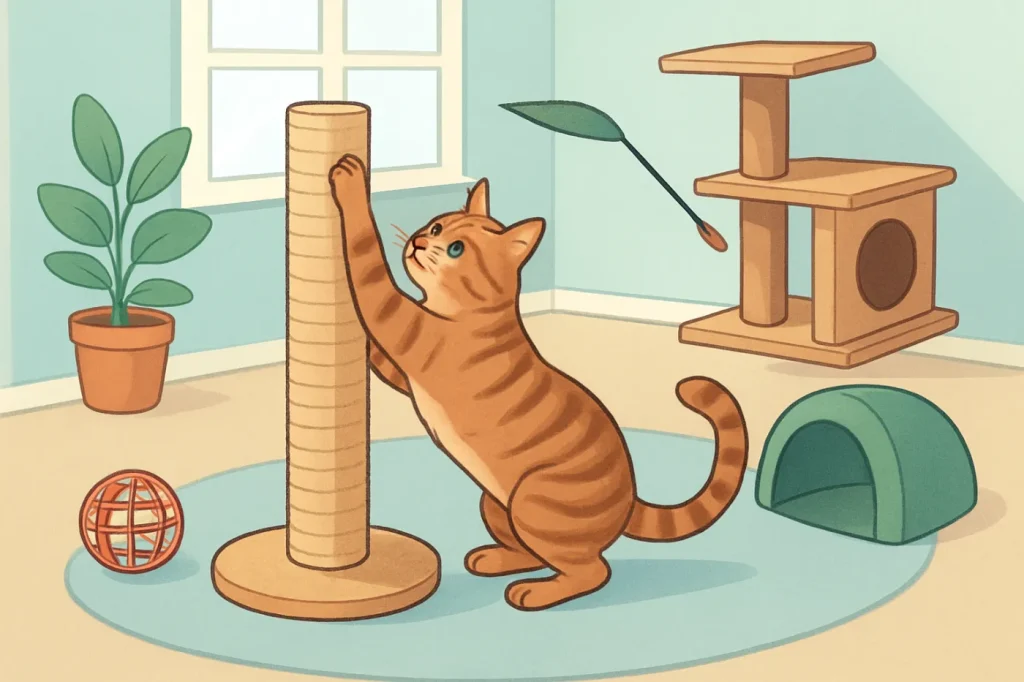
Indoor cats can live long, safe lives, but without enough stimulation they often become bored, stressed, and prone to behavior issues. To avoid boredom in indoor cats, you need a mix of daily play, a stimulating environment, and predictable routines that let your cat express natural hunting, climbing, scratching, and exploring behaviors.
Key things to understand about indoor cat boredom
Before changing toys or buying new cat trees, it helps to understand what your cat actually needs:
- Cats are hunters, even indoors. They need chances to stalk, chase, pounce, and “catch” something every day, not just cuddle and nap.
- Boredom and stress often look like “bad behavior.” Scratching furniture, meowing at night, or attacking ankles are often signs of unmet needs, not a “naughty” cat.
- Short, frequent activity beats one long session. A few 5–10 minute play bursts spread through the day usually work better than one long play marathon.
- Routine is calming. Predictable feeding, play, and quiet times help most indoor cats feel secure and less restless.
- Enrichment does not have to be expensive. Cardboard boxes, paper bags, and DIY puzzle feeders can be as effective as store-bought toys when used well.
If you remember that your indoor cat is a small predator living in a human apartment, enrichment becomes about giving safe, daily outlets for that predator brain.
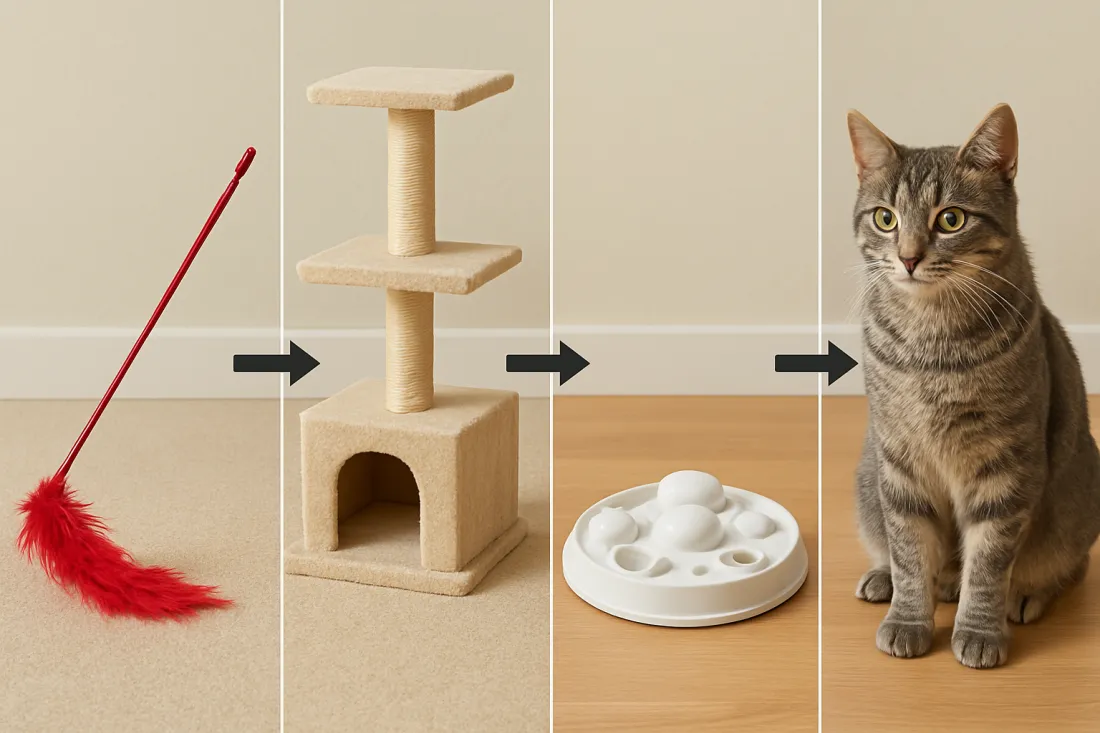
Recognizing signs of boredom and stress in indoor cats
Many owners only think about enrichment after behavior problems start. Watch for these common signs that an indoor cat may be bored, under-stimulated, or stressed:
Behavior changes that suggest boredom
- Over-sleeping combined with low interest in toys, people, or new things (sleep is normal, but a cat that barely reacts to anything may be under-stimulated or unwell).
- Sudden bursts of wild energy (zoomies) at night, including racing through the house, knocking things over, or pouncing on sleeping humans.
- Attention-seeking behaviors like constant meowing, pawing at you, or walking across your keyboard whenever you sit down.
- Destructive scratching on furniture, carpets, or door frames, especially if there are no appealing scratching posts nearby.
- Rough play with people (biting, clawing, ankle attacks) that often comes out of nowhere when the cat seems “hyper.”
Stress-related signs that may overlap with boredom
Boredom and stress often go together. A chronically under-stimulated cat may also show:
- Over-grooming (licking or chewing fur until it thins or bald spots appear).
- Changes in appetite (begging for food out of boredom or, less commonly, eating less).
- Litter box changes (peeing or pooping outside the box, especially near doors or windows).
- Hiding more than usual or seeming jumpy and easily startled.
Any sudden change in behavior or litter box habits should be discussed with a veterinarian to rule out medical issues. Once health problems are addressed, enrichment is often a key part of improving your cat’s mood and behavior. A structured preventive care schedule for indoor cats can help you keep track of health checks while you work on enrichment.
Core enrichment areas: how to build a stimulating indoor environment
To avoid boredom in indoor cats, think in categories: hunting, climbing, scratching, resting, and social interaction. You do not need to do everything at once; start with the areas where your cat seems most frustrated.
1. Hunting and food enrichment
Indoor cats usually get food in a bowl with no effort. Turning meals into mini-hunting sessions provides mental and physical stimulation.
- Use puzzle feeders or food-dispensing toys. Start with easy ones so your cat quickly learns that working at the toy leads to food.
- Scatter feeding. Instead of one big bowl, hide small portions of dry food around a room so your cat has to sniff and search.
- “Hunt” for treats. Toss single treats down a hallway or across a room for your cat to chase.
- Rotate feeding spots. Occasionally move the food bowl to a new safe location to encourage exploration (keep water in a consistent place).
2. Vertical space and safe climbing
Most cats feel better when they can get up high and observe their territory.
- Provide at least one tall cat tree with multiple levels and a stable base.
- Use shelves or furniture tops (secured and decluttered) to create “cat highways” along walls.
- Place perches near windows so your cat can watch birds, people, or street activity.
- Check stability regularly so nothing wobbles or tips when your cat jumps.
3. Scratching options
Scratching is normal and necessary. If you do not provide good options, your cat will choose your couch.
- Offer both vertical and horizontal scratchers. Many cats like tall posts plus flat cardboard pads.
- Use different materials (sisal rope, cardboard, carpet) to see what your cat prefers.
- Place scratchers where your cat already scratches (near couches, beds, or doorways) instead of in an unused corner.
- Make scratchers rewarding with catnip, praise, and treats when your cat uses them.
4. Resting, hiding, and “quiet zones”
Enrichment is not only about activity. Cats also need safe, cozy places to retreat and feel secure.
- Provide at least one covered hideout (cat cave, box with a blanket, or a carrier left open with bedding).
- Create elevated resting spots where your cat can nap undisturbed.
- Respect your cat’s quiet time. Do not disturb them when they choose to hide or sleep in their safe spots.
5. Social and sensory enrichment
- Daily gentle interaction. Petting, brushing (if your cat enjoys it), and calm talking help many cats feel secure.
- Safe window views. A bird feeder outside a window or a view of a courtyard can provide hours of entertainment.
- Cat TV and sounds. Some cats enjoy short sessions of videos with birds or small animals; keep volume low and watch your cat’s reaction.
- Scent enrichment. Rotate safe catnip toys or silvervine if your cat responds to them.
Playtime schedule examples for different households
Owners often know they “should play more” but struggle to fit it into real life. The goal is not perfection; it is a realistic routine you can keep most days. Use these examples as starting points and adjust based on your cat’s age, health, and energy level.
Choosing the right play style
Before building a schedule, notice what your cat naturally likes:
- Chasers: Love wand toys, laser pointers (always end with a real toy to catch), and anything that moves fast.
- Pouncers: Prefer toys that hide behind furniture edges or under blankets, then “escape.”
- Stalkers: Enjoy slow, sneaky movements, like a toy creeping along the floor or rustling in a paper bag.
- Wrestlers: Like kick toys they can grab and bunny-kick with their back legs.
Sample weekday enrichment schedules
These examples assume a healthy adult cat. Kittens usually need more, shorter sessions; seniors may prefer gentler play.
Schedule A: Busy 9–5 worker
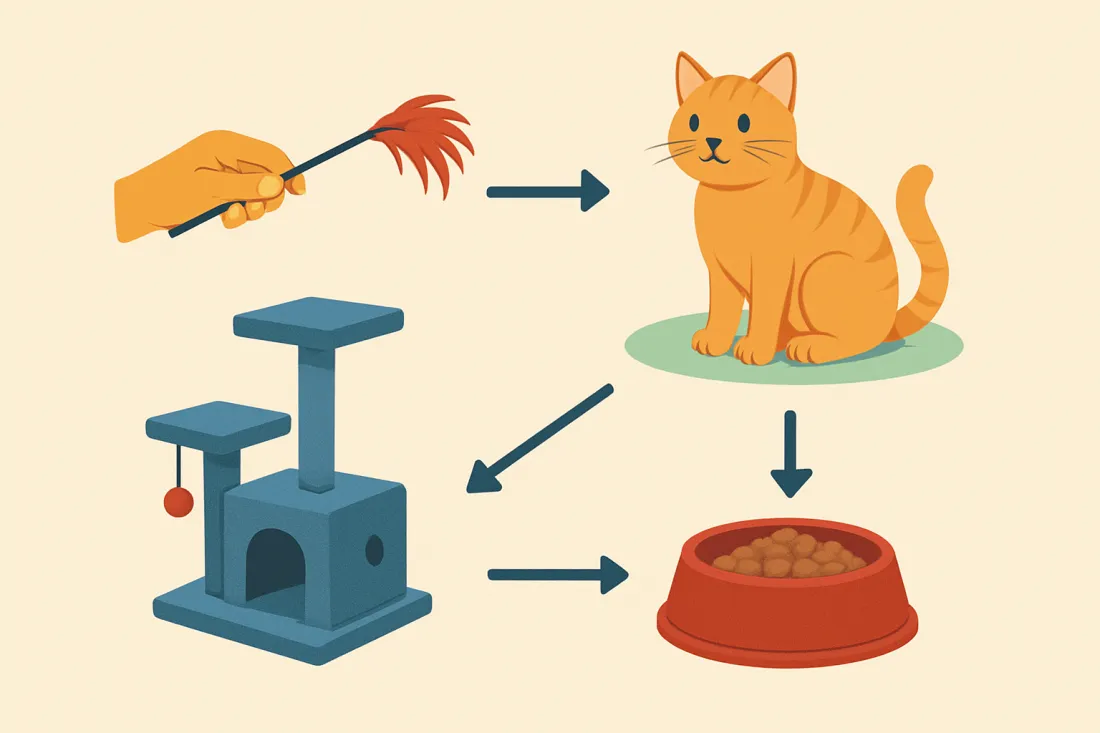
- Morning (10 minutes): Wand toy play before breakfast. End by letting your cat “catch” the toy, then feed breakfast.
- Before leaving (2–3 minutes): Hide a few treats or fill a puzzle feeder for your cat to find after you go.
- Evening (10–15 minutes): Two short play bursts with a wand toy or toss-and-chase game while you unwind.
- Night (2–3 minutes): Calm petting or brushing in your cat’s favorite spot to help them settle.
Schedule B: Work-from-home owner
- Morning (5–10 minutes): Play before breakfast; then feed.
- Midday (5 minutes): Quick treat hunt or puzzle feeder refill during your lunch break.
- Afternoon (5 minutes): Short wand toy session when you take a screen break.
- Evening (10 minutes): More active play, then a small snack or part of dinner.
Schedule C: Multi-cat household
- Separate one-on-one play for each cat daily to reduce competition and build your bond.
- Group play only if all cats enjoy it and no one is bullied or left out.
- Multiple resources (bowls, litter boxes, beds, scratchers) so cats are not forced to share everything.
If you are building a broader routine, pairing enrichment with a consistent daily care routine for indoor cats can make it easier to remember play and puzzle time.
Comparison table: enrichment options and when to use them
Use this table to decide which enrichment ideas fit your cat and your home right now.
| Enrichment option | Best for these cats | Owner time/effort | Main benefits | Potential drawbacks |
|---|---|---|---|---|
| Interactive wand toy play | Most healthy cats; especially young or high-energy cats | Moderate: needs human for 5–15 minutes per session | Burns energy, strengthens bond, satisfies hunting drive | Requires consistency; toys must be stored safely when not in use |
| Puzzle feeders / food toys | Food-motivated cats; cats that eat too fast | Low to moderate: fill toys, occasionally adjust difficulty | Slows eating, adds mental work, reduces boredom when alone | Some cats need time to learn; may be noisy on hard floors |
| Cat tree and shelves | Cats that like to climb or watch from above | One-time setup, occasional cleaning and safety checks | Uses vertical space, increases territory, offers safe retreats | Needs floor and wall space; poor-quality trees can wobble |
| Window perch with outside view | Indoor-only cats; cats that watch birds or people | Low: install once, then maintain cleanliness | Visual stimulation, reduces boredom during the day | Some cats may become frustrated if outdoor animals come too close; curtains may be needed at night |
| DIY boxes, tunnels, paper bags | Curious, playful cats; budget-conscious owners | Low: cut holes, rotate items, remove damaged pieces | Encourages exploration and hiding, very inexpensive | Needs regular inspection to remove tape, staples, or torn pieces |
| Catnip or silvervine toys | Cats that respond to catnip; some older cats perk up with it | Low: offer toys, rotate weekly | Short bursts of playful energy, variety in scent | Not all cats respond; some may get overexcited and need breaks |
Common enrichment mistakes and how to avoid them
Many owners try enrichment but do not see results because of a few predictable mistakes. Avoid these to make your efforts more effective.
1. Buying toys but not playing with the cat
Leaving toys on the floor is not the same as interactive play. Most toys only come “alive” when you move them like prey.
Fix: Schedule short, daily sessions where you actively move the toy. Think like a mouse or bird: dart, hide, pause, then move again.
2. Never rotating toys or activities
Cats get bored of the same toy lying in the same spot for weeks.
Fix: Keep most toys in a box and bring out a few at a time. Swap them every few days so they feel “new.”
3. Overwhelming the cat with too much at once
Cluttering the room with toys, tunnels, and scratchers can be confusing rather than enriching.
Fix: Introduce one or two new items at a time. Watch what your cat actually uses and remove what they ignore.
4. Playing only when the cat misbehaves
If you only play after your cat attacks your feet or scratches the couch, you may accidentally reward the behavior.
Fix: Offer play proactively at predictable times, not as a reaction to unwanted behavior.
5. Ignoring health and age limits
A cat that refuses to play might be in pain or unwell, not just bored.
Fix: If your cat suddenly stops playing, limps, pants during play, or seems uncomfortable, pause intense games and talk with your vet. Align enrichment with your cat’s health plan, using resources like an annual vet care schedule for dogs and cats USA as a planning guide.
6. Forcing interaction when the cat wants space
Chasing, grabbing, or cornering a cat “to make them play” increases stress and can damage trust.
Fix: Invite play by moving the toy away from your cat and letting them choose to chase. Respect signals that they are done (walking away, grooming, losing interest).
Structured checklist: step-by-step plan to reduce boredom
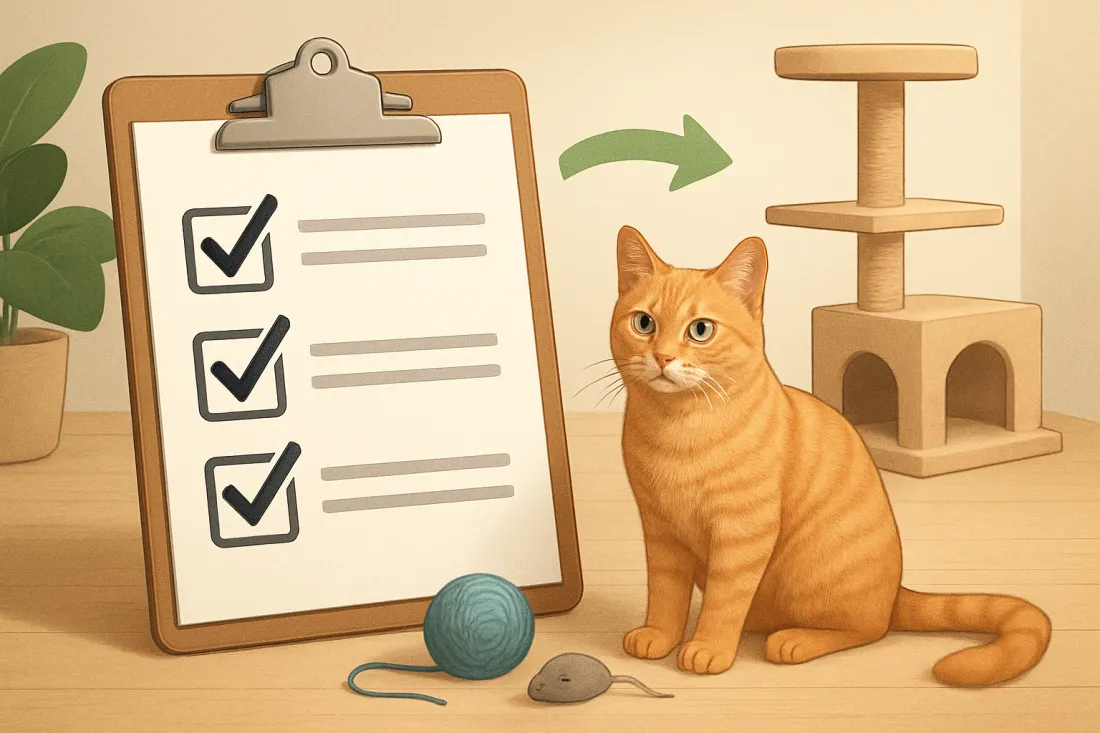
Use this checklist to build a realistic enrichment plan over the next few weeks. You do not need to check every box at once; progress is what matters.
Step 1 – Observe and note current behavior (Days 1–3)
- Write down when your cat is most active (morning, afternoon, late night).
- List any problem behaviors (night meowing, scratching, ankle attacks, over-grooming).
- Note which toys or activities your cat already enjoys, if any.
- Check your home for existing vertical spaces, window views, and scratching options.
Step 2 – Set simple, specific goals
- Choose one or two behaviors you want to improve (for example, “less night zoomies” or “stop scratching the couch”).
- Decide on a minimum daily playtime you can realistically keep (for example, “two 5-minute sessions”).
- Pick one environment upgrade to add this week (a new scratcher, window perch, or puzzle feeder).
Step 3 – Build a basic daily enrichment routine
- Schedule play before meals when possible to mimic hunt–eat–groom–sleep.
- Plan at least one interactive play session during your cat’s natural active time.
- Prepare one independent activity for when you are busy (puzzle feeder, treat hunt, box maze).
- Choose a consistent quiet time when the home is calm and your cat can rest undisturbed.
Step 4 – Adjust the environment
- Add or reposition scratching posts near favorite rest spots and problem areas.
- Set up or improve vertical space (cat tree, shelf, or cleared top of a sturdy piece of furniture).
- Create at least one safe hideout (box, covered bed, or open carrier with bedding).
- Check that litter boxes, food, and water are easy to access and in low-stress locations.
Step 5 – Monitor and fine-tune (Weekly)
- Once a week, ask: Has any problem behavior improved? (Less night noise, fewer ankle attacks, less destructive scratching.)
- Rotate toys and activities so your cat does not see the same setup every day.
- Increase or decrease play intensity based on your cat’s age, health, and interest.
- If there is no improvement after a few weeks, or if behavior worsens, consult your veterinarian or a qualified behavior professional.
Limitations and when to seek extra help
Enrichment is powerful, but it is not a magic fix for every problem.
- Medical issues first. Sudden changes in behavior, appetite, or litter box use can signal illness or pain. Enrichment should complement, not replace, veterinary care.
- Trauma or severe anxiety. Cats with a history of trauma, long-term stress, or aggression toward people or other pets may need a tailored behavior plan.
- Multi-cat tension. If cats are fighting, blocking each other from resources, or constantly on edge, enrichment must be combined with careful resource management and sometimes separation.
In these situations, enrichment is still important, but professional guidance helps you apply it safely and effectively.
FAQ about avoiding boredom in indoor cats
How much daily play does an indoor cat really need to avoid boredom?
Most healthy indoor cats do well with several short play sessions spread through the day rather than one long session. Aim for at least two to three sessions of 5–10 minutes of active, interactive play, adjusting up or down based on your cat’s age, health, and interest. Kittens and young adults often need more frequent bursts, while seniors may prefer gentler, shorter games. Watch your cat’s body language—if they are still eager and engaged, you can extend the session; if they start grooming, looking away, or walking off, they are probably done for now.
What is the biggest mistake owners make when trying to keep indoor cats entertained?
A very common mistake is relying only on passive toys—leaving a pile of toys on the floor—and expecting the cat to entertain themselves. Many cats lose interest quickly when toys do not move like real prey. The most effective boredom-buster is interactive play where you move the toy in ways that trigger your cat’s hunting instincts. Another frequent mistake is never rotating toys or activities; even the best toy becomes dull if it never changes location or context.
What should I do first after realizing my indoor cat is bored?
Start small and specific instead of trying to change everything at once. For the next week, commit to one or two short interactive play sessions every day, ideally before meals, and add one simple environment upgrade such as a new scratching post near your couch or a cardboard box hideout. At the same time, observe and note any changes in your cat’s behavior—are they calmer at night, scratching less, or seeking you out in a more relaxed way? Use those observations to decide which enrichment ideas to expand next, following the step-by-step checklist above.
Can an indoor-only cat really be happy without going outside?
Many cats can live content, low-stress lives entirely indoors if their needs for hunting, climbing, scratching, resting, and social contact are met. The key is to replace the stimulation they would get outdoors with safe indoor alternatives: interactive play, puzzle feeding, vertical spaces, window views, and predictable routines. Some cats also enjoy controlled outdoor experiences such as leash walks or secure enclosures, but these are not the only path to a good quality of life. Focus on consistent enrichment and regular health care to support your indoor cat’s wellbeing.
How do I know if my enrichment plan is working for my cat?
Over several weeks, you should see gradual changes rather than overnight transformation. Signs that your plan is helping include more relaxed body language, fewer destructive behaviors (like scratching furniture or attacking ankles), more predictable sleep and play patterns, and a cat that seeks out play or interaction in a positive way. If you track a few specific problem behaviors before and after starting your plan, it becomes easier to see progress. If there is no improvement or your cat seems more stressed, review your routine, simplify where needed, and talk with your veterinarian to rule out health issues.