Key treatment options for arthritis in dogs and how they work together
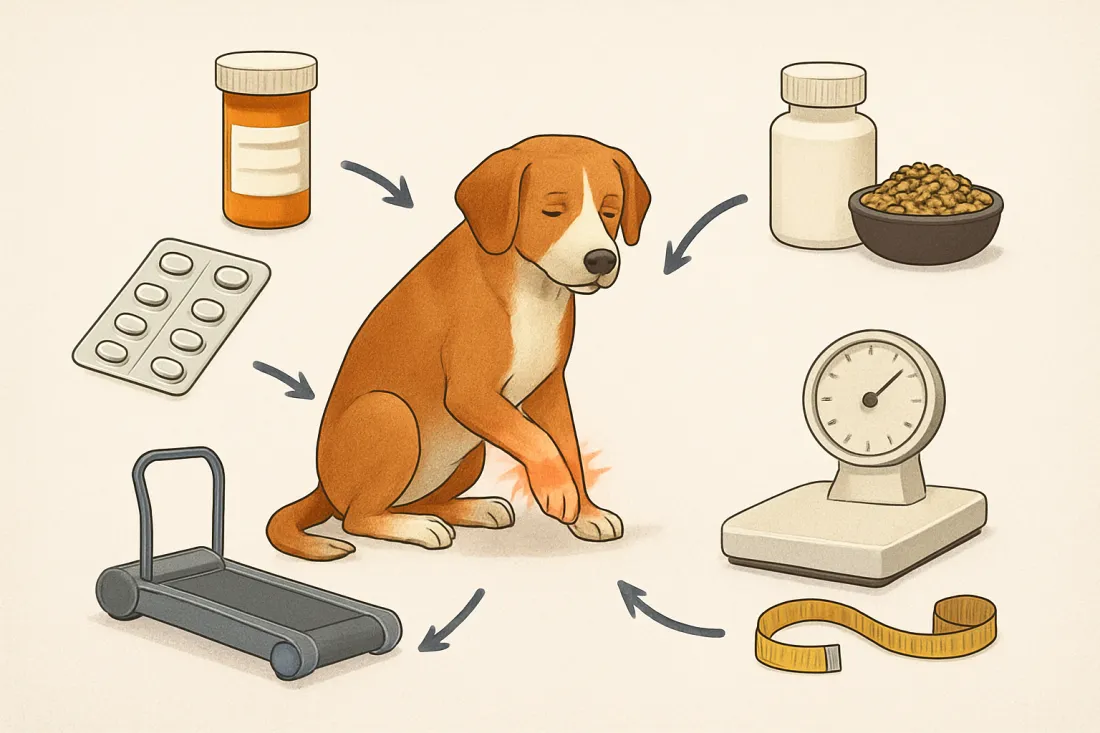
Dog arthritis treatment is rarely about finding one “magic pill.” The real goal is to combine several options so your dog has less pain, better mobility, and a good quality of life for as long as possible. Most dogs with arthritis are treated with a mix of:
- Prescription medications to control pain and inflammation
- Supplements and joint support products to protect cartilage and reduce inflammation over time
- Physical therapy and rehab (like hydrotherapy or laser) to build strength and keep joints moving safely
- Weight control and lifestyle changes to reduce stress on joints
- Occasional procedures such as joint injections or surgery in specific cases
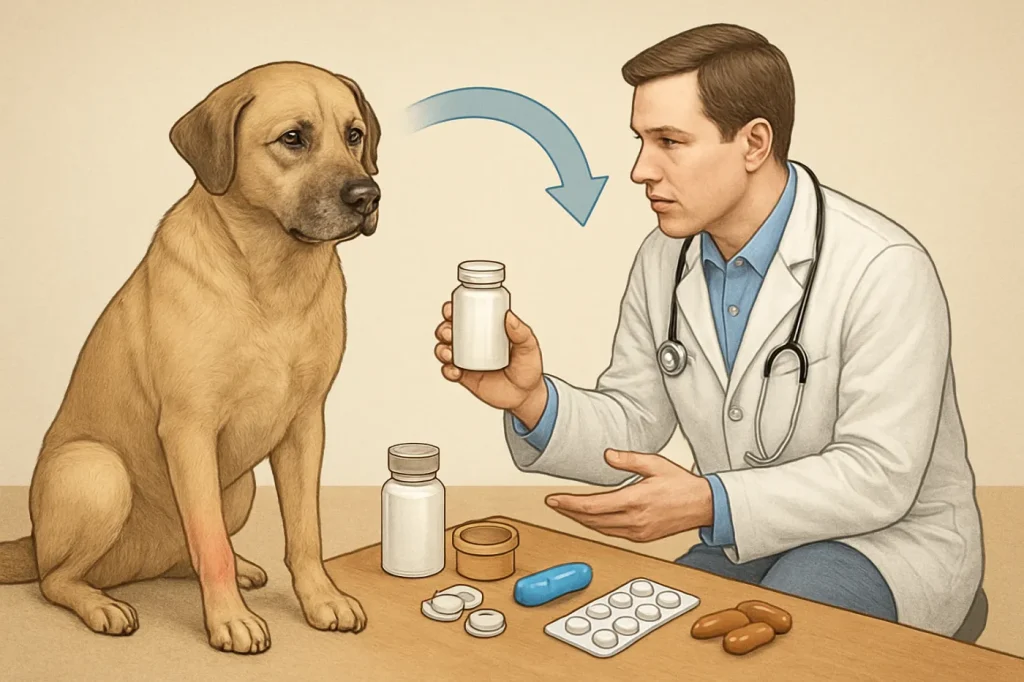
A veterinarian usually builds a multimodal treatment plan—several tools used together and adjusted over time. Your job as a pet owner is to notice changes, give medications correctly, watch for side effects, and speak up when something seems off.
What a good arthritis treatment plan is trying to achieve
Before comparing treatment options, it helps to understand what success actually looks like. For most dogs, the goals are:
- Pain control – Your dog should be comfortable enough to walk, rest, and enjoy normal activities without obvious suffering.
- Better mobility – Climbing stairs, getting into the car, and going for walks should become easier or at least not get worse quickly.
- Preserving muscle and joint function – Strong muscles support weak joints; the plan should help your dog stay as active as safely possible.
- Slowing progression – Arthritis cannot be reversed, but smart management can slow down joint damage and stiffness.
- Good quality of life – Your dog should still want to play, interact, and enjoy daily life, not just “exist” on the couch.
When you talk with your vet, describe these goals in concrete terms, for example:
- “I want him to be able to go on a 20-minute walk without limping badly afterward.”
- “I’d like her to be able to get up from her bed without crying out.”
This helps your vet choose and adjust treatments in a way that matches your expectations and your dog’s reality.
Comparing major treatment options for arthritis in dogs
The table below gives a side‑by‑side look at common options, when they fit, and what to watch for. Use it as a starting point for a vet conversation, not a do‑it‑yourself plan.
| Treatment option | Best for | What it mainly does | Key pros | Key cautions / what to watch |
|---|---|---|---|---|
| Prescription NSAIDs (non‑steroidal anti‑inflammatory drugs) | Mild to severe arthritis pain and inflammation | Reduce joint inflammation and pain so the dog can move more comfortably | Often the backbone of treatment; usually give clear improvement when well‑tolerated | Can affect stomach, kidneys, or liver; need vet exam, bloodwork, and close monitoring for vomiting, diarrhea, loss of appetite, or lethargy |
| Other prescription pain meds (e.g., nerve‑targeting or opioid‑like drugs) | Moderate to severe pain not fully controlled by NSAIDs alone | Change how the nervous system senses pain | Can make a big difference for dogs still uncomfortable on NSAIDs | May cause sedation, wobbliness, or behavior changes; dosing must be followed exactly |
| Joint injections (e.g., into the joint space or around it) | Specific joints causing major problems (hip, elbow, knee) | Deliver medication directly into or near the joint to reduce inflammation and pain | Can give targeted relief when oral meds are not enough or cause side effects | Require sedation or anesthesia; effect is temporary and may need repeating; not right for every dog |
| Joint supplements (glucosamine, chondroitin, green‑lipped mussel, etc.) | Early arthritis, long‑term joint support, or dogs at risk (large breeds, prior injuries) | Support cartilage and joint fluid; may reduce inflammation over time | Generally well‑tolerated; can be used long‑term alongside other treatments | Effects are usually subtle and slow; quality varies between products; not a replacement for pain meds in moderate to severe cases |
| Omega‑3 fatty acids (fish oil) | Dogs with chronic joint inflammation, especially if they can’t take high doses of NSAIDs | Help reduce inflammation throughout the body, including joints | Often easy to give; may also support skin and heart health | Too much can cause stomach upset or affect clotting; must be dosed based on vet guidance |
| Physical therapy and rehab (hydrotherapy, laser, exercises) | Dogs who can still move but are stiff, weak, or unsteady | Build muscle, improve range of motion, and reduce pain with controlled movement | Can significantly improve function and confidence; often reduces reliance on high medication doses | Requires regular sessions and home exercises; not every dog enjoys all modalities |
| Weight management and lifestyle changes | Almost every dog with arthritis, especially if overweight | Reduce stress on joints and make movement easier | Low risk and high impact; supports every other treatment | Requires consistency at home; progress can be slow and easy to undo with extra treats |
| Surgery (e.g., joint repair or replacement in selected cases) | Severe joint damage, certain hip or knee problems, or when medical management fails | Correct or bypass the worst structural problems in the joint | Can dramatically improve comfort and function in the right candidate | Involves anesthesia, recovery time, and significant cost; not suitable for all dogs or families |
For a deeper dive into specific medications and their risks, you can also read about arthritis medications for dogs side effects and how vets monitor them.
Prescription medications for canine arthritis explained simply
Veterinary arthritis medications fall into a few main groups. Your dog may be on one or several at the same time.
NSAIDs: the foundation of many arthritis plans
NSAIDs (non‑steroidal anti‑inflammatory drugs) are often the first prescription step for arthritis. They work by reducing inflammation in the joints, which in turn reduces pain. What you should know:
- They are prescription‑only for a reason. Human painkillers like ibuprofen or naproxen can be dangerous or deadly to dogs, even in small amounts.
- Vets usually recommend baseline bloodwork before starting long‑term NSAIDs to check liver and kidney function.
- Many dogs take NSAIDs for months or years with careful monitoring.
Common side effects to watch for:
- Vomiting or diarrhea
- Loss of appetite
- Black, tarry, or bloody stools
- Unusual tiredness or weakness
If you notice any of these, stop the medication and call your vet promptly for guidance.
Additional pain medications
Some dogs still hurt even on NSAIDs, or they cannot take NSAIDs at all. In those cases, vets may add or switch to other pain medications that work on the nervous system. These drugs can:
- Help with nerve‑related pain
- Take the “edge off” chronic discomfort
- Be combined with NSAIDs for better control
What to watch:
- Sleepiness or sedation
- Wobbliness or unsteady walking
- Behavior changes (restlessness, agitation, or unusual quietness)
Always give these exactly as prescribed and never double up doses if you miss one without checking with your vet.
Joint injections and other targeted treatments
For some dogs, especially those with one or two very painful joints, your vet may suggest injections directly into or near the joint. These can:
- Deliver medication right where it is needed
- Provide relief that lasts weeks to months in some cases
- Be repeated on a schedule if they help
They are not right for every dog and usually require sedation or anesthesia, so your vet will weigh the benefits and risks based on age, overall health, and how severe the arthritis is.
Supplements and joint support products: what helps and what to question
Supplements are everywhere, and the quality varies widely. They can be a useful part of a plan, but they are not a stand‑alone cure.
Glucosamine, chondroitin, and similar joint supplements
These ingredients are often combined in chewable tablets or powders. They aim to:
- Support cartilage health
- Improve joint lubrication
- Reduce low‑grade inflammation over time
How to use them wisely:
- Think of them as a long‑term investment, not a quick fix. It may take several weeks before you notice any change.
- Ask your vet to recommend a veterinary‑quality product with clear dosing for your dog’s weight.
- Use them alongside, not instead of, pain control if your dog is clearly uncomfortable.
Omega‑3 fatty acids (fish oil)
Omega‑3s from fish oil can help reduce inflammation in the joints and throughout the body. Key points:
- Use products formulated for pets or follow your vet’s dosing instructions carefully.
- Introduce slowly to reduce the chance of stomach upset.
- Store properly to prevent the oil from going rancid.
Other supplements and “natural” products
You may see products containing herbs, CBD, or other ingredients marketed for joint health. Before starting any of these:
- Talk to your vet—even “natural” products can interact with medications or affect the liver and kidneys.
- Be cautious of big promises like “cures arthritis” or “replaces prescription meds.”
- Introduce only one new product at a time so you can tell what is actually helping or causing side effects.
Physical therapy and rehab options that really help arthritic dogs
Rehabilitation is one of the most underused but powerful tools for managing arthritis. When done correctly, it can reduce pain, improve strength, and help your dog move more confidently.
Hydrotherapy (underwater treadmill or swimming)
Water supports your dog’s weight while providing resistance. This allows:
- Gentle, low‑impact exercise
- Improved range of motion
- Better muscle strength without pounding the joints
Hydrotherapy is usually done at a rehab facility with trained staff. Some dogs need a life jacket or extra support at first.
Laser therapy and other modalities
Cold laser therapy and similar treatments aim to reduce pain and inflammation and promote tissue healing. They are typically:
- Non‑invasive and painless
- Given in short sessions, often in a series
- Used along with exercises and medications
Therapeutic exercises and home programs
A rehab vet or certified therapist can design a plan of:
- Stretching and range‑of‑motion exercises
- Strength‑building activities (like controlled sit‑to‑stand or walking over poles)
- Balance work to reduce slipping and falls
You will usually be given home exercises to do several times a week. Consistency matters more than intensity.
Acupuncture
Some vets offer acupuncture as part of arthritis management. It may help with pain control for certain dogs and is often combined with other treatments. If you are interested, look for a veterinarian trained in veterinary acupuncture and ask how they measure whether it is helping.
How vets build a multimodal arthritis treatment plan
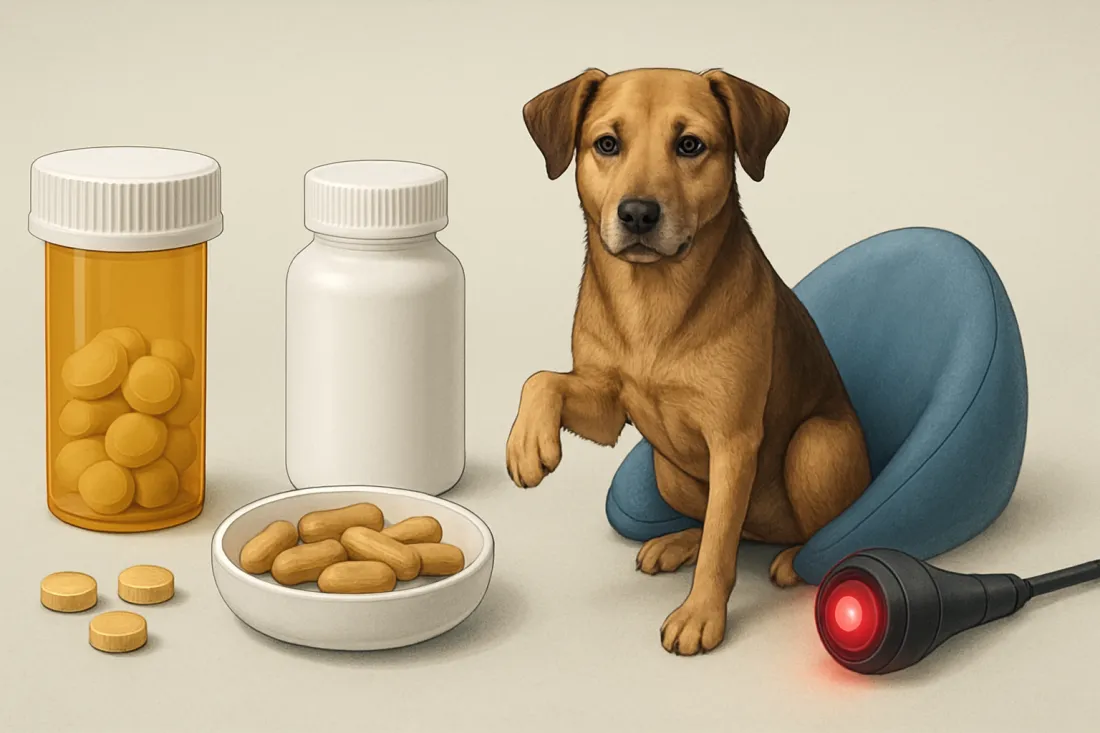
Most dogs do best when several tools are used together. A typical multimodal plan might include:
- A daily NSAID (if safe for your dog)
- A joint supplement and omega‑3s
- Weight management and controlled exercise
- Periodic rehab sessions and home exercises
- Additional pain medication on bad days or as the disease progresses
How your vet decides what to use:
- Severity of arthritis – based on exam, X‑rays, and your description of your dog’s behavior.
- Age and overall health – including kidney, liver, and heart function.
- Temperament and lifestyle – whether your dog tolerates clinic visits, water, or handling.
- Your budget and schedule – how often you can come in, what you can realistically maintain at home.
Over time, the plan is adjusted. You might:
- Increase or decrease medication doses based on response and side effects.
- Add rehab when stiffness worsens.
- Change supplements if there is no clear benefit after a reasonable trial.
For a broader overview of choices, you may also find it helpful to compare treatment options and costs for dogs with arthritis so you can plan ahead.
Monitoring for side effects and when to call the vet
Any effective arthritis plan needs regular monitoring. This protects your dog from preventable problems and helps catch issues early.
Everyday signs to track at home
Watch for changes in:
- Appetite – eating less, skipping meals, or seeming nauseous
- Drinking and urination – drinking much more or less, accidents in the house
- Stools and vomiting – diarrhea, constipation, black or bloody stools, or vomiting
- Energy level – unusual lethargy or restlessness
- Mobility – more limping, reluctance to move, or crying out
Keep a simple log of what you notice. This helps your vet see patterns and decide whether to adjust medications.
Red‑flag signs: call the vet promptly
Contact your vet as soon as possible if you see:
- Repeated vomiting or diarrhea, especially with blood
- Refusal to eat for more than a day
- Sudden collapse, extreme weakness, or confusion
- Swollen belly, pale gums, or difficulty breathing
- Severe pain that does not improve with prescribed medication
Do not give extra doses or add human medications on your own. Call the clinic or an emergency vet for guidance.
Routine check‑ups and tests
For dogs on long‑term arthritis medications, vets often recommend:
- Regular physical exams to assess pain, mobility, and muscle condition
- Periodic bloodwork to monitor liver and kidney function
- Weight checks to track progress if your dog is on a diet
Ask your vet what schedule they recommend for your dog and why.
Cost considerations and how to prioritize on a budget
Arthritis care can add up, especially over years. You do not have to do everything at once to help your dog. Instead, think in layers and priorities. Ways to prioritize:
- Start with the basics that give the biggest comfort boost – usually a well‑chosen prescription pain medication and weight management.
- Add lower‑cost, long‑term helpers – such as a quality joint supplement and omega‑3s, if your vet agrees.
- Layer in rehab or procedures – like hydrotherapy or joint injections, if your budget allows and your vet thinks they will make a meaningful difference.
- Invest in home modifications – ramps, non‑slip rugs, and supportive beds can be one‑time purchases that pay off daily.
Practical tips:
- Ask your vet which parts of the plan are non‑negotiable for comfort and which are “nice to have.”
- Discuss generic medication options when available.
- Use a written plan so you can see where your money is going and adjust if needed.
For more detailed budgeting ideas, you can explore best treatment for arthritis in dogs to see how different families balance effectiveness and cost.
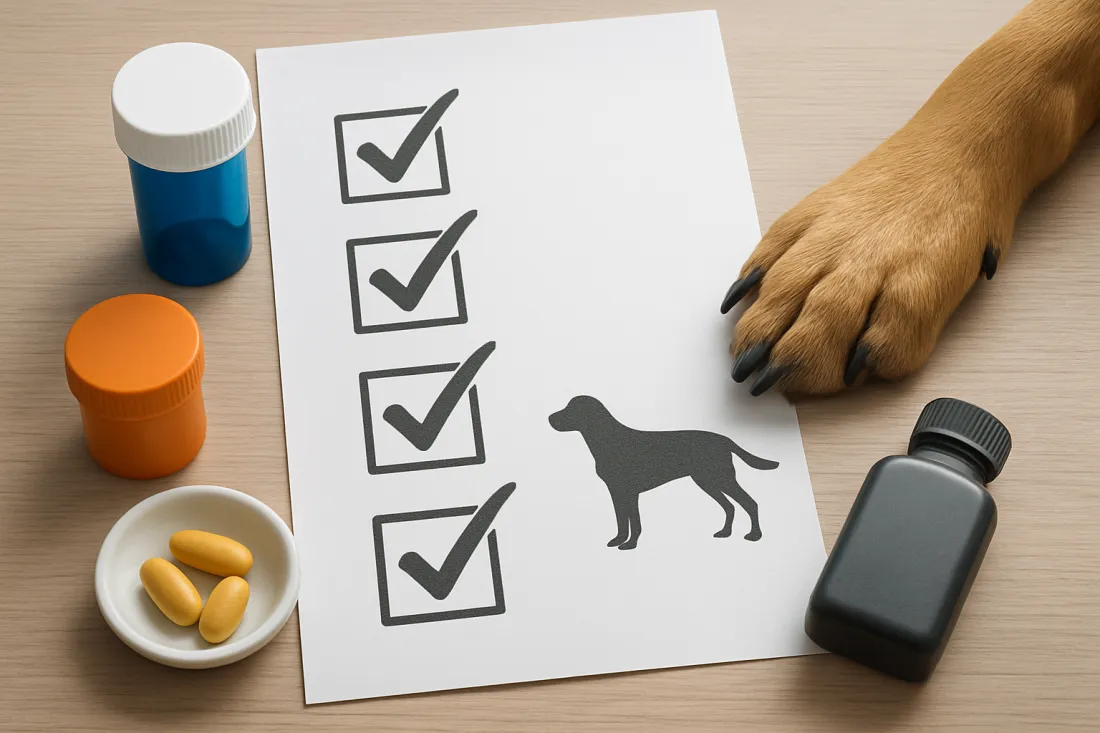
Structured checklist: questions to ask your vet about arthritis treatment
Use this checklist at your next appointment to make sure you cover the essentials and leave with a clear plan.
Before starting or changing treatment
- What type of arthritis does my dog have, and which joints are affected most?
- How severe is it right now—mild, moderate, or severe?
- What are the main goals for my dog in the next 3–6 months (comfort, activity level, weight)?
- Which treatment options do you recommend starting with, and why those first?
- Are there any tests (like bloodwork or X‑rays) you recommend before we begin?
About medications
- What is the name of this medication, and how does it help arthritis?
- How long should it take before I notice improvement?
- What side effects should I watch for, and what should I do if I see them?
- How often will my dog need check‑ups or blood tests while on this medication?
- Are there any other drugs or supplements I should avoid while using this?
About supplements and rehab
- Do you recommend a specific joint supplement or omega‑3 product for my dog?
- How long should we try a supplement before deciding if it is helping?
- Would my dog benefit from physical therapy, hydrotherapy, laser, or acupuncture?
- Can you show me a few safe home exercises or stretches to start with?
About lifestyle and long‑term planning
- Is my dog at a healthy weight, and if not, what is a realistic target?
- How much and what kind of exercise is safe right now?
- What changes at home (ramps, rugs, bed type) would help my dog the most?
- How will we know when the plan is working well, and when it needs to be adjusted?
- What signs would tell you that my dog’s arthritis is no longer well‑controlled?
Bring this list on paper or on your phone and add your own questions based on what you notice at home.
Common mistakes owners make with arthritis treatment in dogs
Avoiding a few frequent pitfalls can make a big difference in your dog’s comfort and safety.
- Using human painkillers without veterinary guidance – Many over‑the‑counter human medications are unsafe or toxic for dogs.
- Stopping medications too soon – Some owners stop as soon as the dog seems better, only to have pain return. Arthritis is chronic; many treatments need to be ongoing.
- Skipping follow‑up visits and bloodwork – This can miss early signs of medication problems or disease progression.
- Relying only on supplements – Supplements alone are rarely enough for moderate or severe arthritis pain.
- Letting weight creep up – Extra pounds put real mechanical stress on joints and can undo the benefits of other treatments.
- Over‑exercising on “good days” – A dog that feels better may overdo it, leading to a painful flare‑up later.
- Not adjusting the home environment – Slippery floors, steep stairs, and high beds can turn everyday life into an obstacle course.
Practical step‑by‑step process to build a plan with your vet
Use this simple algorithm to move from worry to a clear, workable arthritis plan.
- Observe and record
- For one to two weeks, note when your dog limps, hesitates on stairs, or struggles to get up.
- Record how long walks last and how your dog acts afterward.
- Schedule a veterinary exam
- Bring your notes and videos of your dog walking, climbing stairs, or getting up.
- Ask about pain level, joint damage, and any recommended tests.
- Agree on first‑line treatments
- Decide together on initial medications, supplements, and lifestyle changes.
- Clarify dosing, timing, and what improvements to look for.
- Set a follow‑up point
- Plan a check‑in (in person or by phone) after a set period to review progress.
- Know what signs would trigger an earlier visit.
- Layer in rehab and home modifications
- Ask if rehab, hydrotherapy, or laser could add value once pain is better controlled.
- Add ramps, rugs, and a supportive bed at home.
- Review and adjust regularly
- At each visit, discuss what is working, what is not, and whether your goals have changed.
- Be open to adjusting doses, swapping medications, or trying new modalities as your dog ages.
FAQ about treatment options for arthritis in dogs
What should I understand before choosing treatment options for my dog’s arthritis?
Understand that arthritis is a long‑term condition that usually needs ongoing management, not a one‑time fix. Most dogs do best with a combination of approaches: prescription pain control, joint support, controlled exercise, and lifestyle changes. Each dog’s plan is customized based on pain level, other health issues, and what you can realistically maintain. Your role is to give treatments consistently, watch for side effects, and communicate clearly with your vet about what you see at home.
How do I know if a treatment for my dog’s arthritis is actually working?
Look for concrete changes in daily life rather than just assuming the medication is helping. Signs of success include getting up more easily, walking farther with less limping, being more willing to climb stairs or jump into the car (if allowed), and showing more interest in play or family activities. Track these changes over several weeks, since some treatments take time. If you see no improvement or your dog seems worse, share specific examples with your vet so the plan can be adjusted.
What common mistakes should I avoid when managing my dog’s arthritis?
Avoid giving human painkillers without veterinary advice, stopping medications abruptly when your dog seems better, and skipping follow‑up visits or bloodwork. Do not rely only on supplements for a dog that is clearly in pain, and do not let your dog become overweight or over‑exercise on good days. Ignoring small changes—like hesitating before jumping or slowing down on walks—can also delay helpful adjustments to the treatment plan.
What should I do next after learning about arthritis treatment options?
Start by writing down what you notice about your dog’s mobility and comfort, including when problems are worst. Then book a veterinary appointment and bring your notes, videos, and the question checklist from above. Ask your vet to help you build a step‑by‑step plan that fits your dog’s needs and your budget. After starting treatment, monitor your dog closely for both improvements and side effects, and schedule follow‑ups to fine‑tune the plan over time.
Can lifestyle changes alone be enough to treat arthritis in dogs?
For very mild arthritis or dogs just starting to show stiffness, weight control, gentle exercise, and home modifications can make a noticeable difference. However, as arthritis progresses, most dogs need prescription pain control and possibly rehab to stay comfortable. Think of lifestyle changes as the foundation that supports every other treatment, not as a complete replacement for medical care when pain is significant.