
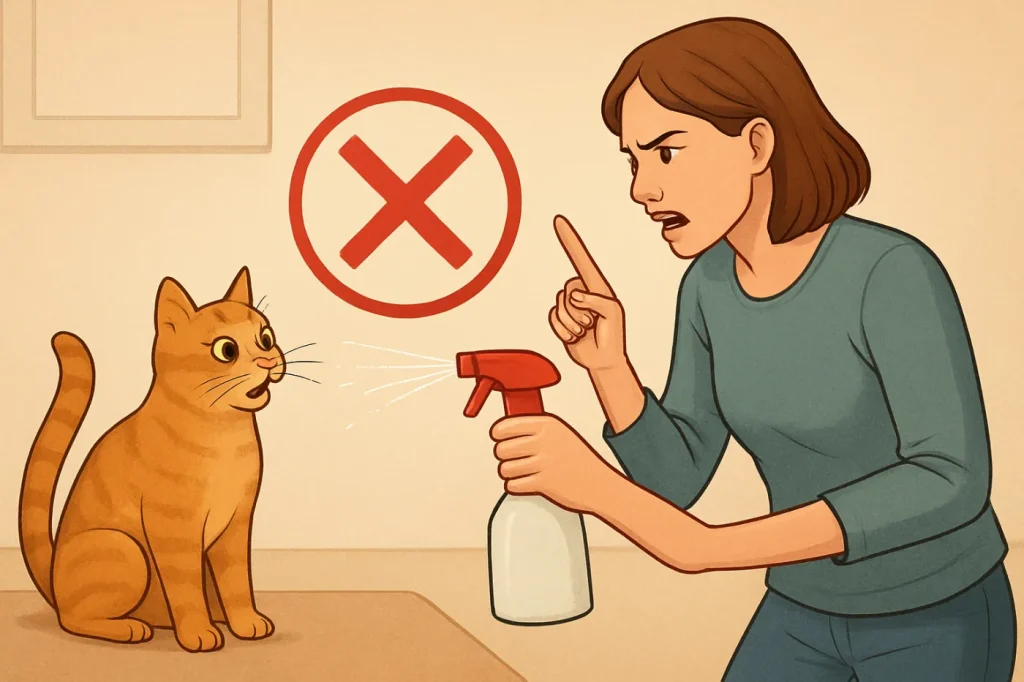
Cats can absolutely learn good manners and routines, but they do not respond to training the same way dogs do. Many “problem cats” are actually confused, scared, or reacting to training mistakes humans make without realizing.
The most important shift is simple: stop relying on punishment and confusion, and start making the “right” behavior easy, safe, and rewarding for your cat.
Key cat training mistakes to avoid right away
If you only change a few things, focus on these high-impact mistakes first:
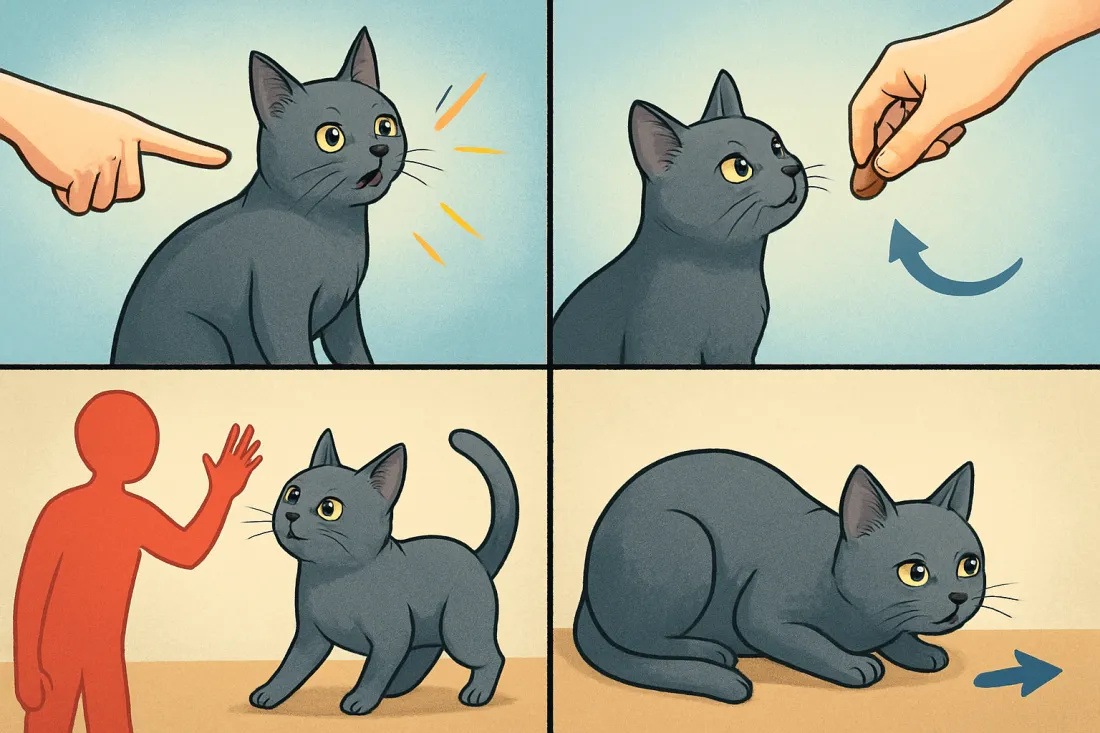
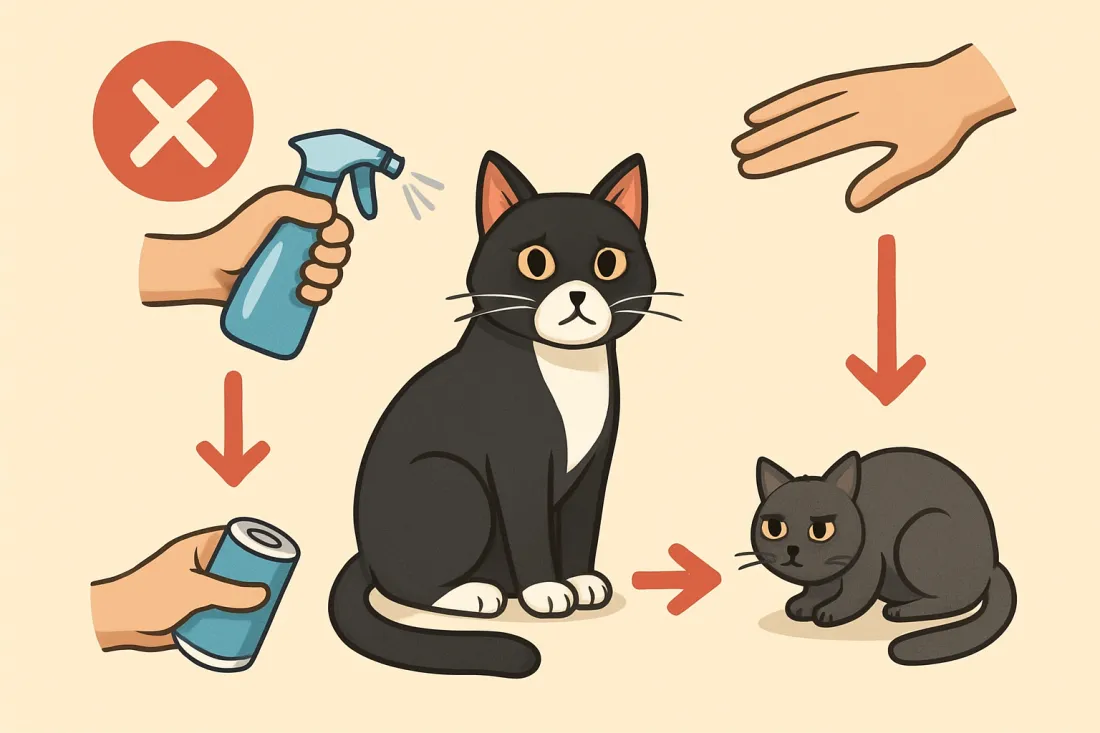
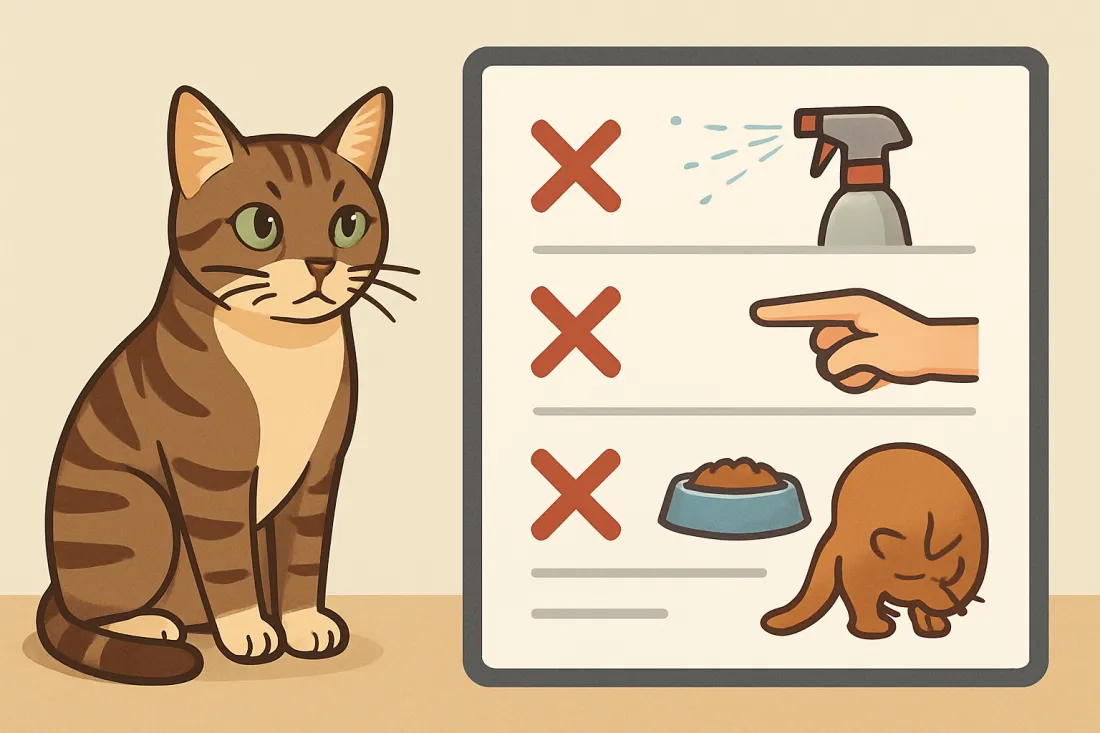
- Using punishment (yelling, spraying water, hitting, shaking cans) instead of rewarding what you like.
- Expecting dog-style obedience – most cats learn routines and boundaries, not perfect “sit, stay” on command.
- Training only when there is a problem instead of building good habits before issues start.
- Ignoring stress signals like tail swishing, ears back, hiding, or sudden grooming during training.
- Making litter boxes and scratching posts inconvenient or unpleasant, then blaming the cat for accidents or scratching furniture.
- Changing rules or routines constantly so the cat never knows what is allowed.
Everything else on this page builds on three ideas: reward what you want, make it easy for the cat to choose the “right” behavior, and stop when stress shows up.
How cat training differs from dog training (and why that matters)
Many cat training mistakes come from treating cats like small, stubborn dogs. Understanding the differences helps you choose humane, realistic methods.
Independence vs. social obedience
- Dogs were bred to work with humans and often enjoy following cues like “sit” or “come.”
- Cats were bred mostly for pest control and are more independent. They learn what benefits them: safety, comfort, food, play.
Training takeaway: Cats respond best when the behavior clearly pays off for them (treats, play, access to a sunny spot), not because “you said so.”
Motivation and rewards
- Dogs may work for praise or to please you.
- Cats usually need a concrete reward: a favorite treat, a short play session, or being allowed on a perch.
Training takeaway: If your cat is “stubborn,” the reward is probably not valuable enough, or the environment is too distracting or scary.
Body language and stress
Cats often show discomfort in subtle ways long before they hiss or bite. Dog owners may miss these signs because they look different from dog stress signals.
Training takeaway: If you push past early stress signs, your cat may shut down, hide, or suddenly lash out. Short, calm sessions work better than long, intense ones.
Consistency and environment
Cats are highly sensitive to territory and routine. A small change in litter type, furniture, or schedule can affect behavior.
Training takeaway: For cats, “training” is often about setting up the environment so the easiest choice is the right one (for example, placing a scratching post where they already scratch).
Common cat training mistakes and humane alternatives
Use this comparison table as a quick reference when you feel stuck.
| Common mistake | What usually happens | Better alternative | Why it works better |
|---|---|---|---|
| Yelling, spraying water, or hitting when the cat misbehaves | Cat becomes scared of you, hides, or acts out when you are not around | Interrupt calmly (single clap, neutral “uh-uh”), then redirect to an allowed behavior and reward that | Teaches what to do, not just what to avoid; keeps trust intact |
| Punishing after the fact (e.g., scolding for a mess you find later) | Cat has no idea why you are upset; may become anxious around you | Clean up quietly, then adjust environment (more litter boxes, covered wires, closed doors) | Cats only connect consequences with what happens in the moment |
| Training only when angry or frustrated | Sessions feel tense; cat avoids you or the training area | Plan short, calm sessions (about 3–5 minutes) when you are relaxed; end on a small success | Positive emotional tone helps the cat learn faster and feel safe |
| Expecting instant results after one or two tries | You give up or switch methods constantly; cat gets confused | Repeat the same simple step over several days, gradually increasing difficulty | Repetition and consistency help habits stick |
| Using food the cat does not care about | Cat walks away; you assume they “cannot be trained” | Test several treats and rewards (different textures or flavors, or play) to find a favorite | High-value rewards keep the cat engaged and motivated |
| Physically forcing the cat (pushing paws, holding them in place) | Cat struggles, scratches, or bites; may fear being handled | Use luring (treats, toys) and shaping (rewarding small steps) instead of force | Voluntary behavior is safer and more reliable than forced behavior |
| Ignoring medical or stress causes of behavior | Problem persists or worsens despite training | Rule out pain, illness, or major stressors with a vet and environment check | Many “behavior problems” are actually health or stress issues |
Litter box and scratching post training pitfalls
Litter box and scratching issues are two of the biggest reasons people feel desperate about their cats. Often, the cat is not being “spiteful” – the setup or training is failing them.
Typical litter box mistakes
- Too few boxes. In many homes, one box for multiple cats leads to tension and accidents.
- Boxes in scary or busy spots. Next to loud appliances, in hallways with foot traffic, or near a dog’s bed can make cats avoid the box.
- Covered or tiny boxes only. Some cats feel trapped or crowded in covered boxes, especially if another pet can ambush them.
- Strong-smelling cleaners or scented litter. Overpowering scents can be unpleasant for a cat’s sensitive nose.
- Inconsistent cleaning. Waiting too long to scoop can push a clean cat to find a fresher spot elsewhere.
- Punishing accidents. Rubbing a cat’s nose in urine or yelling near the accident area can make them afraid to eliminate when you are around.
Better litter box setup and training
Use these checks to improve litter habits. The exact numbers are general guidelines; always adjust to your cat and home.
- Count and place boxes wisely. Many behavior professionals suggest at least one box per cat, plus one extra. In a two-story home, aim for a box on each main level so your cat is never more than a short walk away.
- Choose a comfortable box style. A roomy, open box that is roughly as long as your cat from nose to base of tail (or longer) is usually easier to use than a cramped one, especially for seniors or large cats.
- Pick a simple, unscented litter. Start with a fine-textured, unscented clumping litter. If you change brands, do it gradually over about a week by mixing more of the new litter in each day.
- Keep a cleaning routine. Scooping at least once daily and doing a full wash with mild, unscented soap every week or two helps many cats feel comfortable using the box consistently.
- Handle accidents calmly. Use an enzymatic cleaner on soiled areas and block access if possible. Then ask: Was the box clean, easy to reach, and comfortable at the time?
- Check for health issues. Sudden changes in litter habits, straining, or visible blood in urine or stool are reasons to contact a veterinarian promptly.
Common scratching post mistakes
- Only one small, wobbly post. If it tips or shakes, many cats will not use it.
- Post in the wrong place. Cats like to scratch where they wake up, where people gather, or near furniture they already scratch.
- Wrong texture or angle. Some cats prefer vertical scratching (tall posts), others horizontal (flat boards) or angled surfaces.
- Declawing or harsh punishment. These can cause pain, fear, and other behavior problems.
Better scratching training
- Offer variety. Provide at least one tall, sturdy vertical post and one horizontal or angled scratcher, using materials like sisal, cardboard, or wood.
- Place posts strategically. Put them near favorite sleeping spots and next to furniture your cat targets.
- Make posts more attractive than furniture. Sprinkle catnip (if your cat enjoys it), use wand toys to encourage scratching, and reward with treats when they use the post.
- Protect furniture without scaring the cat. Use furniture covers, double-sided tape, or moving the furniture slightly while you build the scratching habit on the post.
- Trim nails regularly. Gentle nail trims every couple of weeks can reduce damage while you work on training.
Recognizing stress signs and knowing when to stop
Pushing a stressed cat to “just get used to it” is one of the most damaging training mistakes. Learning to read early stress signals lets you stop before your cat feels forced to defend themselves.
Early stress signs during training
Watch for these subtle signals that your cat is getting uncomfortable:
- Tail flicking or lashing, especially when it was relaxed before.
- Ears turning sideways or flattening slightly.
- Sudden freezing or becoming very still.
- Looking away, turning the head, or trying to move away from you or the object.
- Rapid, shallow breathing or panting in a non-hot environment.
- Sudden grooming (licking, scratching) that seems out of context.
Clear signs to stop immediately
If you see any of these, end the session right away:
- Hissing, growling, or spitting.
- Swatting with claws out.
- Biting or lunging.
- Trying desperately to escape, scrambling, or vocalizing loudly.
- Hiding and refusing to come out even for favorite treats.
What to do when your cat is stressed
- Stop the session. Calmly remove the trigger if possible, or step away and give your cat space.
- Do not punish the reaction. Punishment will only confirm that the situation is unsafe.
- Give a predictable break. Let your cat retreat to a safe, quiet area with water, litter, and a hiding place.
- Next time, go slower. Break the training into smaller steps and reward at the first sign of calm cooperation.
- Consider help. If your cat reacts strongly even to very small steps, talk with a veterinarian or a qualified behavior professional.
Structured checklist: cat training do’s and don’ts
Use this checklist as a quick audit of your current approach. You do not need to be perfect; aim to improve one or two items at a time.
Training mindset and timing
- Do choose short sessions (about 3–5 minutes) once or twice a day when your cat is awake but not overly excited or hungry.
- Do end sessions on a small success, even if it is just your cat calmly approaching the target.
- Do keep your voice calm and neutral; use gentle praise and soft talking.
- Don’t train when you are angry, rushed, or distracted.
- Don’t expect a new behavior to be reliable after only a day or two.
Rewards and motivation
- Do test at least three different rewards (treats, wet food, play, petting) to see what your cat values most.
- Do reward immediately when your cat does something you like, even if it was accidental.
- Do gradually reduce treat frequency only after the behavior is strong and consistent.
- Don’t use only dry kibble if your cat is not excited by it.
- Don’t bribe by waving food constantly; instead, show the reward, ask for a tiny behavior, then pay.
Handling mistakes and misbehavior
- Do interrupt gently (a single clap, a calm “no”) and redirect to an allowed behavior.
- Do change the environment to prevent repeat problems (block access, move fragile items, add a scratching post).
- Do notice what happened right before the misbehavior (boredom, fear, other pets) and adjust.
- Don’t yell, hit, or use pain-based tools.
- Don’t punish your cat for something you discover after the fact.
Litter box and scratching habits
- Do check that you have enough litter boxes in quiet, easy-to-reach spots, especially if you live in a multi-level home.
- Do offer multiple scratching options with different textures and angles.
- Do reward your cat when they use the box or scratching post correctly.
- Don’t move litter boxes or posts suddenly without helping your cat transition.
- Don’t punish accidents or scratching; instead, improve the setup and supervision.
Health and stress checks
- Do rule out pain or illness with a vet visit if behavior changes suddenly.
- Do watch for early stress signs and shorten sessions if you see them.
- Do provide hiding spots, vertical spaces, and predictable routines.
- Don’t force interactions with people or other pets.
- Don’t ignore ongoing fear, aggression, or litter issues; seek professional guidance.
Decision guide: when to change your cat training plan
Use this simple decision guide when you feel stuck or your cat is not improving.
- Is the behavior new or suddenly worse?
If yes, first check for medical issues with a veterinarian, especially for litter box problems, sudden aggression, or changes in appetite or activity. - Is the environment helping or fighting you?
Ask yourself:- Is there a clear, easy alternative behavior available (scratching post, box, perch)?
- Is that alternative in a place your cat naturally spends time?
- Are there loud noises, other pets, or people making that area feel unsafe?
If the answer to any of these is “no,” adjust the setup before changing your training method.
- Is your cat actually motivated?
If your cat walks away, try:- Higher-value rewards.
- Shorter sessions.
- Training at a different time of day.
- Are you being consistent?
Check whether everyone in the home follows the same rules. If one person allows counter-surfing and another punishes it, the cat will be confused. - Is your cat showing stress or fear?
If yes, slow down, break the task into smaller steps, and consider professional help if fear remains high.
Summary: what to remember about cat training mistakes
Most cat training problems come from misunderstandings, not “bad cats.” Cats learn best when:
- They feel safe and have predictable routines.
- The “right” behavior is easy and rewarding.
- Humans stay calm, consistent, and patient.
- Punishment is replaced with gentle interruption and redirection.
- Litter boxes and scratching posts are set up with the cat’s preferences in mind.
After reading, choose one behavior to work on, adjust the environment to make success easy, and use the checklist above to keep your training kind and effective. If you are worried that behavior issues might lead you to consider rehoming, planning ahead with resources like how to avoid having to give up my pet can help you stay on track as a responsible cat guardian.
FAQ about cat training mistakes to avoid
What should I understand first about cat training mistakes to avoid?
The key idea is that most “bad” cat behavior makes sense from the cat’s point of view. Scratching, climbing, and hiding are normal needs, not defiance. The biggest mistakes are punishing these instincts, changing rules from day to day, and ignoring stress or health issues. When you instead ask “What is my cat trying to achieve?” and give a better outlet for that need, training becomes much easier and kinder.
What are the most common cat training mistakes new owners make?
New owners often expect dog-like obedience, use punishment such as yelling or spray bottles, and only start training once a serious problem appears. They may also set up too few litter boxes, offer one flimsy scratching post in a corner, or overlook early stress signs like tail flicking and hiding. These mistakes can turn small issues into big ones. Focusing on clear routines, enough resources, and reward-based training prevents many conflicts.
What should I do next if my cat’s behavior is already a serious problem?
First, stop any punishment you are using and make the environment safer: add or improve litter boxes, scratching posts, and hiding spots. Then track when and where the problem happens to spot patterns, and schedule a vet check to rule out pain or illness. Use the checklist on this page to shift toward short, reward-based sessions. If the issue is affecting your ability to keep your cat, look for local behavior help and support resources early rather than waiting until you feel out of options.