
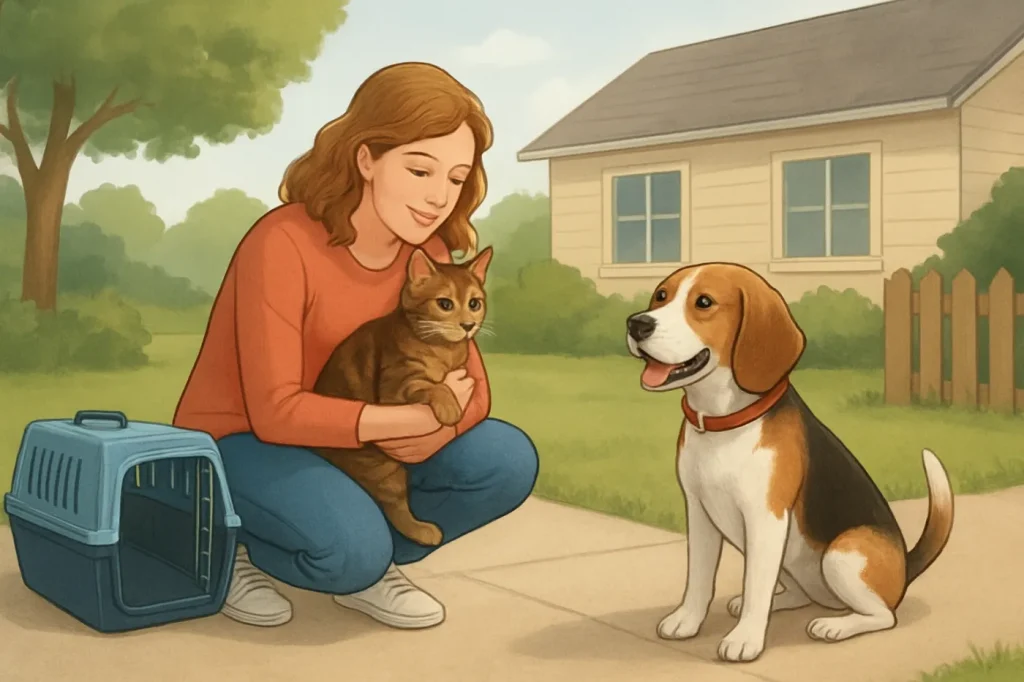
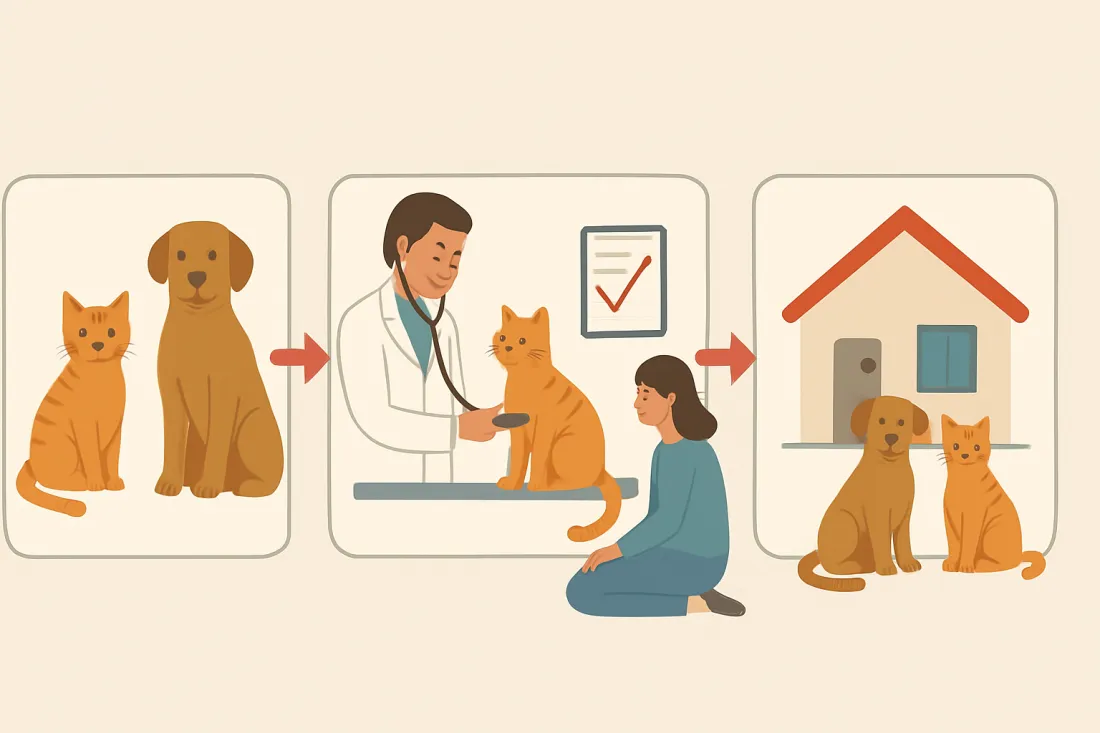
The first 30 days after adopting a dog or cat shape how safe your new pet feels and how smoothly your life together starts. In this first month your priorities are to:
- Create a calm, predictable routine.
- Handle basic health care (vet visit, vaccines review, microchip check or update).
- Teach where to potty or use the litter box.
- Introduce family members and other pets slowly and safely.
- Respond calmly to normal “new pet” behavior issues.
If you stay focused on those areas, most dogs and cats settle in, and many early problems stay small instead of turning into long‑term habits.
How the 3‑3‑3 adjustment rule helps you set expectations
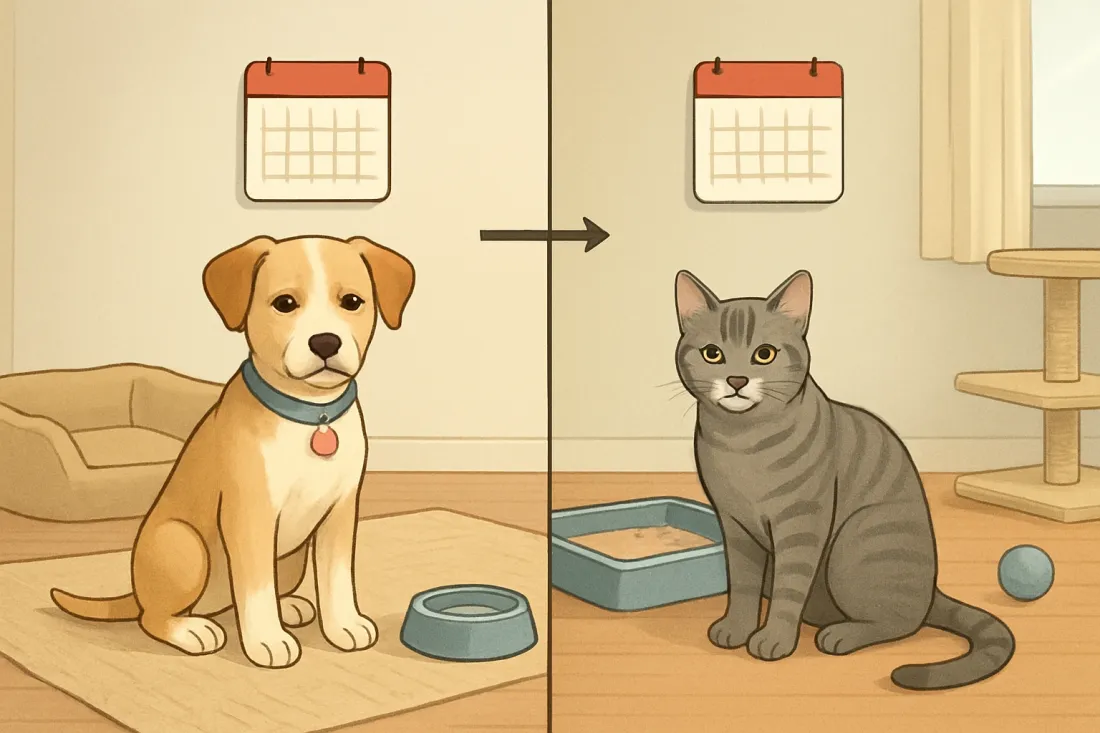
The 3‑3‑3 rule is a simple way to remember how many adopted pets often adjust over time:
- First 3 days – Overwhelmed, stressed, or shut down.
- First 3 weeks – Starting to learn the routine and show real personality.
- First 3 months – Feeling like part of the family.
This is a guideline, not a deadline. Some pets relax faster; others need more time, especially if they have had multiple homes, neglect, or scary experiences. Use it as a reminder to stay patient and not expect “perfect” behavior in the first month.
What the 3‑3‑3 rule looks like for adopted dogs
- First 3 days – Your dog may pace, pant, whine, cling to you, refuse food, or sleep a lot. House‑training may be unreliable. They are trying to figure out where they are and whether it is safe.
- First 3 weeks – Your dog starts to recognize your schedule, may test boundaries (jumping, mouthing, barking), and begins to bond with you. You see more of their real energy level and personality.
- First 3 months – Your dog usually knows the household rules, feels attached to you, and can focus better during training. You can start more advanced training, longer outings, and new activities.
What the 3‑3‑3 rule looks like for adopted cats
- First 3 days – Your cat may hide, hiss, or avoid contact. Appetite may be low. Litter box use can be hesitant, but most cats still prefer a box if it is easy to find and quiet.
- First 3 weeks – Your cat explores more, chooses favorite spots, and may start playing and seeking attention on their terms. You see patterns in when they like to eat, play, and rest.
- First 3 months – Your cat usually has a stable routine, clear preferences, and a predictable comfort level with people and other pets. Many cats become more affectionate once they feel truly secure.
If your dog or cat seems “behind” this pattern, that is not a failure. It is a sign to slow down changes, keep things predictable, and, if needed, ask your veterinarian or a behavior professional for help.
First 30 days after adopting a dog: week‑by‑week plan
When you focus on a dog, the first 30 days after adoption are about moving from survival mode to a simple, stable life together. Use this week‑by‑week overview alongside the 3‑3‑3 rule so you know what to expect and what to work on.
Week 1 (days 1–7): Decompression and safety
Main goals: help your dog feel safe, start a basic routine, and prevent accidents or scary experiences.
- Keep life quiet and predictable: same wake‑up, feeding, and potty times each day.
- Limit new places to home and yard plus very short, calm walks.
- Use a crate or gated area as a safe zone when you cannot supervise.
- Take your dog out to potty frequently (after sleep, meals, play, and every few hours).
- Introduce simple cues only: name, “sit,” and coming to you for a treat.
- Watch for signs of illness or extreme fear and keep a list of questions for your vet visit.
What is normal this week: whining, pacing, clinginess, accidents, not eating much the first day or two, or sleeping a lot.
Week 2 (days 8–14): Learning the routine
Main goals: strengthen house‑training, make rules clear, and build positive habits.
- Keep the same feeding and potty schedule, adjusting slightly if needed.
- Decide and stick to house rules: furniture access, off‑limits rooms, where the dog sleeps.
- Add short training sessions (3–5 minutes) a few times a day for sit, down, come, and leash manners.
- Introduce low‑key visitors if your dog seems ready: one or two calm adults at a time.
- Increase walks slightly, but avoid busy dog parks or chaotic environments.
- Notice patterns in your dog’s energy and triggers (noises, other dogs, being alone).
What is normal this week: “testing” boundaries (jumping, grabbing things, ignoring cues), more energy, and some barking as they feel bolder.
Week 3 (days 15–21): Building skills and confidence
Main goals: help your dog understand expectations and give them healthy outlets for energy.
- Practice basic cues daily in different rooms and on walks.
- Introduce structured play: fetch, tug with rules (drop it), or simple scent games.
- Work on calm behavior around everyday life: doorbells, people passing windows, household noises.
- If your vet has cleared your dog, consider a positive‑reinforcement group class or one‑on‑one trainer.
- Keep social time with other dogs short and supervised; quality over quantity.
What is normal this week: your dog may seem more “themselves,” both good and challenging behaviors included. This is when many adopters first notice pulling, barking, or mild guarding.
Week 4 (days 22–30): Settling into family life
Main goals: solidify routines, continue training, and address any behavior issues early.
- Fine‑tune your daily schedule so it works long‑term for both of you.
- Expect fewer accidents if house‑training is on track, though occasional slips can still happen.
- Practice alone time in small steps so your dog can relax when you leave.
- Keep working on leash manners and polite greetings with people.
- Talk with your vet or trainer about any ongoing concerns (whining, reactivity, fear).
By the end of the first 30 days after adopting a dog, you are not aiming for perfection. You are aiming for a dog who mostly understands the routine, feels safer with you, and has the start of good habits you can keep building.
First‑day priorities when you bring a new pet home
The first day is not about showing off your new pet or giving a full house tour. Focus on safety, calm, and clear basics.
Day‑one priorities for adopted dogs
- Go straight home
Skip errands and visits. Car rides, new smells, and the shelter or rescue experience are already a lot to process. - Take a potty break before going inside
Walk your dog on leash in the area where you want them to potty in the future. Quietly praise and reward if they go. This is your first house‑training lesson. - Bring them to a prepared “safe zone”
Set up a crate or gated area with a bed, water, and a safe chew toy. This is where they can decompress without being bothered. - Keep greetings calm and limited
Introduce only the people who live in the home. Ask everyone to sit, let the dog approach, and avoid hugging, squealing, or crowding. - Offer a small meal and water
Use the food the shelter or foster was feeding if possible to reduce stomach upset. Do not overfeed, even if they seem very hungry. - Plan the first‑night sleeping spot
Most adopted dogs do best sleeping in a crate or bed in your bedroom or just outside the door so they are not isolated but cannot roam unsupervised.
Day‑one priorities for adopted cats
- Go directly to the “starter room”
Choose a quiet room (bedroom or office) as your cat’s first territory. Close windows, secure heavy items, and block unsafe hiding spots where you cannot reach them (like inside box springs). - Set up litter box, food, and water
Place the litter box away from food and water but in the same room. Show your cat where it is by gently placing them nearby or letting them walk out of the carrier toward it. - Open the carrier and let them decide
Do not pull your cat out. Open the door, sit quietly, and let them emerge when ready. - Limit visitors and noise
Only immediate family should enter the starter room, and only one or two people at a time. Keep loud music and roughhousing away from that space. - Keep the door closed
This prevents escapes and gives your cat a small, predictable world to learn first. You can sit in the room and read or work so they get used to your presence.
Daily routine examples for the first 30 days (dogs vs. cats)
A predictable routine is one of the most powerful tools you have. It helps your pet feel safe, speeds up house‑training and litter habits, and reduces behavior problems.
Sample daily routine for an adopted dog
Adjust times to your schedule, but keep the order consistent from day to day.
- 6:30–7:00 a.m. – Potty break on leash in the same outdoor spot, then breakfast.
- 7:30–8:00 a.m. – Short walk or play session, then rest in crate or safe area while you get ready.
- Mid‑morning – Brief potty break and a few minutes of simple training (name, sit, come), then quiet time.
- Midday – Potty break and short walk or backyard time. For puppies or small dogs, add extra potty trips.
- Late afternoon – Potty break, play or walk, gentle introductions to new rooms or safe family interactions.
- Evening – Dinner, calm family time (chew toy near you, light training), then a final potty break before bed.
- Night – Sleep in crate or bed in your room or nearby hallway. Take out once during the night for young puppies if needed.
As your dog settles in, you can lengthen walks, add training games, and adjust feeding times, but try to keep the basic pattern steady.
Establishing routines for feeding, walks, and sleep
During the first 30 days after adopting a dog, clear routines make life easier for both of you.
- Feeding – Offer meals at the same times each day, usually twice daily for adult dogs and three to four times for puppies. Pick up any uneaten food after 15–20 minutes so you can predict potty needs.
- Walks and potty breaks – Use consistent spots and cues (“go potty”) and keep a simple log in your head of when your dog usually needs to go. Most newly adopted dogs do best with at least three to four outdoor trips per day, more for puppies.
- Sleep – Aim for a regular bedtime and wake‑up time. Keep late‑evening activity calm so your dog can wind down. If you plan for your dog to sleep in a crate long‑term, use that same sleeping spot from the start.
Routines do not have to be rigid to the minute, but they should be predictable enough that your dog can relax and know what comes next.
Sample daily routine for an adopted cat
Cats are more flexible than dogs but still benefit from structure and predictable interactions.
- Morning – Scoop litter box, refresh water, and feed breakfast. Short play session with a wand toy or ball to mimic hunting.
- Midday – Quiet time. Check on your cat briefly, talk softly, and offer a treat if they approach.
- Late afternoon – Another play session, gentle petting if your cat is comfortable, and a chance to explore a bit more of the house if they are ready.
- Evening – Dinner, then calm time with you in the room (reading, working, watching TV) so your cat can choose to be near you or observe from a distance.
- Night – Keep the starter room available with litter box and bed. Many cats explore more at night; that is normal as long as they have safe spaces and no access to dangerous areas.
After the first week or two, you can gradually expand your cat’s territory beyond the starter room, one area at a time. If litter box habits or confidence slip when you expand, go back to a smaller space and slow down.
Introducing basic training and house rules for adopted dogs
Training in the first 30 days after adopting a dog should be short, positive, and focused on everyday life skills.
- Name and attention – Say your dog’s name once, then reward any eye contact with a treat or praise. This makes it easier to get their focus later.
- Sit and down – Practice before meals, at doors, and before putting on the leash so your dog learns that calm behavior makes good things happen.
- Come when called – Start indoors on a long leash or in a fenced yard. Call once in a happy voice, then reward generously when they reach you.
- House rules – Decide early about furniture, counter‑surfing, and access to certain rooms. Use baby gates, closed doors, and leashes to prevent rule‑breaking instead of constantly correcting it.
- Leash manners – Reward walking beside you with treats and a loose leash. Keep early walks short so your dog can succeed.
Keep sessions to a few minutes at a time, several times a day. Ending while your dog is still engaged helps them look forward to the next lesson.
Where an adopted dog should sleep the first night
The first night can be rough for both of you. Your dog has likely never slept in your home before and may cry, bark, or pace.
For many dogs, a helpful first‑night setup is:
- A crate or secure pen just big enough to stand up, turn around, and lie down comfortably.
- Placed in your bedroom or just outside your bedroom door so your dog can hear and smell you.
- With soft bedding and a safe chew or stuffed toy.
This arrangement supports house‑training, prevents nighttime accidents or chewing, and reassures your dog that they are not alone. If your dog cries, respond calmly: a quiet word, a brief touch, then back to bed. Avoid taking them into your bed the first night if you do not want that to become the long‑term habit.
Introducing your new pet to family members and other animals
Thoughtful introductions prevent many future conflicts. Move more slowly than you think you need to, especially in the first 30 days.
Introducing an adopted dog to people
- Start with household members only for the first few days. Save friends and extended family for later.
- Ask people to ignore the dog at first – no leaning over, hugging, or direct eye contact. Let the dog approach on their own.
- Use treats to create positive associations. People can toss treats gently to the side of the dog rather than reaching over their head.
- Keep interactions short and end on a calm note. If the dog seems overwhelmed, give them a break in their safe zone.
- Delay big gatherings (parties, kids’ sleepovers) until your dog is more settled, often after the first few weeks.
Introducing an adopted dog to resident dogs
- Meet on neutral ground first (a quiet sidewalk or yard, not right at your front door).
- Walk parallel with space between dogs, gradually closing the gap if both seem relaxed.
- Watch body language: loose bodies and wagging tails are good; stiff posture, hard staring, tucked tails, or raised hackles mean you should increase distance.
- Keep first indoor interactions short and supervised, with leashes on but loose, and separate them when you cannot watch.
- Feed separately at first to avoid food guarding while everyone is still adjusting.
Introducing an adopted cat to people
- Let your cat hide if they want. Do not drag them out from under furniture or from inside carriers.
- Teach children to be gentle and quiet. No chasing, grabbing, or cornering. Show them how to offer a hand to sniff and then wait.
- Use “ignore and reward”: people sit quietly, ignore the cat, and drop a treat nearby if the cat approaches.
- Keep visits short and let the cat choose when to end contact by walking away.
Introducing an adopted cat to resident cats or dogs
- Keep your new cat in the starter room at first. Let pets sniff under the door and get used to each other’s sounds.
- Swap scents by exchanging bedding or using a cloth to gently rub one pet’s cheeks and then the other’s.
- Use short, controlled visual introductions (baby gate, cracked door, or carrier) before full contact.
- Move at the pace of the most nervous pet. If anyone hisses, growls, or lunges, go back a step and slow down.
- Provide vertical spaces (cat trees, shelves) so cats can escape upward and feel safer.
House‑training and litter box basics for adopted pets
Even if your new pet was described as house‑trained or litter‑trained, expect accidents in a new environment. They are learning new smells, surfaces, and routines.
House‑training an adopted dog
- Go outside often: after waking, after eating or drinking, after play, and every few hours during the day.
- Use the same potty area so smells cue your dog to go.
- Reward immediately after they finish, with praise and a small treat. Timing matters more than the size of the reward.
- Supervise indoors. Use baby gates or a leash indoors so you can spot sniffing, circling, or heading to corners.
- Use a crate or pen when you cannot watch. Most dogs avoid soiling their sleeping area if given enough potty breaks.
- Clean accidents thoroughly with an enzymatic cleaner so your dog is not drawn back to the same spot.
Avoid punishment. Yelling or rubbing a dog’s nose in urine only teaches them to fear you or hide when they need to go, not to hold it.
Litter box basics for an adopted cat
- Provide enough boxes. A common rule of thumb is one box per cat plus one extra, especially in multi‑cat homes.
- Choose a simple, open box at first, with unscented litter similar to what the shelter used if you know it.
- Place boxes in quiet, accessible spots, not next to noisy appliances or in high‑traffic hallways.
- Scoop daily and fully change litter regularly so the box stays appealing.
- Show your cat the box when they arrive and after meals or naps by gently placing them near it.
If a cat suddenly stops using the litter box, especially if they strain, cry, or pass blood, contact a veterinarian promptly. Urinary problems can be serious and need quick attention.
Managing common behavior issues in newly adopted dogs
Many behavior problems in the first 30 days after adopting a dog are normal reactions to stress and change. Addressing them early keeps them from becoming long‑term habits.
- Whining and crying – Stay calm. Check basic needs (potty, water, pain). At night, keep the crate near you and offer a safe chew. Avoid letting your dog out every time they vocalize, or they may learn that whining is the way to get what they want.
- Accidents indoors – Treat them as information, not misbehavior. Go outside more often, supervise more closely, and reward outdoor potty trips. Clean indoor spots thoroughly so they do not become repeat targets.
- Chewing and mouthing – Provide a variety of safe chews and rotate them. Redirect gently from hands, clothes, or furniture to a toy, then praise.
- Barking at noises or people – Reduce triggers where you can (close curtains, use white noise) and reward your dog for looking at a trigger and then back at you. Avoid yelling, which can add to the excitement.
- Difficulty being alone – Start with very short absences (even just stepping outside the door), pair them with a special chew or stuffed toy, and return before your dog panics. Gradually increase time away.
If these issues are intense, do not improve over the first month, or cause safety concerns, involve your veterinarian or a qualified trainer sooner rather than later.
Vet visits, vaccines, and microchipping in the United States
Many shelters and rescues provide basic vet care before adoption, but you still need your own veterinarian. In the United States, a common approach is to:
- Schedule a vet visit within the first week after adoption, or sooner if your pet seems sick, painful, or very lethargic.
- Bring all paperwork you received at adoption so the vet can see prior vaccines, tests, and medications.
- Ask your vet to:
- Do a full physical exam.
- Review or update core vaccines appropriate for your pet’s age and lifestyle.
- Discuss parasite prevention (fleas, ticks, heartworm, intestinal worms) based on your region and whether your pet will be mostly indoors or outdoors.
- Check for a microchip and help you register or update your contact information.
- Talk about spay/neuter timing if it has not been done.
Vaccine schedules and legal requirements can vary by state and by your pet’s history. Confirm timing and specific shots with your veterinarian instead of assuming a one‑size‑fits‑all plan.
For dogs, the first 30 days after adoption are also a good time to ask your vet about:
- When it is safe to visit dog parks or daycare based on vaccine status.
- Any behavior changes that might be linked to pain or past injuries.
- A realistic exercise plan for your dog’s age and breed mix.
Common behavior issues in newly adopted pets and simple responses
Many “problems” in the first 30 days are normal adjustment behaviors. Your goal is to keep everyone safe and gently guide better habits.
Typical dog behavior issues in the first month
- Pulling on leash – Use a front‑clip harness, reward walking by your side, and keep walks short and calm while your dog is still learning.
- Jumping on people – Turn away and ignore jumping; reward four paws on the floor with attention and treats.
- Barking at noises or people – Close curtains, use background sound, and reward quiet moments. Avoid yelling, which can sound like you are “barking back.”
- Chewing household items – Puppy‑proof your home, provide chew toys, and confine your dog when unsupervised.
- Separation distress – Practice very short absences at first, pair departures with a special chew or stuffed toy, and keep returns low‑key.
Typical cat behavior issues in the first month
- Hiding – Normal in the first days or weeks. Provide safe hiding spots and do not force interaction.
- Hissing or swatting – A sign of fear or feeling cornered. Give more distance, add vertical spaces (cat trees, shelves), and slow introductions.
- Scratching furniture – Offer sturdy scratching posts near the items they target and reward using the post. You can cover furniture edges temporarily with protective materials.
- Nighttime zoomies – Increase play sessions before bed and provide puzzle feeders or toys to burn energy.
If behavior seems extreme (continuous aggression, self‑injury, or inability to settle), consult your vet to rule out pain or illness and ask for a referral to a qualified trainer or behavior professional.
Comparison table: first 30 days with an adopted dog vs. cat
| Area | Adopted dog – what to expect | Adopted cat – what to expect | Your priority action |
|---|---|---|---|
| First 3 days | May pace, pant, cling, or shut down; accidents are common. | May hide, hiss, or avoid contact; appetite may be low. | Keep environment quiet, limit visitors, and stick to a simple routine. |
| Safe space | Crate or gated area near family activity. | Starter room with hiding spots, litter box, and food. | Set up before arrival and use it consistently. |
| Toilet habits | Needs frequent outdoor potty breaks and supervision indoors. | Usually uses litter box if it is clean and easy to find. | Reward correct use, clean accidents thoroughly, never punish. |
| Social introductions | Short, calm meetings with people and pets; may be overexcited. | Slow, scent‑based introductions; may be defensive if rushed. | Go at the pace of the most nervous pet or person. |
| Exercise and play | Needs walks and training sessions to burn energy. | Needs daily play to mimic hunting and reduce stress. | Plan at least two focused activity times each day. |
| Common first‑month issues | Pulling, jumping, barking, mild separation distress. | Hiding, scratching furniture, nighttime activity. | Redirect to appropriate behaviors and reward calm choices. |
| Vet care | Physical exam, vaccines review, parasite prevention, microchip check. | Similar exam and vaccines; discuss indoor vs. outdoor risks. | Book a vet visit within the first week and bring adoption records. |
Structured checklist: first‑week and first‑month milestones
Use this checklist as a practical roadmap. Adjust timing if your pet needs more time.
First‑week milestones (days 1–7)
- Safe zone (dog) or starter room (cat) fully set up before arrival.
- First day kept calm with limited visitors and short, positive interactions.
- Basic routine established for feeding, potty breaks (dogs), and litter box care (cats).
- Vet appointment scheduled within the first week and attended or confirmed for the coming days.
- Microchip checked and contact information registered or updated if present.
- Simple rules introduced (where they sleep, where they eat, off‑limits areas).
- First gentle introductions to household members; other pets introduced slowly or kept separate as needed.
- Early behavior issues noted (fear, reactivity, house‑soiling) to discuss with your vet or trainer.
First‑month milestones (days 8–30)
- Routine refined based on your pet’s energy and comfort level.
- House‑training or litter habits mostly reliable, with accidents decreasing.
- Your pet responds to their name and at least one or two simple cues (for dogs: sit, come; for cats: coming when called or to a treat sound).
- Safe, supervised time with other pets without major conflict, or a clear plan to keep working on introductions.
- Follow‑up vet recommendations scheduled (boosters, spay/neuter discussion, dental checks if needed).
- Enrichment in place: toys, scratching posts, chew items, or puzzle feeders.
- Plan made for ongoing training or behavior support if any issues persist or worry you.
Common mistakes new adopters make in the first 30 days
Avoiding a few common pitfalls can make your pet’s transition much smoother.
- Doing too much too soon – Taking your new pet everywhere, inviting lots of visitors, or giving full house access on day one can overwhelm them.
- Inconsistent rules – Allowing behaviors at first (sleeping on the bed, jumping up) and then suddenly forbidding them confuses your pet.
- Skipping the vet because the shelter “already checked them” – You still need your own vet to review records, examine your pet, and plan future care.
- Assuming fear or aggression is “meanness” – Many pets act out because they are scared or in pain, not because they are bad.
- Using punishment for normal adjustment behaviors – Yelling, hitting, or harsh corrections often make fear and problem behaviors worse.
- Neglecting mental exercise – Bored pets (dogs and cats) are more likely to chew, scratch, or vocalize excessively.
When to seek professional help (vet, trainer, or behaviorist)
It is easier to address health and behavior concerns early than to wait until problems feel unmanageable.
Contact a veterinarian promptly if your new pet:
- Refuses food or water for more than a day, or suddenly stops eating after initially eating well.
- Has repeated vomiting or diarrhea, especially with blood or lethargy.
- Strains to urinate or defecate, cries in the litter box, or passes very small amounts frequently.
- Shows sudden lameness, severe itching, or signs of pain (crying, hiding, not wanting to be touched).
- Has behavior changes that appear suddenly and are out of character, which can sometimes be linked to medical issues.
Seek a qualified trainer or behavior professional if your dog:
- Growls, snaps, or bites when people or other animals approach food, toys, or resting spots.
- Shows intense fear or aggression toward visitors, children, or other dogs.
- Cannot be left alone even briefly without severe distress (destructive behavior, nonstop barking, attempts to escape).
- Has been in your home for several weeks and still seems unable to relax or learn basic cues.
Seek a behavior‑focused vet or cat behavior specialist if your cat:
- Regularly attacks people or other pets, not just occasional swats.
- Eliminates outside the litter box despite clean boxes and vet‑ruled‑out medical issues.
- Spends nearly all their time hiding, not eating, or not grooming after the first weeks.
Your primary vet can often recommend reputable trainers or behavior specialists in your area.
Decision criteria: how fast to progress in the first 30 days
Use your pet’s behavior as your guide when deciding whether to add new experiences, expand their space, or introduce more people and animals.
- Eating, drinking, and bathroom habits – If these are normal and steady, you can slowly add new experiences. If not, slow down changes and call your vet.
- Comfort around you – If your pet chooses to be near you sometimes, you can gently increase interaction. If they always avoid you, give more space and move slower.
- Behavior trend – Are early behavior issues improving, staying the same, or getting worse? Improvement suggests your routine is working; worsening issues mean it is time to adjust or seek help.
- Other pets’ stress level – If resident pets are relaxed or mildly curious, you can keep building contact. If they are stressed, hissing, or guarding resources, slow introductions and give everyone more separate time.
When in doubt, choose the slower, calmer option. Your relationship with an adopted pet is measured in years; there is no need to rush the first month.
FAQ: first 30 days after adopting a dog or cat
What is the 3‑3‑3 rule for adopting a dog?
The 3‑3‑3 rule for dogs is a guideline that says many adopted dogs need about 3 days to decompress, 3 weeks to start learning the routine and showing their true personality, and 3 months to feel fully at home. Some dogs move faster or slower, but the rule is a reminder to stay patient and not expect perfect behavior right away.
What is the first thing to do after adopting a dog?
The first thing to do after adopting a dog is to bring them straight home to a prepared, quiet space and give them a chance to go potty in the area where you want them to use in the future. Keep greetings calm, offer water and a small meal, and let them rest in a safe zone such as a crate or gated area instead of overwhelming them with visitors or long outings.
How should I structure the first 30 days after adopting a dog?
Use the first week for decompression and safety, the second week to strengthen house‑training and basic rules, the third week to build skills and confidence with short training sessions, and the fourth week to fine‑tune routines and address any behavior issues with help from your vet or a trainer if needed.
What is the 3‑3‑3 rule when adopting a cat?
For cats, the 3‑3‑3 rule also describes a common adjustment pattern: roughly 3 days of hiding or being very cautious, 3 weeks of gradually exploring and settling into a routine, and about 3 months before many cats feel fully secure and show their full personality. Some confident cats adjust faster, while shy or previously stressed cats may need more time.
Where should an adopted dog sleep the first night?
An adopted dog usually does best sleeping in a crate or secure bed in your bedroom or just outside your bedroom door on the first night. This setup helps with house‑training, prevents nighttime mischief, and reassures your dog that they are not alone in a strange place. Provide soft bedding and a safe chew toy, and respond calmly if they fuss without turning it into a long play session.
How soon should I let my new cat explore the whole house?
Most new cats do better starting in a single quiet room for at least several days, sometimes longer for shy cats. Once your cat is eating, using the litter box reliably, and seems relaxed in that room, you can open access to one additional area at a time, supervising and closing off spaces that are unsafe or overwhelming. If your cat starts hiding more or has litter box accidents after expanding their territory, go back to a smaller area and slow the process.
Do I need a trainer right away for my adopted dog?
You do not have to hire a trainer on day one, but planning some training support early can prevent small issues from becoming big ones. If your dog shows serious fear, aggression, or separation distress in the first weeks, or if you feel unsure how to handle behaviors like jumping, pulling, or barking, contacting a positive‑reinforcement trainer or asking your vet for a referral is a good idea.
If you want a more detailed day‑by‑day structure for your new dog, you can also look at a dedicated first 30 days with a rescue dog routine once you have these basics in place.