
Core vaccines for dogs in the United States are the shots that almost every dog should receive, no matter where they live. In practice, that usually means:
- DHPP (or DAPP) combo vaccine – protects against distemper, adenovirus/hepatitis, parvovirus, and often parainfluenza.
- Rabies vaccine – required by law in many U.S. states and strongly recommended everywhere.
On top of these, your veterinarian may recommend regional or lifestyle-based vaccines such as Lyme, leptospirosis, canine influenza, or Bordetella depending on where you live and how your dog spends time.
Below is a practical breakdown of what “core” means, how state laws affect rabies vaccination, and how to decide which extra vaccines make sense for your dog.
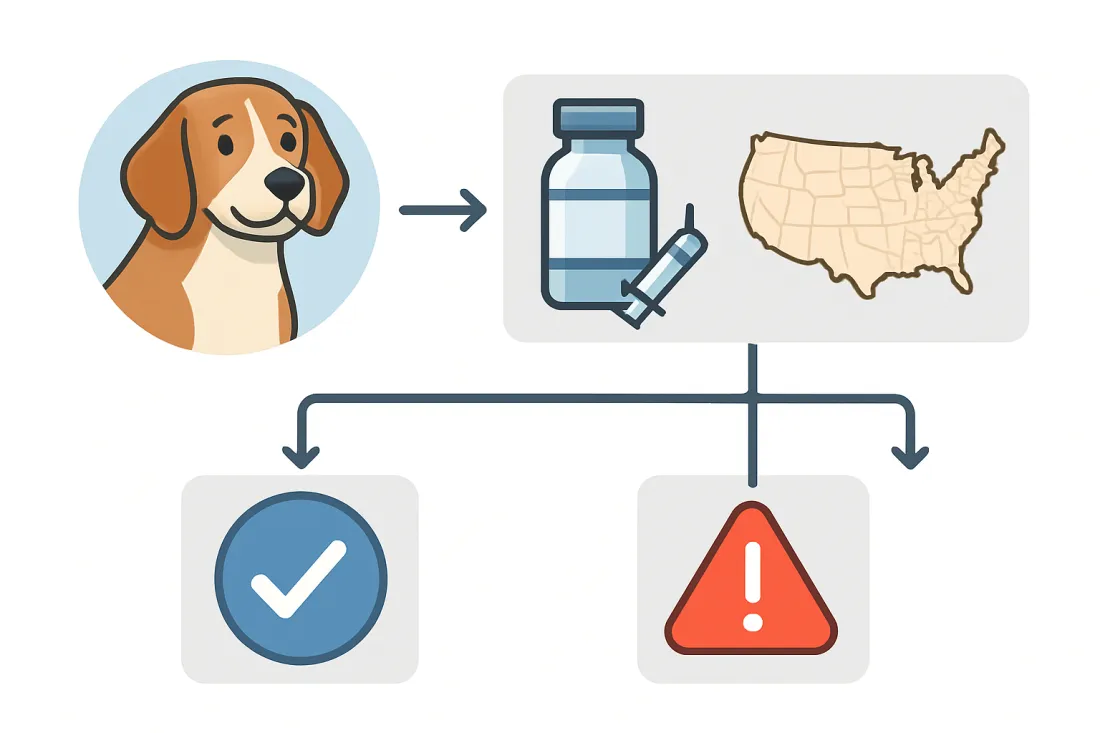
Core vs non-core dog vaccines in the United States
Veterinary guidelines usually divide vaccines into two broad groups: core and non-core.
- Core vaccines – recommended for all dogs (including indoor dogs) because the diseases are severe, widespread, or pose a risk to people.
- Non-core vaccines – recommended based on where you live, your dog’s lifestyle, and exposure risk.
For most U.S. dogs, the core set includes:
- DHPP (or DAPP) – a combination shot that covers:
- Canine distemper virus
- Canine adenovirus (hepatitis)
- Canine parvovirus
- Parainfluenza (often included in the combo)
- Rabies – considered a core vaccine because rabies is almost always fatal and can infect people.
Common non-core (risk-based) vaccines in the U.S. include:
- Leptospirosis
- Lyme disease
- Canine influenza (CIV)
- Bordetella bronchiseptica (kennel cough)
- Rattlesnake and other very location-specific vaccines in some areas
Some veterinarians now strongly recommend leptospirosis and Lyme in many regions, so you may hear them described as “core for this area” even though they are technically non-core in national guidelines.
Core vaccines every U.S. dog should have: DHPP and rabies
Even though state laws mainly focus on rabies, most veterinarians treat both DHPP and rabies as non-negotiable for basic preventive care.
| Vaccine | What it protects against | Why it is considered core | Typical use in the U.S. |
|---|---|---|---|
| DHPP (or DAPP) | Distemper, adenovirus/hepatitis, parvovirus, parainfluenza | These viruses are highly contagious and can be severe or fatal, especially in puppies. They still circulate in many parts of the country. | Given to almost all puppies in a series, then boosted as adults on a schedule your vet sets. |
| Rabies | Rabies virus | Rabies is almost always fatal and can infect people. Wildlife reservoirs exist in many states. | Required by law in many states; proof is often needed for licensing, boarding, grooming, and travel. |
Many “7-in-1” or “5-in-1” vaccines marketed to owners are simply different combinations of these core components plus one or two non-core diseases. The exact mix varies by manufacturer, so your veterinarian will explain what is included rather than relying on the marketing name.
If you want a detailed timing plan for puppy shots and adult boosters, it can help to review a dedicated dog vaccination schedule USA and then confirm the details with your local veterinarian.
Rabies vaccine requirements by state: how it really works
Rabies is the only dog vaccine that is widely regulated at the state or local level in the United States. However, the details differ by state and sometimes by county or city. Because rules can change, always confirm the current requirements with your veterinarian or local animal control.
In general, U.S. states fall into three broad patterns:
- Rabies required statewide – many states require dogs to be vaccinated against rabies and kept up to date.
- State sets a framework, local areas add rules – some states allow counties or cities to set additional licensing or booster rules.
- Local ordinances only – a small number of areas rely mainly on local rules, but rabies vaccination is still strongly recommended.
| State-level pattern | What it usually means for owners | What to double-check locally |
|---|---|---|
| Statewide rabies requirement | Most dogs must be vaccinated by a certain age and receive regular boosters. Proof is often needed for licensing. | Exact age for first shot, booster interval (often 1 or 3 years depending on vaccine), and what happens if a dog is overdue. |
| State framework + local rules | The state may say dogs must be vaccinated, but local governments decide how licensing and enforcement work. | Whether your city or county requires a license, how often it must be renewed, and what proof of rabies is needed. |
| Local ordinances only | Rabies vaccination may not be spelled out in state law but is still expected for public safety and services. | Local animal control rules, boarding facility policies, and any travel or housing requirements. |
Because the exact list of states in each category can change, use this simple check to stay compliant:
- Ask your veterinarian, “What are the rabies requirements for dogs in this state and county right now?”
- Call or visit your local animal control or city website to confirm licensing rules and deadlines.
- Keep paper or digital copies of your dog’s rabies certificate and tag where you can find them quickly.
If you need a deeper legal-style breakdown, you can also review a dedicated guide such as the required vaccines for dogs by state USA and then confirm details locally.
Regional risk-based vaccines: Lyme, leptospirosis, influenza, Bordetella
Beyond DHPP and rabies, your veterinarian will look at where you live and how your dog lives to decide which extra vaccines make sense. These are some of the most common regional or lifestyle vaccines in the U.S.:
| Vaccine | When vets often recommend it | Typical regions or situations | Key questions to ask |
|---|---|---|---|
| Lyme disease | For dogs with regular tick exposure in Lyme-endemic areas. | Many parts of the Northeast, Upper Midwest, and other tick-heavy regions. | “How common is Lyme in dogs in this county?” “Does my dog’s lifestyle put them at high tick risk?” |
| Leptospirosis | For dogs exposed to standing water, wildlife urine, or urban rat populations. | Wet, warm climates; areas with heavy rainfall; cities with rodent issues. | “Do you see leptospirosis cases in local dogs?” “Does my dog’s outdoor routine justify this vaccine?” |
| Canine influenza (CIV) | For dogs that travel, attend daycare, shows, or live where outbreaks have occurred. | Urban areas, regions with recent flu outbreaks, dogs that board or attend group events. | “Have there been canine flu outbreaks nearby?” “Will boarding or daycare require this?” |
| Bordetella (kennel cough) | For dogs that meet many other dogs or use shared facilities. | Boarding, daycare, grooming salons, training classes, dog parks. | “Does my dog’s social life justify Bordetella?” “How often would boosters be needed?” |
Is Bordetella considered a core vaccine? Nationally, Bordetella is usually treated as non-core. However, it becomes “functionally core” for dogs that board, attend daycare, or visit groomers that require it. Many facilities will not accept a dog without proof of a recent Bordetella vaccine.
How climate and lifestyle shape your dog’s vaccine plan
Instead of memorizing a list of vaccines by state, it is more practical to think in terms of climate zones and lifestyle patterns. Two dogs in the same state can need very different protection.
Climate-based patterns across the U.S.
- Cold, tick-heavy regions (many northern states)
- Higher concern for Lyme disease and other tick-borne illnesses.
- Tick prevention plus Lyme vaccination is often recommended for outdoor dogs.
- Warm, wet, or flood-prone regions
- Higher risk of leptospirosis from contaminated water and wildlife urine.
- Lepto vaccination is often added to the core set for many dogs.
- Dense urban areas
- More dog-to-dog contact in parks, daycares, and apartment buildings.
- Bordetella and sometimes canine influenza are common add-ons.
- Regions with recent disease outbreaks
- Local veterinarians may temporarily push certain vaccines more strongly.
- Always ask if there are current local outbreaks influencing recommendations.
Lifestyle-based patterns for individual dogs
Two dogs living on the same street can need different vaccines. Consider these lifestyle factors:
- Homebody vs social butterfly
- Mostly-at-home dogs that avoid group settings may not need Bordetella or influenza.
- Dogs that attend daycare, training classes, or dog parks often benefit from both.
- Backyard only vs hiking and camping
- Backyard-only dogs may have lower tick exposure but still face risks from wildlife and standing water.
- Hiking and camping dogs often need Lyme, lepto, and strict tick prevention.
- Urban vs rural
- Urban dogs may face more kennel cough and influenza risk.
- Rural dogs may have more wildlife exposure and water sources that increase lepto risk.
- Traveling dogs
- Dogs that cross state lines for shows, work, or family trips may need vaccines required in destination states or by event organizers.
Comparison: core-only schedule vs expanded regional schedule
Owners often wonder whether to stick with just DHPP and rabies or add more vaccines. The comparison below can help frame that decision with your veterinarian.
| Option | What it usually includes | Best suited for | Potential downsides |
|---|---|---|---|
| Core-only schedule | DHPP (or DAPP) + rabies, on a vet-recommended booster schedule. | Low-exposure dogs in low-risk areas: mostly indoor, minimal contact with other dogs, limited outdoor adventures. | May leave gaps for regionally common diseases like Lyme, leptospirosis, or kennel cough. |
| Expanded regional schedule | Core vaccines plus selected non-core vaccines such as Lyme, lepto, Bordetella, and canine influenza. | Dogs in higher-risk climates, social dogs, frequent boarders, travelers, and working or sporting dogs. | More vet visits or injections, higher cost, and slightly higher chance of mild side effects. |
Decision checklist: choosing vaccines for your dog in any U.S. state
Use this practical checklist before your next vet visit so you can make a clear, state-appropriate plan.
Step-by-step decision process
- Confirm the basics
- Is your dog fully up to date on DHPP and rabies?
- Do you have current proof of rabies (certificate and tag)?
- Map your dog’s lifestyle
- How often does your dog meet other dogs (parks, daycare, classes)?
- Do you board your dog or use professional grooming?
- Does your dog hike, swim, or camp in natural areas?
- Does your dog travel across state lines or fly with you?
- Note your local environment
- Is your area known for ticks or Lyme disease in dogs?
- Do you live in a warm, wet, or flood-prone area?
- Is your city dealing with rodent problems or wildlife in yards?
- Ask your vet targeted questions
- “Which non-core vaccines do you recommend for dogs in this county, and why?”
- “Are there any local outbreaks that change your usual advice?”
- “Can we space out vaccines if I am worried about side effects?”
- Plan for proof and renewals
- Set reminders for booster due dates (especially rabies).
- Store digital photos of vaccine certificates on your phone for travel or boarding.
How to talk to your U.S. veterinarian about a vaccine schedule
A good vaccine plan is a partnership between you and your veterinarian. To make that conversation productive:
- Bring your dog’s full history – previous vaccines, reactions, illnesses, and medications.
- Describe your dog’s real lifestyle – do not downplay dog park visits or boarding; these details change recommendations.
- Ask about local disease patterns – “What are the most common infectious diseases you see in dogs here?”
- Discuss timing – puppies need a series of shots; adults may move to longer intervals for some vaccines.
- Share any concerns – if you are worried about side effects, ask whether vaccines can be staggered over multiple visits.
If you are also working on making your home safer overall, it can help to review a broader pet safety checklist for the home so vaccines fit into a complete safety plan.
Vaccine side effects: what is normal and when to call the vet
Most dogs tolerate vaccines well, but it is important to know what to watch for after any shot.
Common, mild side effects
These usually appear within a day and resolve on their own:
- Mild sleepiness or lower energy
- Slight decrease in appetite for a meal or two
- Small, tender lump at the injection site
- Very mild fever or feeling “off” for 24 hours
Call your veterinarian if these symptoms last more than a couple of days or seem to be getting worse instead of better.
Less common, more serious reactions
Contact a veterinarian or emergency clinic immediately if you notice:
- Facial swelling (around eyes, muzzle, or lips)
- Hives or widespread itching
- Vomiting or diarrhea, especially if repeated
- Difficulty breathing, wheezing, or collapse
- Extreme lethargy where your dog cannot or will not get up
These can be signs of an allergic or anaphylactic reaction, which needs urgent care. If your dog has ever had a strong reaction, tell your vet before future vaccines so they can adjust the plan.
Common mistakes owners make with dog vaccines by state
Even well-meaning owners can run into problems. Avoid these frequent pitfalls:
- Assuming indoor dogs do not need vaccines – viruses can travel on shoes, clothing, or visiting pets; rabies risk comes from wildlife exposure, not just dog parks.
- Relying on state law alone – state rules focus on rabies, not on all the diseases that can seriously harm your dog.
- Letting boosters quietly expire – a rabies vaccine that is overdue may be treated differently than one that is current if your dog bites someone or is exposed to wildlife.
- Skipping vaccines before boarding or travel – many facilities require Bordetella, sometimes influenza, and always rabies; last-minute surprises can cancel plans.
- Not updating vaccines when moving states – disease risks and legal expectations change when you relocate; always ask a new local vet to review your dog’s record.
FAQ: proof of vaccination for boarding, travel, and licensing
Which vaccines are considered core for dogs in the U.S.
Most veterinarians consider DHPP (or DAPP) and rabies to be core vaccines for U.S. dogs. DHPP covers distemper, adenovirus/hepatitis, parvovirus, and often parainfluenza. Rabies is treated as core because of its severity and human health risk, and it is required by law in many states.
In what states is it illegal to not vaccinate your dog for rabies?
Many U.S. states require rabies vaccination for dogs, but the exact list and details can change. Instead of relying on a static list, check with your local veterinarian and animal control office for current rules in your state and county. They can tell you whether rabies is mandatory, when it must be given, and how often boosters are required.
Is Bordetella a core vaccine?
Bordetella is generally classified as a non-core vaccine. However, it is strongly recommended—and often required—for dogs that board, attend daycare, go to grooming salons, or participate in training classes and dog sports. For highly social dogs, Bordetella becomes an essential part of their preventive care.
What is the “7-in-1” vaccine for dogs?
The term “7-in-1” is a marketing name for a combination vaccine that usually includes several core components (such as distemper, adenovirus, and parvovirus) plus additional diseases. The exact mix varies by manufacturer. Always ask your veterinarian which specific diseases a combination vaccine covers instead of relying on the label alone.
What proof of vaccination do boarding kennels usually require?
Most boarding kennels in the U.S. require proof of a current rabies vaccine and a core distemper/parvo vaccine such as DHPP. Many also require Bordetella, and some ask for canine influenza depending on local risk. Requirements vary, so contact the facility several weeks before boarding to confirm which vaccines are needed and how recent they must be.
What proof of vaccination is needed for dog licensing?
Many cities and counties that license dogs require a rabies certificate from a veterinarian. Some may also ask for proof that core vaccines are current, but rabies is usually the key document. Check your local government’s website or call animal control to confirm exactly what is needed where you live.
What proof of vaccination is needed for air travel with a dog?
Airlines typically require proof of a current rabies vaccine and sometimes a recent health certificate from a veterinarian. If you are flying internationally, destination countries may have additional vaccine and health requirements. Always check with the airline and, for international trips, the destination country’s pet import rules well in advance.
How often should adult dogs get core vaccines?
Puppies receive a series of DHPP shots, then transition to adult boosters. Many adult dogs receive DHPP boosters every few years, while rabies boosters are given on a schedule defined by the vaccine used and local rules, often every one or three years. Your veterinarian will set the exact schedule based on your dog’s age, health, and local regulations.
Can I space out my dog’s vaccines?
In many cases, veterinarians can stagger non-core vaccines so your dog does not receive too many injections at once. However, legal timing for rabies and medical timing for puppy series need to be respected. Discuss your concerns with your vet; they can often design a schedule that balances protection with your comfort level.