House training a puppy in an apartment: the practical core plan
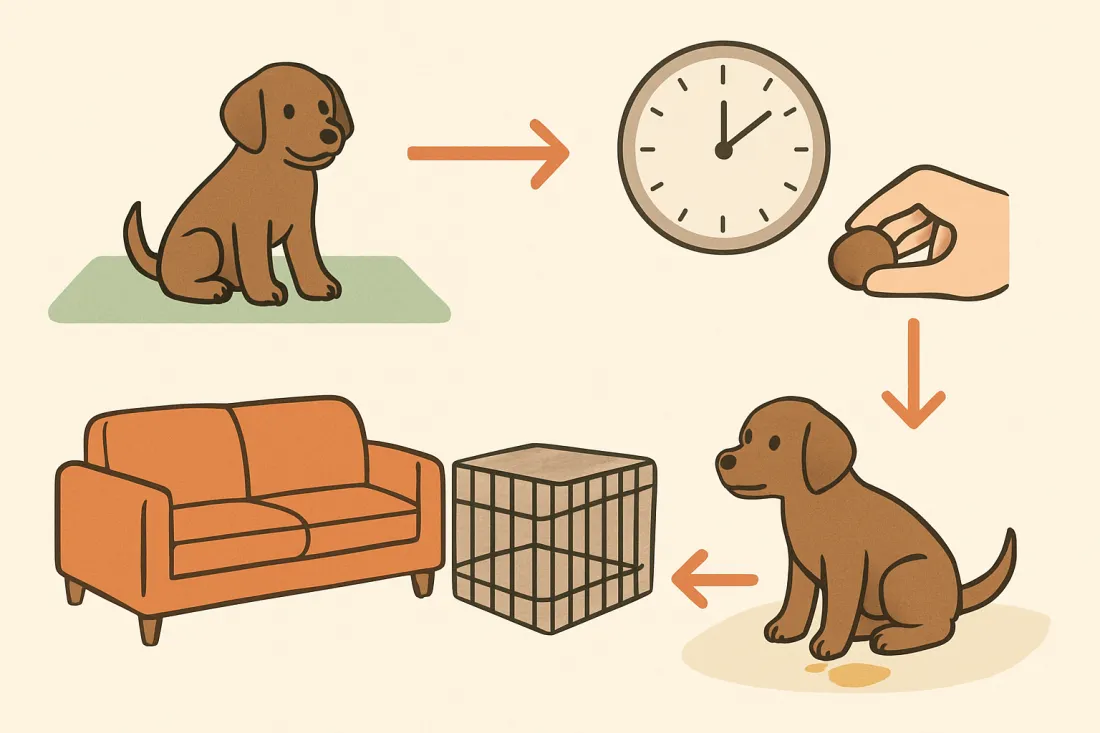
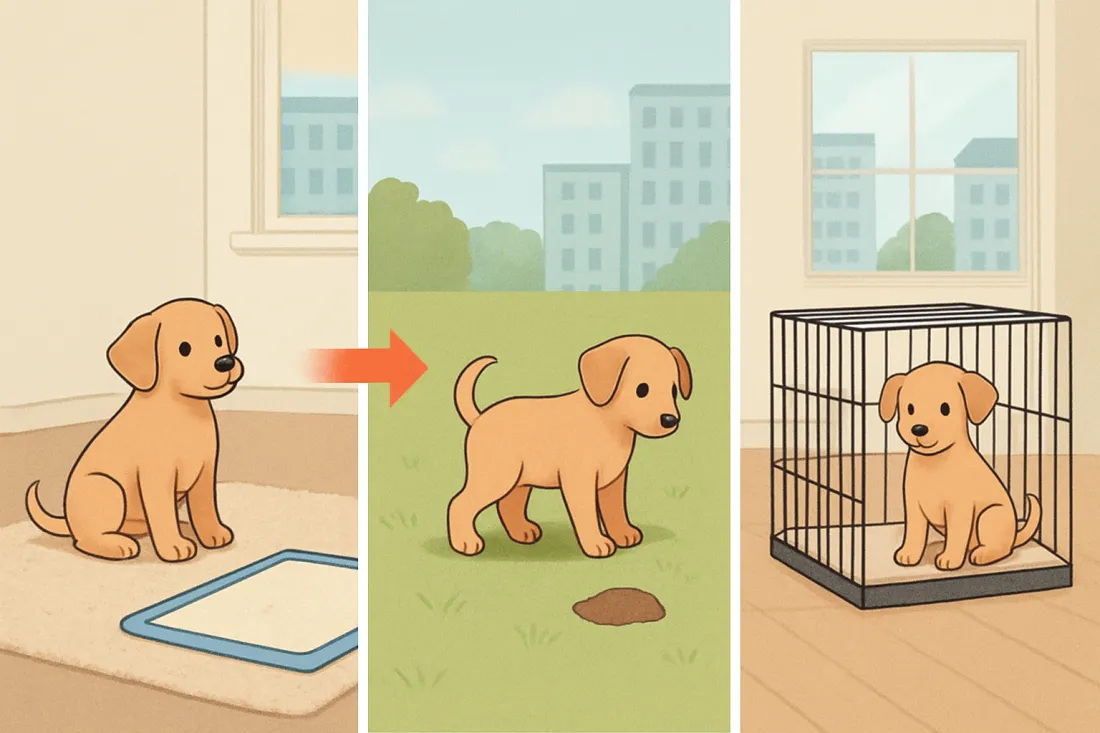
House training a puppy in an apartment is absolutely possible, even without a yard. The core plan is:
- Pick one potty spot (outdoor or indoor) and stick to it.
- Use a tight schedule: take your puppy to that spot after waking, after eating, after play, and at least every 2–3 hours during the day.
- Supervise or confine whenever your puppy is not empty.
- Reward like crazy for going in the right place; quietly clean accidents with no punishment.
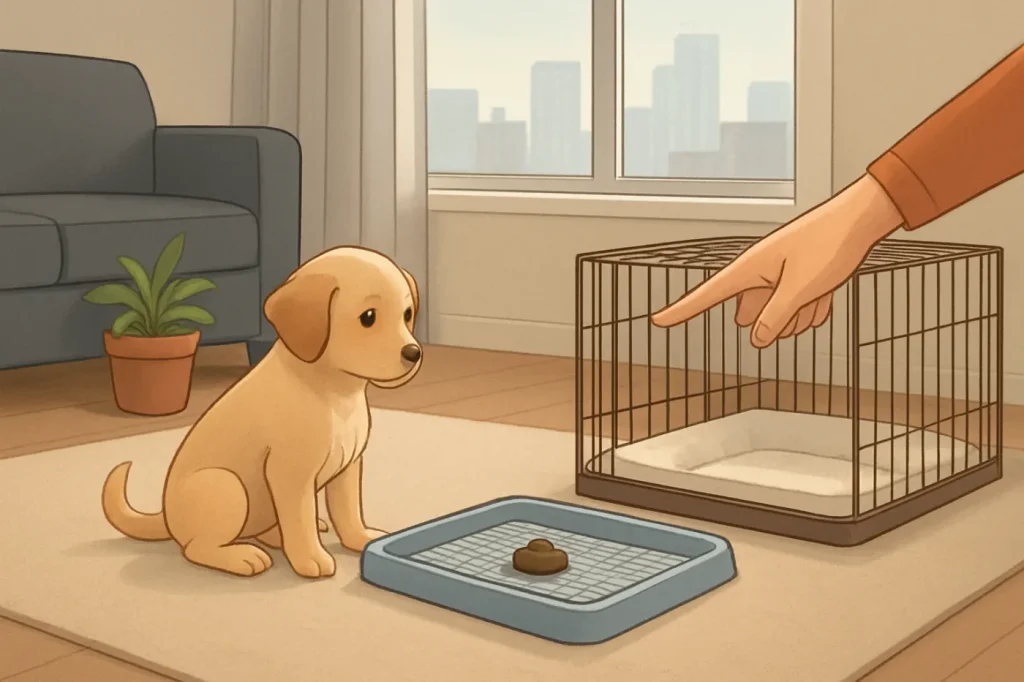
- Use a crate or small pen to prevent random accidents and build bladder control.
Everything else is details: how often you can go outside, whether you use pads or balcony turf, and how long your puppy can be left alone. This guide walks through those decisions step by step so you can build a routine that fits real apartment life.
What “success” looks like when house training in an apartment
Before you start, it helps to know what you are aiming for. For most apartment owners, realistic house training goals are:
- Short term (first 2–3 weeks)
- Most pees and poops happen in the chosen potty area.
- Accidents still happen, but you are catching patterns.
- Puppy starts to pause, sniff, or circle before going.
- Medium term (around 2–4 months of age)
- Puppy can stay clean in the crate for several hours during the day.
- Nighttime accidents are rare with one or two potty breaks.
- Puppy often goes when you bring them to the potty spot.
- Long term (by 6–8 months for many puppies)
- Puppy reliably holds it between scheduled potty breaks.
- Accidents indoors are unusual and often linked to a clear cause (illness, big schedule change).
- Puppy may start to signal when they need to go (going to the door, whining, pacing).
Timelines vary by breed, size, and health. Small breeds and toy dogs often need more frequent breaks and can take longer to fully house train. If progress seems very slow, a checkup with a veterinarian is a good idea to rule out medical issues.
Apartment preparation checklist before house training starts
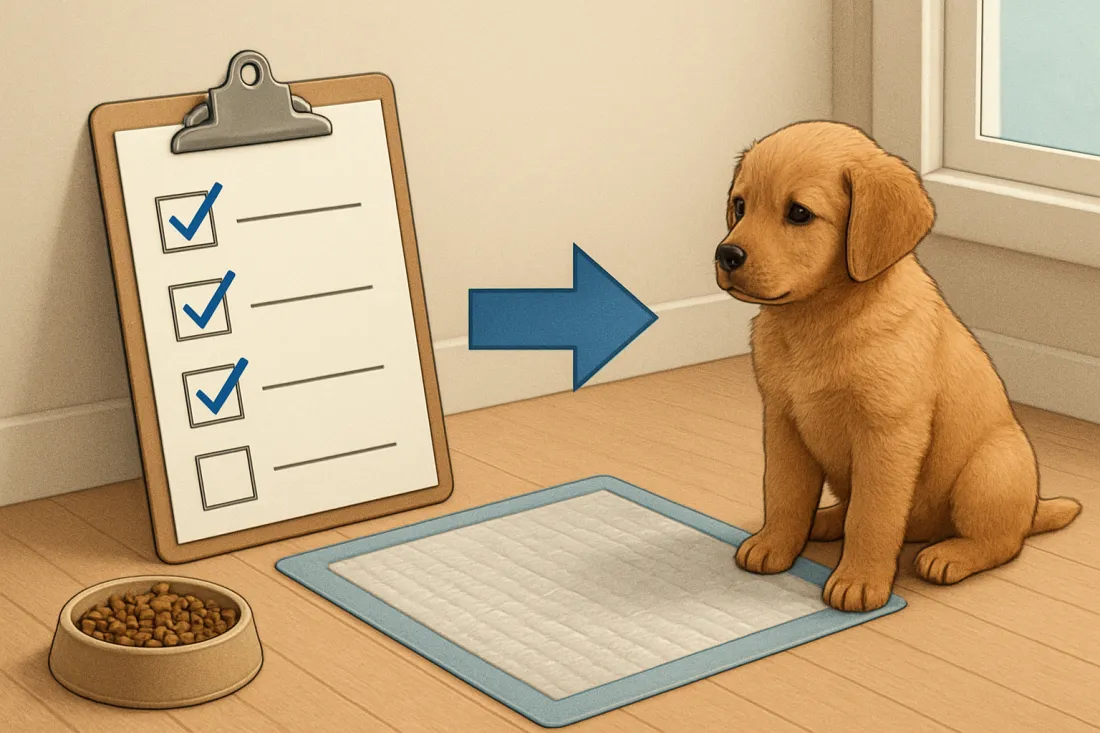
Use this practical checklist to set up your apartment so training is easier from day one.
Supplies to gather
- Crate sized so your puppy can stand up, turn around, and lie down comfortably, but not pace or use one end as a bathroom.
- Exercise pen or baby gates to create a small puppy-safe area outside the crate.
- Leash and flat collar or harness for controlled trips to the potty spot.
- High-value treats (tiny, soft, and very tasty) reserved only for potty rewards.
- Enzymatic cleaner made for pet urine and feces to remove odor from accidents.
- Indoor potty option if needed:
- Disposable pee pads, or
- Washable pads, or
- Balcony potty with artificial or real turf.
- Chew toys and food puzzles to keep your puppy busy in the crate or pen.
- Small waterproof mat or tray under pads or turf to protect floors.
Apartment setup decisions
- Choose your main potty area
- Outdoor: a specific patch of grass or gravel near your building.
- Indoor: one corner of a bathroom, laundry room, or balcony with pads or turf.
- Define the puppy’s “living zone”
- Use gates or an exercise pen to limit access to one or two rooms.
- Place the crate inside this zone so your puppy is near family activity.
- Remove or protect tempting surfaces
- Roll up rugs for the first weeks; many puppies prefer soft surfaces.
- Block off areas with lots of cables or clutter.
- Plan your route
- Decide the fastest, safest way from crate to potty spot (elevator, stairs, hallway).
- Keep leash, treats, and poop bags by the door for quick exits.
If your building has specific rules about pets in common areas, review those as well so your routine stays compliant with your lease and house rules.
Step‑by‑step house training plan with time blocks
The following process assumes a young puppy (around 8–14 weeks). Adjust timing as your puppy grows and can hold it longer.
1. Morning routine (first 60–90 minutes)
- Wake and carry or leash to potty spot immediately
- Do not stop to play or prepare coffee first.
- Give a simple cue like “Go potty” once you reach the spot.
- Wait quietly for 5–10 minutes
- If your puppy pees or poops, praise warmly and give 3–5 tiny treats in a row.
- If nothing happens, go back inside and place the puppy in the crate for 10–15 minutes, then try again.
- Feed breakfast
- Offer food for about 15–20 minutes, then pick up the bowl.
- Most puppies need to go again within 5–20 minutes after eating.
- Second potty trip
- Same spot, same cue, same big reward if successful.
- Play and supervised free time (20–30 minutes)
- Keep your puppy in the same room as you.
- Watch for sniffing, circling, or suddenly wandering off; those are early potty signs.
- Crate or pen rest (30–60 minutes)
- Short nap or quiet time with a safe chew toy.
2. Daytime cycle (repeat every 1.5–3 hours)
Repeat this simple loop throughout the day:
- Wake or take puppy out of crate/pen.
- Go straight to potty spot (no detours).
- Reward success generously.
- Allow 20–40 minutes of supervised play or training.
- Back to crate or pen for a rest period.
You are using time blocks to prevent accidents: puppies usually need to go after sleeping, after playing, and after eating or drinking.
3. Evening and bedtime
- Offer dinner a few hours before bedtime so your puppy has time to digest and eliminate.
- Limit big drinks of water right before sleep, unless your veterinarian advises otherwise.
- Take your puppy out one last time immediately before bed.
- Overnight, many young puppies need 1–2 potty breaks. Set an alarm rather than waiting for crying to escalate.
Sample potty schedule for working apartment owners
If you work outside the home, you will likely need help for the first months. Young puppies often cannot hold it for a full workday. Below is a sample weekday schedule for a puppy around 10–12 weeks old, with a midday helper (dog walker, neighbor, or sitter). Adjust times to your own routine.
| Time | What you do | Goal |
|---|---|---|
| 6:30 am | Wake, straight to potty spot, reward. | Empty bladder after night. |
| 6:45 am | Breakfast, short play, supervised time. | Burn energy, build routine. |
| 7:15 am | Potty trip again, then into crate with chew. | Prevent post‑breakfast accident. |
| 9:30 am | Helper visit: potty break, short play, back to crate or pen. | Break up long holding time. |
| 12:30 pm | Helper visit: potty, lunch (if still on 3 meals), brief play. | Reinforce potty spot, social contact. |
| 3:30 pm | Helper visit: potty, quiet time. | Keep crate time reasonable. |
| 6:00 pm | You return: potty, dinner, play, training. | Family bonding, more chances to reward. |
| 8:00 pm | Evening potty, calm activities. | Wind down before night. |
| 10:00 pm | Last potty, then bed in crate. | Start night with empty bladder. |
| 2:00 am | Optional alarm for quick potty trip, then back to bed. | Prevent overnight accident while puppy is young. |
If you cannot arrange a midday helper, an indoor potty option may be kinder and more realistic, especially for small breeds or very young puppies.
Crate training basics and how it supports house training
Crate training is one of the most useful tools for house training in an apartment, because it:
- Prevents unsupervised wandering and secret accidents.
- Uses a dog’s natural tendency to keep their sleeping area clean.
- Makes it easier to predict when your puppy will need to go.
How to introduce the crate
- Place the crate in a living area, not in isolation.
- Make it cozy with a blanket or bed if your puppy does not chew bedding.
- Feed some meals in the crate with the door open.
- Toss treats inside and let your puppy go in and out freely at first.
- Start with very short closed‑door periods (1–5 minutes) while you sit nearby, then gradually increase.
Crate rules that protect house training
- Do not use the crate as punishment. It should feel like a safe den, not a time‑out corner.
- Take your puppy to the potty spot immediately after crate time. This builds a strong habit.
- Watch the clock. Young puppies often need a break every 1–3 hours during the day.
- If your puppy has repeated accidents in the crate, the crate may be too large, your puppy may be left too long, or there may be a medical issue.
Using indoor potty options (pads, balcony, turf) responsibly
Indoor potty options are especially useful when:
- You live on a high floor and cannot get outside quickly.
- Weather is extreme (very hot, very cold, storms).
- You have mobility challenges or limited elevator access.
- Your work schedule makes midday outdoor breaks impossible.
There are trade‑offs, though. Indoor options can blur the line between “inside” and “outside” for your puppy, so you need a clear plan.
Comparison of common apartment potty options
| Option | Best for | Pros | Cons | Tips |
|---|---|---|---|---|
| Disposable pee pads | Very young puppies, small breeds, high‑rise living. | Easy to set up and replace; good backup for long days. | Some puppies chew them; can be messy and create waste. | Use a pad holder or tray; keep pads in one fixed spot only. |
| Washable pads | Owners wanting less waste and lower long‑term cost. | Reusable; often more durable than disposable pads. | Need frequent washing; lingering odor if not cleaned well. | Have at least 2–3 pads to rotate; wash with hot water and appropriate detergent. |
| Balcony turf potty | Owners with a balcony and goal of outdoor‑only later. | More like grass; keeps bathroom area outside living space. | Requires regular rinsing; may not be allowed in all buildings. | Place on a tray; rinse daily and deep clean weekly to control odor. |
| Outdoor only | Ground‑floor or easy outdoor access, flexible schedule. | Clear rule: bathroom is always outside; easier long‑term. | Harder with very young puppies or bad weather; more accidents early on. | Be consistent with route and spot; plan for weather backups. |
How to teach your puppy to use an indoor potty area
- Pick one exact location and do not move it around.
- Take your puppy there on leash at all the usual potty times (after sleep, play, meals).
- Stand still and wait quietly. When your puppy starts to go, calmly praise.
- As they finish, mark the moment with a cheerful “Yes!” and give several treats right on the pad or turf.
- After success, allow some free time in the apartment as a bonus.
If your long‑term goal is outdoor‑only, you can gradually move the pad closer to the door, then just outside, and eventually phase it out once your puppy reliably asks to go out.
Positive reinforcement techniques and reward ideas
Positive reinforcement is the engine of house training. You want your puppy to think, “Going in this spot makes amazing things happen.”
How to reward effectively
- Timing: Give treats within 1–2 seconds of your puppy finishing, not when you get back inside.
- Intensity: Use a happy voice, gentle petting if your puppy enjoys it, and several tiny treats instead of one big one.
- Consistency: Reward every successful potty in the right place for at least the first few weeks.
- Special rewards: Reserve the very best treats only for potty success, not for random tricks.
Reward ideas
- Small pieces of cooked chicken or turkey (plain, no seasoning).
- Tiny bits of soft commercial training treats.
- A quick game of tug or fetch after your puppy goes, if they love play.
- Sniffing time on the way back from the potty spot as a “life reward.”
How to handle accidents without punishment
Accidents are part of house training, especially in apartments where quick outdoor access is harder. How you respond can speed up or slow down progress.
What to do when you catch your puppy in the act
- Say a neutral “Oops” or “Outside” once, without yelling.
- Gently interrupt by picking up the puppy or guiding them on leash to the potty spot.
- Give them a chance to finish there; reward if they do.
What to do when you find a puddle or pile later
- Do not scold, rub their nose in it, or show anger. Your puppy will not connect it with what happened earlier.
- Put your puppy in another room or in the crate with a chew.
- Clean the area thoroughly with an enzymatic cleaner to remove odor.
- Ask yourself what you can change: timing, supervision, or access.
Why punishment backfires
Punishment can lead to:
- Puppies hiding to pee where you cannot see them.
- Fear of you approaching when they need to go.
- Stress, which can actually increase accidents.
Instead, treat accidents as information: your schedule, supervision, or confinement plan needs adjusting.
Troubleshooting common apartment house training setbacks
Even with a good plan, you may hit bumps. Here are common issues and practical fixes.
Nighttime accidents
Possible causes and adjustments:
- Puppy is too young to hold it all night
- Set one or two alarms for quick, boring potty trips.
- Gradually push the alarm later as your puppy matures.
- Too much water right before bed
- Offer most water earlier in the evening.
- Do not restrict water excessively; if in doubt, ask your veterinarian.
- Crate is too large
- Use a divider so your puppy has just enough room to sleep comfortably.
Regression after early success
Regression is common around growth spurts, routine changes, or after illness.
- Go back to basics: shorter intervals between potty trips and more supervision.
- Review any recent changes (new schedule, new surfaces like rugs, different food).
- Check with a veterinarian if accidents suddenly increase or your puppy seems uncomfortable when urinating.
Bad weather and high‑rise challenges
- Keep a “potty kit” by the door: towel, umbrella, coat for you, and possibly a jacket for your puppy.
- If it is unsafe to go out, use a backup indoor potty area and reward it the same way.
- Practice quick, focused trips: straight to the spot, go, reward, back inside.
Confusion between pads and carpets
If your puppy starts using rugs as toilets:
- Remove or roll up rugs during the main training period.
- Keep pads in a clearly different area and on a tray or mat with a distinct texture.
- Supervise closely when rugs return; interrupt and redirect at the first sniffing or circling.
Decision criteria: outdoor‑only vs indoor‑plus‑outdoor training
Use these questions to choose the right plan for your situation:
- How quickly can you reach an outdoor spot?
- If it takes several minutes and involves elevators or long hallways, an indoor option can prevent many accidents.
- How long will your puppy be alone on a typical day?
- More than a few hours regularly usually calls for a helper or indoor potty area.
- What is your long‑term goal?
- If you want outdoor‑only, you can still start with pads but plan a clear phase‑out process.
- Does your building allow balcony or hallway potty setups?
- Check building rules before placing turf or pads outside your door.
There is no single “right” choice. The best plan is the one you can follow consistently without putting unrealistic pressure on your puppy.
Common mistakes in apartment puppy house training
Avoiding a few typical errors can make the process much smoother.
- Too much freedom too soon
- Letting a puppy roam the whole apartment makes accidents almost guaranteed.
- Inconsistent potty spot
- Switching between multiple pads or outdoor areas confuses your puppy.
- Rewarding at the wrong time
- Giving treats back inside teaches “come inside” instead of “go potty here.”
- Skipping daytime breaks
- Expecting a young puppy to hold it for a full workday often leads to crate soiling and setbacks.
- Using punishment or harsh voices
- This can create fear and hiding behavior instead of learning.
Simple checklist: your daily house training routine
Use this quick checklist to keep yourself on track:
- I have one clear potty spot (indoor, outdoor, or both with a plan).
- I take my puppy to the potty spot after waking, after eating, after play, and every 1.5–3 hours.
- I supervise closely whenever my puppy is out of the crate or pen.
- I use a crate or small pen to prevent unsupervised accidents.
- I reward every correct potty with several small treats and praise.
- I clean accidents with an enzymatic cleaner and do not punish.
- I adjust the schedule if I see repeated accidents at the same time of day.
- I have a backup plan for bad weather or long workdays.
When to seek help from a trainer or veterinarian
Sometimes house training problems are not just about routine.
Signs to call your veterinarian
Contact your vet if you notice:
- Sudden increase in accidents after your puppy was mostly reliable.
- Straining, crying, or discomfort while urinating or defecating.
- Very frequent urination in small amounts.
- Changes in stool consistency that last more than a day or two.
These can be signs of medical issues that need treatment.
Signs to consult a professional trainer or behavior specialist
A qualified trainer can help if:
- Your puppy regularly soils the crate despite reasonable schedules.
- Your puppy seems very anxious about going outside or using the potty area.
- House training problems are combined with other behavior issues like severe fear, aggression, or destructive chewing.
- You feel overwhelmed and unsure how to adjust the plan.
Look for trainers who use positive reinforcement methods and have experience with puppies and apartment living.
FAQ about house training a puppy in an apartment
How hard is it to train a puppy in an apartment?
It is more logistically challenging than in a house with a yard because you cannot just open a door. You need better planning, tighter supervision, and sometimes indoor potty options. With a consistent schedule and realistic expectations, most puppies can be successfully house trained in apartments.
How to potty train a puppy while living in an apartment?
Choose one potty spot (indoor or outdoor), take your puppy there on a regular schedule (after sleep, meals, and play), reward generously for success, supervise closely indoors, and use a crate or pen to prevent unsupervised accidents. Add an indoor potty option or midday helper if you cannot get outside often enough.
What is the 7‑7‑7 rule for puppies?
People sometimes mention informal “rules” like 7‑7‑7 to describe how long puppies can hold their bladder or how often they need breaks. These are rough guidelines at best and do not fit every puppy. Instead of relying on a specific number pattern, watch your individual puppy and plan frequent breaks, especially during the first months.
What is the 10‑10‑10 rule for puppies?
Similar to the 7‑7‑7 idea, the 10‑10‑10 rule is an informal way some owners talk about timing for potty breaks or crate use. There is no single official rule that applies to all puppies. Age, size, health, and activity level all matter, so use your puppy’s behavior and your veterinarian’s advice to set realistic intervals.
How long can my puppy hold it during the day?
Very young puppies often need breaks every couple of hours during the day. As they grow, they can gradually hold it longer. Instead of aiming for a specific number of hours, start with short intervals and increase slowly if your puppy is staying clean and comfortable.
Can I fully house train a puppy if I work full‑time?
Yes, but you will likely need support. Options include a dog walker, a trusted neighbor, doggy day care, or an indoor potty area. Leaving a young puppy alone for a full workday without a break usually leads to accidents and can slow training.
With a clear plan, realistic schedule, and plenty of patience, house training a puppy in an apartment becomes a series of small, manageable steps rather than a constant struggle. Focus on consistency, supervision, and positive reinforcement, and your puppy will learn where to go—even without a backyard.