
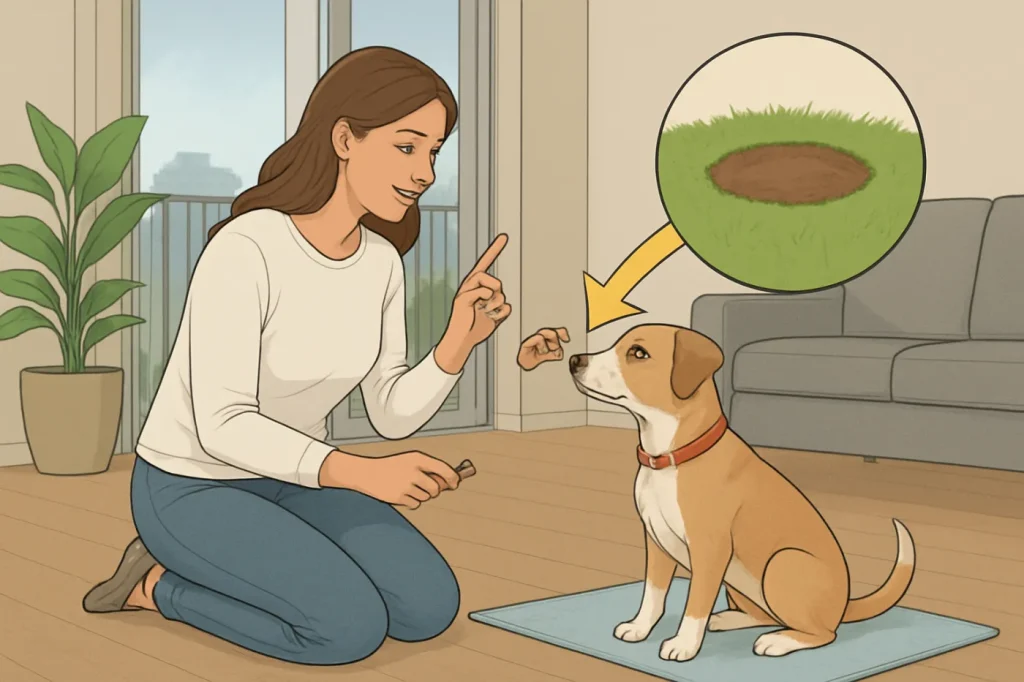
House training a rescue dog in an apartment is absolutely possible, even if you work full-time or your dog has a rough past. The core plan is:
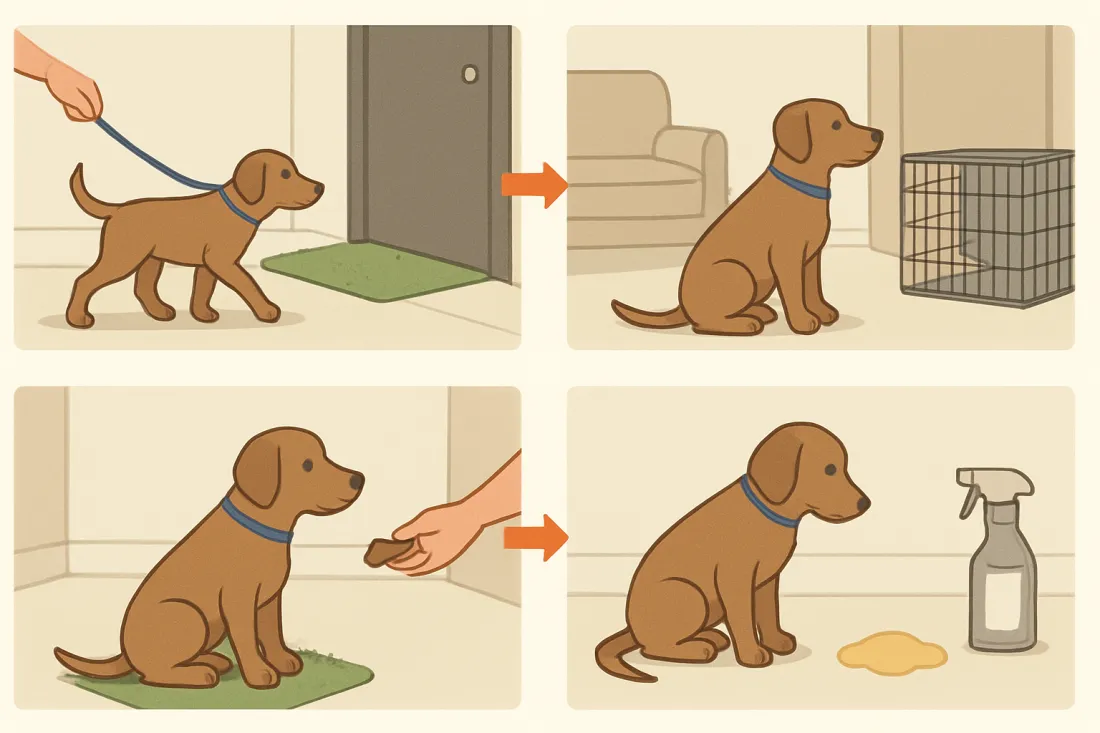
- Take your dog to the same potty spot every 2–4 hours (more often at first).
- Supervise closely indoors or use a crate/pen so accidents are less likely.
- Reward every successful potty outside with treats and praise.
- Clean accidents quietly and thoroughly, without punishment.
- Adjust the schedule based on age, health, and how often accidents happen.
From there, you layer in apartment-specific solutions: elevator time, limited grass, neighbors, and your work schedule.
How apartment house training differs from a yard (and what to expect)
In a house with a yard, you can often open a back door the moment your dog shows signs they need to go. In an apartment, you have to factor in elevators, hallways, and leashes. That does not make training harder forever, but it does mean:
- You need more planning and a stricter schedule in the first few weeks.
- You may need backup options like a balcony potty station or a dog walker.
- You must supervise more carefully indoors because there is no quick “back door” option.
Many adult rescue dogs can make big progress in a few weeks with a clear plan, but some need several months of consistency, especially if they never lived indoors before.
Rescue dog adjustment timelines (3–3–3 and 7–7–7 ideas)
Many trainers talk about adjustment rules of thumb like the “3–3–3 rule” (about 3 days, 3 weeks, 3 months) or “7–7–7” style ideas (roughly 7 days, 7 weeks, 7 months). These are not strict science, but they are a helpful reminder:
- First few days: Your dog may be shut down, clingy, or confused. House training progress can be slow because stress affects bladder and bowel habits.
- First few weeks: Your dog starts showing their real personality. Old habits (like going indoors) can pop up once they feel safer.
- First few months: Routines settle in. Consistent house training usually pays off here.
Think of house training as part of this bigger adjustment. You are not just teaching “where to go”; you are helping your dog feel safe enough to learn.
Assessing your rescue dog’s history and current routine
Before changing anything, gather clues about how your dog currently understands “bathroom rules.” This helps you avoid guessing and set realistic expectations.
Questions to ask the shelter, rescue, or previous owner
- Where did the dog usually go potty (yard, pee pads, concrete, crate, indoors)?
- How often were they taken out?
- Were they ever punished for accidents?
- Any known medical issues (UTIs, diarrhea, incontinence)?
- Have they lived in an apartment or only in a house/yard?
What to observe in the first week at home
- Patterns of accidents: Time of day, location, surface (rug vs tile), and whether they sniff or circle first.
- Body language before going: Pacing, whining, heading toward the door, suddenly leaving play.
- Crate/pen habits: Do they keep their sleeping area clean or soil it?
- Stress signs: Panting, hiding, freezing, or startle responses that may affect their ability to hold it.
Use these observations to tailor the schedule. For example, if accidents always happen around 6 p.m., plan a potty break at 5:30 p.m. and again at 7 p.m. for a while.
Setting up your apartment for house training success
In an apartment, you cannot just open a back door. Your setup must make it easy to get your dog out quickly and prevent unsupervised wandering indoors.
Crate or pen: choosing the right confinement tool
Confinement is not punishment; it is a safety and training tool. You can use:
- Crate: Best for dogs who are comfortable in small, den-like spaces and do not soil where they sleep.
- Exercise pen (x-pen): Good for dogs who panic in crates or need a bit more room. You can include a bed, water, and a small potty pad area if absolutely necessary.
- Baby-gated room: Useful for dogs who hate crates but can be trusted not to chew everything.
The crate or pen should be just big enough for your dog to stand up, turn around, and lie down comfortably. Too much space makes it easier for them to potty in one corner and sleep in another.
Designing a realistic potty area for apartment living
Pick one primary potty option and stick with it as much as possible:
- Outdoor spot: A consistent patch of grass, mulch, or gravel near your building. Take your dog there on leash every time.
- Balcony or indoor potty station: A turf tray, pee pads, or a litter-style box can be a backup for high-rises, mobility issues, or extreme weather. Use this only if you truly cannot get outside often enough.
Consistency matters more than the exact surface. If your dog used pee pads before, you can start with pads and gradually move them closer to the door, then outside, over time.
Creating a simple schedule chart
Write down a daily plan and post it on the fridge. Include:
- Wake-up time and first potty break.
- Meal times and post-meal potty trips.
- Midday, after-work, evening, and pre-bed potty breaks.
- Who is responsible for each walk (you, partner, dog walker, neighbor).
Seeing the schedule laid out makes it easier to spot long gaps that may be unrealistic for your dog’s bladder, especially if you work long hours.
Step-by-step house training plan tailored to apartment living
Use this as a base and adjust timing to your dog’s age and health.
1. Morning routine: start the day with success
- Out of crate/pen and straight outside. No playing, no breakfast, no scrolling your phone first.
- Go to the same potty spot on leash. Stand mostly still and give a cue like “Go potty” in a calm voice.
- Wait 5–10 minutes. If they go, praise warmly and give 2–3 small treats right after they finish.
- If they do not go: Bring them back inside, put them in the crate/pen for 10–15 minutes, then try again.
2. Daytime schedule: frequent, predictable breaks
General guidelines (check with your vet for your individual dog):
- Young puppies: Often need breaks every 1–2 hours while awake.
- Adult dogs new to house training: Start with every 2–3 hours, then stretch gradually as they succeed.
- Senior dogs or dogs with medical issues: May need more frequent breaks; discuss with a vet.
Each time you take your dog out:
- Go directly to the potty spot on leash.
- Give your potty cue and wait quietly.
- Reward generously for success.
- Only after they go, start a walk or play as a bonus reward.
This “potty first, fun second” rule helps your dog understand that going in the right place makes good things happen.
3. Supervision indoors: prevent accidents before they happen
When your dog is not in their crate/pen, supervise like you would a toddler learning to use the bathroom:
- Use a leash indoors to keep them near you while you watch TV or work.
- Close doors to bedrooms and carpeted rooms at first.
- Watch for early signs: sniffing, circling, wandering away, sudden quiet.
- If you see signs, calmly say “Let’s go outside!” and take them to the potty spot.
4. Feeding and water routines that support house training
- Feed on a schedule (for example, morning and evening) instead of free-feeding all day. Predictable meals create predictable potty times.
- Offer water regularly but avoid huge gulps right before bed or long crate periods. Do not restrict water excessively; if you are unsure, ask your vet.
- Plan potty breaks roughly 10–30 minutes after meals and after big drinks.
5. Night routine: last call and safe sleep
- Take your dog out for a final potty break right before bed.
- Use the same spot and cue, reward success.
- Set up the crate/pen near your bedroom so you can hear if they stir or whine.
- If they wake you at night and you suspect they need to go, take them out calmly, no play, then back to bed.
Apartment vs yard: comparison table for house training choices
Apartment living changes logistics but not the core principles. Use this table to adjust expectations and tools.
| Aspect | Apartment rescue dog | House with yard |
|---|---|---|
| Getting to potty spot | Elevators, stairs, hallways; plan extra 5–10 minutes per trip | Often just opening a door; faster response to early signals |
| Noise and distractions | Neighbors, doors, other dogs in hall can distract or scare | Usually quieter, more control over environment |
| Backup potty options | Balcony turf, pee pads, indoor station may be needed | Yard area can be primary and backup potty spot |
| Accident impact | Carpets and shared walls; odor control is critical | More hard floors; easier cleaning in some homes |
| Exercise needs | Must schedule walks or indoor play; no free roaming outside | Yard can help with quick exercise and extra potty chances |
| Response to emergencies | Harder to rush out; crate/pen and schedule become more important | Can often get outside quickly if dog signals suddenly |
Managing work schedules, dog walkers, and daycare
Many U.S. apartment dwellers work away from home. You may need help to keep potty breaks frequent enough.
Deciding what support you need
- If you are gone 8–10 hours most weekdays: A midday dog walker, trusted neighbor, or dog daycare is usually necessary, especially for puppies or newly adopted dogs.
- If you work from home: Set alarms to avoid getting absorbed in meetings and missing potty windows.
- If your schedule changes weekly: Use a shared calendar with your household and any helpers so the dog’s routine stays predictable.
How to use walkers or daycare without confusing your dog
- Ask walkers to take your dog to the same potty spot and use the same cue you do.
- Request a quick text or note after each visit: did your dog pee, poop, or just walk?
- For daycare, confirm they take dogs out regularly and ask how they handle potty breaks.
- Keep feeding times and morning/evening potty routines as consistent as possible, even if midday care varies.
Dealing with accidents in an apartment without punishment
Accidents are part of the process, especially with rescue dogs who may be confused or anxious. How you respond can speed up or slow down training.
What to do when you catch your dog mid-accident
- Stay calm. No yelling, hitting, or rubbing their nose in it.
- Say something neutral like “Outside!” and gently interrupt.
- Guide them quickly to the potty spot. If they finish there, praise and treat.
- Clean the indoor mess thoroughly once your dog is out of the way.
What to do when you find an accident later
- Do not scold or show the mess to your dog. They cannot connect your reaction with something that happened earlier.
- Use an enzymatic cleaner designed to break down pet urine and feces odors. Regular cleaners often leave a scent dogs can still detect.
- Block access to repeat spots temporarily with furniture, a baby gate, or a closed door.
- Review your schedule: when was the last potty break, and were you supervising?
Special considerations for adult rescue dogs vs puppies
Rescue dogs come in all ages. The core method is similar, but expectations and details differ.
Adult rescue dogs
- May have some bladder control but no idea about indoor rules.
- Could have been punished for accidents, making them afraid to potty in front of people.
- Often benefit from a re-boot: treat them like an untrained puppy for a few weeks (crate, schedule, supervision).
- Progress can be faster than with puppies if you are consistent.
Puppies from rescues
- Smaller bladders and less control; expect more frequent trips and more accidents.
- Need many short, positive experiences outside to build good habits.
- May chew pee pads or crate bedding; supervise closely and puppy-proof your space.
- Nighttime potty trips are often necessary for a while.
When to talk to a vet
Regardless of age, contact a veterinarian if you notice:
- Straining, blood in urine or stool, or obvious pain.
- Sudden increase in accidents after doing well for a while.
- Dribbling urine while walking or sleeping.
- Extreme thirst or frequent urination with large volumes.
Medical issues like urinary tract infections or digestive problems can make house training much harder and need treatment.
Common mistakes that slow down house training in apartments
- Expecting too much too soon: Assuming a rescue dog is “already house trained” and giving them full freedom right away.
- Inconsistent potty spots: Using the lobby one day, the sidewalk the next, and a random patch of gravel another day.
- Too much indoor freedom: Letting the dog roam the whole apartment unsupervised between walks.
- Mixed messages with pee pads: Allowing pads everywhere, then getting upset when the dog uses rugs that feel similar.
- Accidental punishment: Scolding for accidents, which can make dogs hide and potty out of sight.
- Ignoring subtle signals: Missing early signs because you are on your phone or in another room.
- Infrequent cleaning: Not using enzymatic cleaners, so the apartment still smells like a bathroom to your dog.
Decision checklist: is your apartment plan realistic?
Use this quick checklist to fine-tune your approach.
- Have I chosen one main potty spot and a clear cue word?
- Do I have a crate, pen, or gated area set up that my dog can rest in safely?
- Is my dog getting potty breaks often enough for their age and health (not just my convenience)?
- Do I have a backup plan for long workdays (walker, neighbor, daycare)?
- Am I rewarding every success outside with treats and praise?
- Do I know my dog’s early potty signals and watch for them?
- Do I have an enzymatic cleaner on hand and a plan for cleaning accidents?
- Have I ruled out or checked for medical issues with a vet if accidents are frequent?
- Am I prepared to follow this plan consistently for several weeks, not just a few days?
For broader manners and routines that support house training, it can also help to review basic dog training rules for responsible owners so your dog gets clear, consistent guidance in every part of daily life.
Troubleshooting specific apartment house training problems
Night accidents in the crate or pen
Possible causes and adjustments:
- Too long between potty breaks: Add a late-night trip or a brief middle-of-the-night outing for a while.
- Crate too big: Use a divider so your dog cannot potty in one corner and sleep in another.
- Too much water right before bed: Offer water earlier in the evening and a small final drink, then a potty break.
- Stress or fear: Move the crate closer to your bed, use a soft bed and a light cover, and keep bedtime calm.
Indoor marking (especially on furniture or walls)
- Schedule a vet visit to rule out medical causes.
- Clean marked areas thoroughly with enzymatic cleaner.
- Supervise closely and interrupt calmly if you see leg-lifting starting.
- Limit access to high-risk areas (corners of couches, door frames) until habits improve.
- Increase mental and physical exercise; some dogs mark more when stressed or under-stimulated.
Fear of hallways, elevators, or outdoor areas
- Pair scary areas with treats: toss small treats in the hallway or near the elevator while staying under your dog’s fear threshold.
- Take short, calm trips without expecting potty success at first; focus on confidence.
- If your dog is too scared to go outside reliably, use a temporary indoor potty station while you work on confidence.
- Consider working with a trainer who uses reward-based methods to address fear.
Dog will not potty on leash
- Use a longer leash (where safe) to give a bit more room to move.
- Stand still and avoid staring at your dog; some feel pressured.
- Give them time. Some dogs need several calm, boring minutes to relax enough to go.
- Reward heavily when they finally potty on leash so they learn it is safe and worthwhile.
When to seek a trainer or behaviorist in the U.S.
Professional help is worth it if:
- Accidents continue several times a week after you have followed a consistent plan for a month or more.
- Your dog shows intense fear of going outside, elevators, or certain surfaces.
- There is aggression, severe anxiety, or destructive behavior along with house soiling.
- You feel overwhelmed or unsure how to adjust the plan.
How to find the right professional
- Look for trainers who use reward-based, humane methods and avoid harsh punishment tools.
- Ask if they have experience with rescue dogs and apartment living challenges.
- Check whether they offer in-home sessions or virtual coaching so they can see your exact setup.
- For complex anxiety or medical concerns, ask your vet about a veterinary behavior specialist who can coordinate training and medical care.
FAQ: house training a rescue dog in an apartment
How long does it take to housebreak a rescue dog in an apartment?
It varies widely. Some adult rescue dogs catch on in a few weeks if you are very consistent. Others, especially those who never lived indoors or have medical or anxiety issues, may need several months. Focus on steady improvement: fewer accidents, more clear signals, and longer times between breaks, rather than a specific deadline.
What is the 3-3-3 rule for rescue dogs?
The 3-3-3 idea is a rough way to think about adjustment: about 3 days to decompress, 3 weeks to start settling into a routine, and 3 months to feel truly at home. It is not a strict timeline, but it reminds you that behavior, including house training, often improves gradually as your dog feels safer.
What is the 7-7-7 rule for rescue dogs?
Some people use a 7-7-7 style idea (for example, 7 days, 7 weeks, 7 months) to describe stages of adjustment. Like the 3-3-3 rule, it is a guideline, not a scientific formula. The key message is that rescue dogs need time and consistent routines before their true behavior and learning potential show.
How often should I take my rescue dog out in an apartment?
At first, many newly adopted dogs do best with potty breaks every 2–3 hours while awake, plus after meals, naps, and play. Puppies and some seniors may need even more frequent trips. As your dog has fewer accidents and shows they can hold it comfortably, you can gradually extend the time between breaks.
Should I use pee pads for a rescue dog in an apartment?
Pee pads can be useful as a temporary tool in high-rises, for very young puppies, or for dogs with medical issues. However, they can also confuse some dogs about where it is okay to go. If you use pads, keep them in one consistent spot and plan a gradual transition toward your long-term goal, whether that is a balcony station or going outside.
What if my rescue dog was “house trained” in their previous home but has accidents now?
New environments, different schedules, and stress can cause setbacks. Treat your dog as if they are not fully trained for a few weeks: use a schedule, supervision, and rewards for outdoor potty trips. Most dogs who were previously trained regain good habits once they understand the new routine.
Can I crate my rescue dog while I am at work?
Crates can be helpful, but only if your dog is comfortable and not left inside longer than they can reasonably hold it. Many dogs cannot stay crated all day without a break. If you work long hours, plan for a midday visit from a walker, neighbor, or daycare, or use a larger pen with a designated potty area instead of a small crate.
Is my dog having accidents out of spite?
Dogs do not have accidents to get revenge. They go indoors because they do not yet understand the rules, cannot hold it, are stressed, or have a medical issue. Focusing on clear routines, supervision, and gentle guidance will help far more than trying to interpret accidents as intentional misbehavior.
How do I know if my rescue dog is really house trained?
Signs of solid progress include: no indoor accidents for several weeks, your dog consistently going when taken to the potty spot, and clear signals (going to the door, pacing, whining) when they need to go. Even then, keep routines in place and be extra careful during changes like moving, schedule shifts, or travel, when setbacks are more likely.