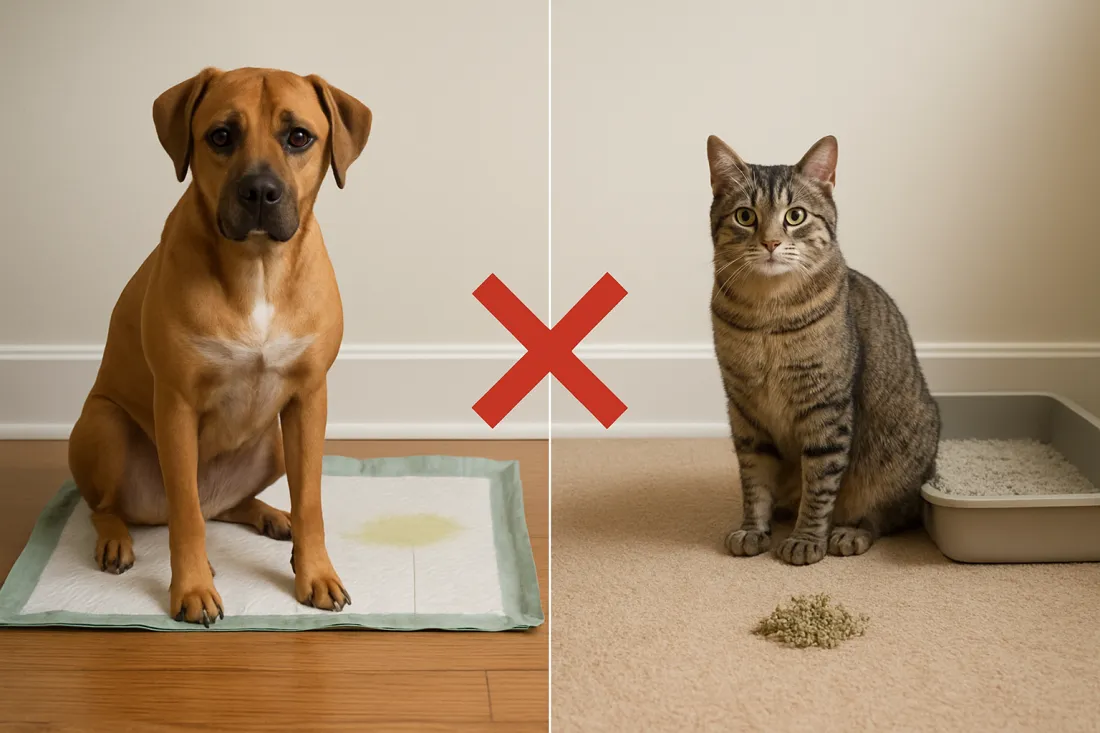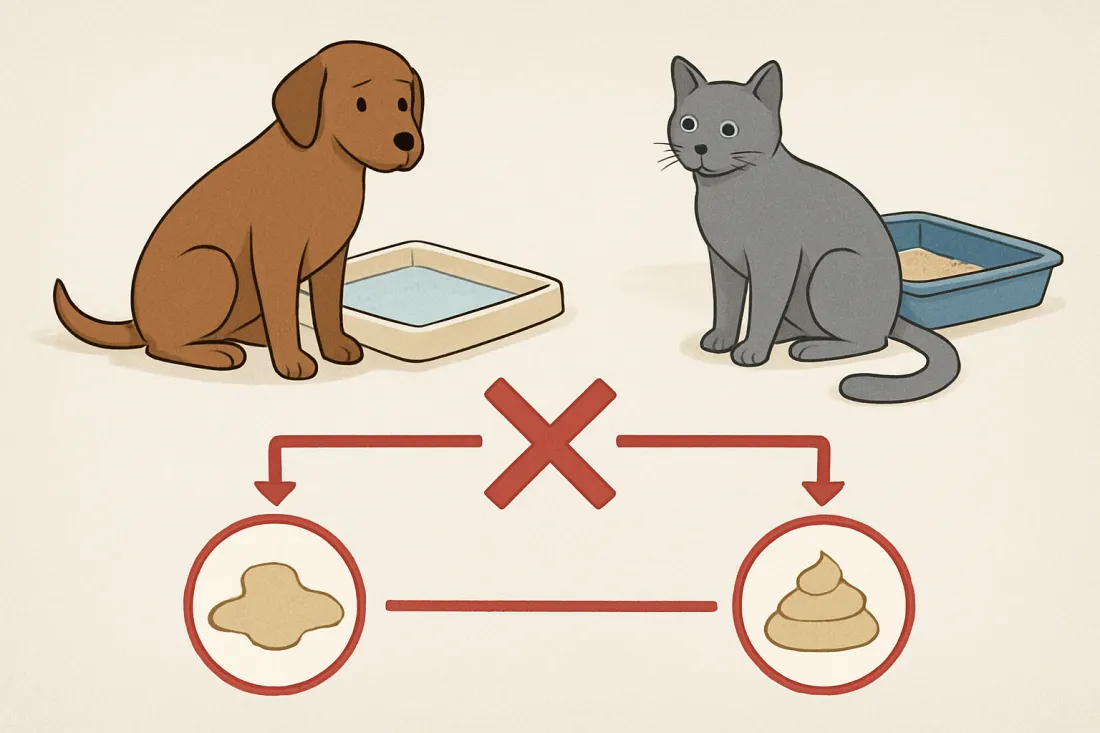
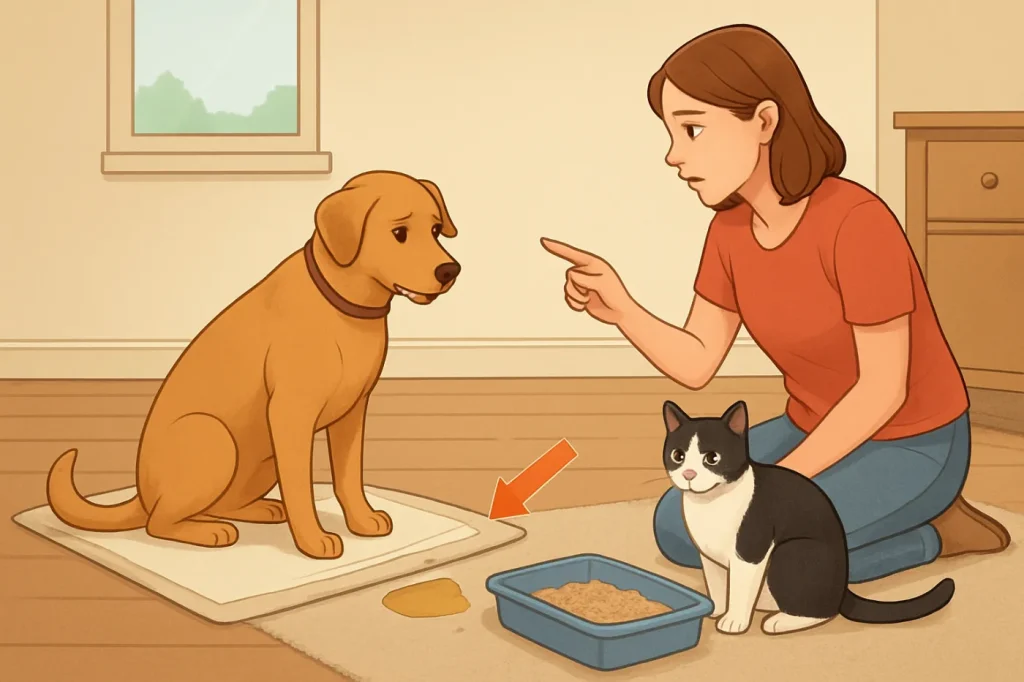
How to stop indoor accidents: the core idea
To prevent or fix indoor accidents with dogs and cats, focus on three things you fully control:
- Biology – what is realistic for your pet’s age and health.
- Environment – how easy it is for them to find and use the right toilet spot.
- Routine and response – how consistent you are with timing, supervision, and rewards.
Most house soiling problems are not “stubbornness.” They come from too much freedom, confusing set‑ups, missed bathroom breaks, or stress. When you tighten the set‑up and change your own habits, accidents usually drop quickly. This guide compares dog house training and cat litter training side by side, shows the most common mistakes to avoid, and gives reset plans, a comparison table, and a practical checklist you can follow.
Normal elimination behavior in dogs vs cats
Understanding what is normal helps you decide whether you are dealing with a training gap or a possible medical issue.
What is normal for dogs
Puppies and adult dogs have very different abilities:
- Puppies have tiny bladders and immature control. Many need a chance to go every 1–3 hours when awake, plus after eating, drinking, playing, and waking up.
- Adult dogs can usually hold it for longer stretches when healthy and gradually trained, but they still need regular breaks spread through the day.
- Most dogs prefer to move away from where they sleep and eat to eliminate.
- Common pre‑potty signals include sniffing, circling, suddenly wandering off, or heading to a corner or doorway.
- Many dogs develop a preference for a particular surface (grass, gravel, pee pad) and may hesitate on very different surfaces.
What is normal for cats
Cats are naturally inclined to use a designated toilet area, but details matter:
- Cats usually prefer to dig and bury their waste in a loose, sandy material.
- Healthy adult cats typically urinate and defecate in the litter box several times a day, often after meals or naps.
- Many cats are very sensitive to litter texture, smell, and box cleanliness.
- Cats often want privacy without feeling trapped: a quiet spot where they can see an escape route.
- In multi‑cat homes, most cats do better when there are multiple boxes so they do not feel forced to share a single toilet space.
When “not normal” may mean a vet visit
Training alone cannot fix a medical problem. Contact a veterinarian promptly if you notice any of these in dogs or cats:
- Straining, crying, or frequent attempts to urinate or defecate with little output.
- Blood in urine or stool, or very watery diarrhea.
- Sudden increase in drinking and urinating in an adult pet that was previously reliable.
- Strong urine odor, very dark or very pale urine, or visible discomfort when eliminating.
- Repeated accidents from a pet that was fully trained, especially if paired with lethargy, weight loss, or appetite changes.
If you are unsure whether it is behavioral or medical, schedule a vet check first. It is part of responsible pet ownership and fits well with an annual vet care schedule for dogs and cats USA.
Common house training mistakes with dogs
Many dog owners are trying hard but are undermined by a few predictable errors.
1. Too much freedom too soon
Allowing a puppy or new dog to roam the whole house before they are reliable is one of the biggest pitfalls.
- They find quiet corners to pee or poop without being noticed.
- Each hidden accident teaches them that indoors is an acceptable bathroom.
Better approach: Gradually expand freedom. Use a crate, playpen, or a small puppy‑proofed room until your dog has gone several weeks with no accidents in that space.
2. Poor supervision during the learning phase
Even in a small area, a puppy can have an accident in seconds.
- Being on your phone, in another room, or showering while the puppy is loose means you miss early warning signs.
- By the time you notice, the accident has already happened and the teaching moment is gone.
Better approach:
- When the puppy is out of their crate or pen, keep them within arm’s reach using a leash, baby gate, or by staying in the same room.
- Watch for sniffing, circling, or sudden wandering and calmly take them outside immediately.
3. Inconsistent potty schedule
Random potty breaks create random results.
- Feeding at different times each day leads to unpredictable bowel movements.
- Long gaps between outings followed by very frequent ones confuse the dog.
Better approach:
- Feed at roughly the same times every day.
- Take your dog out on a consistent schedule: after waking, after meals, after play, and at regular intervals based on age and bladder capacity.
4. Punishing accidents instead of rewarding success
Yelling, rubbing a dog’s nose in urine, or scolding when you find a puddle later are common but harmful.
- Dogs may learn to hide where they go instead of understanding where to go.
- They may become anxious about eliminating in front of you, making outdoor training harder.
Better approach:
- Calmly interrupt if you catch them mid‑accident, then take them outside.
- Give high‑value praise and treats immediately after they finish in the correct spot.
- Silently clean indoor accidents with an enzymatic cleaner to remove odor.
5. Not choosing and sticking to a clear potty spot
Taking your dog to a different place every time can slow learning.
- They do not build a strong association between “this spot” and “bathroom time.”
- They may get distracted by new smells instead of focusing on eliminating.
Better approach: Pick a specific outdoor area or indoor pad location and go there first on each potty trip. Stand quietly and give them a few minutes to sniff and go.
6. Expecting adult‑level control from a young puppy
A common mistake is assuming a 10‑ or 12‑week‑old puppy can “hold it” for a full workday.
- Even with the best training, young puppies physically cannot wait that long.
- Repeated forced holding can be uncomfortable and stressful.
Better approach: Arrange midday breaks with a family member, neighbor, pet sitter, or dog walker, or use a safe indoor potty area if outdoor breaks are impossible. For more context on boundaries and structure, you can also review basic house rules for dogs and cats.
Common litter training mistakes with cats
Cats often arrive already using a litter box, so it is easy to assume any accident is “bad behavior.” In reality, the box set‑up is often the problem.
1. Wrong box type or size
Many litter boxes sold in stores are too small or awkward for adult cats.
- Covered boxes can trap odors and make some cats feel cornered.
- High sides can be hard for kittens, seniors, or arthritic cats.
- Cramped boxes make it difficult to turn and dig comfortably.
Better approach:
- Choose a box that is large enough for your cat to enter, turn around, and dig without touching all sides.
- Offer at least one open, uncovered box even if you also use covered ones.
- For kittens or older cats, use a box with low entry for easy access.
2. Poor box location
Common placement mistakes include:
- Putting the box in a noisy laundry room, next to a furnace, or near loud appliances.
- Hiding it in a tight corner where the cat feels trapped.
- Placing food and water bowls right next to the box.
Better approach:
- Choose a quiet, low‑traffic area where the cat can see the room and has more than one escape route.
- Keep litter boxes away from feeding areas.
- In multi‑story homes, place boxes on more than one level so cats do not have to travel far.
3. Not enough boxes for multiple cats
Sharing a single box can create tension.
- Some cats guard the box, blocking others from using it.
- Others avoid a box that already smells strongly of another cat.
Better approach: Provide multiple boxes in different locations so each cat has options and does not feel forced to share a single toilet area.
4. Litter that feels or smells wrong
Cats can be picky about litter texture and scent.
- Strongly scented litters may bother sensitive noses.
- Very coarse or sharp‑feeling litter can be uncomfortable on paws.
Better approach:
- Use a soft, fine‑grained litter that clumps well and is not heavily perfumed.
- When changing brands, mix the new litter gradually with the old to avoid sudden changes.
5. Dirty or heavily perfumed boxes
Cats are generally clean animals.
- Boxes that are not scooped often enough can quickly become unappealing.
- Strong chemical cleaners or heavy deodorizers may leave smells cats dislike.
Better approach:
- Scoop solid waste and clumps at least once daily, more often if you have multiple cats.
- Wash the box periodically with mild, unscented soap and water, then dry thoroughly before refilling.
6. Punishing accidents outside the box
Just like dogs, cats do not connect delayed punishment with past behavior.
- Scolding or forcing a cat into the box can create a negative association with it.
- Stress and fear can actually increase inappropriate elimination.
Better approach:
- Quietly clean accidents with an enzymatic cleaner.
- Adjust box number, type, location, and litter to better match your cat’s preferences.
- If problems continue, consult your vet to rule out medical causes such as urinary issues or pain.
Dog house training vs cat litter training: comparison of pitfalls
| Aspect | Dogs – typical mistakes | Cats – typical mistakes | Better practice for each |
|---|---|---|---|
| Freedom in the home | Puppy or new dog roams the whole house and rehearses hidden accidents. | Cat has access to the whole home but only one unappealing box, so carpets or beds become toilets. | Limit dog’s area until reliable; for cats, offer several attractive box options in key areas. |
| Supervision and observation | Owner is distracted and misses early potty signals; only finds puddles later. | Owner misses subtle signs of box avoidance (scratching beside the box, perching on the edge, hesitating). | Actively watch dogs during free time; regularly observe cats’ box habits and respond to small changes early. |
| Toilet location | Outdoor potty spot changes constantly; dog is busy exploring instead of learning. | Box placed in noisy, scary, or hard‑to‑reach areas, or next to food bowls. | Choose a consistent dog potty area; place litter boxes in quiet, accessible, low‑stress spots away from food. |
| Surface and set‑up | Switching between grass, pads, and indoor spots without a clear plan. | Using small, covered, or high‑sided boxes with uncomfortable or strongly scented litter. | Pick one main dog potty surface and stick with it; choose large, open boxes with comfortable, unscented litter. |
| Cleaning accidents | Using regular cleaners that leave odor traces dogs can still smell and reuse. | Leaving faint urine odor on carpets or furniture that draws repeat use. | Use enzymatic cleaners on all accident areas for both dogs and cats; avoid ammonia‑based products. |
| Owner response | Punishing after the fact, leading to fear or secretive behavior. | Scolding or forcing cat into box, creating negative associations. | Reward correct use immediately; stay calm about accidents and adjust environment and routine instead. |
| Medical oversight | Assuming all accidents are “stubbornness” in an adult dog. | Assuming spraying or frequent urination is purely behavioral. | For both species, rule out medical issues when habits suddenly change or accidents persist despite training. |
Step‑by‑step house‑training reset plan for dogs
If your dog keeps having accidents, treat them like an untrained puppy and run a reset for at least a few weeks.
Step 1: Tighten management and space
- Choose a crate, playpen, or small room where your dog can rest safely.
- Remove rugs or absorbent items from this area if possible.
- When you cannot actively supervise, your dog stays in this safe space.
Step 2: Build a predictable potty schedule
Use your dog’s age and routine to plan regular breaks:
- First thing in the morning.
- After each meal.
- After play sessions or excitement.
- After naps.
- Before bedtime.
- Additional breaks during the day based on how long they can comfortably hold it.
Set reminders on your phone if needed so you do not miss windows.
Step 3: Use a consistent potty spot and cue
- Take your dog on leash to the same outdoor spot each time.
- Stand quietly; avoid playing until after they go.
- Use a simple cue like “go potty” once they start to sniff.
- Wait a few minutes; if nothing happens, go back inside and try again later.
Step 4: Reward the right behavior immediately
- Carry small treats in your pocket or a pouch.
- As soon as your dog finishes eliminating in the correct spot, praise warmly and give a treat within a couple of seconds.
- Follow with a short walk or playtime so going potty does not always end the fun.
Step 5: Supervise closely during free time
- When your dog is out of their crate or pen, keep them in the same room with you.
- Use a leash indoors if needed to prevent wandering off.
- Watch for sniffing, circling, or heading to a usual accident area; calmly take them outside right away.
Step 6: Handle accidents correctly
- If you catch them mid‑accident, say a neutral “uh‑uh,” then guide them quickly to the potty area.
- Do not yell, hit, or rub their nose in it.
- Clean the spot thoroughly with an enzymatic cleaner to remove lingering odor.
- Ask yourself what you can adjust: more frequent breaks, better supervision, or a smaller freedom area.
Step 7: Gradually increase freedom
Once your dog has gone at least a couple of weeks with no accidents in their current area:
- Open access to one new room at a time.
- Supervise closely in the new space for several days.
- If accidents return, go back a step and tighten management again.
If you are working with a rescue dog in a small space, you may also find targeted tips in house training a rescue dog in an apartment.
Step‑by‑step litter box reset plan for cats
If your cat is avoiding the box, a structured reset can help.
Step 1: Rule out medical causes
Before changing the environment, schedule a vet visit if you notice:
- Frequent trips to the box with little output.
- Straining, crying, or licking the genital area.
- Blood in urine or stool.
- Sudden changes in habits in a previously reliable cat.
Once your vet has cleared or treated medical issues, move on to the environment.
Step 2: Increase and improve litter boxes
- Add at least one extra box in a different, quiet location.
- Use large, open boxes with low entry if your cat is small, older, or has mobility issues.
- Place boxes on different levels of the home if you have stairs.
Step 3: Upgrade litter and cleaning routine
- Switch to a soft, fine‑grained, unscented clumping litter if you are not already using one.
- Fill boxes with a comfortable depth of litter so your cat can dig and bury.
- Scoop at least once daily; more often if you have multiple cats.
- Wash boxes periodically with mild, unscented soap and water.
Step 4: Make problem areas less appealing
- Clean all accident spots with an enzymatic cleaner.
- Temporarily block access to favorite accident areas if possible.
- Place a litter box near (not on top of) the problem area at first, then gradually move it to a better location once your cat is using it reliably.
Step 5: Reduce stress and competition
Stress can trigger litter box problems.
- Provide multiple resting spots, hiding places, and vertical spaces so cats can avoid each other.
- Feed cats separately if there is tension around food.
- Offer playtime and gentle interaction to build positive associations with the home environment.
Step 6: Observe and adjust
- Notice which box your cat prefers and copy that set‑up (box style, litter depth, location) for other boxes.
- If your cat consistently avoids a particular box, change one variable at a time: location, litter type, or box style.
- Keep a simple log of where and when accidents happen to spot patterns.
Structured checklist: environment and routine audit
Use this checklist to quickly spot gaps in your current set‑up. Work through dogs and cats separately if you have both.
Dog house training audit
- Space management
- My dog has a safe crate, pen, or small room for unsupervised time.
- I have limited access to rooms where accidents have happened before.
- Schedule
- Meals are given at roughly the same times each day.
- I have set regular potty breaks based on my dog’s age and needs.
- My dog always goes out first thing in the morning and before bed.
- Supervision
- When my dog is out of their crate/pen, I am in the same room.
- I recognize early signs that my dog needs to go (sniffing, circling, wandering off).
- Potty routine
- I use a consistent potty area and a simple cue.
- I reward my dog immediately after they finish in the right spot.
- Cleaning and response
- I use enzymatic cleaner on all accident spots.
- I do not punish my dog for accidents; I adjust management instead.
Cat litter training audit
- Box number and placement
- There are multiple litter boxes in different, quiet locations (especially in multi‑cat homes).
- Boxes are not next to loud appliances or in cramped corners.
- Boxes are on different levels of the home if there are stairs.
- Box design
- At least one box is large, open, and easy to enter.
- Older or mobility‑impaired cats have low‑entry boxes.
- Litter and cleanliness
- Litter is soft, fine‑grained, and not heavily scented.
- Boxes are scooped at least once daily.
- Boxes are washed periodically with mild, unscented soap.
- Accident management
- Accident areas are cleaned with enzymatic cleaner.
- I have considered placing a box near repeated accident spots during the reset.
- Stress and health
- My cat has safe resting places and hiding spots.
- I have consulted a vet if there were sudden changes, straining, or blood.
When accidents may signal a medical issue
Training changes are important, but some patterns point more strongly to health problems.
Warning signs in dogs
Contact your vet if you notice:
- Sudden house soiling in an adult dog that was previously reliable.
- Frequent urination, dribbling, or inability to hold urine even for short periods.
- Straining, vocalizing, or obvious discomfort when eliminating.
- Blood in urine or stool, or persistent diarrhea.
- Changes in thirst or appetite along with accidents.
Warning signs in cats
In cats, urinary issues can become serious quickly.
- Frequent trips to the box with little or no urine.
- Straining, crying, or licking the genital area.
- Urinating on cool, smooth surfaces like bathtubs or tile floors.
- Blood in urine or stool.
- Sudden litter box avoidance in a cat that previously used it reliably.
If you see these signs, call your veterinarian promptly. Do not wait to see whether training fixes it.
Realistic timelines and expectations
Setting fair expectations reduces frustration and helps you stay consistent.
Dogs: how long house training usually takes
Timelines vary widely by age, breed, history, and your routine, but some general patterns help frame expectations:
- Young puppies often need several months of consistent training before they are mostly reliable.
- Even when they seem “perfect” for a week, occasional setbacks are normal, especially after changes in routine.
- Rescue or adult dogs may learn faster than puppies if they have some prior training, but dogs that have rehearsed indoor accidents for a long time can take longer to retrain.
Think in terms of weeks of consistency, not days. Every accident you prevent and every correct potty you reward moves you forward.
Cats: how long litter box fixes usually take
Once medical issues are ruled out and the box set‑up is improved:
- Some cats start using the box reliably again within a few days.
- Others need more time, especially if they have strong negative associations with the box or if household stress is high.
- Multi‑cat dynamics can slow progress if there is ongoing tension or bullying.
Watch for gradual improvement: fewer accidents, more consistent box use, and more relaxed behavior around the boxes.
Who should focus on which changes first
Different situations call for different priorities.
- New puppy owners should focus on space management, supervision, and a clear potty schedule before worrying about advanced training.
- Owners of adult dogs with new accidents should schedule a vet check, then run a structured reset if health is cleared.
- New cat owners should set up multiple, attractive boxes from day one to prevent problems.
- Multi‑cat households should prioritize box number, placement, and stress reduction.
- Families moving to a new home should treat both dogs and cats as if they are learning from scratch, guiding them to the new potty areas and boxes repeatedly. Reviewing house rules for dogs and cats new home can help with that transition.
Decision checklist: what to do next
Use this quick decision guide to choose your next steps.
- Is your pet’s behavior suddenly different from their usual pattern?
- If yes, especially with straining, blood, or discomfort: call your vet first.
- If no, move to step 2.
- Is your dog or cat new to your home (or recently moved)?
- If yes: treat them as untrained. For dogs, start the house‑training reset. For cats, do a full litter box reset.
- If no, move to step 3.
- Are accidents happening in specific locations?
- For dogs: block or supervise those areas more closely; increase potty breaks.
- For cats: add or move a litter box near those spots during the reset.
- Have you reviewed your environment and routine using the audit checklists?
- If not: go through the dog or cat checklist and mark concrete changes to make this week.
- If yes: pick the top two or three changes that will have the biggest impact and start there.
- Are you tracking progress?
- Keep a simple note of accidents and successes for at least two weeks.
- If there is no improvement despite consistent changes, consult a vet or qualified behavior professional.
FAQ about house training mistakes with dogs and cats
What should I understand first about house training mistakes with dogs and cats?
The most important point is that most accidents come from set‑up and routine problems, not from a “bad” pet. Dogs usually struggle when they have too much freedom, not enough supervision, or an inconsistent potty schedule. Cats usually struggle when the litter box is the wrong size, in the wrong place, too dirty, or linked to stress or pain. Once you adjust those factors and stop punishing accidents, many problems improve quickly.
Which specific house training and litter box mistakes should I avoid right away?
Avoid giving puppies or new dogs full run of the house, skipping regular potty breaks, changing potty spots constantly, and punishing accidents after they happen. For cats, avoid tiny or covered boxes only, placing boxes in noisy or cramped corners, using heavily scented or very rough litter, letting boxes stay dirty, and scolding cats for accidents. All of these make it harder for pets to choose the right toilet area.
What should I do next after learning about these house training pitfalls?
Pick one pet to focus on first. Do the environment and routine audit for that dog or cat, then choose two or three specific changes to implement over the next week—such as tightening your dog’s supervision and schedule, or adding a larger, better‑placed litter box for your cat. Clean all old accident spots with an enzymatic cleaner, then start either the dog house‑training reset or the cat litter box reset and track progress for at least a couple of weeks.
How can I tell if my dog’s or cat’s accidents are from training mistakes or a medical problem?
Look at the pattern and your pet’s overall behavior. If a young or newly adopted pet has accidents that match missed potty breaks, poor supervision, or an obvious litter box set‑up problem, training is the likely issue. If an adult pet that was reliable suddenly starts having frequent accidents, strains, shows blood, or seems uncomfortable, a medical problem is more likely. When in doubt—especially with sudden changes—contact your veterinarian before assuming it is just a behavior issue.
Can an older dog or cat still be retrained after years of accidents?
Many older dogs and cats can improve significantly with a combination of medical care (if needed) and a structured training or litter box reset. It may take longer because habits are well‑established and health issues are more common, but consistent management, a better environment, and clear routines still make a big difference. Patience and realistic expectations are key, and professional behavior help can be useful if progress stalls.