Start with the core rule: go slower than you think
The biggest mistake people make when introducing a new cat is moving too fast. Most problems—hissing, swatting, hiding for weeks, even full-on fights—come from skipping steps or rushing the timeline. A low-stress, safe introduction usually means:
- Separate spaces at first, not instant face-to-face meetings
- Gradual scent swapping before visual contact
- Short, controlled visual sessions before free roaming
- Letting the shyest or most stressed cat set the pace
If you remember only one thing, make it this: it is better to be “too slow” than even a little too fast. You can always speed up if both cats are relaxed; undoing a bad first impression is much harder.
What you need in place before the new cat arrives
Rushing in without preparation is another common mistake. Before you bring the new cat home, have these basics ready.
Physical setup requirements
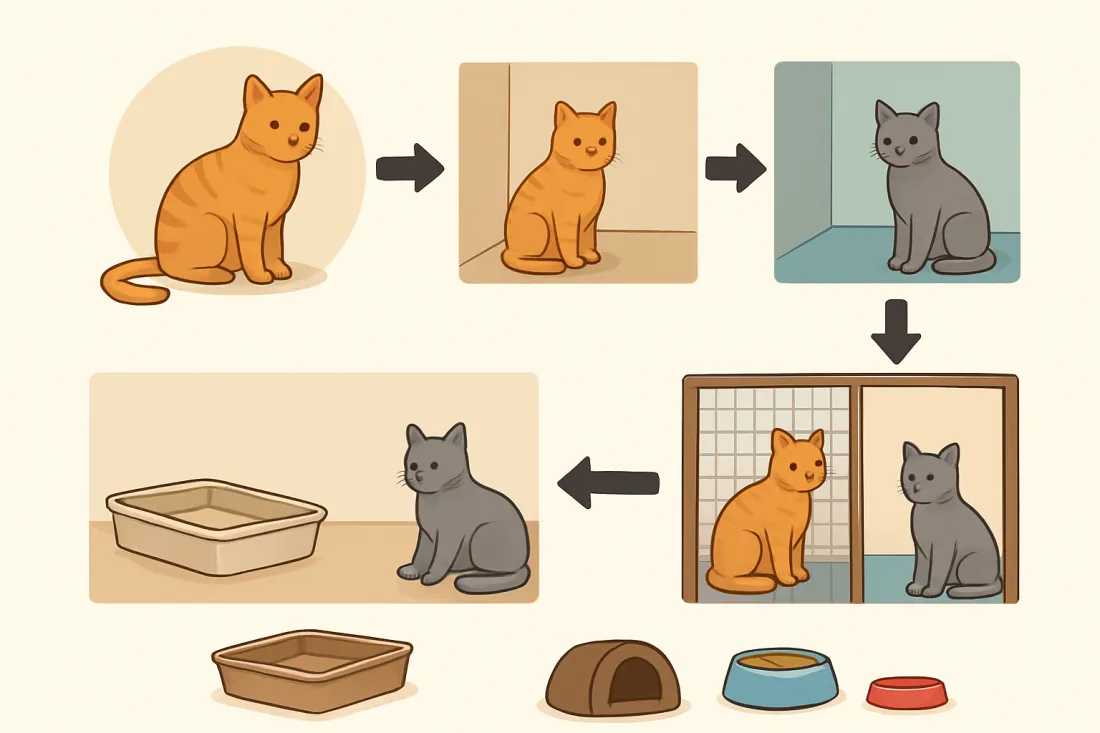
- A separate “safe room” for the new cat (bedroom, office, or bathroom with a door). It should have:
- Litter box
- Food and water (placed away from the litter box)
- Hiding spots (covered bed, box, or carrier with a blanket)
- Scratching post and a few toys
- Comfortable resting places at different heights if possible
- Enough resources for both cats to reduce competition:
- At least one litter box per cat, plus one extra (for two cats, aim for three boxes in different locations)
- Multiple feeding stations if you have an existing cat
- More than one scratching post or pad
- Multiple resting spots and vertical spaces (cat trees, shelves, window perches)
- Barriers for gradual introductions:
- Baby gate, screen door, or cracked door with a doorstop for safe visual meetings
- Blankets or towels you can hang to block view if needed
Behavior and health prerequisites
- Recent vet check for the new cat to screen for contagious illnesses and parasites.
- Vaccination and parasite control status known for both cats; ask your vet what is appropriate for your area.
- Spay/neuter status considered. Intact cats can be more territorial and harder to introduce.
- Basic understanding of each cat’s temperament:
- Is your resident cat confident, shy, or easily startled?
- Is the new cat used to other cats or has it been a solo pet?
Mindset requirements
- Plan for at least 1–3 weeks of gradual introduction. Some pairs need longer.
- Accept that hissing and growling are normal communication and not always a sign you failed.
- Commit to not forcing physical contact—no holding one cat while the other sniffs, no pushing them together for photos.
Step-by-step process for a low-stress cat introduction
Use this as a practical algorithm. If either cat looks scared or aggressive at any step, go back one step and slow down.
Step 1: Safe-room confinement for the new cat
Goal: The new cat feels secure in a small territory before meeting the resident cat.
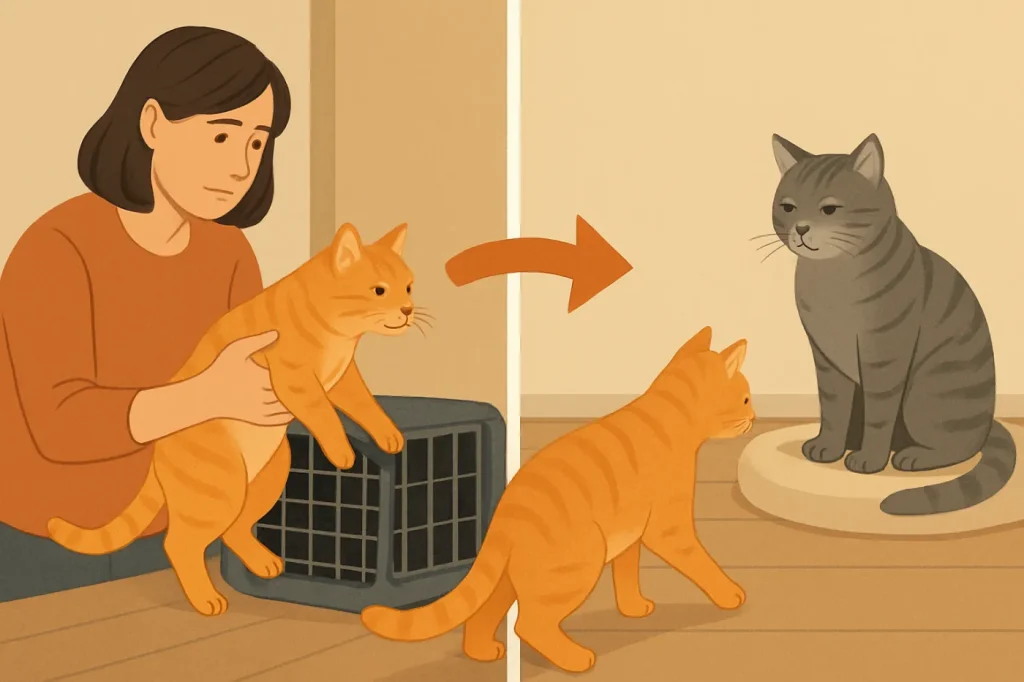
- Bring the new cat straight to the safe room. Do not let the resident cat greet at the carrier door.
- Set the carrier down, open the door, and let the new cat come out on their own time.
- Keep the door closed. Spend quiet time in the room, talking softly and offering treats or toys.
- Let the resident cat sniff under the door but do not open it yet.
Mistakes to avoid at this step
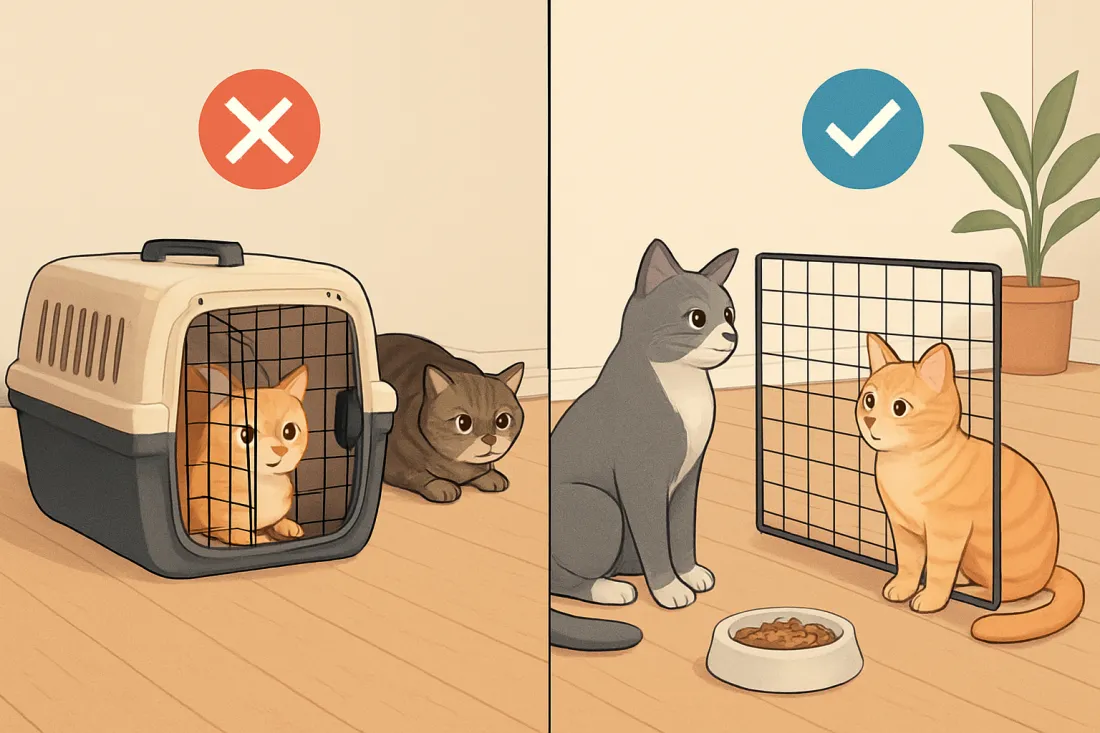
- Letting the cats see each other immediately “to get it over with.”
- Allowing children or visitors to crowd the new cat.
- Moving the litter box or food around constantly; stability helps the new cat relax.
Step 2: Scent swapping before visual contact
Goal: Each cat learns the other’s scent in a safe, low-pressure way.
- Swap bedding or blankets between the cats every day or two.
- Gently rub a soft cloth on one cat’s cheeks and head, then place it near the other cat’s resting area.
- Feed both cats on opposite sides of the closed door so they associate the other’s scent with something positive.
Mistakes to avoid at this step
- Skipping scent work because “they seem fine under the door.”
- Forcing a cat to sniff an item if they back away—place it nearby and let them approach.
- Feeding so close to the door that a nervous cat refuses to eat; start farther away and move bowls closer over time.
Step 3: Controlled room swapping
Goal: Each cat explores the other’s territory without direct contact.
- Confine the resident cat to a separate room with food, water, and a litter box.
- Let the new cat explore the main living area for a short period while the resident cat is safely away.
- Then swap: new cat back to the safe room, resident cat out to explore the new cat’s scent.
- Repeat daily if both cats handle it well.
Mistakes to avoid at this step
- Leaving doors unsecured so a cat can push through and cause an unplanned face-to-face meeting.
- Letting sessions run so long that one cat becomes overstimulated or starts pacing and vocalizing.
Step 4: First visual introductions through a barrier
Goal: Calm, brief visual contact without physical access.
- Use a baby gate, screen door, or cracked door with a doorstop so the cats can see but not reach each other.
- Have high-value treats or a toy ready for each cat.
- Allow them to look at each other for a few seconds to a few minutes, then redirect to treats or play.
- End on a neutral or positive note—before either cat escalates to intense staring, growling, or lunging.
Mistakes to avoid at this step
- Holding one cat in your arms to “keep control.” A frightened cat can scratch or bite to escape.
- Letting them stare each other down for long periods; this can build tension.
- Scolding for hissing; it is normal communication. Instead, shorten the session next time.
Step 5: Short, supervised shared-room sessions
Goal: Calm coexistence in the same room with you supervising closely.
- Open the barrier and let both cats enter a neutral room with escape routes and vertical spaces.
- Keep sessions short at first—just a few minutes.
- Distract with toys, treats, or gentle petting (for cats that enjoy it) to keep focus off each other.
- Watch body language closely (see troubleshooting section below).
- End the session before either cat becomes tense, and separate them again.
Mistakes to avoid at this step
- Leaving them together unsupervised “to work it out.”
- Chasing or grabbing a cat if they start to posture; use a barrier, loud clap, or pillow between them if needed, then separate calmly.
- Forcing them to share a bed, bowl, or lap.
Step 6: Gradual move toward normal household life
Goal: The cats share space with minimal tension and no unsafe aggression.
- Increase the length and frequency of shared sessions as long as both cats stay relatively relaxed.
- Keep multiple resources available so they do not have to compete.
- Continue to give each cat individual attention and playtime.
- Only leave them together unsupervised when they have had many calm sessions without chasing, pinning, or intense staring.
Mistakes to avoid at this step
- Dropping all structure too soon and assuming they are “fine now.”
- Accidentally rewarding bullying behavior (for example, petting the resident cat while they block the new cat from a doorway).
Typical timeline and how to adjust it
Every cat pair is different, but this rough breakdown helps you plan. Use it as a guide, not a rigid schedule.
- Days 1–3: New cat in safe room only; scent swapping and feeding near the door.
- Days 3–7: Continue scent work; start short room-swapping sessions if both cats are eating and using the litter box normally.
- Week 2: Begin brief visual introductions through a barrier; gradually increase duration if both cats stay relatively calm.
- Weeks 2–3: Move to short, supervised shared-room sessions, then slowly lengthen them.
- Week 3 and beyond: Transition to more normal household access if there is no serious aggression.
Signs you should slow the timeline
- One cat stops eating or using the litter box normally.
- Persistent growling, hissing, or swatting at every sighting.
- One cat hides almost all the time and will not come out even for food.
- Any attempt to charge, pin, or bite the other cat.
Signs you may be able to move a bit faster
- Both cats eat and play near the closed door without tension.
- They approach the barrier with loose bodies and curious sniffing.
- Hissing is brief and followed by quick recovery and normal behavior.
Comparison table: rushed vs. gradual introductions
| Approach | What it looks like in practice | Short-term risk | Long-term impact | Better alternative |
|---|---|---|---|---|
| Rushed, no separation | New cat is released into the home immediately; resident cat investigates at the carrier; no safe room used. | High chance of hissing, chasing, or fights on day one. | Cats may form strong negative associations and stay tense or territorial for months. | Use a dedicated safe room and keep cats fully separated for the first few days. |
| Minimal scent work | Owner skips bedding swaps and door feeding because cats seem “curious, not scared.” | Cats may react strongly when they finally see each other. | Harder to build trust; small triggers can cause setbacks. | Swap bedding, use cloth scent transfers, and feed on opposite sides of the door. |
| Unsupervised early meetings | Cats are left together while the owner runs errands or sleeps after only one or two calm sessions. | Fights may break out with no one there to interrupt safely. | One cat may become fearful of the other and avoid key areas of the home. | Supervise all early meetings and separate them when you cannot watch. |
| Gradual, structured introduction | Safe room, scent swapping, barrier visuals, then short supervised sessions. | Some hissing or growling, but serious fights are less likely. | Better chance of peaceful coexistence and shared spaces. | Follow a step-by-step plan and let the most stressed cat set the pace. |
| Resource-rich environment | Multiple litter boxes, feeding spots, beds, and perches spread around the home. | Lower tension around food, boxes, and resting spots. | Cats are more likely to share territory without guarding or bullying. | Plan resources before the new cat arrives and adjust based on behavior. |
Most common mistakes when introducing a new cat
Understanding what to avoid can prevent many problems.
1. Skipping the safe room stage
Letting the new cat roam the whole house on day one can overwhelm them and trigger territorial behavior from the resident cat. A safe room gives the newcomer a secure base and reduces the chance of early confrontations.
2. Letting cats “work it out” through fights
Some people assume cats will fight briefly and then settle. For many cats, fights do not build friendship—they build fear. Once one cat has been chased or pinned, it can take a long time to rebuild trust.
3. Forcing physical contact or holding cats during introductions
Holding a cat while they meet another can make them feel trapped. A frightened cat may scratch or bite to escape, and they may associate that fear with the other cat.
4. Ignoring body language
Subtle signs—like a stiff tail, flattened ears, or slow, intense staring—often come before a fight. Ignoring these signals and continuing the session can push cats past their comfort zone.
5. Not providing enough resources
Too few litter boxes, food bowls, or resting spots can lead to guarding and bullying. A confident cat may block hallways, litter boxes, or food, leaving the other cat stressed and hiding.
6. Punishing normal communication
Scolding or spraying a cat for hissing or growling can increase their stress and does not address the cause. It is better to shorten the session, give more distance, and go back a step in the introduction process.
7. Dropping individual attention for the resident cat
If the resident cat suddenly gets less playtime or affection, they may associate the new cat with that loss. Keeping routines and one-on-one time helps reduce jealousy and insecurity.
Structured checklist: are you introducing your new cat safely?
Use this checklist to plan and review your process.
Before bringing the new cat home
- I have set up a separate safe room with litter box, food, water, hiding spots, and toys.
- I have at least one litter box per cat, plus one extra, in different locations.
- I have multiple scratching posts and resting spots, including vertical spaces.
- Both cats have had recent vet checks and parasite control as recommended.
- I understand each cat’s basic temperament (confident, shy, easily startled).
- I have time in the coming weeks to supervise introductions and go slowly.
During the first week
- The new cat is confined to the safe room and seems to be eating, drinking, and using the litter box.
- I am swapping bedding or using cloth scent transfers between cats.
- I am feeding both cats on opposite sides of the closed door without major distress.
- I am not allowing face-to-face contact yet, even if one cat seems eager.
Before barrier introductions
- Both cats can approach the closed door without intense hissing or growling.
- I have a safe barrier ready (baby gate, screen, or cracked door).
- I have high-value treats or toys ready for both cats.
- I have a plan to keep sessions short and positive.
Before unsupervised time together
- The cats have had multiple calm, supervised sessions in the same room.
- There has been no chasing, pinning, or serious aggression in recent sessions.
- Each cat can walk away from the other and relax in the same space.
- Resources (litter boxes, food, water, beds) are spread out so no single spot can be easily guarded.
Troubleshooting common introduction problems
Even with a good plan, bumps are normal. Here is how to respond.
Problem: constant hissing at the door
Possible causes
- Cats are still very unsure of each other’s scent.
- The door is the only barrier and feels like a “border” to defend.
What to do
- Increase scent swapping with bedding and cloth rubs.
- Move food bowls farther from the door, then gradually closer again.
- Play with each cat near the door separately so they associate the area with fun, not just tension.
- Delay visual introductions until hissing decreases in frequency or intensity.
Problem: one cat hides all the time
Possible causes
- New environment stress (for the newcomer).
- Feeling outnumbered or overwhelmed (for either cat).
What to do
- Ensure the hiding cat has safe, covered spots in their own area.
- Offer food, water, and litter box close enough that they do not have to cross paths with the other cat.
- Use gentle play or treats to encourage short periods out of hiding, but do not drag them out.
- Slow the introduction process; go back to earlier steps if needed.
Problem: chasing or swatting during shared sessions
Possible causes
- Overexcitement or play that turns rough.
- Territorial behavior from the resident cat.
- Sessions are too long or too intense.
What to do
- Interrupt calmly with a loud clap or by placing a pillow or large object between them, then separate.
- Shorten future sessions and add more distractions (toys, treats).
- Provide more vertical spaces and escape routes so no cat feels cornered.
- If chasing is persistent, go back to barrier introductions for a while.
Problem: litter box avoidance after introductions start
Possible causes
- One cat is blocking access to a box.
- The box is in a high-traffic or tense area.
- Stress from the introduction process.
What to do
- Add at least one more litter box in a quiet, easily accessible location.
- Ensure there is at least one box on each main level of the home.
- Watch for guarding behavior and redirect with play or separation if needed.
- If avoidance continues, contact your vet to rule out medical issues.
When to call the vet or a behavior professional
Some situations need more than home adjustments.
Call your veterinarian promptly if
- Either cat stops eating or drinking for more than a day, or eats much less than usual.
- You see signs of illness: vomiting, diarrhea, coughing, sneezing with discharge, or sudden lethargy.
- There are any bite wounds or deep scratches after a fight.
- A cat starts urinating outside the litter box and you are not sure if it is behavioral or medical.
Your vet can check for pain, illness, or hormonal factors that might be making introductions harder.
Consider a certified behavior professional if
- Fights continue despite going back to earlier steps and slowing down.
- One cat is constantly stalking or blocking the other from key areas.
- Fearful behavior (hiding, growling, avoiding rooms) does not improve over several weeks.
- You feel anxious or unsure how to safely manage the process.
A behavior professional can create a tailored plan, including desensitization and counterconditioning steps.
What to do after you finish the introduction process
Once the cats are sharing space, your job is not completely over. To keep the peace:
- Maintain multiple resources so competition stays low.
- Keep up daily play sessions with each cat to burn off energy and reduce tension.
- Watch for subtle changes—like one cat avoiding certain rooms—that may signal brewing conflict.
- Revisit structured steps (like brief separations and barrier sessions) if tension returns.
If you are also a first-time cat guardian, you may find it helpful to review broader new cat owner mistakes to avoid so your overall routine supports a calm, confident household.
FAQ about mistakes to avoid when introducing a new cat
What is the single most damaging mistake people make when introducing a new cat?
The most damaging mistake is allowing an uncontrolled, early face-to-face meeting. When cats meet with no preparation, there is a high chance of chasing or fighting. That first bad experience can make one or both cats fearful every time they see the other, turning a short introduction into a long-term tension problem.
How can I tell if I am moving too fast with my cats’ introduction?
You are likely moving too fast if one cat consistently hides, refuses food near the other’s scent, or reacts with intense hissing, growling, or lunging whenever they see the other cat. If sessions get worse instead of better, that is another sign. In these cases, go back one or two steps—such as returning to scent swapping and door feeding—and shorten sessions.
Is it a mistake to separate cats again after they have already met?
It is not a mistake to separate them; it is often the safest choice. If a meeting goes badly, calmly separating and returning to earlier steps can prevent the situation from escalating. The real mistake is repeatedly putting them together in the same way and hoping the outcome will change. Use separation as a tool to reset and rebuild positive associations.
What should I do next if my cats have already fought during introduction?
First, check both cats for injuries and contact your vet if you see any wounds or if behavior changes suddenly. Then, give them a full break from each other—separate rooms, separate resources—for several days. Restart the process from the scent-swapping stage, keeping sessions very short and positive. If fights continue or fear remains high, consider asking your vet for a referral to a behavior professional.
Is it always a mistake to introduce a new cat to an older resident cat?
It is not automatically a mistake, but older cats can be less flexible about change. The key is to respect the older cat’s comfort level: keep their routines stable, give them quiet spaces away from the newcomer, and move more slowly than you might with younger, playful cats. If the older cat has health issues or is easily stressed, talk with your vet before bringing a new cat home.
Key takeaway
Successful introductions are less about a perfect script and more about avoiding preventable mistakes: rushing, skipping separation, ignoring body language, and failing to provide enough resources. With a safe room, gradual steps, and a willingness to slow down when either cat looks stressed, you give both animals the best chance at a peaceful, long-term relationship.