
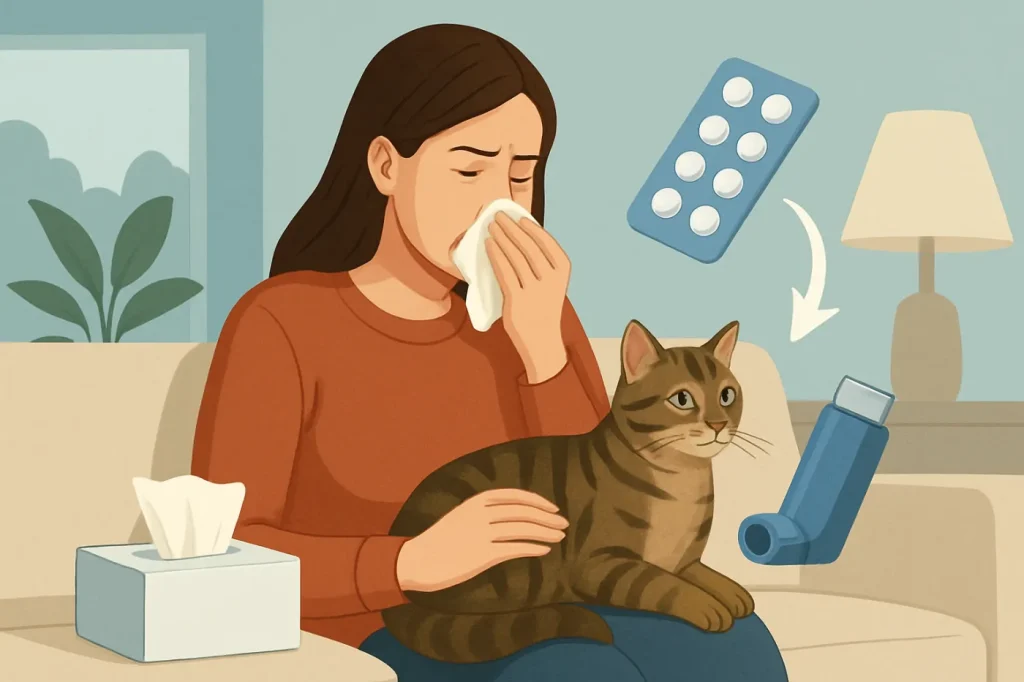
You usually can live with cat allergies and keep your cat, but only if you treat it like a real health project, not just “taking a pill and hoping for the best.” For most people, the best results come from combining:
- Medical management (allergy meds, possibly shots, asthma control)
- Home changes (cleaning, fabrics, air filters)
- Cat care changes (grooming, litter, where the cat is allowed)
- Personal habits (handwashing, bedroom rules, clothes routine)
Below is a practical, step-by-step way to reduce symptoms while staying a responsible cat guardian.
Medical vs home strategies when you are allergic to your cat
Think of cat-allergy management as two levers you can pull at the same time:
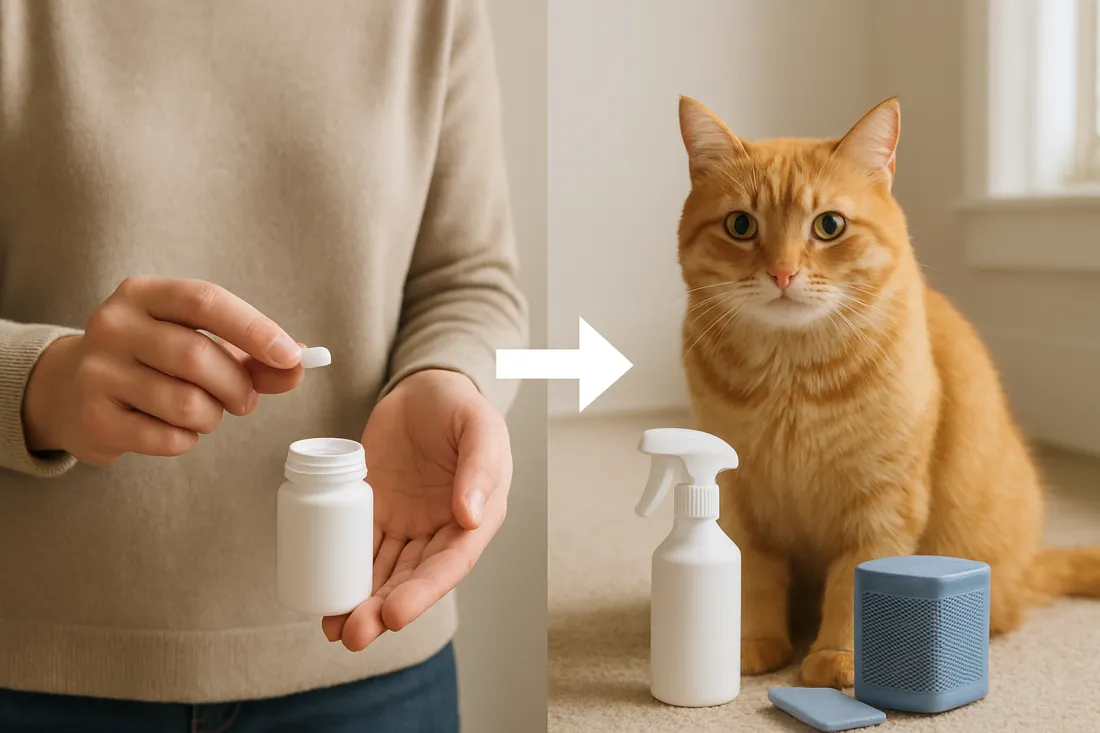
- Medical management – calms your body’s reaction to allergens.
- Environmental management – reduces how much allergen reaches you in the first place.
Medical management: what it can and cannot do
Common options your doctor or allergist may suggest include:
- Oral antihistamines – for sneezing, runny nose, itchy eyes or skin. Many people use once-daily tablets.
- Nasal steroid sprays – reduce inflammation in the nose and sinuses; often more effective for congestion than pills alone.
- Eye drops – for red, itchy, watery eyes.
- Asthma medications – inhalers or other prescriptions if you wheeze, cough, or feel chest tightness around cats.
- Allergy shots (immunotherapy) – a long-term plan that can reduce sensitivity to cat allergens over time for some people.
Medical treatment can:
- Make symptoms milder and more predictable
- Help you tolerate normal daily contact with your cat
- Reduce the risk of flare-ups turning into sinus infections or asthma attacks
But it usually cannot:
- Completely erase your allergy while you keep the same environment
- Replace the need for cleaning and home changes if your symptoms are moderate to severe
- Guarantee that you will never need to reconsider your living situation if your lungs are involved
That is why environmental management is just as important.
Environmental management: why it matters so much
Cat allergens are sticky and tiny. They cling to:
- Soft furniture and carpets
- Bedding and pillows
- Clothes and hair
- Dust on shelves, blinds, and electronics
Even if you take strong medication, a house full of accumulated allergen can keep your symptoms going. Reducing allergen in the home:
- Makes each exposure smaller, so your body has less to react to
- Helps medications work better
- Protects visiting family or friends who may also be allergic
The rest of this guide focuses on how to adjust your home, your cat’s routine, and your own habits so you can realistically keep living with your cat.
Home changes that make the biggest difference for cat allergies
You do not need to turn your home into a sterile lab. Focus on a few high-impact changes you can actually maintain.
1. Create a low-allergen bedroom (non‑negotiable zone)
Your bedroom is where you spend many hours breathing the same air. Turning it into a “cat-free breathing zone” is one of the most powerful steps you can take.
- Keep the cat out of the bedroom – close the door 24/7, not just at night. This is emotionally hard but medically powerful.
- Use allergen-proof covers on your mattress and pillows to reduce exposure to allergens that settle in bedding.
- Wash bedding weekly in hot water – many allergy guides recommend at least around 130°F; check your fabric care labels.
- Minimize soft surfaces – if possible, avoid extra throw pillows, heavy drapes, and piles of blankets that trap dander.
- Vacuum floors and rugs regularly with a vacuum that has a good filter system to trap fine particles.
2. Use air filtration wisely
Air purifiers and filters will not remove every allergen, but they can reduce what floats in the air.
- HEPA air purifier – place one in your bedroom and/or the main living area where you spend the most time. Choose a unit sized for the room and run it consistently.
- HVAC filters – if you have central heating or air, use higher-efficiency filters recommended by your system’s manufacturer and change them on schedule.
- Airflow habits – avoid pointing fans directly from the cat’s favorite area toward your face; that just blows allergens at you.
3. Rethink fabrics and surfaces
Allergens love to hide in soft, textured materials.
- Prefer hard floors (wood, tile, vinyl) over wall-to-wall carpet when you have a choice. If you rent, focus on what you can control: washable rugs instead of thick carpets, for example.
- Choose washable covers for sofas and chairs. Wash them regularly if the cat sits there.
- Limit heavy curtains. If possible, use blinds or washable curtains and clean them regularly.
- Declutter surfaces so dusting is fast and realistic. The less clutter, the less allergen build-up.
4. Build a realistic cleaning routine
Consistency beats perfection. Aim for small, regular tasks instead of rare deep cleans that leave you miserable.
- Vacuum frequently with a good filter system, especially in living areas and near where the cat sleeps.
- Damp dust surfaces weekly so you trap dust instead of just moving it into the air.
- Wash throw blankets and pet beds regularly in warm or hot water, following care labels.
- Wear a mask while cleaning if vacuuming or dusting triggers symptoms, and leave windows open when possible for ventilation.
Cat-focused strategies: grooming, litter, and daily care
You cannot make a truly “hypoallergenic” cat, but you can reduce how much allergen your cat spreads around.
1. Grooming without making allergies worse
- Brush your cat regularly to remove loose hair and dander – but have a non-allergic person do it if possible.
- Brush outdoors or in a well-ventilated area so loose hair and dander do not settle all over your home.
- Use grooming wipes designed for cats to gently wipe fur and reduce surface dander between full grooming sessions.
- Bathing: some people find that occasional bathing with a cat-safe shampoo reduces allergens on the fur for a short time. Many cats hate baths, so talk with your vet about whether this is safe and realistic for your cat’s coat and skin.
2. Litter box choices that help allergies
Litter dust can irritate your nose and lungs on top of cat allergens.
- Choose low-dust or dust-free litter to reduce airborne particles when your cat digs.
- Place the litter box in a well-ventilated area that you do not spend long periods in, rather than in your bedroom or home office.
- Scoop daily and fully change litter on a regular schedule to reduce odor and dust build-up.
- Consider a covered box carefully – it may contain some litter scatter, but can also trap odors and irritants. Choose what works best for your symptoms and your cat’s comfort.
3. Diet and overall cat health
Healthy skin and coat can shed less and produce fewer flakes of dander.
- Feed a balanced, vet-recommended diet so your cat’s skin and coat stay in good condition.
- Address skin problems promptly – if your cat is itchy, flaky, or over-grooming, see a vet. Skin issues can increase dander and hair loss.
- Keep up with regular vet visits so underlying health problems that might affect the coat are caught early.
For more ideas on keeping your indoor cat content while you adjust your routines, see how to keep an indoor cat happy and safe.
Human habits that reduce daily cat-allergy exposure
Small changes in your own routine can significantly cut down your symptoms.
1. Handwashing and face habits
- Wash your hands after petting, feeding, or playing with your cat, before you touch your face, eyes, or nose.
- Avoid rubbing your eyes after contact with your cat or cat bedding; use a clean tissue or washcloth if your eyes itch.
- Consider changing clothes if you have had a lot of close contact (like cuddling your cat on your lap) before going to bed or sitting on your bed.
2. Clothing and laundry strategies
- Have “cat clothes” – comfy clothes you wear when cuddling or playing with your cat. Change out of them before going to your bedroom.
- Use a separate laundry basket for heavily cat-exposed clothes and wash them regularly.
- Dry laundry in a dryer rather than air-drying indoors when possible; the dryer’s lint filter can trap hair and dander.
3. Bedroom and personal space rules
- Keep your bed a strict no-cat zone, even if the cat is allowed in other parts of the home.
- Store coats, work clothes, and school bags in a closet or closed area so they do not collect fur and dander.
- Shower before bed if you have had a lot of close contact with your cat during the day, especially if you wake up congested.
Comparison: medical vs environmental strategies for living with cat allergies
Both approaches matter, but they help in different ways. Use this table to see how they compare and where to focus your energy.
| Strategy type | What it does best | Limitations | Best for |
|---|---|---|---|
| Medical (antihistamines, sprays, inhalers, shots) | Reduces your body’s reaction: sneezing, itching, congestion, wheezing | Does not remove allergens from your home; may cause side effects; usually needs ongoing use | People who want symptom relief while they work on home changes; those with moderate to severe allergies under medical care |
| Environmental (cleaning, filters, fabrics) | Lowers the total amount of allergen you breathe or touch every day | Requires regular effort; cannot fully eliminate cat allergen; some changes may be limited by rental rules or budget | Anyone living with a cat allergy; especially helpful if you want to use less medication over time |
| Cat-focused (grooming, litter, health) | Reduces loose hair and dander; cuts down on dust from litter | Results vary by cat; some cats hate baths or grooming; needs consistency | Households where a non-allergic person can handle most grooming; people willing to adjust litter and care routines |
| Human habits (handwashing, bedroom rules) | Prevents high-dose exposures, especially near your face and while you sleep | Can be hard to stick to, especially keeping cats out of the bedroom; requires family cooperation | Anyone trying to live comfortably with a cat allergy; especially important if you cannot change flooring or furniture |
Who should lean more on each option
Everyone will use a mix of strategies, but your situation may push you to emphasize some more than others.
If your symptoms are mostly mild (sneezing, itchy eyes)
- Talk with a primary care doctor about over-the-counter options and whether they are safe for you.
- Focus on bedroom changes, regular cleaning, and handwashing.
- Try a HEPA air purifier in your bedroom and see if you notice a difference over a few weeks.
If you have moderate symptoms or frequent flare-ups
- See an allergist to confirm that cat is a trigger and to rule out other causes.
- Use a combination of prescribed medications and strict bedroom rules.
- Be more aggressive with cleaning routines and grooming (with vet guidance).
If you have asthma or serious breathing problems
- Involve an allergist or pulmonologist early. Breathing issues can be serious.
- Follow your asthma action plan and keep rescue inhalers where your doctor recommends.
- Take bedroom restrictions, air filtration, and cleaning routines very seriously.
- Have an honest conversation with your doctor about whether living with a cat is safe for you long term. In some cases, rehoming may be the safest choice, even if it is heartbreaking.
Common mistakes when trying to live with cat allergies
Avoiding a few typical errors can save you a lot of frustration.
- Relying only on pills – taking an antihistamine but never changing cleaning habits or bedroom rules often leads to ongoing symptoms.
- Letting the cat sleep on your pillow – this turns your bed into an allergen hotspot and can undo all your other efforts.
- Cleaning rarely but intensely – waiting weeks and then doing a huge clean can trigger massive symptoms. Smaller, regular tasks are easier on your body.
- Vacuuming without a good filter – this can blow fine allergens back into the air instead of trapping them.
- Brushing the cat indoors in main living areas – this spreads hair and dander exactly where you spend the most time.
- Ignoring early asthma signs – coughing, chest tightness, or wheezing around cats should be taken seriously and checked by a doctor.
- Assuming you must rehome immediately – many people can stay with their cats by combining medical care and environmental changes. Get medical advice and try a structured plan before deciding.
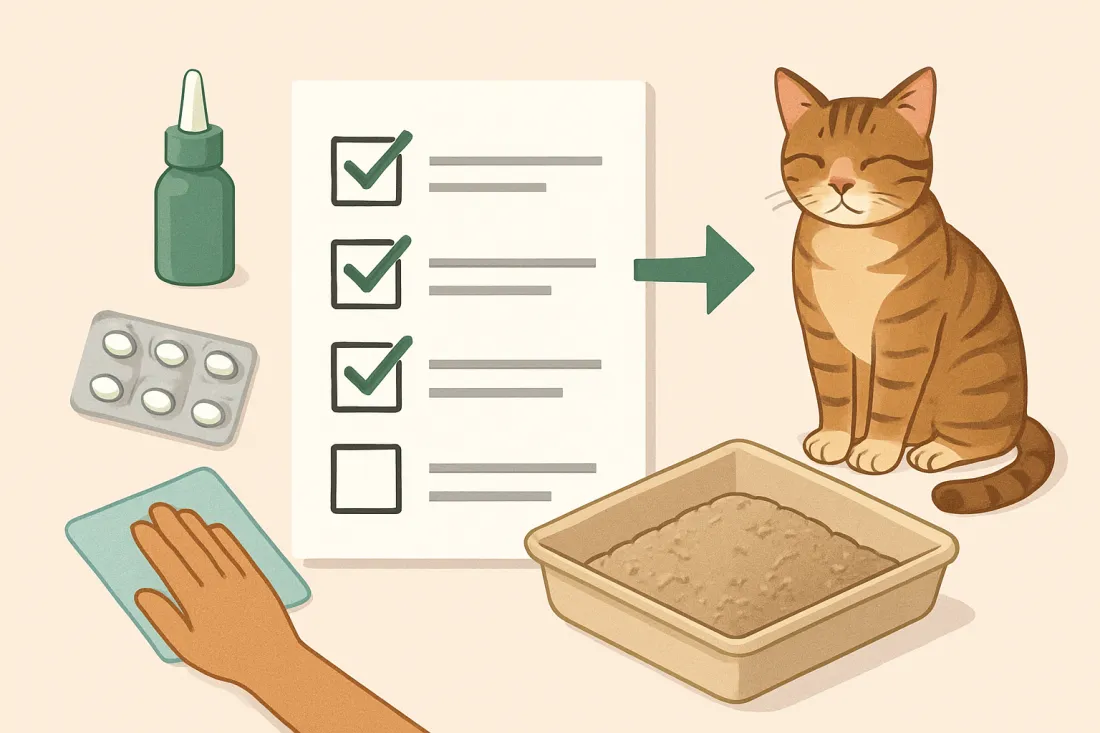
Decision checklist: weekly allergy-management routine for cat owners
Use this structured checklist to keep your plan realistic. Adjust it to your home and schedule.
Daily
- Take prescribed or recommended allergy medications as directed by your doctor.
- Keep bedroom door closed and cat out of the room.
- Wash hands after petting or feeding your cat and before touching your face.
- Scoop the litter box and dispose of waste; wash hands afterward.
- Run your HEPA air purifier in the bedroom and main living area if you have one.
- Do a quick tidy of cat hair on main surfaces (lint roller or damp cloth on favorite cat spots).
Several times per week
- Vacuum high-traffic areas and around cat sleeping spots with a vacuum that has a good filter system.
- Wipe down hard surfaces (tables, shelves, window sills) with a damp cloth.
- Brush your cat outdoors or in a well-ventilated area, if your cat tolerates brushing.
- Change out of “cat clothes” before going into your bedroom or lying on your bed.
Weekly
- Wash bedding in warm or hot water, following fabric care labels.
- Wash cat blankets, soft toys, and pet beds according to care instructions.
- Clean or vacuum upholstery where your cat spends time.
- Dust blinds, curtain tops, and other places where hair and dust collect.
- Check your medication supply and note any symptom changes to discuss with your doctor.
Monthly
- Change HVAC filters according to manufacturer guidance or your contractor’s advice.
- Deep clean one extra area (behind furniture, under the bed, closet floors) where hair and dust build up.
- Review your routine: what is working, what feels impossible, and what you might adjust.
When to involve an allergist and what to ask
An allergist can help you understand exactly what you are reacting to and build a plan that lets you keep your cat if it is medically safe.
Signs you should see an allergist
- You have frequent or severe symptoms (most days, or very intense episodes).
- You have asthma, wheezing, or chest tightness around cats or in your home.
- Over-the-counter medications are not enough or cause side effects.
- You are considering allergy shots and want to know if you are a candidate.
- You are torn between keeping your cat and your health and need expert guidance.
Questions to ask your allergist
- “What exactly am I allergic to, and how strong is my reaction?”
- “Is it medically reasonable for me to keep living with a cat if I follow a strict plan?”
- “What medications do you recommend for daily control, and how should I use them safely?”
- “Would allergy shots be appropriate for me, and what results should I realistically expect?”
- “What warning signs mean my asthma or allergies are not under control?”
- “How should I adjust my plan if I get sick with a cold or flu on top of my allergies?”
Bring notes about your symptoms, when they happen, and what you have already tried. This helps the allergist tailor advice to your real life.
FAQ about living with cat allergies and keeping your cat
Can I stop cat allergies when living with a cat?
Most people cannot completely “turn off” a cat allergy while still living with a cat, but many can reduce symptoms to a manageable level. The most effective approach usually combines medical treatment (like antihistamines, nasal sprays, or other prescriptions recommended by a doctor) with home changes such as keeping the bedroom cat-free, using air filtration, and cleaning regularly. Some people also benefit from allergy shots, which may reduce sensitivity over time. Your exact results will depend on how strong your allergy is and how consistently you follow your plan.
Can I keep a cat if I have allergies?
Many people with cat allergies do keep their cats, especially when symptoms are mild to moderate and there is no serious asthma. The key is to treat your allergy as a health condition that needs active management: work with a doctor, keep your bedroom as a no-cat zone, use a realistic cleaning routine, and adjust how you interact with your cat. If you have asthma or very severe reactions, you should discuss the risks carefully with an allergist or pulmonologist. In some cases, they may advise against living with a cat for your safety.
How do I live with a cat if I have allergies but do not want to rehome them?
Start by protecting your sleep space: keep the cat out of your bedroom, wash bedding weekly, and consider a HEPA air purifier. Next, build a simple routine of vacuuming, damp dusting, and washing pet bedding so allergens do not build up. Adjust your habits by washing hands after petting your cat, changing out of “cat clothes” before bed, and avoiding rubbing your eyes. Finally, talk with a doctor about safe medications and whether you should see an allergist. Combining these steps gives you the best chance to stay comfortable while keeping your cat.
Can I give Zyrtec or other allergy medicine to my cat to help my allergies?
Do not give human allergy medicines like Zyrtec to your cat without direct guidance from a veterinarian. Some medications and doses that are safe for people can be unsafe for cats. Even when a vet does prescribe an antihistamine for a cat, it is usually to treat the cat’s own allergies or skin issues, not to fix a human’s allergy to the cat. The main way to help your own allergies is to treat yourself under medical supervision and reduce allergens in your environment.
What if I try everything and my cat allergies are still bad?
If you have followed a structured plan for several weeks or months and still have strong symptoms, go back to your doctor or allergist. They may adjust your medications, check for other triggers (like dust mites or pollen), or discuss allergy shots. In some situations—especially with uncontrolled asthma or severe reactions—they may recommend that you do not live with a cat. That is a painful decision, but your long-term health and breathing safety come first. If it comes to that, you can still practice responsible pet ownership by working with a reputable rescue or trusted friends or family to find your cat a safe, loving home.