
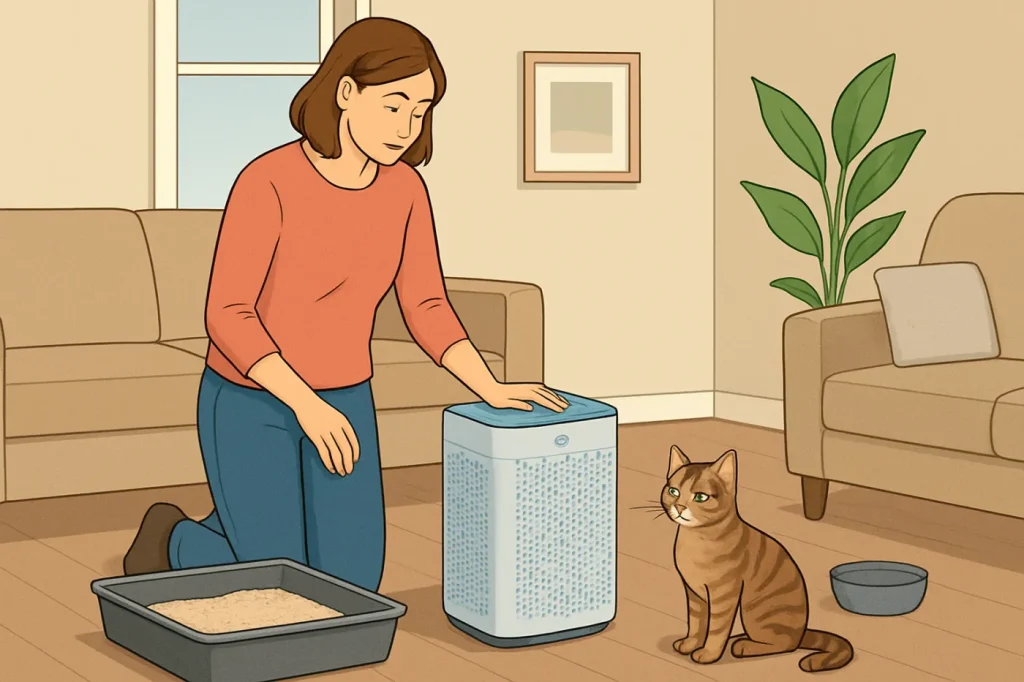
Bringing a cat into an allergy-prone home is possible, but it takes planning. The core idea is simple: reduce how much allergen (mainly a cat protein called Fel d 1) builds up on surfaces and in the air, and protect the most sensitive family members with smart room rules and cleaning routines.
To prepare your home for a cat when your family has allergies, you need to:
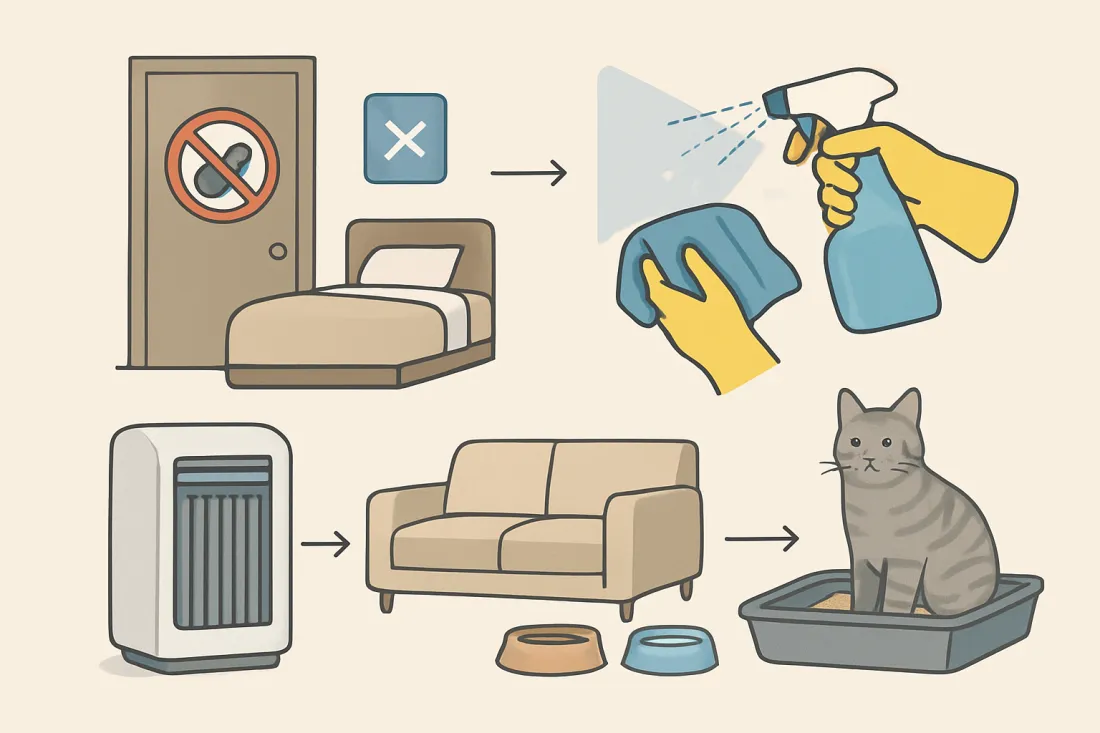
- Decide which rooms will be cat-free zones (especially bedrooms).
- Deep-clean and declutter before the cat arrives.
- Set up air filtration and choose allergy-friendlier furnishings where you can.
- Plan litter, feeding, and grooming areas to contain dander and dust.
- Follow a realistic daily and weekly cleaning routine.
- Coordinate with a pediatrician or allergist if anyone has moderate to severe symptoms or asthma.
this guide walk through each of these decisions with concrete steps you can follow.
Key decisions before you bring the cat home
Before you start cleaning, make a few big-picture decisions. These choices will shape how you set up each room and what rules you put in place.
1. Who in the family is most allergy-prone?
- Mild symptoms (occasional sneezing, itchy eyes): you may manage with good cleaning, air filtration, and basic room rules.
- Moderate symptoms (frequent congestion, coughing, sleep disruption): you will likely need stricter cat-free zones and more consistent routines.
- Severe symptoms or asthma (wheezing, tight chest, history of ER visits): you should involve a pediatrician or allergist before adopting and be ready for stricter limits, like keeping the cat out of bedrooms and possibly rethinking adoption if symptoms can’t be controlled.
2. Which rooms will be cat-free zones?
For most allergy-prone families, the bedroom of the allergic person should be a cat-free sanctuary. Decide now:
- Whose bedrooms will be cat-free (often all kids’ rooms and any adult with allergies).
- Whether you can keep doors closed consistently and use baby gates if needed.
- Where the cat will be allowed to sleep (for example, living room or a dedicated cat room).
3. What can you realistically maintain?
An allergy-safe setup only works if you can keep up with it. Be honest about:
- How often you can vacuum and dust.
- Whether you can run an air purifier daily.
- Who will be responsible for litter, grooming, and laundry.
If your schedule is tight, prioritize the most important steps: bedroom protection, litter control, and air filtration.
Room-by-room preparation guide for an allergy-safe cat home
Use this room-by-room guide to prepare your home before your new cat arrives. Focus first on the rooms where allergic family members spend the most time.
Bedrooms: protecting your sleep and breathing
Bedrooms matter most because you spend many hours there and your body is more sensitive while you sleep.
Set bedroom rules
- Make allergic family members’ bedrooms strict cat-free zones.
- Keep doors closed at all times; consider a door sign so guests and kids remember.
- If doors tend to be left open, add a self-closing hinge or a simple reminder like a hook-and-eye latch high on the door where kids can’t accidentally leave it unlatched.
Prepare the bed and soft surfaces
- Use mattress and pillow protectors that zip closed to reduce allergen build-up inside bedding.
- Wash all bedding (sheets, pillowcases, duvet covers) in hot water if the fabric allows, before the cat arrives.
- Limit extra soft items that trap allergens: swap multiple decorative pillows and throws for one or two that you can wash weekly.
- If you have heavy curtains, consider replacing them with blinds or washable curtains you can launder regularly.
Flooring and storage in bedrooms
- If you have wall-to-wall carpet, vacuum thoroughly with a vacuum that has a good filter. If you ever replace flooring, smoother surfaces like vinyl, laminate, or hardwood are easier to keep low-allergen.
- Remove or reduce small rugs. If you keep them, choose washable rugs and launder them frequently.
- Declutter under the bed and on open shelves so dust and dander have fewer places to settle.
Living room and family spaces: balancing comfort and control
The living room is usually where the cat and family will spend the most time together, so focus on surfaces and air quality.
Sofas and seating
- If you have fabric sofas, use washable slipcovers or throws you can wash weekly.
- Leather or faux leather is easier to wipe down and tends to hold less dander than deep fabric upholstery.
- Designate at least one seat as a “low-allergen spot” where the cat is not encouraged to sit, for the most sensitive family member.
Floors and surfaces
- Vacuum carpets and rugs thoroughly before the cat comes home.
- On hard floors, damp-mop rather than dry-sweeping to avoid stirring up dust and dander.
- Dust shelves, electronics, and window sills with a slightly damp cloth or microfiber cloth that traps dust instead of moving it around.
Air quality in shared spaces
- Place an air purifier with a good filter in the living room or main family room, and run it regularly, especially when the cat is most active.
- Open windows when weather and outdoor air quality allow, to help dilute indoor allergens.
- Avoid scented candles, heavy air fresheners, or incense that can irritate sensitive airways on top of allergies.
Kids’ rooms: extra care for little lungs
If your child has allergies or asthma, their room should be treated as a protected zone.
- Keep the cat out of kids’ bedrooms, especially for children with allergies or asthma.
- Limit stuffed animals to a small number and choose ones that are machine-washable. Store extras in a closed bin.
- Wash favorite stuffed animals regularly along with bedding.
- Teach kids that cuddling the cat is fine in shared spaces, but the cat does not “live” in their room.
- Store school bags and jackets off the floor and away from where the cat spends most of its time, to reduce allergen transfer to school.
Litter area: controlling dust and odor without triggering allergies
The litter area can be a major source of dust and odor, which can aggravate allergies even if the allergen is mainly from the cat’s skin and saliva.
Where to place the litter box
- Choose a well-ventilated but low-traffic area, such as a bathroom corner, laundry room, or a quiet hallway nook.
- Avoid placing the litter box in bedrooms, kids’ rooms, or right next to main seating areas.
- Keep it away from heating or air conditioning vents that could spread dust through the house.
Litter choice and setup
- Consider a low-dust litter option. Many families with allergies prefer litters marketed as low-tracking or low-dust.
- Pour litter slowly and close to the box to reduce dust clouds.
- Use a litter mat outside the box to catch granules and reduce tracking through the house.
- Keep a small covered trash can or bag nearby for quick scooping, so you are more likely to maintain the box daily.
Feeding and grooming stations: containing dander and mess
Where and how you feed and groom your cat can affect how far dander and hair spread.
Feeding area
- Choose a hard floor area (kitchen, hallway, or mudroom) that is easy to wipe down.
- Place bowls on a washable mat and clean the area daily to remove crumbs and drips.
- Keep food and water away from bedrooms and soft furnishings.
Grooming station
- Pick a grooming spot on a hard floor, such as a bathroom or laundry room.
- Brush the cat gently and regularly to remove loose hair, ideally by a family member with the least sensitivity, or outdoors if safe and practical.
- Wear an old shirt while grooming and wash your hands and face afterward.
- Use a damp cloth or pet-safe grooming wipes to gently wipe the cat’s coat if recommended by your veterinarian, which may help reduce loose dander on the surface.
Comparison table: allergy-friendly home choices for cat owners
The table below compares common home setup options and how they affect allergies, so you can choose what fits your family and budget.
| Home feature or choice | More allergy-friendly option | Less allergy-friendly option | Impact on allergies | Practical next step |
|---|---|---|---|---|
| Bedroom access | Cat-free bedrooms with doors kept closed | Cat allowed to sleep on beds | Protected sleep space can reduce nighttime symptoms for allergic family members. | Decide now which bedrooms are off-limits and explain the rule to the whole family. |
| Flooring in main areas | Hard floors (vinyl, laminate, hardwood) with minimal rugs | Wall-to-wall carpet and multiple thick rugs | Hard floors are easier to clean and do not trap as much dander and dust. | If you have carpets, vacuum regularly; consider hard flooring when you next renovate. |
| Soft furnishings | Washable covers, fewer pillows, lighter curtains | Heavy drapes, many cushions, unwashable throws | Fewer soft items mean fewer places for allergens to build up. | Remove or store extra cushions and switch to washable covers where possible. |
| Air filtration | Air purifier with a good filter in main living and sleeping areas | No filtration, windows rarely opened | Filtration and fresh air can help reduce airborne allergen levels. | Place a purifier in the living room or allergic person’s bedroom and run it daily. |
| Litter setup | Low-dust litter in a ventilated, low-traffic area | Dusty litter in a bedroom or main living space | Less dust means fewer particles to irritate airways and spread through the house. | Relocate the litter box if needed and test a low-dust litter type. |
| Grooming routine | Regular gentle brushing in a controlled area | Rare grooming, cat sheds freely everywhere | Removing loose hair in one place can limit how far it spreads. | Choose a grooming spot and schedule, and assign a responsible adult. |
Structured checklist: pre-arrival cleaning and product choices
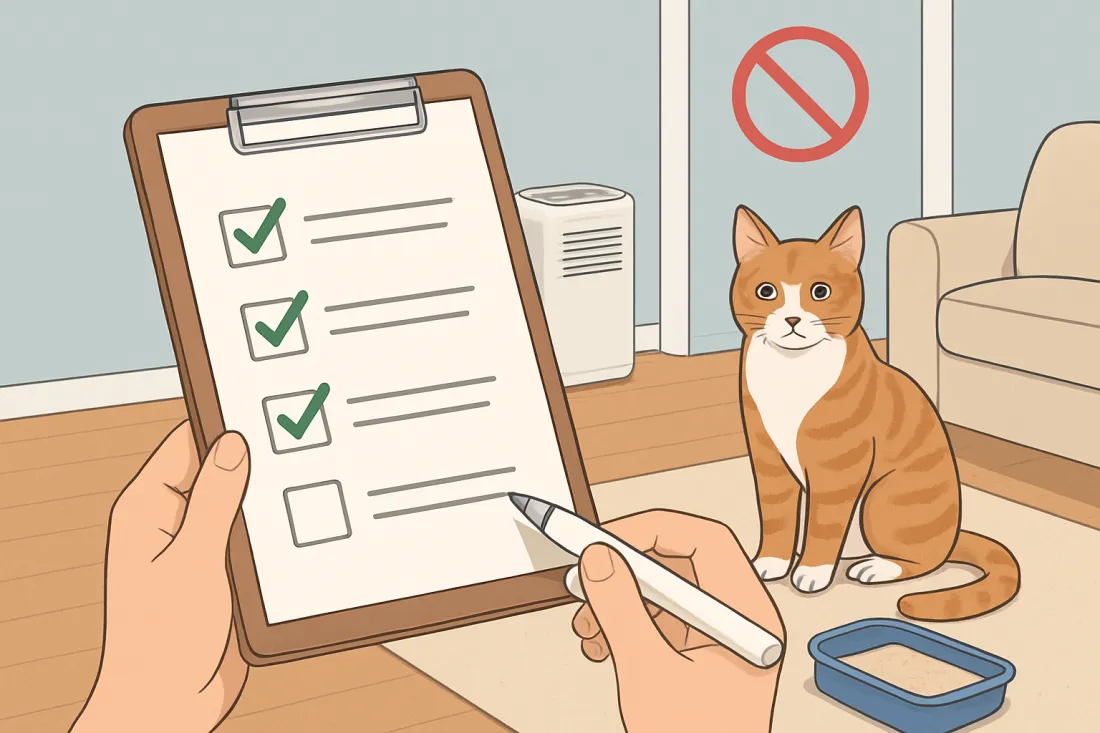
Use this checklist in the week before your new cat comes home. Adjust it to your home size and schedule.
Whole-home preparation
- Walk through each room and remove clutter that collects dust (unused textiles, piles of papers, extra decor).
- Check your vacuum: make sure it has a good filter and is in working order.
- Choose cleaning products that are unscented or lightly scented to avoid extra irritation.
- Avoid heavy-duty sprays with strong fumes or added perfumes in areas where allergic family members spend a lot of time.
Floors and surfaces
- Vacuum all carpets and rugs thoroughly, including edges and under furniture where possible.
- On hard floors, vacuum or sweep gently, then damp-mop to pick up fine dust.
- Dust all surfaces with a slightly damp microfiber cloth, starting high (shelves, tops of doors) and working down.
- Wipe light switches, door handles, and railings where dust can collect unnoticed.
Bedding and soft furnishings
- Wash all bedding in hot water if the fabric allows, including mattress protectors if washable.
- Wash throw blankets and removable cushion covers.
- If curtains are washable, launder them or at least vacuum them with an upholstery attachment.
- Bag or donate extra pillows and soft items you do not need.
Litter and feeding setup
- Decide on the litter box location away from bedrooms and main seating areas.
- Clean the chosen area and clear space for the box, scoop, and trash can or bags.
- Buy a low-dust litter option to test, plus a litter mat.
- Choose a feeding area on hard flooring and clean the floor and baseboards there.
- Set out bowls on a washable mat.
Air and ventilation
- Place air purifiers in the living room and, if possible, in the bedroom of the most allergy-prone person.
- Check and replace HVAC filters according to manufacturer guidance if you have central heating or cooling.
- Open windows for a while during cleaning to air out dust and cleaning product odors.
Products to use and avoid
- Generally helpful: unscented or mild cleaners, microfiber cloths, vacuum with good filtration, fragrance-free laundry detergent.
- Use with caution: strong bleach solutions, heavily perfumed sprays, aerosol air fresheners, and powders that can linger in the air.
- If anyone in the family is sensitive to certain ingredients, check labels and test new products in a small area first.
Creating and enforcing cat-free zones and bedroom access rules
Cat-free zones only work if everyone in the home understands and respects the rules. This is especially important for kids who may want the cat in their room.
How to set up effective cat-free zones
- Choose the zones: usually all bedrooms of allergic people, plus maybe a home office if someone works from home and needs a lower-allergen space.
- Make the rules visible: use simple signs on doors (“Cat-free room”) so guests and kids remember.
- Use barriers if needed: baby gates or screen doors can help in hallways or staircases to keep the cat from wandering into certain areas.
- Be consistent: do not make exceptions “just this once,” or the cat will quickly learn to push boundaries.
Helping kids stick to the rules
- Explain that the cat can still be loved and cuddled in shared spaces, but bedrooms are “rest zones” for their bodies.
- Give kids a special cat blanket or bed in the living room where they can invite the cat for snuggles.
- Remind them to change clothes or wash hands if they have a long cuddle session before bedtime.
- If you need more guidance on the family side of things, you may find it helpful to read about how to prepare kids for a new pet.
Daily and weekly cleaning routines for allergy-prone cat homes
Once your cat is home, regular routines matter more than one big deep clean. Aim for small, consistent habits.
Daily routine (10–20 minutes)
- Scoop litter boxes at least once a day to reduce odor and dust.
- Wipe feeding area and wash food and water bowls.
- Quick floor check around litter and feeding areas; sweep or vacuum visible debris.
- Spot-clean soft furnishings where the cat naps most often (use a lint roller or vacuum upholstery attachment).
- Handwashing habit: encourage everyone to wash hands after petting or playing with the cat, especially before meals and bedtime.
Weekly routine
- Vacuum all carpets and rugs, focusing on high-traffic and cat-favorite areas.
- Vacuum or mop hard floors throughout the home.
- Dust surfaces in living areas and bedrooms with a damp or microfiber cloth.
- Wash bedding for allergic family members and any washable throws or slipcovers the cat uses.
- Wash kids’ favorite stuffed animals if they are often carried into shared spaces where the cat is present.
- Groom the cat in your chosen grooming area, removing loose hair and checking for any skin issues.
Monthly or seasonal tasks
- Wash or vacuum curtains and blinds where dust collects.
- Move furniture slightly to vacuum edges and corners.
- Check and replace air purifier and HVAC filters according to manufacturer guidance.
- Review your routines: if allergies are flaring, increase the frequency of the most important tasks (vacuuming, bedding washing, litter scooping).
Common mistakes when preparing an allergy-prone home for a cat
Avoiding a few common missteps can make a big difference in how manageable allergies feel.
- Letting the cat into bedrooms “just at first.” Once the cat learns that beds are cozy, it is hard to reverse the habit. Set bedroom rules from day one.
- Underestimating the litter box. Dusty litter in a bad location can make allergies feel much worse. Choose a low-dust option and a sensible spot from the start.
- Relying only on medication. Allergy medicine can help, but without cleaning and room rules, symptoms may still be strong.
- Skipping regular grooming. Some people avoid brushing because they are worried about dander, but controlled grooming in one place can actually reduce how far hair spreads.
- Using strong fragrances to “cover” pet smells. Heavy scents can irritate sensitive noses and lungs. Focus on cleaning and ventilation instead.
- Not involving kids in the plan. If children do not understand why rules exist, they are more likely to sneak the cat into their room or ignore handwashing.
- Expecting zero symptoms. Even with careful preparation, some mild symptoms may still appear. The goal is to make them manageable and to protect anyone with more serious issues.
- Ignoring early warning signs. If someone’s symptoms quickly worsen after the cat arrives, do not just hope it will pass; adjust your setup and talk to a doctor.
If you want to go deeper into behavior and adjustment issues beyond allergies, you can also read about mistakes to avoid when introducing a new cat to your home.
When to involve a pediatrician or allergist in your planning
Medical guidance is an important part of responsible pet ownership when your family has allergies.
Before adopting a cat
Consider scheduling a visit with a pediatrician or allergist before you bring a cat home if:
- Your child has a history of asthma, wheezing, or breathing difficulties.
- Allergies already interfere with sleep, school, or daily activities.
- There is a strong family history of severe allergies or asthma.
- You are unsure whether symptoms are from pets, dust, pollen, or something else.
During the visit, you can:
- Discuss whether a cat is a reasonable choice for your family’s health.
- Ask about any medications or inhalers that should be on hand.
- Review your home setup plan and ask if there are extra precautions they recommend.
After the cat arrives
Contact a pediatrician or allergist promptly if:
- Symptoms become more frequent or severe (for example, nightly coughing or wheezing).
- Over-the-counter allergy relief is not enough to keep symptoms manageable.
- Your child has trouble sleeping, playing, or concentrating because of allergy symptoms.
- You notice any signs of breathing difficulty, chest tightness, or persistent wheeze.
They can help adjust treatment, clarify triggers, and advise whether changes in your home setup or pet access are needed.
Step-by-step process to prepare your allergy-prone home for a new cat
Use this simple sequence as an algorithm to keep the process manageable.
- Assess health needs. List who has allergies or asthma, how severe they are, and whether you need a medical visit before adopting.
- Define cat-free zones. Decide which bedrooms and spaces will be off-limits to the cat and how you will enforce that (doors, gates, reminders).
- Plan litter, feeding, and grooming locations. Choose spots on hard floors, away from bedrooms and main seating, and clear them out.
- Declutter key rooms. Focus on bedrooms, living room, and hallways. Remove extra soft items and dust-collecting clutter.
- Deep-clean floors and surfaces. Vacuum, mop, and dust thoroughly, then wash bedding and washable soft furnishings.
- Set up air filtration. Place and test air purifiers and check HVAC filters if you have central systems.
- Buy and organize supplies. Litter, litter mat, scoop, feeding bowls and mat, grooming tools, cleaning products that are not heavily scented.
- Walk the family through the plan. Explain bedroom rules, handwashing, and who will handle which tasks.
- Bring the cat home calmly. Introduce the cat to allowed areas only, guiding them away from cat-free zones from day one.
- Review and adjust. After a few weeks, check how everyone is feeling and tweak routines, cleaning frequency, or room rules as needed.
FAQ about preparing a home for a cat when your family has allergies
What is the most important thing to do when preparing a home for a cat with family allergies?
The single most important step is to protect sleeping areas. Make allergic family members’ bedrooms cat-free zones and keep doors closed consistently. Combine that with regular cleaning and air filtration, and you give sensitive bodies a break for several hours every night, which can make symptoms more manageable.
What common mistakes should I avoid when setting up my home for a cat and allergies?
Some of the biggest mistakes are letting the cat sleep on beds, placing the litter box in a bedroom or main living area, relying only on medication instead of also changing the environment, and using strong fragrances to cover pet smells. Skipping regular vacuuming and grooming also lets allergens build up quickly, making it harder to control symptoms later.
What should I do next after getting my home ready for an allergy-safe cat?
Once your home is prepared, focus on consistent routines: stick to bedroom rules, scoop the litter box daily, vacuum and wash bedding regularly, and groom the cat in your chosen area. Pay attention to how each family member feels over the first few weeks. If symptoms are stronger than expected, tighten room rules, increase cleaning frequency, and talk with a pediatrician or allergist about additional options.
Can cleaning alone make my home completely allergy-free with a cat?
Cleaning, air filtration, and room rules can significantly reduce allergen levels, but they rarely make a home completely allergy-free. The goal is to lower exposure enough that symptoms are tolerable and health is protected, especially for children and anyone with asthma. If symptoms remain strong despite your efforts, medical advice and possibly rethinking how much contact the allergic person has with the cat will be necessary.
How can I tell if my child’s symptoms are from the cat or something else in the home?
It can be hard to tell on your own because dust, pollen, mold, and other indoor factors can cause similar symptoms. Track when symptoms appear or worsen (for example, after cuddling the cat, during cleaning, or at night). Share this pattern with a pediatrician or allergist, who can help identify likely triggers and suggest testing or changes to your home setup.