
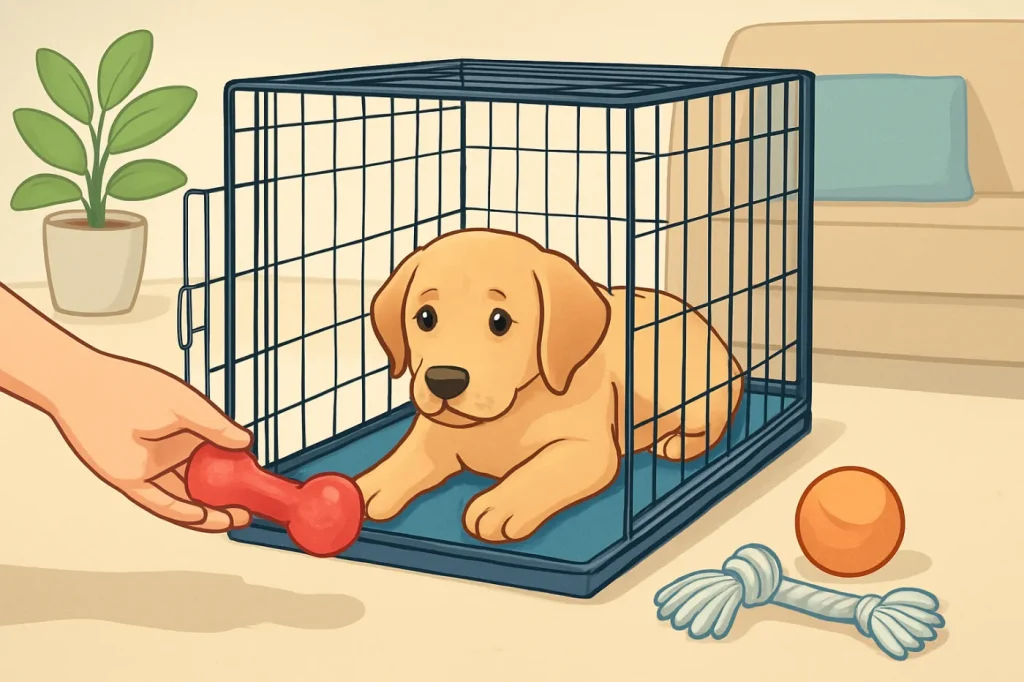
To avoid crate training mistakes, treat the crate as a safe bedroom, not a punishment, and move at your dog’s pace. The crate should be the place where your dog relaxes, chews a favorite toy, and naps with the door open long before you ever leave them locked inside for more than a few minutes.
Everything else in crate training flows from that idea: go slowly, pair the crate with good things, and never use it to “fix” problems by locking your dog away for long hours.
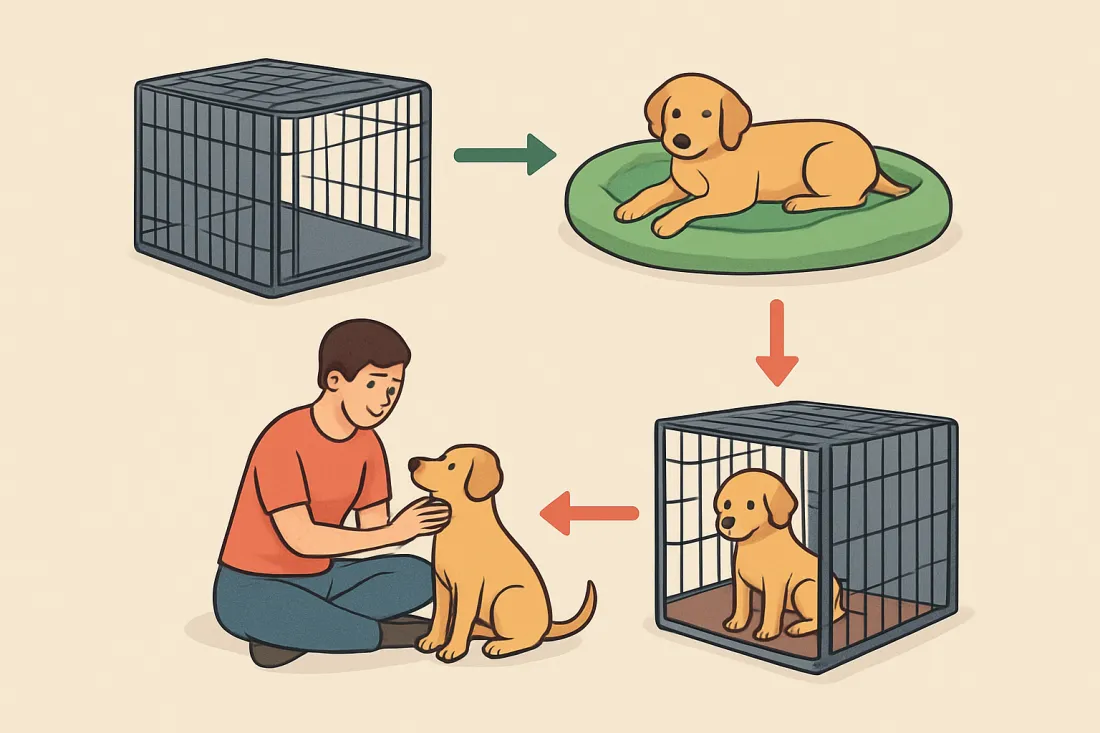
When crate training is helpful (and when it is not)
Before diving into mistakes, it helps to know what a crate can and cannot do. That way you can decide how much to rely on it and avoid overusing it.
Healthy reasons to use a crate
- House training support – Many dogs naturally avoid soiling their sleeping area. A correctly sized crate can help puppies and new dogs learn to “hold it” between regular potty breaks.
- Safety when unsupervised – Prevents chewing wires, eating unsafe objects, or getting into trash when you cannot watch your dog.
- Calm space for rest – Gives your dog a quiet place to nap away from kids, guests, or household noise.
- Travel and vet visits – Dogs who are comfortable in a crate handle car rides, boarding, and vet stays with far less stress.
Limits of crate training
- It does not fix separation anxiety by itself – A dog who panics when left alone will usually panic in a crate too. They need a gradual alone-time training plan, not just more crating.
- It is not a babysitter for long workdays – Most dogs cannot stay comfortable in a crate for a full workday without enough potty breaks, exercise, and mental stimulation.
- It cannot replace training and supervision – A crate helps manage behavior, but dogs still need to be taught what to do when they are out of it.
- Some dogs are poor candidates for heavy crating – Dogs with a history of confinement trauma, some rescue dogs, and highly active working breeds may need extra care and alternatives.
If your main goal is house training in a small space, you may also want to read about house training a puppy in an apartment so the crate fits into a bigger routine, not the other way around.
Most common crate training mistakes (and what to do instead)
Avoiding a few predictable errors will spare your dog a lot of stress and you a lot of frustration. Use this section as a quick diagnostic: if something feels off with your crate training, you will probably spot the cause here.
1. Using the crate as punishment
Mistake: Sending the dog to the crate only when they misbehave (“Time out in your crate!”).
Why it backfires: The crate becomes a place of isolation and anger instead of comfort. Dogs may resist going in, bark, or whine because they associate it with being in trouble.
Do this instead:
- Use a calm, neutral cue like “crate” or “bed,” never an angry tone.
- Send your dog to the crate for good reasons: to enjoy a chew, to rest after a walk, or to relax when guests arrive.
- If you need a “time out,” calmly remove your dog from the situation without using the crate as the penalty box.
2. Moving too fast and closing the door too early
Mistake: Luring the dog in with a treat, then immediately shutting the door and walking away for a long stretch.
Why it backfires: The dog feels trapped and tricked. This can create fear or panic and make them resist entering the crate next time.
Do this instead:
- Spend several short sessions just rewarding your dog for going in and out with the door open.
- When you first close the door, do it for only a few seconds while you sit right next to the crate, then open it before your dog gets upset.
- Gradually increase the time with the door closed, always staying below your dog’s stress threshold.
3. Leaving the dog crated for too long
Mistake: Expecting a puppy or adult dog to stay in the crate for long workdays or overnight plus work without enough breaks.
Why it backfires: Dogs may be forced to soil the crate, which is stressful and can slow house training. Long confinement also leads to pent-up energy, frustration, and sometimes destructive behavior when they finally get out.
Do this instead:
- Plan realistic potty and exercise breaks based on your dog’s age and health. Young puppies need very frequent breaks.
- Use help if needed: a trusted neighbor, dog walker, or dog daycare for part of the day.
- Balance crate time with plenty of walks, play, training, and sniffing opportunities.
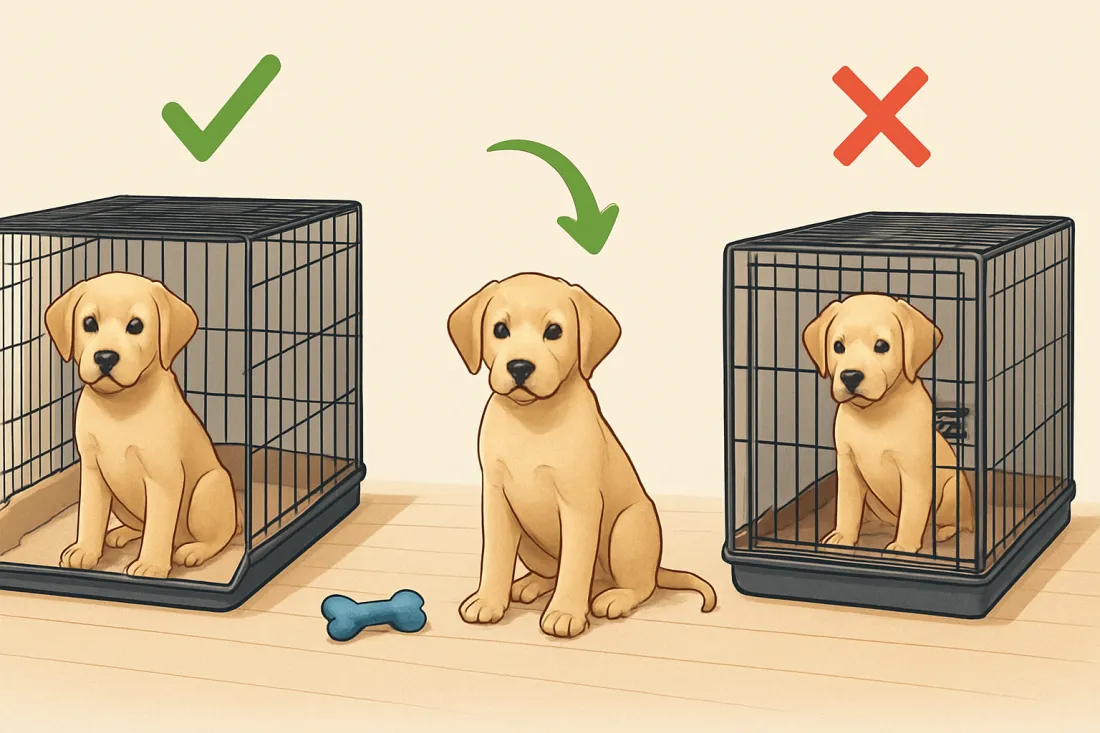
4. Choosing the wrong crate size or setup
Mistake: Using a crate that is too small (uncomfortable) or too large (easy to use one end as a toilet).
Why it backfires: A cramped crate can cause physical discomfort and anxiety. An oversized crate can encourage accidents and slow house training.
Do this instead:
- Pick a crate that allows your dog to stand up, turn around, and lie down comfortably, but not pace.
- For growing puppies, use a crate with a divider so you can adjust the size as they grow.
- Add soft bedding only if your dog is not chewing or soiling it; some young puppies do better with a simple mat at first.
5. Ignoring exercise and mental stimulation
Mistake: Crating a dog who has not had a chance to burn off energy or use their brain.
Why it backfires: A bored, under-exercised dog is more likely to bark, whine, or try to escape the crate.
Do this instead:
- Give your dog a walk, play session, or short training game before longer crate periods.
- Provide safe chew toys or food puzzles in the crate so they have something to do.
- Rotate toys to keep them interesting.
6. Rewarding whining or barking by letting the dog out
Mistake: Opening the crate door every time the dog makes noise, just to get some peace.
Why it backfires: The dog learns that whining or barking is the key to freedom, so the behavior gets stronger.
Do this instead:
- Wait for a brief pause in the noise, then calmly open the door. Reward the quiet moment, not the barking.
- Work on very short crate sessions at first so your dog does not reach a full meltdown.
- If the dog is panicking rather than mildly protesting, the training plan is too hard and needs to be scaled back.
7. Skipping basic training rules
Mistake: Treating crate training as completely separate from the rest of your dog’s education.
Why it backfires: Inconsistent rules, unclear cues, and lack of rewards make everything harder, including crate time.
Do this instead: Follow basic dog training rules for responsible owners across all areas: clear cues, timely rewards, and fair expectations. Your dog will understand crate cues more easily if the rest of their training is consistent.
Step-by-step humane crate training plan
This plan works for most puppies and many adult dogs. Nervous rescue dogs may need even smaller steps, but the structure is the same: introduce, build comfort, then add duration and distance.
Phase 1: Make the crate a cozy, safe place
- Place the crate in a lived-in area. Choose a spot where your dog can see and hear the family, not a lonely corner. Cover part of the crate with a light blanket if it helps your dog feel den-like, but keep airflow clear.
- Leave the door open. For the first day or two, the crate door should stay open whenever your dog is around it.
- Scatter treats inside. A few times a day, toss treats just inside the door, then farther back. Let your dog go in and out freely.
- Feed meals in the crate. Start by placing the bowl just inside the door. As your dog relaxes, move it farther back so they step fully inside to eat.
- Add a special chew or stuffed toy. Reserve a high-value chew or food puzzle that your dog only gets in the crate, with the door still open.
Stay in this phase until your dog walks into the crate happily and spends a few minutes inside on their own with the door open.
Phase 2: Introduce short door closures
- Close the door briefly while you sit nearby. When your dog is calmly chewing or eating in the crate, gently close the door. Count a few seconds, then open it again before they finish the treat.
- Gradually increase the time. Over several sessions, extend the door-closed time from a few seconds to a minute or two while you stay next to the crate.
- Mix easy and harder reps. Do some very short closures between longer ones so it never feels like it only gets harder.
- End on a success. Finish each session after an easy, calm repetition, not after your dog gets upset.
Phase 3: Add distance and short absences
- Move around the room. Once your dog is relaxed with the door closed while you sit nearby, start standing up, walking a few steps, and returning.
- Leave the room briefly. Step out for a few seconds, then come back and calmly sit down again. Gradually increase the time you are out of sight.
- Vary the pattern. Sometimes leave for a short time, sometimes a bit longer, so your dog does not predict a long absence every time.
- Keep departures and returns low-key. Avoid big goodbyes or excited greetings, which can make absences more emotional.
Phase 4: Build up to real-life crate use
- Practice nap times. After exercise and a potty break, cue your dog into the crate with a chew and let them nap with the door closed while you are home.
- Try short outings. When your dog is comfortable napping in the crate while you are home, start leaving the house for very short errands.
- Increase duration slowly. Add time in small increments, always checking that your dog is still calm when you return (no soaked bedding, no signs of frantic scratching or drooling).
- Adjust based on your dog. If you see signs of stress, go back to an easier step and progress more slowly.
Comparison table: Good vs. harmful crate training habits
| Crate training habit | Healthy version | Harmful version | What to do instead |
|---|---|---|---|
| Reason for crating | Short rest, safety, house training support | All-day confinement to “keep dog out of the way” | Use the crate for limited periods and combine with exercise, training, and supervised free time. |
| Dog’s feelings about crate | Sees it as a cozy bedroom with good things | Associates it with punishment or isolation | Pair the crate with meals, chews, and calm time; never send the dog there in anger. |
| Door closing | Introduced gradually while dog is relaxed | Door slammed shut the first time dog steps inside | Start with open-door sessions, then very short closures while you sit nearby. |
| Responding to noise | Dog is let out during a quiet moment | Dog is released as soon as they bark or whine | Wait for a brief pause in noise, then open the door calmly and reward quiet. |
| Crate size and setup | Dog can stand, turn, and lie down comfortably | Too small (cramped) or too big (one end used as toilet) | Choose a snug but comfortable size; use a divider for growing puppies. |
| Daily routine | Balanced: exercise, training, free time, and crate time | Mostly crate time with little interaction | Plan walks, play, and training around any longer crate periods. |
How to handle whining, barking, and crate soiling
Even with a good plan, many owners hit a rough patch: the dog cries, barks, or has accidents in the crate. These are signals that something in the setup or training needs adjustment.
Whining and barking in the crate
Step 1: Check basic needs first
- Has your dog had a recent potty break?
- Did they get enough exercise and mental stimulation before crating?
- Are they hungry, thirsty, too hot, or too cold?
If a basic need is likely the cause, calmly take care of it, then reset your training plan with shorter crate sessions.
Step 2: Decide if it is protest or panic
- Mild protest: Occasional whining or short bursts of barking, dog can settle after a few minutes.
- Panic: Continuous frantic barking, heavy drooling, chewing or clawing at the crate, attempts to escape that risk injury.
For mild protest, work on:
- Very short crate sessions that end while your dog is quiet.
- Rewarding calm behavior with treats dropped into the crate.
- Using background noise (like a fan or soft music) to reduce outside triggers.
For signs of panic, scale back your expectations. Go back to open-door crate games and very brief closures while you are right there. If panic continues, consider working with a qualified trainer or behavior professional.
Accidents and crate soiling
Step 1: Rule out medical issues
If your dog suddenly starts having accidents in the crate after being clean, or if they strain, lick, or seem uncomfortable, contact your veterinarian to rule out urinary or digestive problems.
Step 2: Check your schedule and crate size
- Are you expecting your dog to hold it longer than they reasonably can for their age?
- Is the crate so large that your dog can sleep in one corner and use another as a toilet?
Adjust your potty break schedule and crate size as needed. Puppies in particular often need more frequent breaks than new owners expect. If you are also working on house training in a small space, the routines for house training a rescue dog in an apartment can give you ideas for realistic schedules.
Step 3: Clean thoroughly and reset training
- Use an enzymatic cleaner designed for pet messes so your dog does not smell old accidents.
- Go back to shorter crate sessions with a potty break before and after.
- Avoid scolding your dog for accidents; focus on prevention and management.
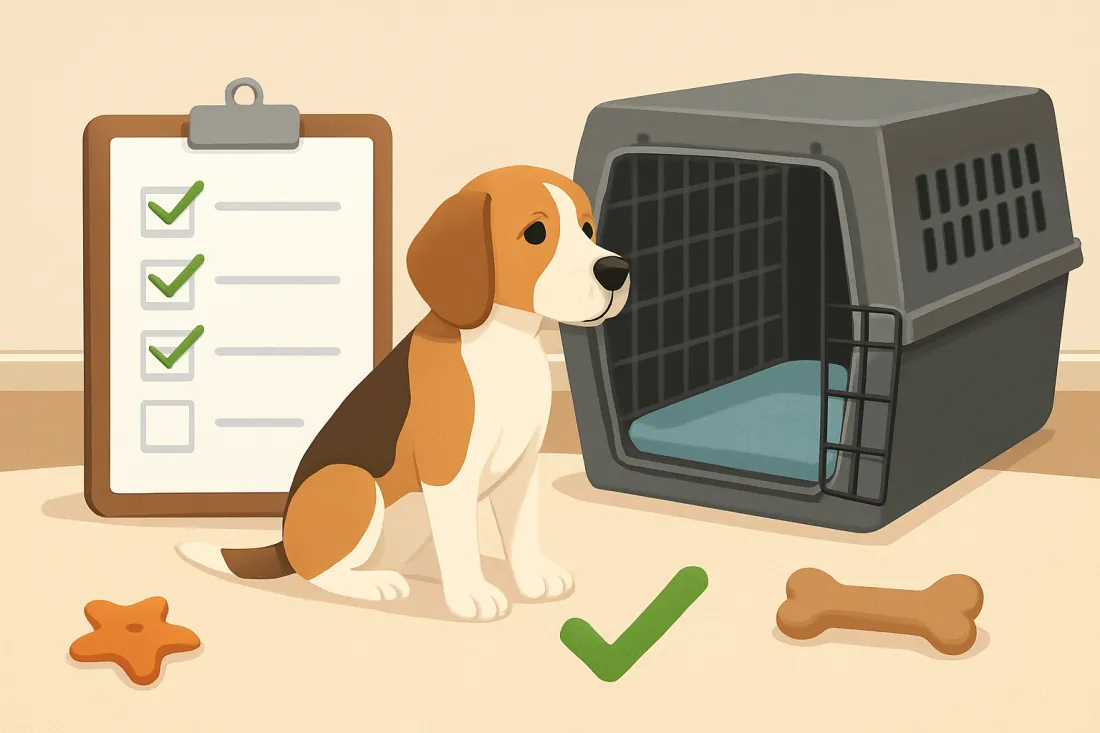
Structured checklist: crate training safety rules
Use this checklist as a quick safety and welfare review for your crate training routine.
- Crate size and setup
- My dog can stand up, turn around, and lie down comfortably in the crate.
- The crate is not so large that my dog can use one end as a toilet.
- The crate is placed in a well-ventilated, temperature-appropriate area.
- There are no sharp edges, loose wires, or broken parts on the crate.
- Collars and safety gear
- I remove or loosen any gear that could snag (such as some collars or harnesses) if recommended by my vet or trainer.
- I do not leave long leashes or tie-outs attached to my dog in the crate.
- Time limits and breaks
- My dog gets regular potty breaks appropriate for their age and health.
- My dog is not crated for most of the day and night without enough exercise and interaction.
- Long crate periods are balanced with walks, play, and training.
- Emotional welfare
- The crate is never used as punishment.
- I introduce the crate gradually and watch for signs of stress.
- I keep departures and returns low-key to avoid building anxiety.
- Training consistency
- I use the same cue (like “crate”) and reward my dog for going in.
- I avoid letting my dog out while they are actively barking or whining.
- I adjust my plan if my dog seems overwhelmed instead of forcing them to “get used to it.”
Putting it all together: a realistic daily crate routine
To avoid crate training mistakes, think about the whole day, not just the moments your dog is in the crate. A balanced routine might include:
- Morning potty break and walk or play session.
- Breakfast in the crate with the door open, then a short closed-door nap while you get ready.
- Midday potty break and some mental enrichment (training games, sniffing, or puzzle toys).
- Afternoon crate time in short blocks, each followed by a break.
- Evening walk, play, and family time mostly outside the crate.
- Overnight sleep either in the crate (if your dog is comfortable) or in another safe sleeping area.
Adjust the timing and length of each part based on your schedule and your dog’s age, energy level, and progress. If you work full time and are struggling to fit in enough breaks, guidance on house training a puppy while working full time can help you plan support like dog walkers or neighbors.
FAQ about avoiding crate training mistakes
What is the single most important thing to understand to avoid crate training mistakes?
The most important idea is that the crate should always feel safe and predictable to your dog. That means you move at your dog’s pace, pair the crate with good experiences (meals, chews, naps), and never use it as a place of punishment or long-term isolation. If your dog starts to show fear, panic, or increasing resistance to the crate, that is a sign to slow down, make the steps easier, and rebuild positive associations rather than pushing through.
What specific crate training mistakes should new puppy owners avoid first?
New puppy owners should focus on avoiding a few big traps: closing the crate door for long periods on day one, expecting the puppy to hold their bladder for longer than they realistically can, letting the puppy out every time they cry, and using the crate to “park” the puppy for most of the day. Instead, introduce the crate gradually, plan frequent potty breaks, reward quiet moments before opening the door, and balance crate time with plenty of supervised play, training, and rest outside the crate.
What should I do next if my dog already hates the crate?
If your dog already has a negative association with the crate, treat them like a nervous beginner. Move the crate to a comfortable location, leave the door open, and start over with simple games of tossing treats inside and feeding meals near or in the crate. Avoid closing the door until your dog is choosing to go in and relax on their own. In some cases, you may need to switch crate styles (for example, from a wire crate to a more covered one, or vice versa) to see what your dog prefers. If your dog shows signs of panic or self-injury around confinement, consult a qualified trainer or behavior professional for a tailored plan.
How do I know when my dog is ready for less crate time?
Your dog is ready for less crate time when they can stay calm and make good choices in a dog-proofed area without constant supervision. Signs include reliably pottying outside, leaving furniture and household items alone, and settling on a bed or mat instead of constantly seeking mischief. Start by giving your dog short periods of freedom in a safe space, then gradually increase the time as they show they can handle it. The goal is for the crate to become an option your dog likes, not a tool you rely on because you do not trust them at all outside of it.
Summary: how to avoid crate training mistakes
To avoid crate training mistakes, think of the crate as your dog’s bedroom, not a cage for punishment or long-term storage. Choose the right size, introduce it slowly with the door open, and pair it with meals, chews, and naps so your dog feels safe and relaxed inside. Build up to longer closed-door periods gradually, always staying within your dog’s comfort zone.
Watch for common pitfalls: moving too fast, leaving your dog crated too long, rewarding noise by letting them out, and skipping exercise and mental stimulation. Use the safety checklist to review your setup, and adjust your daily routine so crate time is just one small, well-managed part of a full, enriched day. With patience and consistency, crate training can support responsible pet ownership without causing anxiety, accidents, or behavioral problems.