
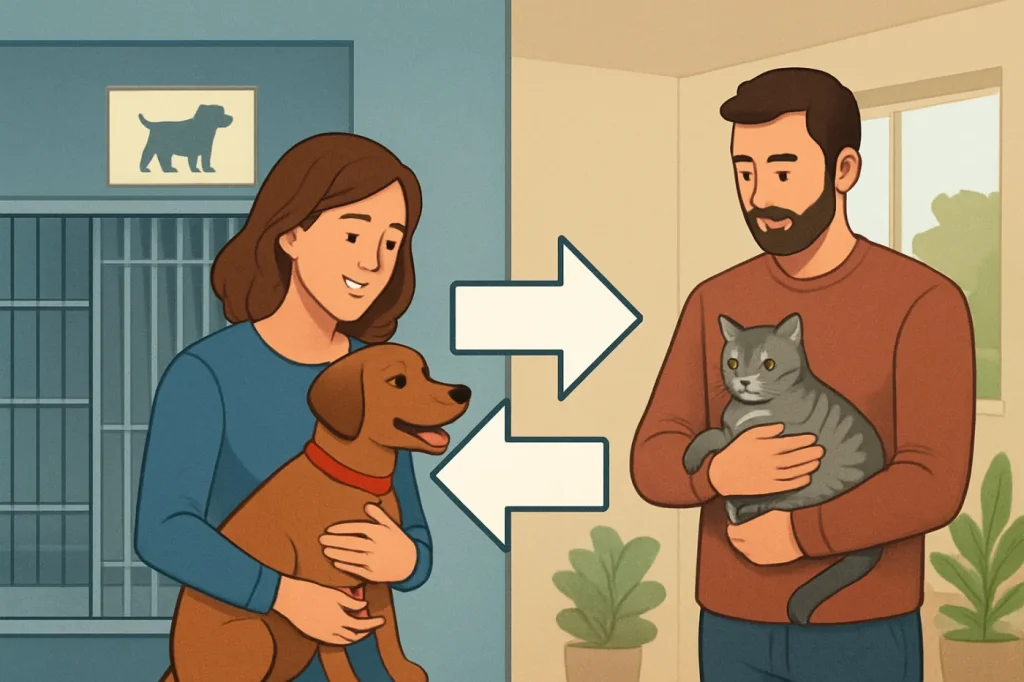
Choosing between adopting from a shelter or rescue and rehoming a pet directly from a current owner is really a choice about support, risk, and how much work you want to do yourself.
In practical terms:
- Most first-time or cautious owners are better off with a shelter or reputable rescue. You get more screening, clearer contracts, included vet care in many cases, and a defined way to return the pet if the match is truly unsafe.
- More experienced owners who can read animal body language, ask hard questions, and manage surprises may do well with a direct rehome from a current owner, especially when they can meet the pet several times in a home setting.
Both paths can lead to a wonderful, lifelong companion. The key is matching the route to your experience level, household needs, and risk tolerance.
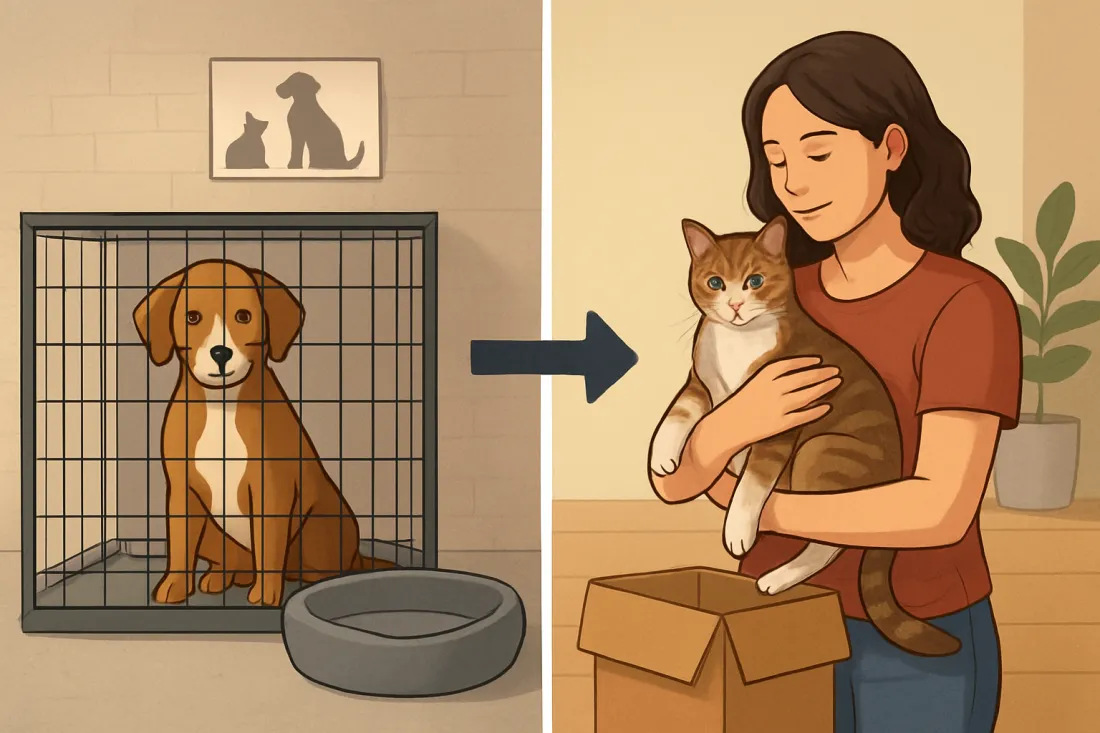
How Pet Adoption Pathways Work in the United States
In the U.S., most dogs and cats find new homes through three main routes. Understanding how each works helps you see where structure and risk sit.
1. Municipal and open-intake shelters
These are city or county shelters and animal control facilities. They typically:
- Take in strays and owner surrenders, often with limited space and high intake.
- House pets in kennels or cages, which can be stressful and noisy.
- Have a mix of animals with known and unknown histories.
- Offer relatively simple adoption processes because of volume (shorter counseling, quicker decisions).
2. Nonprofit rescues and foster-based groups
These are private nonprofits that may focus on a specific breed, size, or situation. They usually:
- Use foster homes, so pets live in a home environment before adoption.
- Gather detailed behavior and health information over weeks or months.
- Have stricter screening (applications, interviews, references, sometimes home checks).
- Provide more ongoing support and guidance after adoption.
3. Private rehoming from a current owner
This includes pets listed on social media, neighborhood apps, flyers, or via friends, family, and coworkers. These situations often:
- Have little or no formal screening unless you create it.
- Rely heavily on the current owner’s honesty and records.
- May or may not include a written agreement or fee.
- Put more responsibility on you to ask questions, verify information, and stay safe.
All three routes can work well. The difference is how much structure, backup, and information you get by default.
Side‑by‑Side Comparison: Shelter or Rescue vs Direct Rehome
Use this table as a practical framework. Details vary by organization and individual owner, so always confirm specifics.
| Decision factor | Shelter / Rescue adoption | Direct rehome from current owner |
|---|---|---|
| Typical fees | Moderate adoption fee that often covers spay/neuter, core vaccines, and microchip; sometimes starter supplies or training discounts. | Ranges from free to a modest rehoming fee; vet care may be incomplete, so you may pay more for catch‑up care after adoption. |
| Screening and matching | Application, interview, and sometimes home check; staff try to match lifestyle, experience, and housing to the pet. | Usually informal; may be just messages and a quick meet. You must design your own screening questions and boundaries. |
| Behavior information | Based on staff or foster observations plus any prior history; may include notes on energy level, triggers, and training. | Owner can describe daily routines, quirks, and reactions in a home; risk of downplaying or missing behavior issues. |
| Medical information | Basic vet work is often documented; you can review records and know what is included in the fee. | Highly variable; some pets have full records, others have none. You must verify with a vet and budget for updates. |
| Contracts and legal clarity | Standard adoption contract outlining responsibilities, return policy, and microchip registration details. | Often no formal contract unless you bring one; without writing, expectations and responsibilities can be vague. |
| Return or trial options | Many shelters/rescues allow returns or short trial periods under set conditions if the match is unsafe or clearly unworkable. | Depends entirely on the owner’s willingness; once you take the pet, you may be fully responsible if it does not work out. |
| Post‑adoption support | Frequently offers advice, behavior tips, and trainer referrals; some have support lines or follow‑up checks. | Usually limited to informal contact with the previous owner, if they stay available. |
| Risk of scams and misrepresentation | Generally lower with established organizations, though you should still review policies and reputation. | Higher risk of fake listings, stolen pets, or misrepresented behavior/health; you must verify identity and history carefully. |
| Time and effort from you | More structured; you follow the organization’s process and timelines. | More DIY; you search, screen, verify, and coordinate meetings on your own. |
| Best fit for | First‑time owners, families with kids, renters needing documentation, and anyone wanting structure and a safety net. | Experienced owners, people rehoming a pet they already know, or those comfortable managing more uncertainty. |
Benefits and Drawbacks of Adopting From a Shelter or Rescue
For many households, shelters and rescues are the safest starting point, but they are not perfect. Understanding both sides helps you set realistic expectations.
Benefits of shelter and rescue adoption
- Built‑in safeguards and structure
Applications, interviews, and contracts can feel formal, but they exist to protect both you and the animal. For example, a rescue might decline to place a high‑energy herding dog with someone who works 12‑hour shifts and has no dog‑walking plan. - Included vet care reduces early surprises
Many organizations adopt out pets that are already spayed or neutered, vaccinated to a basic level, and microchipped. You still need a vet visit soon after adoption, but you are usually not starting from zero. - Return or trial policies as a safety net
Some shelters offer a short trial period or a lifetime return option if the match is clearly unsafe or unmanageable. This does not make the pet “temporary,” but it gives you a defined path if a serious issue appears. - Access to behavior knowledge and resources
Staff and fosters see many similar cases and can suggest trainers, classes, or management strategies for common issues like leash pulling, mild separation anxiety, or nervousness with visitors. - Organized documentation
Adoption paperwork and medical records are usually easy to access and share with landlords, insurance, or licensing offices.
Drawbacks and challenges of shelter and rescue adoption
- Incomplete or unknown history
Strays and pets with multiple past homes may come with big gaps in their story. You might not know how they are with cats, toddlers, or certain triggers until you carefully test those situations at home. - Behavior in the shelter can be misleading
Some animals shut down or become hyper in kennels. A dog that barks nonstop in a row of cages may be much calmer in a quiet house, and the reverse can also happen. You may need to rely more on staff or foster reports than on a single first impression. - Policies that feel rigid
Some rescues have blanket rules (for example, fenced yard required, no young children, or specific work‑hour limits). These rules are meant to protect animals, but they can rule out otherwise suitable homes. - Competition for “easy” pets
Puppies, small dogs, and certain breeds can receive many applications quickly. You may need patience and flexibility instead of fixating on one specific animal. - Emotional overload
Seeing rows of animals in need can create guilt or urgency. It is important to choose a pet that truly fits your life, not just the one that makes you feel the saddest.
If you are leaning toward a cat, a more detailed guide such as what to know before adopting a cat from a shelter can help you prepare for species‑specific needs.
Benefits and Drawbacks of Rehoming Directly From a Current Owner
Direct rehoming can keep a pet out of the shelter system and give you rich information about its daily life. It also shifts more responsibility and risk onto you.
Benefits of direct rehoming from a current owner
- Detailed day‑to‑day history
Owners can describe how the pet behaves with visitors, kids, other animals, car rides, grooming, and alone time. You can ask for specific examples, not just labels like “good with kids.” - Chance to see the pet in a home
Meeting the pet where it lives (with safety precautions) shows you how it behaves in a familiar environment, not just in a kennel or at a busy adoption event. - Potentially lower upfront fee
Some owners charge a small rehoming fee or none at all. This can help if your immediate budget is tight, though you still need to plan for vet care and supplies. - Flexible arrangements
You can negotiate a trial period, ongoing updates, or specific handover conditions that are harder to customize with a large organization. - Helping a pet avoid shelter stress
Taking in a pet directly can prevent it from entering an already crowded shelter, which can be especially meaningful for older, shy, or medically fragile animals.
Drawbacks and risks of direct rehoming
- Fewer built‑in safeguards
There is usually no third party checking that the match is safe. You must be honest about your own limits and create your own screening process. - Information can be incomplete or biased
Most owners care about their pets, but some may downplay issues like resource guarding, separation anxiety, or house‑soiling. Others may simply not recognize early warning signs. - Vet care may be outdated or undocumented
Without clear records, you will need a prompt veterinary exam and may face unexpected costs for vaccines, tests, or procedures. - Limited recourse if it fails
The original owner may not be able or willing to take the pet back. If the match is unsafe or unworkable, you could be left responsible for rehoming the pet again. - Higher scam and personal safety risk
Online listings can be fake, involve stolen animals, or be used to collect deposits without delivering a pet. In‑person meetings also carry personal safety concerns if not handled carefully.
Questions to Ask Shelters and Rescues Before Adopting
Good organizations welcome thoughtful questions. Use these to understand both the pet and the support you will receive.
Questions about the pet’s background and behavior
- What do you know about this pet’s history? Was it a stray, owner surrender, transfer from another shelter, or something else?
- How does the pet behave in the kennel vs in a quieter space? Have staff or volunteers seen a difference in a yard, office, or foster home?
- How does the pet do with children, men, women, strangers, and other animals? Are there any known triggers or red flags?
- What is the pet’s energy level and exercise needs? What does a realistic daily routine look like?
- Has the pet shown any resource guarding, reactivity, or separation anxiety? How has the shelter or foster managed those behaviors?
Questions about health and vet care
- What vet care has this pet already received? Ask specifically about spay/neuter, vaccines, deworming, heartworm testing for dogs, and any lab work.
- Can I see copies of the medical records? This helps your own vet plan follow‑up care.
- Are there any known chronic conditions or medications? If yes, ask how they are managed day to day and what costs to expect.
Questions about policies, fees, and support
- What is included in the adoption fee? Clarify which procedures, microchip registration, and supplies are covered.
- What is your return or trial policy? How long do you have, and under what conditions, if the match is clearly unsafe or unworkable?
- Do you offer post‑adoption support? Is there someone I can contact for behavior or adjustment questions?
- Are there any restrictions I should know about? For example, housing type, fencing, age of children, or travel requirements.
If you are still deciding between species, tools like the should I adopt a dog or cat quiz can help you think through what fits your lifestyle.
Questions to Ask a Current Owner When Considering a Rehomed Pet
With private rehoming, your questions are your main protection. Aim for open‑ended questions that invite detail, not just yes/no answers.
Why the pet is being rehomed
- Why are you rehoming this pet now? Listen for life changes (moving, finances, health) versus serious behavior or safety issues.
- How long have you had the pet? Long‑term owners usually know the pet well; very short‑term owners may have limited insight.
- What have you already tried to keep the pet? Training, vet checks, or environmental changes can reveal unaddressed medical or behavior problems.
Daily routine and behavior details
- Walk me through a typical day for this pet. Ask about feeding, exercise, alone time, and sleep.
- How does the pet react to visitors, delivery people, and noises? Ask for specific examples of barking, hiding, or aggression.
- How is the pet with children and other animals? Ask about ages of children, sizes and species of other pets, and any conflicts.
- Is the pet fully house‑trained or litter box trained? Any accidents, marking, or special routines?
- Does the pet have any fears or triggers? Thunderstorms, fireworks, grooming, nail trims, car rides, or being left alone are common areas.
Health, vet history, and records
- When was the pet last seen by a vet, and for what? Ask for the clinic name so your vet can request records with permission.
- Is the pet spayed or neutered and up to date on vaccines? Ask to see proof, not just verbal confirmation.
- Any history of serious illness, surgery, or chronic conditions? Ask how those were treated and whether they are ongoing.
Handover logistics and expectations
- Are you open to a trial period? For example, a week or two with a clear plan if it does not work out.
- Can we sign a simple written agreement? It should state that ownership is being transferred and that you have been told about any known health or behavior issues.
- Will you stay available for questions after the adoption? Some owners are happy to stay in touch and offer insight during the adjustment period.
Decision Checklist: Which Route Fits Your Household Best?
Use this structured checklist as a step‑by‑step decision tool. If you answer “yes” more often in one column, that route is likely your better starting point.
Step 1: Rate your experience and confidence
- You have never owned a pet or only had very easy animals → lean toward a shelter or rescue with counseling and support.
- You have managed behavior or medical issues before and feel comfortable working with trainers and vets → you may be ready for either route, including direct rehoming.
Step 2: Check your risk tolerance and backup options
- The idea of a serious behavior or health surprise feels overwhelming → prioritize organizations with clear return policies.
- You have a strong support network, flexible schedule, and savings for unexpected vet bills → you may accept the higher uncertainty of a private rehome.
Step 3: Consider your household’s specific needs
- You live with young children, elderly relatives, or immunocompromised people → the extra screening and behavior information from shelters and rescues is especially valuable.
- You have <strongstrict landlord rules or breed/size limits → formal adoption paperwork and clear records can make housing conversations easier.
- You already know a specific pet through friends, family, or neighbors and it has done well with your household → a direct rehome may be a natural fit.
Step 4: Be honest about your time and energy for the search
- You want a guided process with help matching you to pets → start with shelters and rescues.
- You are willing to do more legwork—screening owners, verifying records, arranging multiple meetings → add private rehoming to your search.
Step 5: Decide your starting path
- If you checked more boxes under structure, support, and lower risk, begin with local shelters and rescues. You can still consider direct rehomes later once you have more experience.
- If you checked more boxes under flexibility, experience, and higher risk tolerance, you can pursue both routes in parallel, using the safety tips below for private rehoming.
If you are unsure whether you are ready for a dog at all, the am I ready to adopt a dog quiz can help you test your expectations against daily reality.
How to Avoid Scams and Unsafe Situations in Private Rehoming
Most people rehoming pets are genuine, but it only takes one bad situation to create heartache or danger. Use these safeguards whenever you consider a direct rehome.
Red flags that should make you pause
- Pressure to send money before meeting the pet or seeing any proof it exists.
- Refusal to video chat or show the pet interacting live, especially if they claim to be far away.
- Inconsistent stories about why the pet is being rehomed, age, breed, or medical history.
- No willingness to share vet records or even the name of the clinic.
- Requests for unusual payments (gift cards, wire transfers) or repeated attempts to raise the fee.
- Reluctance to let you meet the pet more than once or to see it around family members or other animals if that is important to you.
Safety steps for communication and meetings
- Keep early communication on the platform or via text until you feel comfortable.
- For the first meeting, choose a public, pet‑friendly place such as a park, and bring another adult if possible.
- Tell a friend or family member where you are going, who you are meeting, and when you expect to return.
- Trust your instincts. If something feels off about the person or situation, you can walk away, even if the pet seems perfect.
- Do not share sensitive personal information (financial details, full work schedule, children’s schools) beyond what is needed to discuss the pet’s care.
Verifying the pet’s identity and history
- Ask for multiple photos and videos of the pet in different settings and with the current owner.
- Request vet records and check that the pet’s name, approximate age, and description match what you have been told.
- At your first vet visit, confirm microchip details and update registration to your name once the adoption is final.
Contracts, Vet Checks, and Trial Periods: Protecting Everyone
Whether you adopt from a shelter, rescue, or private owner, a few concrete steps make the transition safer and clearer for you and the pet.
Why a written agreement matters
Even a simple one‑page agreement helps:
- Clarify that ownership is being transferred to you on a specific date.
- List any known medical or behavior issues that have been disclosed.
- Outline any trial period or return arrangements you have agreed on.
- Record what items are included (crate, bed, medications, food, toys).
Shelters and rescues usually provide their own contracts. For private rehoming, you can create a basic document and ask the owner to sign it with you.
Scheduling a prompt vet check
Plan a veterinary visit soon after bringing the pet home, ideally within the first week or two. At that appointment, you can:
- Confirm the pet’s overall health and discuss any concerns you have noticed.
- Review vaccination status and parasite prevention.
- Discuss spay/neuter if it has not already been done.
- Ask for advice on nutrition, weight, and exercise appropriate for the pet’s age and condition.
If you are adopting from a shelter or rescue, ask whether they have preferred clinics or any included post‑adoption vet visits. For private rehoming, assume you will cover all initial costs and budget accordingly.
Setting up a realistic trial period
Adjustment takes time. A trial period can protect both you and the pet, especially in private rehoming situations.
- Define the length in writing—often one to two weeks for an initial trial, with the understanding that full adjustment may take longer.
- Agree on what happens if it does not work—who will transport the pet, whether any fee is refunded, and how quickly the pet can return.
- Use the trial wisely—introduce the pet gradually to all household members, keep routines calm and predictable, and note any serious concerns to discuss with the owner or a professional.
Common Mistakes When Choosing Between Shelter Adoption and Direct Rehoming
Avoiding a few frequent pitfalls can save you and the pet a lot of stress.
- Choosing based only on emotion or urgency
Feeling sorry for a pet in a photo or post is natural, but you still need to check whether your lifestyle, budget, and home are a good fit. - Underestimating behavior labels
Descriptions like “needs a patient home” or “best as an only pet” signal real challenges. Ask what that looks like day to day and whether you can truly handle it. - Skipping hard questions because you feel awkward
It can feel uncomfortable to ask about bites, accidents, or medical history, especially with a private owner. Remember you are responsible for everyone’s safety in your home. - Assuming a free or low‑fee pet is cheaper overall
Low or no adoption fees can be followed by high vet bills if the pet is not up to date on care. Always budget for an initial medical check and possible catch‑up treatments. - Ignoring your deal‑breakers
If you know you cannot manage a dog that barks at every noise or a cat that cannot live with other pets, do not talk yourself into “maybe it will change.” Choose a pet that fits your real life, not your idealized version. - Not planning for the first weeks at home
Regardless of the route, you will need time for gradual introductions, house rules, and bonding. Starting a new job, moving, or traveling right after adoption makes this harder.
FAQ: Shelter Adoption vs Rehoming From a Current Owner
What should I understand about adopting from a shelter vs rehoming from a current owner before I decide?
Adopting from a shelter or rescue usually gives you more structure: an application, a contract, included vet care in many cases, and some form of return or trial policy. You may not know the pet’s full history, but you have an organization to turn to for guidance. Rehoming from a current owner can offer richer day‑to‑day history and a chance to see the pet in a home, but you have fewer built‑in safeguards and must do your own screening, paperwork, and safety checks. The right choice depends on how much support you want and how comfortable you are managing uncertainty.
What mistakes should I avoid when choosing between shelter adoption and direct rehoming?
Common mistakes include deciding based only on a single photo or sad story, skipping tough questions about behavior and health, assuming a free or low‑fee pet will be cheaper overall, and ignoring your own limits around time, budget, and experience. Another frequent error is not planning for the adjustment period—bringing a new pet home right before a major life change makes it harder for everyone. Taking time to ask detailed questions, verify records, and be honest about what you can handle makes a smoother transition much more likely.
What should I do next after learning about these adoption options?
Next, clarify your household’s needs and limits: your schedule, budget, housing rules, and experience with pets. Decide whether you want the structure of a shelter or rescue, the flexibility of private rehoming, or a mix of both. Then start reaching out to local shelters and rescues, and, if you feel ready, carefully explore reputable rehoming listings using the safety tips and question lists above. Finally, line up a veterinarian and basic supplies so that when you do find the right pet, you are ready to bring them home and support a smooth transition.
Bringing It Together: Match the Route to Your Experience and Resources
There is no single “right” way to adopt a pet, but there is a route that fits your current life better.
- Choose shelters and rescues first if you want guidance, clear policies, and a safety net, especially as a first‑time owner or in a complex household.
- Consider direct rehoming when you have more experience, can carefully screen owners, and are prepared to manage surprises without organizational backup.
- Use questions, contracts, and vet checks in both routes to protect yourself, your family, and the pet.
Whichever path you choose, taking the time to match the pet’s needs with your real lifestyle is one of the most important parts of responsible pet ownership. A thoughtful decision now makes it far more likely that your new companion will truly be a lifelong family member.