
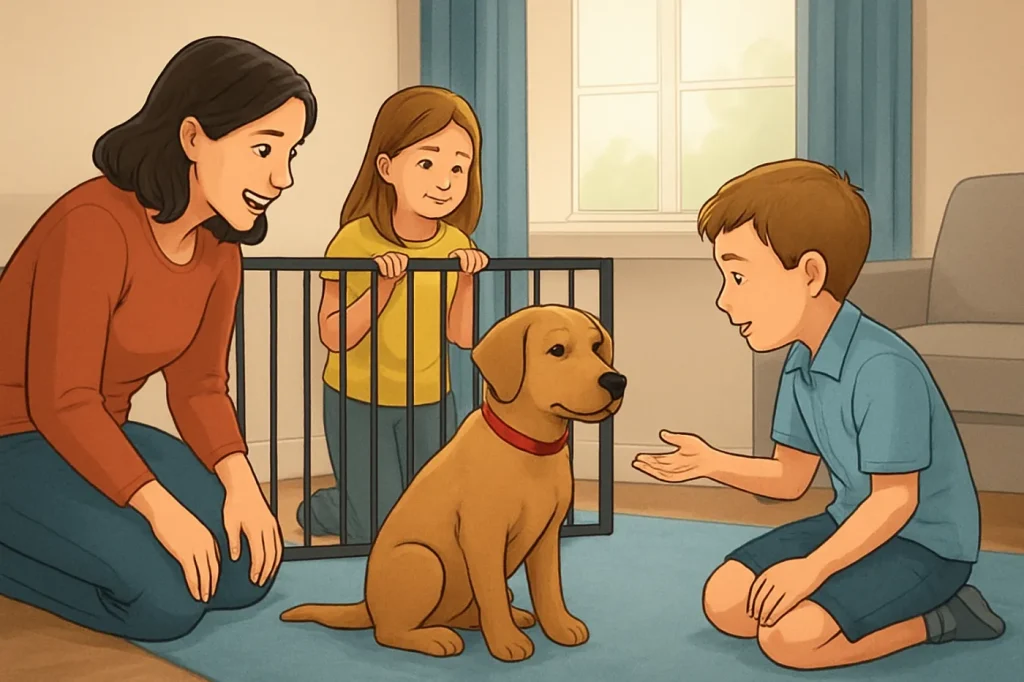
To introduce a new dog to children safely, treat the first month as a slow, supervised trial period. Start with clear rules for kids, controlled first meetings on leash and behind barriers, and daily short, positive interactions instead of one big, overwhelming “welcome home” moment.
Key principles for introducing a new dog to children
Before you dive into steps and checklists, keep these core ideas in mind:
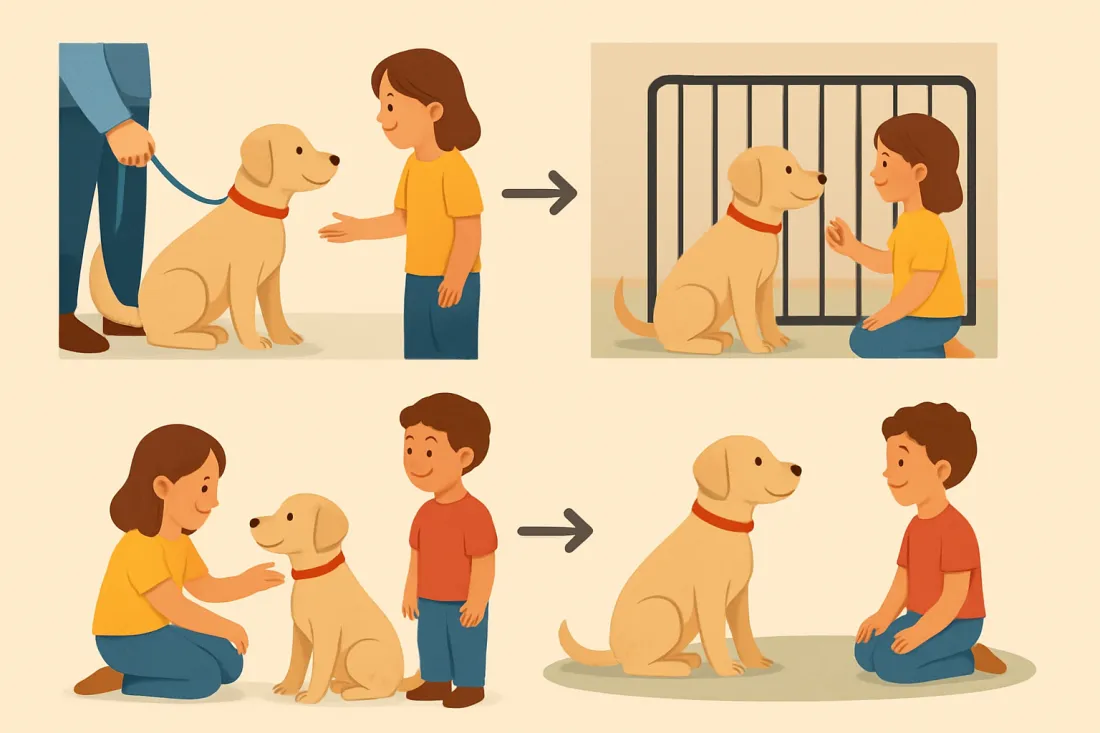
- Go slower than you think. It is better to end a meeting while everyone still feels calm than to push for instant cuddles.
- Adults control the setup. You decide when, where, and how contact happens, not the kids and not the dog.
- Safety beats fairness. If one child is too rough or excitable, they may need shorter or separate interactions.
- Watch body language. Subtle signs of stress in pets or kids are your cue to pause and reset.
- Positive associations only. Every early interaction should pair the dog’s presence with calm voices, gentle touch, and good things like treats or play.
Preparing your home before the first introduction
A calm, well-prepared environment makes the first meetings much easier. Aim to have this setup ready before the dog or cat arrives.
Create safe spaces for pets and kids
- Pet-only retreat: Choose a quiet room or corner where the dog can rest without being touched or followed. Include a bed or crate, water, and a chew toy.
- Child-only zone: Have at least one area where kids can play loudly or run around without the dog present (bedroom, playroom, or fenced yard section).
- Clear “no-go” rules: Teach kids that when the dog is in their bed/crate or behind a gate, they must not reach in, poke, or tease.
Use leashes, baby gates, and barriers wisely
Physical barriers let you control distance and intensity without constant grabbing or shouting.
- Leash: Keep a lightweight leash on the dog for the first several days during kid interactions so you can gently guide them away instead of grabbing their collar.
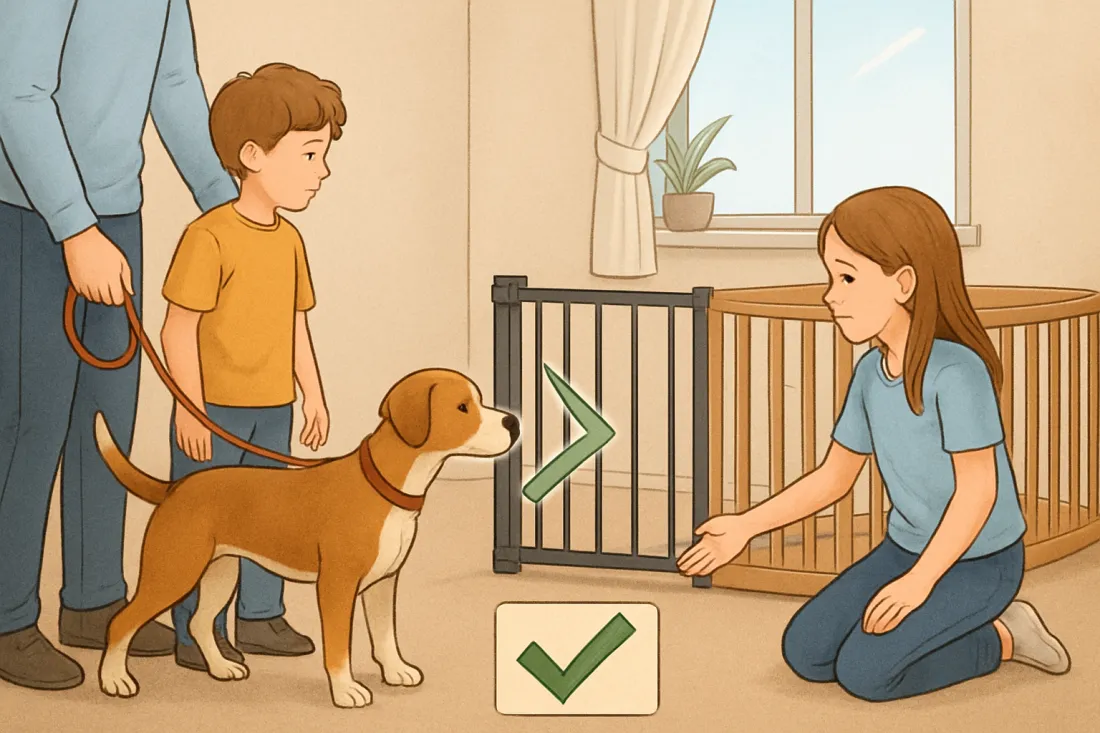
- Baby gates: Place gates between high-traffic areas (hallway to living room, kitchen to playroom) so the dog and kids can see and smell each other without full contact.
- Crate or pen (if used): Make it a safe den, never a punishment zone. Kids should not climb in or lean over it.
- Furniture layout: Remove tight corners where a dog could feel trapped by approaching children (e.g., bed pushed into a corner with only one exit).
Set clear rules with children before the dog arrives
Explain and practice rules with kids in advance, so you are not correcting them in the heat of the moment.
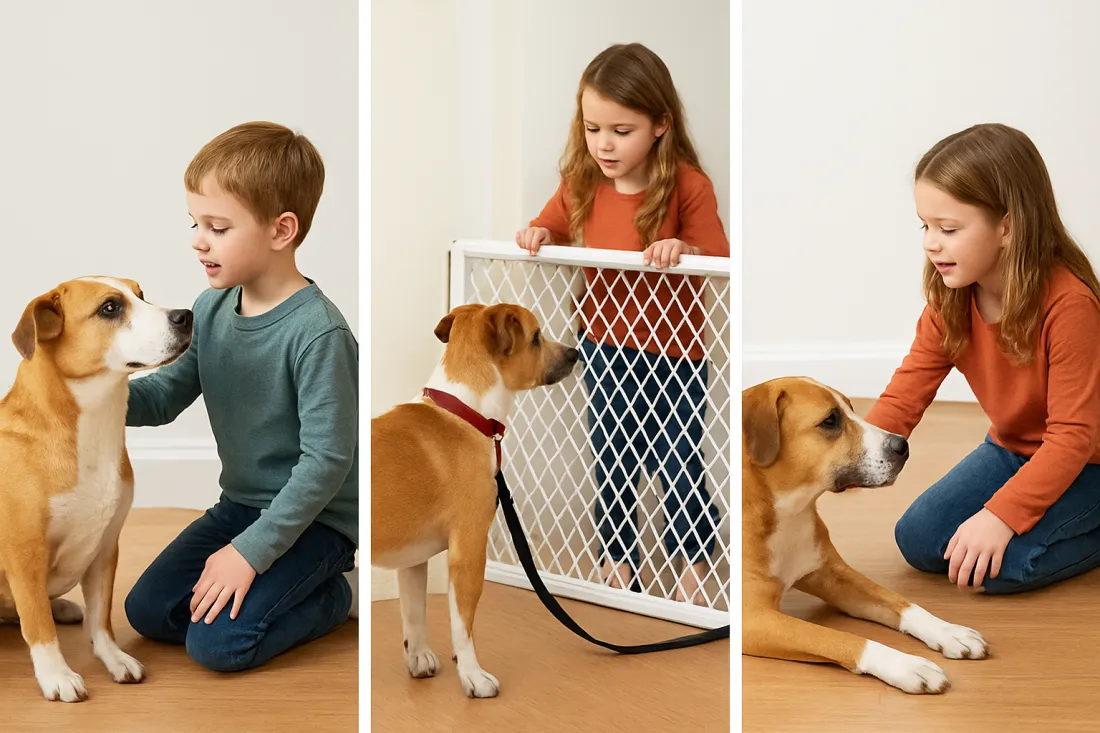
- No hugging, lying on, or riding the dog.
- No pulling ears, tail, fur, or paws.
- No yelling into the dog’s face or chasing them.
- Always ask an adult before approaching or petting.
- Pet gently on the side of the body or chest, not over the head.
- Leave the dog alone when they are eating, sleeping, or in their bed/crate.
If you are also considering a cat, similar preparation applies. You can find more detail on how to introduce a cat to a family with young children once your dog plan is in place.
Step-by-step first meeting guide for dogs
Use this process for the first day or two. Adjust the pace based on how calm the dog and kids stay.
Step 1: Let the dog settle before meeting all the kids
- Bring the dog into the home on leash and walk them through a quiet area first.
- Give them a chance to sniff, drink water, and visit their bed or crate.
- Keep kids in another room and explain that the dog needs a few minutes to “look around” and feel safe.
Step 2: Introduce one child at a time
- Choose the calmest, most rule-following child first.
- Have the child sit or kneel sideways, not face-to-face, with hands in their lap.
- Adult holds the leash loosely and lets the dog approach if they want to. No one should pull the dog toward the child.
- Coach the child to speak softly and avoid sudden movements.
- If the dog sniffs and seems relaxed, allow the child to gently pet the dog’s chest or side 2–3 times, then pause.
Step 3: Keep the first meetings very short
- End the first interaction after 1–3 minutes, even if it is going well.
- Walk the dog away calmly, give them a treat or quiet time in their safe space.
- Rotate through other children one at a time using the same pattern.
- Avoid crowding: no more than one or two kids near the dog at once on day one.
Step 4: Add simple, structured activities
Once the dog has had several calm, short meetings, you can add simple games:
- Treat toss: Child tosses a treat a short distance away from their body so the dog moves away to eat it.
- Gentle brushing (if the dog enjoys it): Short, supervised brushing sessions with clear start and stop.
- Parallel walking: Adult walks the dog on leash while kids walk alongside at a safe distance, practicing calm voices.
Step 5: Gradually increase freedom
- After a few days of calm interactions, allow the dog to be off leash in the same room while you are present.
- Keep baby gates in place so the dog can retreat if they feel overwhelmed.
- Continue to limit rough play, chasing, and loud games around the dog.
Step-by-step first meeting guide for cats
Even though your main focus may be a dog, many families add a cat as well. Cats usually need more control over distance and vertical space.
Step 1: Give the cat a starter room
- Set up one room with litter box, food, water, bed, and hiding spots.
- Keep the door closed at first so the cat can decompress.
- Let kids peek from the doorway only after the cat has eaten and used the litter box at least once.
Step 2: Controlled visual introductions
- Use a baby gate or hold the cat securely (if they are comfortable) while kids sit on the floor.
- Kids should stay quiet and still, allowing the cat to choose whether to approach.
- Offer treats or a wand toy so kids can interact without grabbing.
Step 3: Respect hiding and high places
- Explain that hiding is normal and not a sign that the cat “doesn’t like” the kids.
- Provide shelves, cat trees, or the back of a couch as safe high spots.
- Teach kids never to pull a cat out from under furniture or off a perch.
Step 4: Short, gentle handling sessions
- Only allow kids to hold the cat if the cat clearly seeks contact and stays relaxed.
- Show kids how to support the cat’s chest and hindquarters.
- End handling at the first sign of tail swishing, ear flattening, or attempts to escape.
Supervision guidelines for the first 30 days
Think of the first month as a training period for both kids and pets. Your supervision level should be high at the start and then adjust based on behavior.
Weeks 1–2: Constant, close supervision
- Adults are in the same room and actively watching every interaction.
- No unsupervised time between the dog and children, even for “just a minute.”
- Use gates and closed doors when you cannot watch closely (phone calls, cooking, bathroom).
- Keep interactions short and end them on a positive note.
Weeks 3–4: Graduated freedom with quick check-ins
- If the dog and kids have been calm, you can supervise from a short distance while staying within earshot and line of sight.
- Continue to separate them when high-energy play starts (birthday parties, playdates, sports in the yard).
- Revert to closer supervision if you see any new stress signs or rough behavior.
Nighttime and when adults are away
- At night, keep the dog in a crate, pen, or separate room from children.
- When no responsible adult is home, the dog and kids should not share the same free space.
- Babysitters or relatives should be briefed on the rules and shown how to use gates and leashes.
Signs of stress in pets and children to watch for
Early stress signs are your warning to slow down, separate, or change how interactions happen. Many of these appear before growling, snapping, or full meltdowns.
Common stress signals in dogs
- Turning head away, avoiding eye contact, or trying to move behind an adult or furniture.
- Lip licking, yawning, or sudden scratching when not tired or itchy.
- Stiff body, tail held low or tucked, ears pinned back.
- Panting when the room is not hot or after only light activity.
- Freezing in place when a child approaches.
- Growling, showing teeth, snapping, or air-biting (these are late-stage warnings).
Common stress signals in cats
- Flattened ears, dilated pupils, or rapid tail flicking.
- Hiding for long periods and refusing to come out when kids are present.
- Low growls, hissing, or swatting when approached.
- Overgrooming or sudden changes in litter box habits.
Stress signals in children
- Clinging to adults, crying, or refusing to be in the same room as the dog.
- Overcompensating by being too rough, loud, or “in the dog’s face” to hide fear.
- Nightmares or new fears about dogs or cats.
- Arguing about rules or trying to sneak interactions when adults are not watching.
When you see these signs, shorten interactions, increase distance, and give everyone a break. If stress continues or escalates, consider working with a qualified trainer or behavior professional.
Comparison table: Different introduction speeds and their risks
Families often wonder whether they are going too slow or too fast. Use this table to compare common approaches and their trade-offs.
| Introduction style | What it looks like | When it might fit | Main risks | Safer adjustments |
|---|---|---|---|---|
| Very fast, full access | Dog is off leash with all kids on day one; lots of hugging, crowding, and excitement. | Almost never ideal, even for friendly dogs. | Overwhelm, accidental nips or scratches, kids learning unsafe habits. | Limit to one or two kids at a time, keep the dog on leash, use gates and short sessions. |
| Moderately paced, structured | Short, supervised meetings with one child at a time; gradual increase in freedom over 1–2 weeks. | Most families with school-age children and a reasonably social dog. | Kids may feel impatient; adults must stay consistent with rules. | Use rewards and small “jobs” for kids (treat tossing, simple cues) to keep them engaged. |
| Very slow, high control | Dog and kids mostly separated by gates; brief, low-contact meetings for several weeks. | Homes with very young children, nervous dogs, or unknown history (e.g., some shelter dogs). | Bonding may take longer; kids may worry the dog “doesn’t like” them. | Explain that going slow builds trust; celebrate small positive moments together. |
| Unstructured, inconsistent | Rules change daily; sometimes the dog is allowed on furniture with kids, sometimes scolded. | Common when multiple adults or caregivers are not aligned. | Confused dog, frustrated kids, higher chance of mistakes and conflict. | Agree on clear house rules and write them down where everyone can see them. |
First-week introduction checklist
Use this structured checklist to guide your first week. Adjust timing if your dog or cat needs more time, but keep the sequence.
- Before arrival
- Set up pet-only safe space (bed/crate, water, toys).
- Install baby gates or barriers between key rooms.
- Remove or secure kids’ small toys that could be chewed or swallowed.
- Practice “pet rules” with children using stuffed animals.
- Decide on basic house rules: where the dog can go, feeding times, who walks and feeds.
- Day 1
- Let the dog explore the home on leash with no kids crowding.
- Introduce one child at a time in a quiet room, with the dog on leash.
- Keep each meeting under a few minutes and end while everyone is calm.
- Give the dog quiet breaks in their safe space between meetings.
- Days 2–3
- Repeat short, supervised meetings with each child.
- Add simple, calm games like treat tossing or parallel walking.
- Watch for any stress signs in the dog, cat, or kids and adjust pace.
- Keep using gates when adults cannot supervise closely.
- Days 4–7
- Gradually allow more off-leash time in shared spaces with an adult present.
- Reinforce rules about no hugging, chasing, or disturbing the dog while resting.
- Give each child a small, age-appropriate responsibility (filling water bowl with help, helping measure food, gentle brushing).
- Review what went well and what felt hard at the end of each day; adjust tomorrow’s plan.
Common mistakes when introducing a new dog to children
Avoiding a few predictable errors can dramatically lower the risk of bites, fear, or long-term tension.
- Expecting instant friendship. Pushing for cuddles or play before the dog is ready can backfire. Aim for calm coexistence first, affection later.
- Letting kids crowd or corner the dog. Even friendly dogs may react defensively if they feel trapped.
- Ignoring early warning signs. Growling, freezing, or hiding are signals to slow down, not behavior to punish.
- Using punishment around kids. Yelling or harsh corrections can make the dog associate children with scary experiences.
- Leaving toys and food unprotected. Many dogs guard high-value items. Keep kids away from the dog’s bowl, chews, and favorite resting spots.
- Inconsistent rules between adults. If one adult allows rough play and another forbids it, both the dog and kids become confused.
- Skipping professional help. Waiting until a serious incident happens makes behavior harder to change. Early guidance is easier and safer.
If you are still choosing a dog, it can help to read about how to safely adopt a shelter dog with young children so you start with a good match for your family.
Decision criteria: How fast should you move?
Your introduction pace should fit your specific dog, children, and home. Use these criteria to decide whether to slow down or move forward.
Factors that suggest going slower
- The dog is new from a shelter, rescue, or unknown background.
- The dog shows fear or avoidance around children (backing away, hiding, trembling).
- You have toddlers or preschoolers who cannot reliably follow rules.
- There are multiple children or frequent visiting kids, creating a busy environment.
- The dog has any history of growling, snapping, or biting.
Factors that allow a moderate pace
- The dog has a known history of living peacefully with kids.
- Your children are old enough to understand and follow safety rules most of the time.
- You have enough adult supervision to manage short, structured sessions.
- The home has clear, easy-to-use barriers (gates, separate rooms).
When to seek extra support
- You see repeated stress signals in the dog or cat, even with slow introductions.
- Children remain very fearful or very rough despite coaching.
- There is any incident involving a bite, serious scratch, or intense growling.
- Adults in the home disagree strongly about rules or how to handle problems.
In these situations, a qualified trainer or behavior professional can help you design a tailored plan and coach your family through it.
FAQ about introducing a new dog to children
What is the most important thing to remember when introducing a new dog to children?
The most important point is that adults must control the pace and structure of every early interaction. Do not let kids rush in, grab, or crowd the dog, even if the dog seems friendly. Use leashes, gates, and short, calm meetings so the dog can choose to approach and leave. This builds trust and prevents the dog from feeling trapped or overwhelmed.
How long does it usually take for a new dog to adjust to living with children?
Adjustment is gradual and varies by dog, but many families see clear progress over the first 3–4 weeks. The first few days are about basic safety and calm coexistence. Over the next couple of weeks, the dog and kids learn each other’s routines and signals. Some dogs relax quickly; others, especially those with unknown or difficult histories, may need several months of consistent, gentle handling to feel fully at home.
What are the biggest mistakes parents make when bringing a new dog into a home with kids?
Common mistakes include allowing rough or unsupervised play too soon, assuming a friendly dog will “put up with anything,” and punishing early warning signs like growling instead of treating them as useful communication. Another frequent error is not setting clear, consistent rules for kids and adults, which leaves both the dog and children unsure what is allowed.
What should parents do after following the first-week introduction steps?
After the first week, review what went well and where there were struggles. Keep using gates and supervision, but gradually add more structured activities such as simple training cues, gentle grooming, or calm walks together. If you notice ongoing stress or conflict, slow the pace and consider getting professional guidance before problems become entrenched habits.
How can I tell if my child is actually afraid of the new dog, even if they say they are fine?
Some children hide fear by acting overly loud, silly, or rough around the dog. Others may avoid certain rooms, cling to adults, or complain of stomachaches or nightmares. If your child insists they are fine but shows these signs, treat it as fear and slow down introductions. Give them more control over distance, let them interact through gates or with you holding the dog on leash, and praise them for calm, gentle behavior rather than pushing for close contact.
Next steps for building a safe, long-term bond
Once the first introductions are complete, keep reinforcing good habits. Maintain clear rules, supervise closely during high-energy times, and give both kids and pets daily chances for calm, positive contact. If you are planning for long-term costs and responsibilities, it can help to read about pet costs for families with children so everyone understands what caring for a dog or cat involves.
With patience, structure, and consistent supervision, most families can help their children and new pets grow from cautious first meetings into a safe, trusting relationship.