
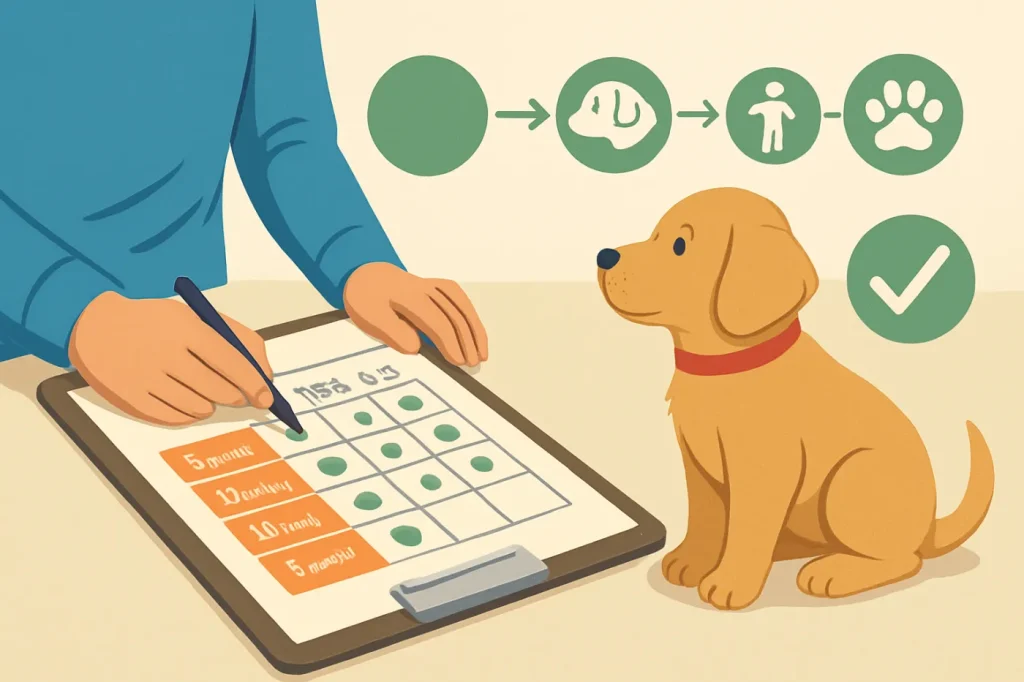
The first year is when your puppy’s personality, confidence, and manners are built. Socialization is not just “meeting lots of dogs” – it is a structured plan to help your puppy feel safe and relaxed in the human world.
Below is a practical, age-by-age socialization and basic training schedule from 8 weeks to 12 months, with safe ideas for unvaccinated puppies, sample daily routines, a comparison table of early vs late socialization, and a checklist you can actually follow.
Why early puppy socialization matters more than later “fixing”
Puppies go through a key socialization window roughly between 3 and 12 weeks of age, and it continues to influence them through about 5 months. During this time, their brain is especially open to new experiences. Calm, positive exposure now is much easier than trying to undo fear or aggression later.
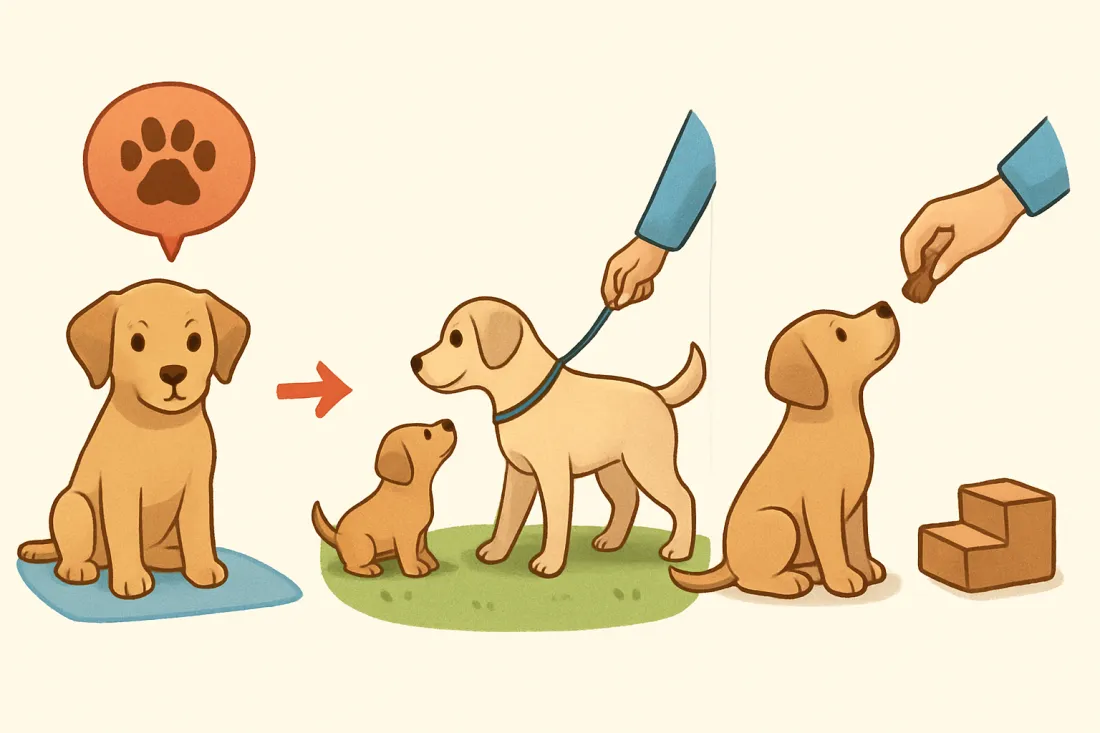
Well-planned early socialization helps your puppy:
- Feel safe around everyday sights and sounds (trash trucks, doorbells, kids running)
- Handle vet visits and grooming without panic
- Play politely with other dogs instead of bullying or hiding
- Cope with being alone for short periods without constant crying
Delaying socialization until “after all shots” can leave a puppy underexposed during that sensitive window. The goal is not to throw them into chaos, but to give them many small, safe, positive experiences.
Early vs late socialization: what actually changes
Owners often wonder whether to wait for full vaccinations or start socialization right away. You do not have to choose between health and behavior; you can balance both with controlled exposure.
| Approach | What it looks like in practice | Short-term benefits | Long-term risks | Best for |
|---|---|---|---|---|
| Thoughtful early socialization (from 8 weeks) | Safe outings in arms or stroller, puppy classes with vaccine checks, calm visitors at home, controlled dog meetups with healthy adult dogs | Builds confidence, easier vet/grooming, fewer fears of noises/people, faster training progress | If done too intensely or in unsafe places, risk of overwhelming the puppy or exposure to illness | Most puppies with basic vet guidance and access to safe environments |
| Delayed socialization (waiting until “fully vaccinated”) | Puppy stays mostly at home or in the yard until vaccine series is complete, then suddenly taken to busy parks and public spaces | Lower disease exposure in the first weeks | Higher chance of fear of strangers, dogs, noises, and new places; harder to change later | High-disease-risk areas where your vet recommends strict limits, or puppies with fragile health |
| Unstructured “anything goes” socialization | Dog parks, chaotic play, rough handling by strangers, no control over other dogs’ behavior or health | Puppy may seem “tired out” and friendly at first | Risk of injuries, illness, fear, or learning rude behavior (bullying, ignoring owners) | Generally not recommended for young puppies |
Use your veterinarian’s advice about disease risk in your area, then choose the safest version of early socialization you can manage.
Age-by-age puppy socialization and training goals (8 weeks to 12 months)
Every puppy develops at a slightly different pace, but this schedule gives realistic targets. Adjust for your puppy’s breed, health, and temperament.
8–10 weeks: settling in and gentle exposure
Main goals
- Build trust with family members
- Start house training and crate training
- Introduce calm, low-intensity new experiences
Socialization focus
- Handling: touch paws, ears, tail, collar gently while feeding treats
- Sounds: low-volume TV, kitchen noises, recorded fireworks/thunder at a low level
- People: a few calm adults and older children, one or two at a time, in your home
- Surfaces: carpet, tile, hardwood, grass, a rubber mat, a low step
Training milestones
- House training: outside every 1–2 hours when awake, after meals, naps, and play; reward immediately for going in the right spot
- Crate training: crate is always linked with treats, chews, and naps; no forced confinement for long periods
- Basics: name recognition, “come” indoors, “sit” for meals
Safe outings before full vaccinations (US context – always confirm with your vet):
- Car rides with the puppy in a secured crate or harness
- Carrying your puppy in your arms or a carrier through quiet streets or pet-friendly stores that allow it
- Sitting on a clean blanket in your yard or on a friend’s balcony to watch the world
- Visits to friends’ homes where resident dogs are healthy and vaccinated
10–16 weeks: core socialization window
This is the most important stretch for varied, positive experiences.
Socialization focus
- More people: different ages, sizes, hats, glasses, beards, walking sticks, wheelchairs
- Dogs: friendly, vaccinated adult dogs with good manners; well-run puppy classes
- Places: parking lots, outdoor shopping areas, school zones at a distance, drive-throughs
- Handling: mock vet exams, gentle restraint, being lifted, wearing a harness
Training milestones
- House training: accidents becoming less frequent; puppy can hold it a bit longer between outings
- Crate training: relaxed in crate for short daytime rests and overnight with one or two potty breaks
- Leash skills: wearing a collar/harness comfortably, walking a few steps on a loose leash in quiet areas
- Recall: “come” reliably indoors and in fenced yards with low distractions
- Impulse control: “sit” or “down” before meals, doors, and play
Safe exposure ideas before full vaccinations
- Carry your puppy through busier areas (farmers’ markets, sidewalks) so they see strollers, bikes, joggers
- Observe other dogs at a distance from the car or a clean, low-traffic spot
- Enroll in a puppy class that requires vaccine records and cleans surfaces regularly
- Short visits to the vet clinic just for treats and weighing, no shots
4–6 months: teenage confidence and boundaries
Puppies often become bolder and test limits during this stage.
Socialization focus
- More real-life situations: outdoor dining areas, hardware stores that allow dogs, quiet trails
- Different dogs: calm adult dogs, a few well-matched playmates, supervised play
- Alone time: practicing short periods alone at home to prevent separation issues
Training milestones
- House training: mostly reliable; accidents are rare and usually due to schedule slips
- Crate training: can rest in crate for a few hours during the day as needed
- Leash skills: walking on a loose leash in familiar areas; starting to handle mild distractions
- Recall: “come” working in fenced areas with moderate distractions using a long line
- Manners: less mouthing, learning “leave it,” “drop it,” and polite greetings
6–9 months: adolescent challenges
Hormones and confidence can spike; some puppies become pushier or more fearful.
Socialization focus
- Reinforce calm behavior in busier environments (parks, sidewalks, pet-friendly stores)
- Practice around kids’ sports, traffic, and louder noises at a distance your puppy can handle
- Maintain positive dog interactions; avoid chaotic dog parks if your puppy is overwhelmed or rude
Training milestones
- House training: fully reliable in normal circumstances
- Leash skills: able to walk past mild distractions with guidance; still needs practice around big triggers
- Recall: improving with high-value rewards; still on a long line in open areas
- Self-control: can settle on a mat, wait at doors, and take breaks from play
9–12 months: polishing adult manners
Socialization focus
- Occasional new places to keep flexibility (new trails, different neighborhoods)
- Longer outings: day trips, dog-friendly patios, visits with friends who have dogs
- Maintenance: vet and groomer visits, boarding or pet sitter trials if needed
Training milestones
- Loose-leash walking in most everyday situations
- Reliable recall in safe, off-leash-appropriate areas (still follow local leash laws)
- Solid cues: sit, down, stay, leave it, drop it, go to mat
- Comfortable alone for reasonable periods, depending on your lifestyle
Safe socialization ideas before full vaccinations (US context)
In the United States, veterinarians often balance the risk of infectious disease with the risk of behavior problems from poor socialization. Always follow your own vet’s vaccine and exposure advice, especially if you live in an area with higher disease risk.
Generally safer options to discuss with your vet
- Car rides through drive-throughs, school pickup lines, and busy streets
- Carrying your puppy in your arms or a sling in public places
- Visiting friends’ homes where dogs are healthy, vaccinated, and friendly
- Puppy classes that check vaccines and clean surfaces regularly
- Clean, private yards or patios (avoid areas heavily used by unknown dogs)
- Indoor exposure to household sounds and equipment (vacuum, blender, hair dryer)
Places to avoid with very young or not-yet-fully-vaccinated puppies
- Dog parks and dog beaches
- Pet store floors where many unknown dogs walk
- Rest areas and high-traffic public grass where many dogs relieve themselves
- Areas with visible animal waste or standing water
If you are unsure, ask your vet, “Given disease risk in our area, what kinds of outings are safe for my puppy at this vaccine stage?”
Basic training milestones to pair with socialization
House training
- Take your puppy out on a schedule: after waking, after eating, after play, and every 1–3 hours depending on age.
- Go to the same potty spot, stand still, and quietly reward as soon as they finish.
- Supervise indoors or use a crate/pen to prevent wandering and accidents.
- Clean accidents with an enzymatic cleaner so the smell does not draw them back.
Crate training
- Make the crate a “den”: soft bedding, safe chew, and treats tossed inside.
- Start with the door open, then close it for a few seconds while you are nearby, gradually increasing time.
- Never use the crate as punishment; it should predict rest and safety.
- Plan realistic alone-time: young puppies still need frequent potty breaks.
Leash skills
- Introduce collar or harness gradually with treats.
- Practice indoors first: reward your puppy for walking beside you with a loose leash.
- Keep early walks short and in low-distraction areas.
- If your puppy pulls, stop or change direction instead of yanking the leash.
Recall (“come”)
- Start indoors: say your puppy’s name once, then “come” in a happy voice, reward heavily when they arrive.
- Use a long line in fenced yards or quiet fields for safety.
- Make “come” always worth it: treats, play, or access to something fun.
- Avoid calling your puppy only when fun ends (like bath time or leaving the park) without rewarding them.
If you are building a broader first-year plan, it can help to read about the first year cost of a puppy so you can budget for classes, training tools, and vet visits alongside your socialization schedule.
Sample daily routines: working vs at-home owners
Use these as starting points and adjust for your puppy’s age and energy level.
Example day for an 11-week-old puppy with a full-time worker
- 6:30 am: Wake, potty outside, breakfast, 10 minutes of training (sit, name, come)
- 7:00 am: Short walk or yard time, gentle exposure to sounds (cars, birds)
- 7:30 am: Crate or pen with safe chew while you get ready
- 8:00 am: Potty break before you leave; dog walker, neighbor, or family member scheduled for midday break
- 12:00 pm: Midday potty, short play, a few minutes of leash practice
- 12:30 pm: Rest in crate/pen
- 5:30 pm: Potty, dinner, 10–15 minutes of training and play
- 6:30 pm: Safe socialization outing (car ride, carried through a store, visit to a friend)
- 8:00 pm: Calm indoor time, gentle handling, grooming practice
- 10:00 pm: Final potty break, settle in crate for the night
Example day for an 11-week-old puppy with an at-home owner
- 7:00 am: Wake, potty, breakfast, short training session
- 7:30 am: Play and exploration indoors with supervision
- 8:00 am: Nap in crate/pen while you work nearby
- 9:30 am: Potty, short walk or yard time, new surface or sound exposure
- 10:00 am: Quiet chew in pen while you work
- 12:00 pm: Potty, lunch (if still on three meals), training game (recall, leash practice)
- 1:00 pm: Nap
- 3:00 pm: Potty, socialization outing (car ride, visit to friend, puppy class on some days)
- 5:00 pm: Play, enrichment toys, handling practice
- 7:00 pm: Dinner, short walk, calm family time
- 10:00 pm: Final potty and bedtime
As your puppy grows, naps get longer and potty breaks can be spaced out more, but keeping a rhythm of potty – play/train – rest works throughout the first year.
Structured socialization checklist for your puppy’s first year
Use this checklist as a guide. You do not need to tick every item perfectly, but aim for many calm, positive exposures in each category.
People and handling
- Met calm adults of different ages and appearances
- Met respectful children (with supervision)
- Seen people with hats, hoods, sunglasses, backpacks
- Seen people using wheelchairs, walkers, canes, or strollers
- Comfortable with gentle handling of paws, ears, tail, mouth
- Practiced mock vet exams (lifting lips, checking ears, gentle restraint)
- Comfortable being brushed and having nails touched
Dogs and other animals
- Positive interactions with friendly, vaccinated adult dogs
- Supervised play with well-matched puppies
- Seen dogs of different sizes and coat types at a distance
- Seen cats or other household pets safely (gates, leashes)
- Practiced ignoring other dogs on walks with your help
Places and surfaces
- Walked on grass, gravel, concrete, tile, wood, carpet
- Experienced stairs (inside and outside) at a comfortable pace
- Visited a quiet park, then a busier park at a distance
- Visited a pet-friendly store after vaccines (if allowed)
- Ridden in an elevator and walked through automatic doors
- Visited the vet clinic for a “happy visit” (treats only)
Sounds and objects
- Heard vacuum, blender, hair dryer at low then normal volume
- Heard traffic, sirens, motorcycles from a safe distance
- Heard fireworks or thunder recordings at low volume
- Seen bikes, skateboards, scooters, and joggers
- Seen umbrellas, balloons, shopping carts, rolling suitcases
Daily life skills
- Comfortable resting alone in a crate or pen for short periods
- Can settle on a mat while you work or watch TV
- Can be left alone at home for short, planned intervals
- Has practiced car rides of different lengths
- Has practiced calm behavior while guests arrive
How to choose puppy classes and trainers in the US
Good puppy classes can multiply your socialization efforts; poor ones can set you back. When evaluating options, use these decision criteria:
- Training methods: Look for reward-based, force-free methods. Avoid classes that rely on leash jerks, yelling, or intimidation.
- Health policies: Puppies should show proof of age-appropriate vaccinations. The facility should be cleaned regularly, with non-slip floors.
- Class size: Smaller groups (often under 8 puppies) allow more individual attention and safer play.
- Instructor qualifications: Ask about experience with puppies, continuing education, and whether they encourage owners to ask questions.
- Curriculum: A good class covers socialization, handling, basic cues, and polite play, not just “sit” and “down.”
- Observation: If possible, watch a class before enrolling. Puppies should look mostly relaxed and engaged, not constantly stressed or shut down.
In the US, you can also ask your veterinarian or local humane society for trainer recommendations that match your puppy’s needs and your training style.
Common socialization mistakes and how to fix them
Even well-intentioned owners run into problems. Recognizing them early helps you adjust.
- Mistake: “Flooding” the puppy with too much at once.
Taking a young puppy to a loud festival, crowded dog park, or busy kids’ party can overwhelm them.
Fix: Break experiences into smaller steps. Watch your puppy’s body language; if they tuck their tail, freeze, or try to escape, move farther away and lower the intensity. - Mistake: Letting rough or scary interactions continue.
Some dogs or people may be too intense for a puppy.
Fix: Advocate for your puppy. Politely end interactions that are too rough or frightening. Choose calm, friendly dogs and respectful people. - Mistake: Only socializing with dogs, not people or places.
A puppy who only plays with dogs may ignore or pull away from humans and struggle in new environments.
Fix: Balance dog play with people time, handling, and exposure to different locations and sounds. - Mistake: Forcing the puppy to “face their fears.”
Dragging a scared puppy toward a stranger or noise can make fear worse.
Fix: Give your puppy distance and choice. Let them approach at their own pace while you pair the situation with treats and praise. - Mistake: Inconsistent rules at home.
Allowing jumping, mouthing, or stealing food sometimes but not others confuses puppies.
Fix: Decide on house rules and have all family members follow them consistently.
Tips for shy, fearful, or overexcited puppies
Helping a shy or fearful puppy
- Keep distance from triggers where your puppy can notice them but still eat treats and explore.
- Let your puppy choose whether to approach people; do not let strangers lean over or grab them.
- Use high-value treats to pair scary things (like traffic or vacuum) with something good.
- Keep sessions short and end on a success, even if it is just your puppy looking at a trigger calmly.
- If fear is intense or getting worse, consult a qualified trainer or behavior professional.
Helping an overexcited or “wild” puppy
- Teach a default behavior like “sit” for greetings and reward it heavily.
- Use short, structured play sessions instead of letting your puppy run wild with no breaks.
- Practice calm activities: sniff walks, food puzzles, and mat training.
- Manage the environment: use leashes, baby gates, and pens to prevent rehearsing jumping and mouthing.
- Give enough rest. Many overexcited puppies are actually overtired.
When to pause or slow socialization
More is not always better. There are times when you should reduce or adjust socialization:
- Illness or recovery: If your puppy is sick, injured, or recovering from surgery, follow your vet’s guidance about activity and outings.
- Sudden behavior changes: If your puppy becomes unusually fearful, aggressive, or lethargic, pause new exposures and speak with your vet.
- Overwhelm signs: Repeated yawning, lip licking, tail tucked, hiding, or refusing treats can mean your puppy is stressed. Move farther away from the trigger and end the session sooner.
- Growth or fear periods: Some puppies go through temporary “fear periods” where familiar things suddenly seem scary. During these times, keep experiences easy and positive rather than pushing harder.
Slowing down does not mean stopping completely. Focus on gentle, predictable experiences at a level your puppy can handle.
Decision checklist: building your puppy’s first-year socialization schedule
Use this checklist to create a plan that fits your life and your puppy.
- Health and safety
- Have I discussed vaccine timing and safe outing options with my vet?
- Do I know which local areas to avoid due to disease risk or unsafe dogs?
- Time and routine
- Can I schedule at least one small socialization outing or new experience most days?
- Do I have a realistic potty, play, and rest schedule for my work situation?
- People and dogs
- Do I have access to calm, dog-savvy friends or family to help?
- Have I identified a few friendly, vaccinated adult dogs for controlled meetups?
- Training support
- Have I researched local puppy classes that use reward-based methods?
- Do I have a plan for what to do if my puppy shows fear or aggression?
- Environment variety
- Have I listed different places, surfaces, and sounds to introduce over the next month?
- Am I prepared to go at my puppy’s pace and adjust if they seem stressed?
FAQ about a puppy’s first-year socialization schedule
What should I understand before following a puppy first-year socialization schedule?
A schedule is a guide, not a strict rulebook. The key is quality, not just quantity, of experiences. Each new person, place, or dog should be paired with safety, distance your puppy can handle, and rewards. Your puppy’s body language is more important than checking every box on a list. If they look relaxed and curious, you are on the right track; if they look tense or scared, slow down and adjust.
What socialization mistakes should I avoid in my puppy’s first year?
Avoid overwhelming your puppy with chaotic environments, forcing them toward things they fear, and assuming dog parks are the best place to socialize. Do not ignore early signs of fear or aggression, and do not skip exposure to people, places, and handling just because your puppy seems “fine” at home. Consistency, gentle progress, and advocating for your puppy’s comfort are more effective than occasional intense outings.
What should I do next after planning my puppy’s socialization schedule?
First, confirm vaccine timing and safe outing options with your veterinarian. Next, choose a reward-based puppy class and enroll for a start date that fits your puppy’s age. Then, map out the coming week with a few small, specific goals: one new sound, one new place, one new type of person, and one short training focus each day. Review your plan weekly and adjust based on how your puppy responds, keeping sessions short, positive, and fun.