
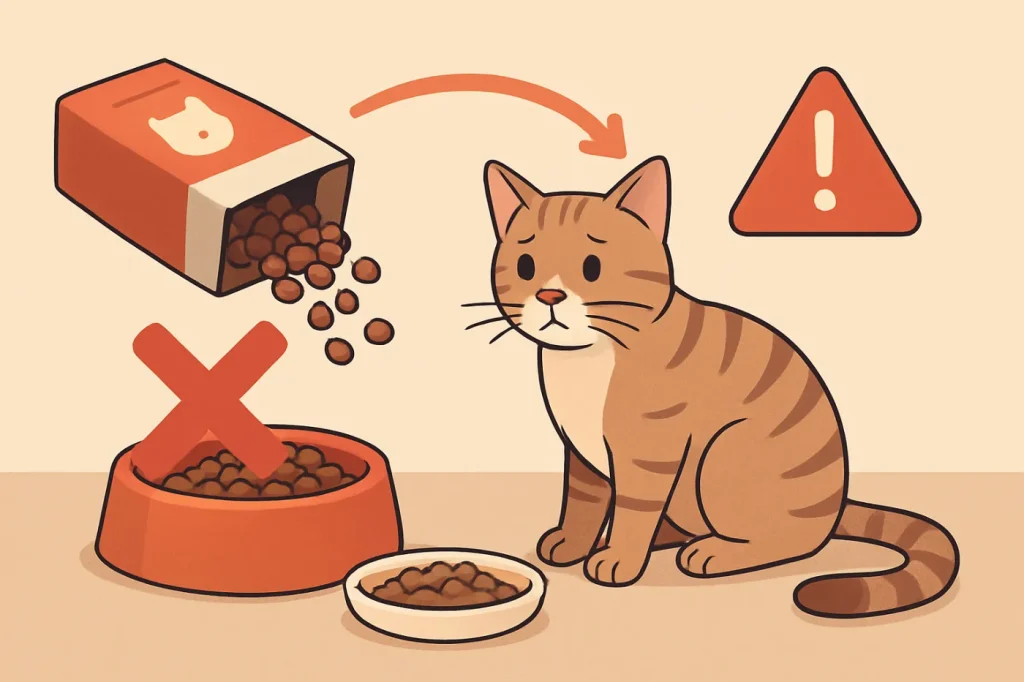
Feeding your cat well comes down to a few repeatable habits: choosing complete cat food that fits their age and health, giving the right amount, and sticking to a calm, consistent routine. Most problems—obesity, picky eating, tummy upsets—come from a small set of feeding mistakes you can spot and fix quickly.
This guide explains the most important cat feeding mistakes to avoid, how to check your current routine, and what to change first so your cat stays healthy and lean.
Key things to understand about cat feeding mistakes
Before changing food or buying new brands, it helps to see the patterns behind most feeding errors. They usually fall into a few groups:
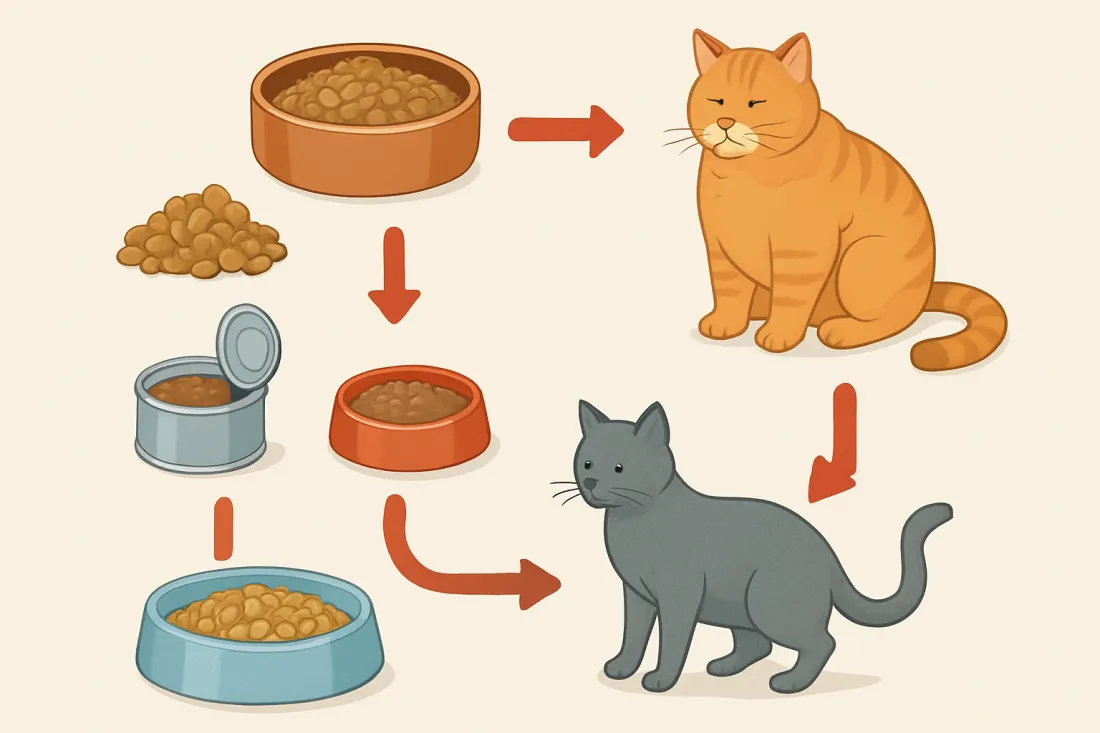
- Too many calories overall – big portions, constant refills, lots of treats, or mixing wet and dry without counting both.
- Unbalanced or unsuitable food – dog food, generic “pet food,” people food, or homemade diets that are not designed for cats.
- Ignoring age and health needs – feeding kittens, adults, and seniors the same way, or not adjusting when health issues appear.
- Stressful or chaotic routines – sudden food changes, irregular meal times, or feeding in noisy, tense spots.
If you focus on avoiding those patterns, you are already practicing responsible pet ownership and reducing the risk of diet-related illness.
Cat nutrition basics every owner should check
Cats are not small dogs or tiny humans. Their bodies are built for a very specific type of diet. When you choose food or change feeding routines, keep these foundations in mind.
Cats are obligate carnivores
Cats need nutrients that come from animal sources, including certain amino acids and fatty acids. Complete cat foods are formulated around animal proteins for this reason. Diets that are mostly plant-based, or that rely heavily on grains or vegetables, can leave important gaps unless they are carefully designed for cats.
Protein quality matters more than trendy labels
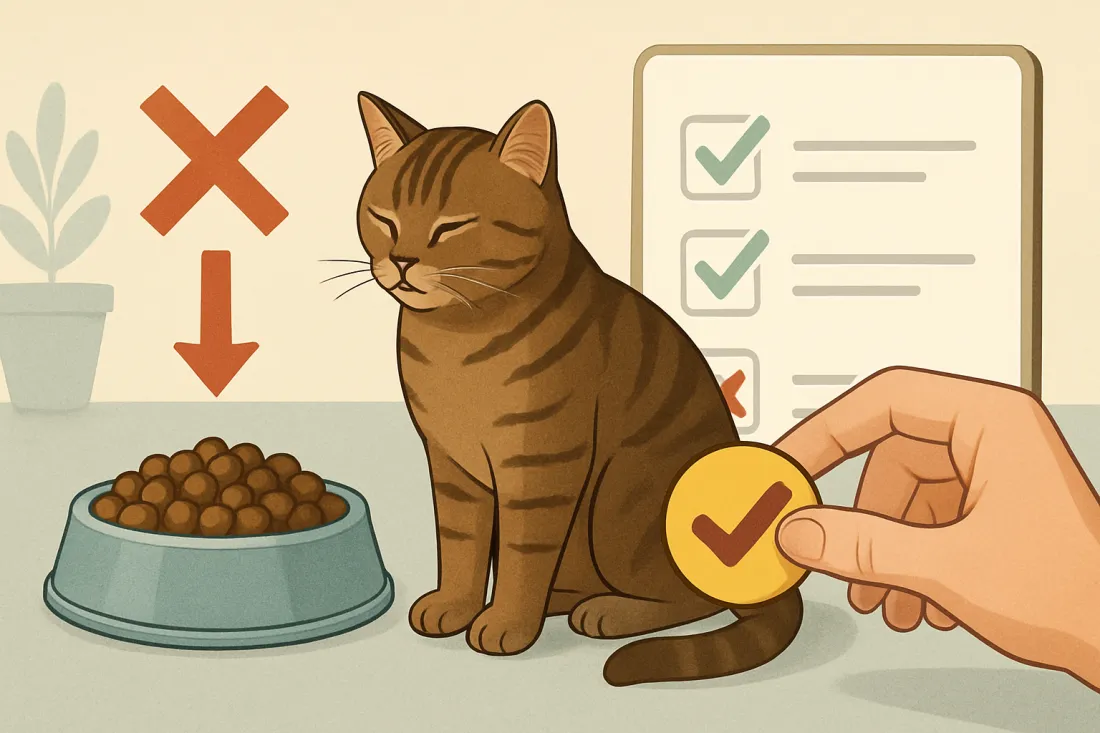
Marketing words like “gourmet,” “premium,” or “natural” are less important than the actual ingredients and balance. Look for foods where a named animal protein (such as chicken, turkey, salmon) appears high in the ingredient list, and that are labeled as complete and balanced for your cat’s life stage.
Cats often have a low thirst drive
Many cats do not drink much water on their own. That is one reason wet food can be helpful: it adds moisture to their diet. Dry food can still be part of a healthy plan, but you may need to encourage extra water intake with multiple bowls, fountains, or a mix of wet and dry food if your veterinarian agrees.
Portion size is as important as food choice
Even a high-quality food can lead to weight gain if the portions are too large. Use the feeding guide on the package as a starting point, then adjust based on your cat’s body condition and your veterinarian’s advice. Many indoor cats need less than the maximum suggested amount, especially if they are not very active.
Sudden changes can upset the stomach
Switching foods abruptly can cause vomiting or diarrhea. When you change food, mix the new food with the old over several days, gradually increasing the new food’s share. If your cat has a sensitive stomach or medical condition, ask your vet for a safe transition plan.
Age-specific feeding guidelines for kittens, adults, and seniors
Feeding needs change as cats grow and age. Using the same food and portions from kittenhood through old age is a common mistake that can lead to weight or health problems.
Feeding kittens (up to about 12 months)
- Use kitten-specific formulas labeled for growth or all life stages. Kittens need more calories and certain nutrients to support rapid growth.
- Offer multiple small meals throughout the day. Their stomachs are small, and they burn energy quickly.
- Avoid strict calorie restriction unless your vet tells you to. Growing kittens need enough energy, but still avoid bottomless bowls that teach them to overeat.
- Introduce variety slowly (different textures and proteins) so they do not become overly picky later, but keep changes gradual.
Feeding adult cats (about 1–7 years)
- Switch to adult maintenance food when your vet confirms your cat is fully grown.
- Measure portions with a scoop or kitchen scale instead of guessing. Adjust based on your cat’s body condition, not just the label.
- Set a routine of two or more meals per day, or carefully managed timed feeding if you use an automatic feeder.
- Watch body shape – you should be able to feel ribs under a thin layer of fat, and see a slight waist from above.
Feeding senior cats (around 7+ years)
- Ask your vet about senior formulas or special diets if your cat has kidney, joint, or digestive issues.
- Monitor weight changes closely. Both weight gain and unexplained weight loss can signal health problems.
- Consider easier-to-eat textures if your cat has dental issues—wet food, softened kibble, or smaller kibble shapes.
- Schedule regular checkups so diet can be adjusted if bloodwork shows changes in organ function.
Common cat feeding mistakes and better alternatives
Below are frequent errors that lead to obesity, digestive problems, or behavior issues, plus practical alternatives you can start using today.
1. Free-feeding dry food all day
Problem: Leaving a full bowl of dry food out all the time makes it easy for many cats to overeat, especially indoor cats with limited activity.
Better approach: Offer measured portions at set meal times. If you like the convenience of free-feeding, use a measured daily amount and do not refill until the next day, or use a timed feeder with pre-portioned meals.
2. Guessing portions instead of measuring
Problem: “A scoop” or “a bowlful” can quietly creep up over time, adding extra calories.
Better approach: Use a measuring cup or kitchen scale. Start with the package guideline for your cat’s weight and activity level, then adjust every few weeks based on body condition and your vet’s input.
3. Overusing treats and table scraps
Problem: Treats and human food can add up quickly, sometimes matching or exceeding the calories from regular meals. Some human foods are also unsafe for cats.
Better approach: Keep treats to a small part of the daily intake. Choose cat-specific treats or use a portion of their regular food as rewards. Avoid feeding from the table to prevent begging and accidental exposure to harmful foods.
4. Feeding dog food or generic “pet food”
Problem: Dog food is not designed for cats and may lack key nutrients cats need. Generic “pet food” that is not clearly labeled for cats may not meet feline requirements.
Better approach: Always use food formulated specifically for cats and labeled as complete and balanced for your cat’s life stage.
5. Making sudden food changes
Problem: Switching brands or types overnight can cause vomiting, diarrhea, or refusal to eat.
Better approach: Transition slowly over several days. Mix a small amount of the new food into the old, then gradually increase the new food’s share. If your cat has a medical condition, ask your vet for a tailored plan.
6. Relying on homemade or raw diets without expert guidance
Problem: It is easy to miss essential nutrients or create imbalances when preparing food at home. Raw diets can also carry bacteria risks if not handled carefully.
Better approach: If you are interested in homemade or raw feeding, work with a veterinarian or a qualified pet nutrition professional to design a safe, balanced plan. Do not improvise recipes from random sources without expert review.
7. Ignoring your cat’s body condition
Problem: Many owners do not realize their cat is overweight until it is significant. Extra weight can strain joints and organs.
Better approach: Regularly feel your cat’s ribs and look at their waistline. If you are unsure what a healthy body shape looks like, ask your vet to show you using a body condition scoring chart and explain what to watch for at home.
8. Feeding in stressful or inconvenient locations
Problem: Bowls placed near loud appliances, busy hallways, or litter boxes can make some cats anxious or reluctant to eat.
Better approach: Place food and water in quiet, low-traffic areas away from litter boxes. Multi-cat homes may need separate feeding spots to reduce tension.
9. Letting one cat steal another’s food
Problem: In multi-cat households, a confident or greedy cat may eat more than their share, while a shy cat gets too little.
Better approach: Feed cats in separate areas or rooms, or use microchip-activated bowls that only open for the assigned cat. Monitor mealtimes until you are sure everyone is getting their portion.
10. Using food only as entertainment without structure
Problem: Constantly offering snacks or leaving puzzle feeders full all day can blur the line between meals and play, leading to overeating.
Better approach: Combine structure and enrichment. Offer measured meals, and use part of the daily ration in puzzle toys or for training sessions. If you are also working on behavior issues, you may find guidance similar to cat training mistakes to avoid helpful for building consistent routines.
How to read cat food labels and avoid marketing traps
Pet food packaging can be confusing, but a few key checks make it much easier to choose wisely and avoid common cat nutrition and feeding errors.
Check for “complete and balanced” and life stage
Look for wording that the food is complete and balanced for your cat’s life stage (kitten, adult, all life stages, or senior if specified). This means it is designed to provide essential nutrients when fed as the main diet.
Scan the primary protein source
Read the ingredient list. A named animal protein (such as chicken, turkey, salmon) near the top usually indicates that meat is a major component. If you prefer more transparency, be cautious with vague terms like “meat by-products” without a named source.
Use the feeding guide as a starting point only
The feeding chart on the package is based on general assumptions about weight and activity. Use it to estimate a starting portion, then adjust based on your cat’s body condition, lifestyle, and any vet recommendations.
Compare moisture and calorie density
Wet food and dry food differ in water content and calories per cup or can. When comparing options, look at the calories per serving listed on the package. This helps you avoid accidentally doubling your cat’s daily intake when switching between types.
Be skeptical of buzzwords
Words like “grain-free,” “natural,” or “gourmet” do not automatically mean healthier. Focus on whether the food is complete and balanced, suits your cat’s age and health, and fits your vet’s guidance.
Comparison table: common feeding choices and when they fit
| Feeding choice | When it can work | Main risks or downsides | What to check or adjust |
|---|---|---|---|
| Free-feeding dry food | Cats that self-regulate well, very active cats, or short periods when strict schedules are hard | Overeating, weight gain, hard to track intake if cat becomes ill | Measure a daily amount, do not refill endlessly, monitor body condition regularly |
| Scheduled meals with measured portions | Most indoor cats, weight management, multi-cat homes where intake must be monitored | Requires owner consistency; some cats may beg between meals at first | Use a measuring cup or scale, adjust portions every few weeks based on body condition |
| Wet food only | Cats needing more moisture, cats with some urinary or dental considerations if vet agrees | May be more expensive; open cans need refrigeration; some cats eat too fast | Check calories per can, divide into several small meals, store leftovers safely |
| Mix of wet and dry food | Owners wanting moisture plus convenience; cats that enjoy variety | Easy to overfeed if you count each as a full meal | Estimate total daily calories from both types, then split into portions |
| Homemade or raw diets | Owners willing to follow professional recipes and food safety steps | Nutrient imbalances, food safety risks if not designed and handled correctly | Work with a vet or nutrition specialist, follow tested recipes, review diet regularly |
Structured checklist: audit your cat’s feeding routine
Use this practical checklist to spot and correct cat feeding mistakes. Go through it step by step and mark any item you answer “no” to—those are your action points.
Step 1: Food type and life stage fit
- My cat’s main food is specifically formulated for cats (not dogs or generic pets).
- The label says “complete and balanced” for my cat’s life stage (kitten, adult, senior, or all life stages).
- If my cat has a medical condition, I have confirmed the diet choice with a veterinarian.
Step 2: Portions and schedule
- I use a measuring cup or scale to portion food instead of guessing.
- I started with the package feeding guide and adjusted based on my cat’s body condition and vet advice.
- My cat has a consistent feeding routine (for example, two or more set meal times each day).
- If I free-feed, I still measure a daily amount and do not refill endlessly.
Step 3: Treats and extras
- Treats and snacks are a small part of my cat’s daily intake, not a second full meal.
- I avoid feeding random table scraps or unsafe human foods.
- If I use food for training or enrichment, I subtract that amount from the day’s total ration.
Step 4: Environment and multi-cat dynamics
- Food and water bowls are in quiet, low-stress areas away from litter boxes.
- In multi-cat homes, each cat can eat without being pushed away or bullied.
- I can tell how much each cat is eating over a day or two.
Step 5: Body condition and health monitoring
- I can feel my cat’s ribs under a thin layer of fat (not buried, not sharp).
- My cat has a visible waist when viewed from above and a slight tummy tuck from the side.
- I weigh my cat periodically or have the vet do it and track changes over time.
- Any sudden change in appetite, weight, or litter box habits leads me to contact my vet.
Step 6: Changes and transitions
- When I change foods, I mix the new and old over several days instead of switching overnight.
- I plan diet changes around vet visits or check-ins, especially for senior cats.
- If I am considering a homemade or raw diet, I am prepared to involve a professional to design it.
Even a few small adjustments from this checklist can reduce the risk of obesity and diet-related illness and support your cat’s long-term health.
Feeding mistakes, limits of DIY fixes, and when to call the vet
Not every feeding mistake is an emergency, but some signs mean you should stop experimenting and get professional help.
When home adjustments are usually enough
It is often reasonable to adjust food type or portions at home when:
- Your cat is slightly overweight but otherwise acting normal.
- Your vet has already confirmed your cat is healthy and suggested weight control.
- You are simply moving from free-feeding to scheduled meals or from one complete commercial food to another.
When to involve your veterinarian promptly
Contact your vet if you notice any of these while changing food or adjusting portions:
- Rapid weight loss or gain over a short period.
- Persistent vomiting or diarrhea.
- Refusal to eat for more than a day, or a sudden drop in appetite.
- Increased thirst or urination, especially in older cats.
- Noticeable changes in energy level or behavior.
Feeding is only one part of responsible pet ownership, but it is a powerful one. If you are also planning long-term around housing, finances, and behavior, resources like how to avoid having to give up my pet can help you think through the bigger picture of caring for your cat.
FAQ about cat feeding mistakes to avoid
What should I understand first about cat feeding mistakes to avoid?
The most important point is that many feeding mistakes are about patterns, not single meals. Constant access to food, unmeasured portions, and lots of extras can quietly push your cat into obesity. At the same time, using food that is not complete and balanced for cats can create nutrient gaps. If you focus on three checks—complete cat food, measured portions, and a calm routine that fits your cat’s age—you will avoid most serious cat nutrition and feeding errors.
Which specific cat feeding mistakes should I avoid right away?
Start by avoiding a few high-impact mistakes: refilling a dry food bowl all day without measuring, giving frequent table scraps or large numbers of treats, switching foods overnight, and using dog food or generic pet food as a main diet. Replacing those habits with measured meals of complete cat food, gradual transitions, and limited treats will already make a noticeable difference to your cat’s weight and comfort.
What should I do next after learning about these cat feeding mistakes?
Take one day to observe and write down what your cat actually eats—meals, treats, and any extras. Compare that with the feeding guide on your current food and your cat’s body condition. Then pick one or two realistic changes, such as measuring portions or cutting treat amounts, and keep them consistent for several weeks. At your next vet visit, bring your notes so you can fine-tune the plan together and adjust for your cat’s age, health, and lifestyle.
Is it a mistake to change my cat’s food brand just for variety?
Changing brands occasionally is not automatically a mistake, but doing it suddenly or very often can upset your cat’s stomach or create picky eating. If you want variety, choose a small set of complete and balanced foods that your vet approves, and rotate them slowly. Always transition by mixing the new food with the old over several days so your cat’s digestion can adapt.
How do I balance feeding mistakes with other behavior or training issues?
Food routines and behavior are closely linked. Irregular feeding, constant snacks, or using food only to stop unwanted behavior can create confusion and stress. Once you have a stable feeding schedule and measured portions, it becomes easier to use food thoughtfully for training and enrichment. If you are also working on behavior challenges, you may find it useful to read about cat training mistakes to avoid so your feeding and training habits support each other instead of clashing.