
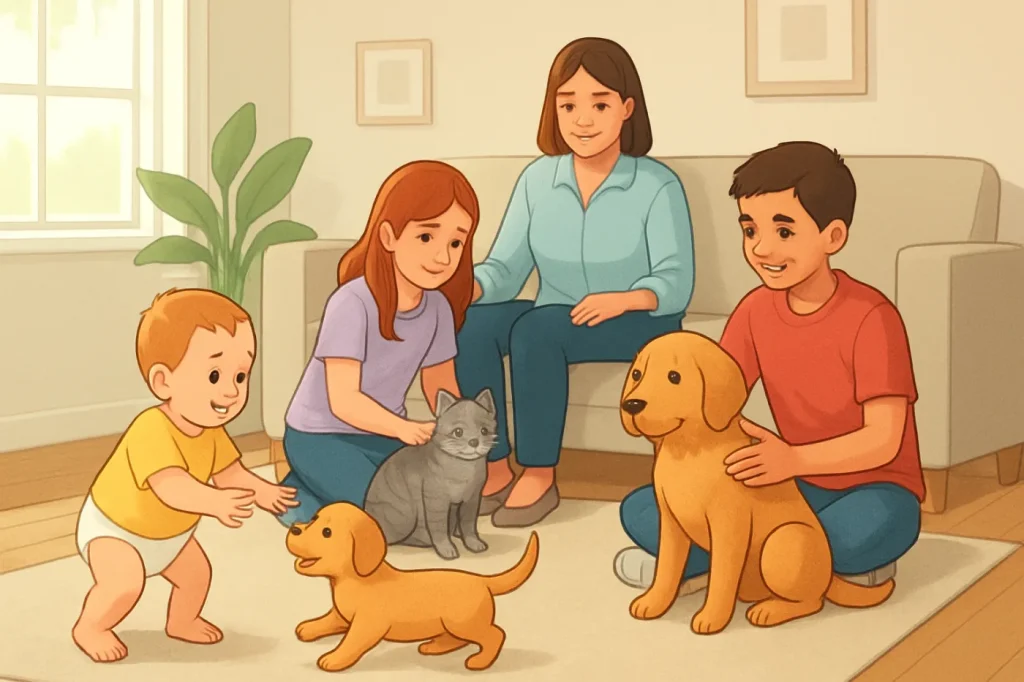
Choosing a pet based on children’s ages is less about finding a “kid-proof” animal and more about matching three things: your child’s stage of development, the pet’s needs, and your family’s capacity to supervise and care for that animal. When those three line up, pets can be wonderful for kids; when they do not, everyone ends up stressed and unsafe.
How your child’s age should shape your pet choice
Before looking at specific animals, it helps to understand what typically changes as kids grow:
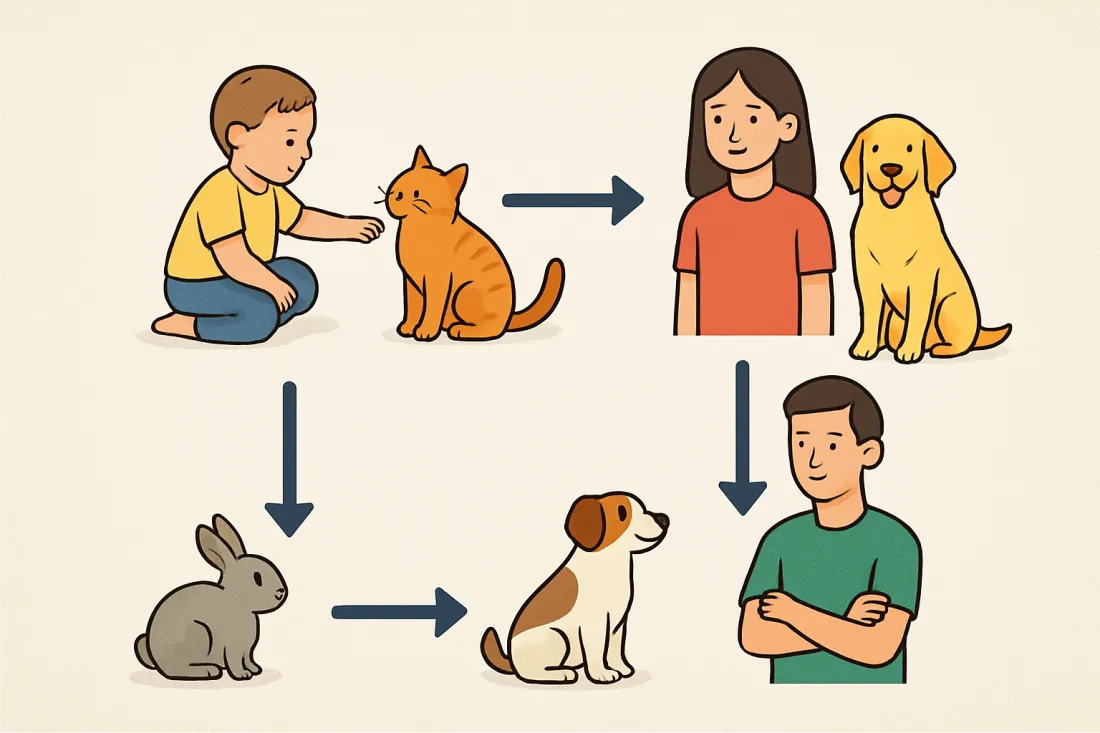
- Toddlers (about 1–3 years): Curious, unsteady, impulsive. They grab, squeeze, and chase. They cannot reliably follow rules or handle a pet gently without close adult help.
- Preschool and early school-age (about 4–7 years): Can learn simple rules and routines but still forget and get overexcited. They can help with small tasks under supervision.
- Older school-age (about 8–12 years): Better self-control and empathy. They can participate in daily care, but adults still hold final responsibility.
- Teens (about 13+ years): Can do most hands-on care and training, but their schedules and interests change quickly. Parents still need a backup plan.
Matching a pet to your child’s age means asking:
- Can my child interact safely with this animal right now?
- How much supervision will this pet need around kids?
- Who will really do the daily care when the novelty wears off?
Age group breakdown: what to expect from kids at each stage
Every child is different, but age stages give useful guardrails when choosing a pet.
Toddlers (1–3 years)
- Typical behavior: Grabbing, poking, hugging too tightly, chasing, loud squeals, sudden movements.
- Understanding of rules: Very limited. They may repeat “gentle” but forget a second later.
- Risk level with pets: High. Toddlers can easily hurt small animals and trigger defensive bites or scratches from larger ones.
- Realistic role: Observer and helper (“Can you watch while I pour the food?”), not caregiver.
Preschool and early school-age (4–7 years)
- Typical behavior: More coordinated, still excitable. They love to play and “help.”
- Understanding of rules: Can follow simple, repeated rules like “no touching the pet while it eats” with reminders.
- Risk level with pets: Moderate. They can be gentle but may misread animal signals or push boundaries.
- Realistic role: Helper with feeding, brushing, and play under adult supervision.
Older school-age (8–12 years)
- Typical behavior: More patient and coordinated, able to learn basic training skills.
- Understanding of rules: Can understand cause and effect (“If I pull the tail, the cat might scratch”).
- Risk level with pets: Lower with proper guidance, though rough play and forgetfulness can still cause problems.
- Realistic role: Active partner in care—feeding, cleaning, walking, basic training—with adult oversight.
Teens (13+ years)
- Typical behavior: Capable of complex tasks, but busy with school, friends, and activities.
- Understanding of rules: Can manage training plans and understand long-term responsibility.
- Risk level with pets: Generally low if they respect boundaries and follow safety rules.
- Realistic role: Primary day-to-day caregiver in many homes, with parents as backup.
Recommended pets by age stage with pros and cautions
There is no single “best” pet for each age, but some options tend to fit better with typical behavior and supervision needs.
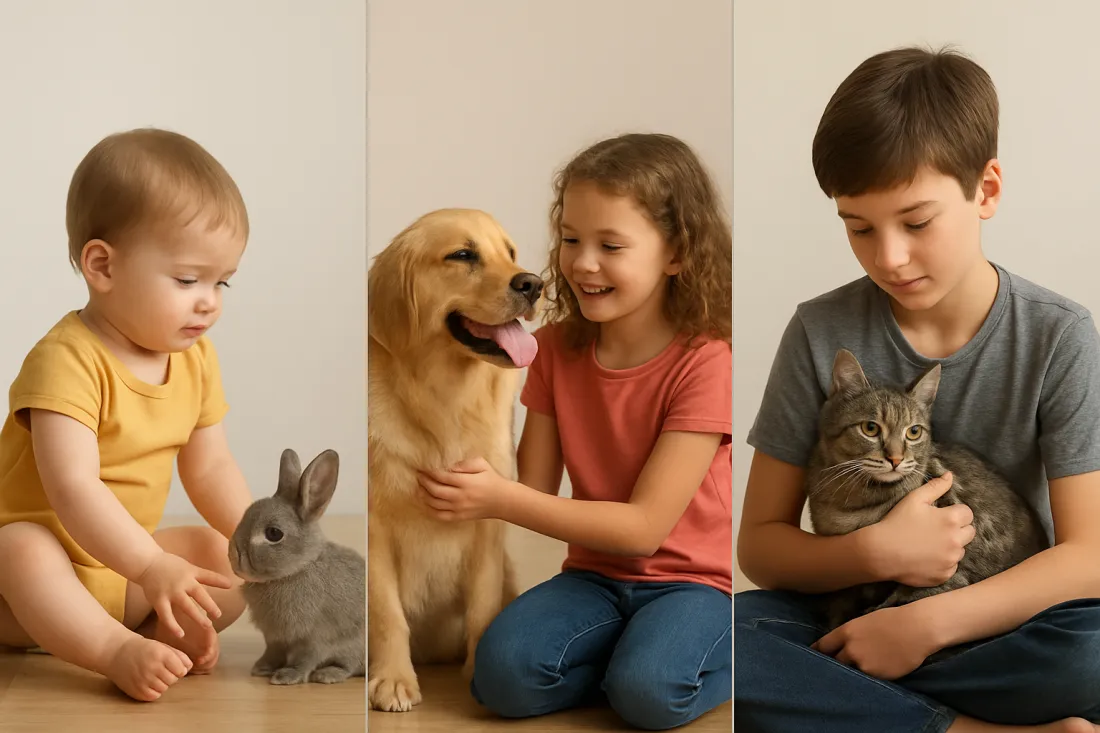
Comparison table: child age vs. suitable pet types
| Child age stage | Generally suitable pet types | When they work well | Key cautions |
|---|---|---|---|
| Toddlers (1–3) | Calm adult dog, calm adult cat, fish, caged pets kept mostly out of reach | Parents want a family pet and are ready to supervise every interaction | No unsupervised contact; avoid very fragile or high-energy animals |
| Preschool / early school-age (4–7) | Steady adult dog, tolerant adult cat, small mammals (with strict supervision), fish | Child can follow basic rules and enjoys helping with simple tasks | Children must not carry or squeeze small pets; adults handle most care |
| Older school-age (8–12) | Family-friendly dog breeds or mixes, cats, some small mammals, some beginner reptiles or birds | Family is ready to involve child in daily care and training | Parents remain ultimate caregivers; research species needs carefully |
| Teens (13+) | Most common pets: dogs, cats, small mammals, some birds or reptiles | Teen is motivated and has time for training and care | Plan for who cares for the pet when the teen is busy or moves out |
Pets for families with toddlers (1–3 years)
With toddlers, the safest mindset is: the pet is your responsibility, and your toddler is a supervised guest in the pet’s space.
- Often suitable
- Calm adult dog with a known history around children, if you can supervise closely and manage training.
- Calm adult cat that tolerates noise and has safe high places to retreat.
- Fish (for example, a simple freshwater setup) as a “look but do not touch” pet.
- Caged pets (like some small mammals) that live out of reach, with adults handling most direct contact.
- Often poor fits
- Very small, fragile animals (tiny rodents, delicate reptiles) that can be easily injured by clumsy hands.
- High-energy, jumpy dogs that may knock toddlers over or react badly to sudden movements.
- Pets that require quiet and predictability, such as some birds or nervous cats, in a very chaotic home.
Pets for preschool and early school-age kids (4–7 years)
At this age, kids can start to be gentle helpers, but they still need firm boundaries.
- Often suitable
- Steady adult dog that enjoys calm play and walks, with adults managing training and rules.
- Friendly adult cat that likes interaction but has safe hideaways.
- Small mammals (such as some guinea pigs or rabbits) if adults control handling and teach gentle touch.
- Fish as a low-contact way to learn daily routines.
- Often poor fits
- Pets that dislike handling or are easily stressed, if the child expects to cuddle and carry them.
- Very strong or untrained dogs that can pull a child over or knock them down.
- Complex exotics that need precise temperature, humidity, or specialized diets beyond what adults can reliably manage.
Pets for older school-age kids (8–12 years)
Older kids can participate in real responsibility, but adults still need to oversee and step in when needed.
- Often suitable
- Family-friendly dogs (mixed or purebred) chosen for temperament, not just looks.
- Cats that enjoy play and affection.
- Small mammals where the child helps with feeding and cleaning under guidance.
- Beginner reptiles or birds if adults are committed to learning and managing their specific needs.
- Often poor fits
- High-intensity working or guarding dogs in families that cannot provide training and structured exercise.
- Large animals (like horses) without proper adult experience and safety measures.
- Any pet acquired “for the child” without a clear adult backup plan.
Pets for teens (13+ years)
Teens can be excellent pet partners, but their lives change quickly.
- Often suitable
- Dogs for teens interested in training, sports, or regular exercise.
- Cats for teens who want companionship with moderate daily care.
- Small mammals, birds, or reptiles when the teen is genuinely interested in the species and adults are willing to support.
- Key questions before saying yes
- Will the pet still fit our household when the teen is busy, away at college, or moves out?
- Are parents prepared to become the primary caregivers if needed?
- Is the teen choosing a pet for status or social media, rather than a long-term bond?
Safety considerations by age: preventing bites, scratches, and stress
Safety is the non-negotiable part of choosing a pet based on children’s ages. Many pet-related injuries happen when a child and animal are unsupervised or when a child does not understand the animal’s signals.
Non-negotiable safety rules for all ages
- No unsupervised time between young children and pets, especially dogs and small mammals.
- No disturbing pets while they are eating, sleeping, or using the litter box or crate.
- No riding, hugging tightly, or pulling tails/ears, even if the pet “seems fine.”
- Teach kids to spot stress signals like growling, hissing, stiff body, tail flicking, or hiding, and to back away calmly.
- Give every pet a safe zone (crate, bed, perch, or room) where children are not allowed to follow.
Extra safety focus for toddlers and preschoolers
- Use physical barriers (baby gates, playpens) to separate pets and kids when you cannot watch closely.
- Keep small pets’ cages out of reach; adults handle opening, feeding, and cleaning.
- Teach a simple rule: “Ask an adult before touching the pet.”
- Show them how to offer a flat hand for sniffing instead of grabbing.
Safety focus for older kids and teens
- Teach responsible play: no chasing, cornering, or rough wrestling with pets.
- Explain leash and door safety for dogs so they do not bolt into the street.
- Discuss online trends that may be unsafe for pets (stunts, pranks, or costumes that cause stress).
- Make sure they know when to ask an adult—for example, if a pet stops eating, hides constantly, or shows new aggression.
Training and care needs by age group
Training is not just for dogs. Every pet needs some level of routine, handling, and socialization. The key is matching those needs to what your family can realistically provide at your child’s current age.
With toddlers: adults do almost everything
- Dogs: Adults handle all training, walks, and management. Focus on basic manners, calm behavior around kids, and creating safe zones.
- Cats: Adults manage litter, feeding, and gentle handling. Encourage positive associations with kids using treats and quiet play.
- Small pets: Adults do feeding, cage cleaning, and handling. Toddlers can watch and “help” with simple, low-risk tasks.
With preschool/early school-age kids: supervised helpers
- Let kids measure food with pre-marked scoops while you watch.
- Involve them in short training games with dogs (sit, stay, touch) under adult guidance.
- Teach gentle brushing and supervised play sessions with cats or small mammals.
- Keep all complex or risky tasks (like nail trims or cage deep-cleaning) as adult jobs.
With older school-age kids: shared responsibility
- Assign specific daily tasks (morning feeding, evening walk, water check) and check that they are done.
- Let kids lead simple training sessions with guidance, such as leash walking or basic tricks.
- Involve them in vet visits so they see the full picture of pet care.
- Use visual charts or reminders to track responsibilities.
With teens: primary caretakers, with adult backup
- Teens can manage most daily care, training plans, and enrichment activities.
- Parents should still monitor health and welfare, schedule vet care, and step in when life gets busy.
- Discuss long-term plans for the pet’s care if the teen moves out or changes routines.
Parent–child responsibility chart for common pet tasks
Even if a pet is “for the kids,” adults remain legally and ethically responsible. This chart shows who should lead on typical tasks at each age stage.
| Task | Toddlers (1–3) | Preschool / early school-age (4–7) | Older school-age (8–12) | Teens (13+) |
|---|---|---|---|---|
| Feeding | Parent measures and serves; toddler may watch | Parent measures; child may pour under supervision | Child can feed daily; parent checks portions and routine | Teen can manage feeding; parent monitors overall health |
| Water | Parent only | Child can refill with help; parent checks | Child responsible; parent spot-checks | Teen responsible; parent steps in if neglected |
| Walking dogs | Parent only | Parent walks; child may come along holding a second leash or handle if safe | Child can walk calm dogs with adult nearby | Teen can walk independently; parent reviews safety rules |
| Litter box / cage cleaning | Parent only | Parent cleans; child may help with simple tasks like adding bedding | Shared: child does routine cleaning; parent handles deep cleans | Teen can manage; parent checks for consistency and hygiene |
| Training and socialization | Parent leads; toddler present only for short, calm moments | Parent leads; child helps with simple cues | Shared: child practices skills; parent sets plan | Teen can lead; parent supports and sets limits |
| Health care decisions | Parent only | Parent only (child may attend vet visits) | Parent decides; child informed and involved | Parent decides; teen participates in discussions |
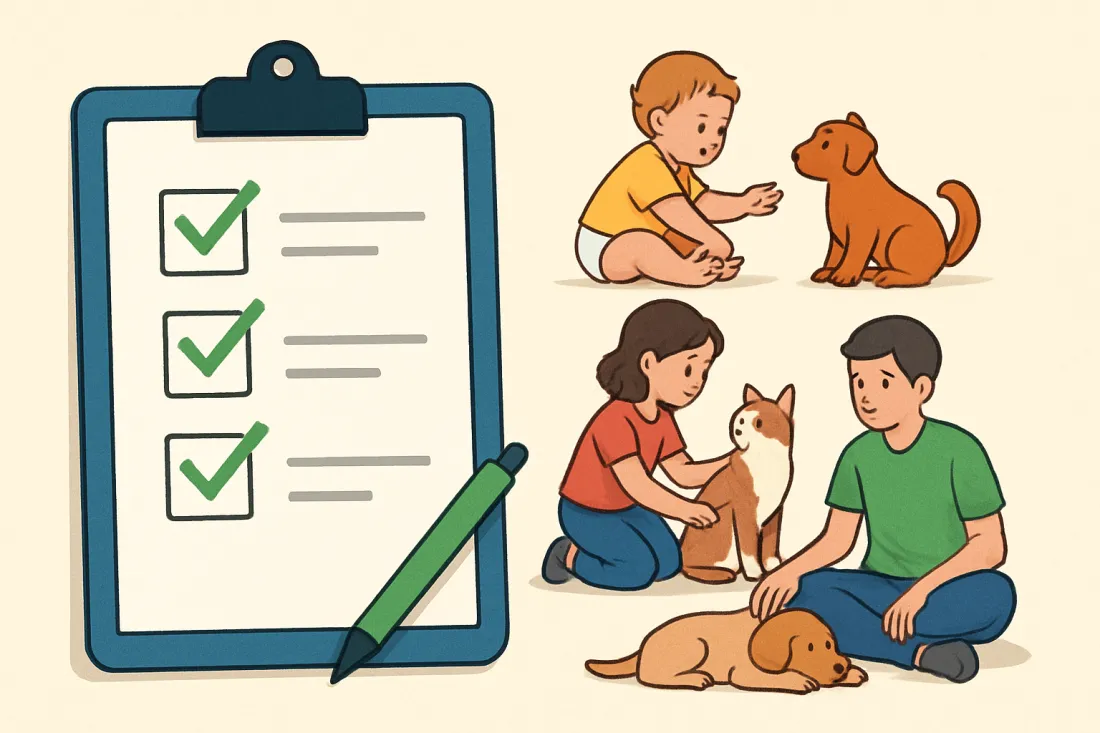
Step-by-step checklist for choosing a pet based on your children’s ages
Use this structured checklist before committing to any pet.
- List your children’s ages and typical behavior
- Write down each child’s age and note key traits: fearful, rough, calm, very active, sensory-sensitive, and so on.
- Ask yourself honestly: Can they follow rules now, or do they need constant reminders?
- Decide who the pet is really for
- Is this primarily a family pet or a “for the child” pet?
- Confirm that an adult is willing to be the primary caregiver for the pet’s entire life.
- Match pet types to your youngest child’s stage
- Use the age-stage guidance above and choose pets that are safe for the youngest child, not just the oldest.
- If you have a toddler, plan for strict supervision and barriers with any pet.
- Check your family’s daily schedule
- Estimate how much time adults can realistically give to walks, play, cleaning, and training.
- If your schedule is already stretched, consider lower-maintenance pets or wait.
- Consider long-term commitment
- Many pets live for several years or more. Picture your kids’ ages and life changes over that time.
- Ask: Will this pet still fit when my toddler is in school or my teen is in college?
- Research species and temperament, not just breed names
- Look for calm, people-friendly temperaments rather than focusing only on “kid-friendly” breed labels.
- For dogs and cats, meet the individual animal and ask about its behavior around children.
- Plan safety and space
- Decide where the pet’s safe zone will be (crate, room, perch, or enclosure).
- Plan how you will separate kids and pets when needed (gates, doors, supervision rules).
- Talk through responsibilities with your child
- Explain what daily care looks like in age-appropriate terms.
- Agree on one or two specific tasks your child will help with, and how you will remind and support them.
- Check financial and time commitments
- Consider ongoing costs like food, supplies, and vet care. For more detail, see guidance on pet costs for families with children.
- Make sure these commitments fit your budget and lifestyle before adopting.
- Choose a safe, responsible source
- For dogs and cats, learn about pet adoption requirements for families with children so you know what to expect.
- Avoid impulse purchases; take time to ask questions and meet the animal more than once when possible.
Common mistakes when choosing a pet based on children’s ages
Avoiding a few frequent errors can prevent stress, injuries, and rehoming later.
1. Choosing a pet “for the child” instead of for the family
Children’s interests change quickly. A pet that depends on a child who loses interest is at risk of neglect. Adults must be prepared to take over fully if needed.
2. Ignoring the youngest child’s needs
Families sometimes pick a pet that suits an older child or teen but is unsafe around a toddler or preschooler. Always choose with the youngest child’s safety and behavior in mind.
3. Assuming certain breeds or species are automatically “kid-safe”
Labels like “good with kids” can be misleading. Individual temperament, training, and history matter more than breed or species reputation. Meet the animal, ask detailed questions, and watch how it responds to gentle, supervised interaction.
4. Underestimating supervision needs
Even calm pets can react if they are hurt or scared. Leaving young children alone with any pet, including small mammals, can lead to bites, scratches, or injuries to the animal.
5. Overloading kids with responsibility
Expecting a 7-year-old to remember every feeding or a teen to manage all vet care is unrealistic. Kids can help and learn, but adults must quietly verify that care is actually happening.
6. Choosing high-maintenance pets for busy families
Some pets need complex environments, frequent cleaning, or long daily exercise sessions. If your family already struggles to find time together, a demanding pet can quickly feel like a burden.
7. Skipping training and socialization
Untrained dogs, under-socialized cats, and poorly handled small pets are more likely to be stressed or reactive around children. Early, positive training and gentle handling are investments in long-term safety.
What to do next once you have matched pets to your children’s ages
After you have a sense of which pets might fit your family, turn that idea into a concrete plan.
- Talk as a family about what everyone expects from a pet and what they are willing to do.
- Visit shelters or reputable sources to meet real animals rather than choosing only from photos.
- Ask detailed questions about each animal’s behavior, energy level, and experience with children. If you are considering a shelter dog and have young kids, it can help to read guidance on how to safely adopt a shelter dog with young children.
- Set house rules for kids and pets before the animal comes home (where the pet can go, how to touch, when to leave it alone).
- Learn how to introduce a new dog to children or adapt similar steps for cats and other pets so the first days go smoothly.
FAQ: Choosing a pet based on children’s ages
What is the most important thing to understand about choosing a pet based on children’s ages?
The key is that your child’s age determines supervision and safety needs, not whether you can have a pet at all. Toddlers and preschoolers can live happily with pets, but adults must control all interactions and care. As kids get older, they can safely take on more responsibility, but adults never hand over full responsibility. Matching pet type and temperament to your youngest child’s stage, and planning for close supervision, is more important than finding a “kid-proof” animal.
Are there pets that are always safe for young children?
No pet is completely risk-free. Even small animals can bite if they are squeezed or startled, and even gentle dogs can react if they are hurt. Some pets, like calm adult dogs or cats with a history of living with children, may be easier to manage, but safety still depends on adult supervision, clear rules, and teaching kids how to behave around animals. Treat every pet as an individual and plan for careful introductions and ongoing supervision.
What common mistakes should parents avoid when picking a pet for kids of different ages?
Parents often focus on what the child wants right now instead of what the family can support long-term. Mistakes include choosing a pet only for an older child while ignoring a toddler’s safety, assuming certain breeds are automatically “kid-safe,” expecting children to handle all daily care, and choosing high-maintenance pets for already busy households. Avoiding these mistakes means being honest about your youngest child’s behavior, your schedule, and who will truly care for the pet over its lifetime.
How can I tell if my child is ready to help care for a pet?
Look at how your child handles existing responsibilities. If they can reliably complete age-appropriate tasks—like brushing teeth, homework, or simple chores—with minimal reminders, they are more likely to follow through on pet-related tasks. Start by assigning one small, specific job (such as refilling water daily) and supervise closely. If they forget often or rush, keep the task as a learning experience rather than relying on it for the pet’s well-being.
What should we do next after learning about age-appropriate pets?
Next, apply the guidance to your own family. Write down your children’s ages and typical behavior, decide who the pet is really for, and use the checklist above to narrow down suitable pet types. Then research specific species and individual animals, visit potential pets in person, and plan your home setup and safety rules. Taking these steps before adopting helps you choose a pet that fits your children’s current ages and can stay with your family as they grow.
Conclusion: Matching pets to kids’ ages for a safer, happier home
Choosing a pet based on children’s ages is about balancing three things: your kids’ developmental stage, the pet’s needs, and your family’s capacity for supervision and care. Toddlers and preschoolers can enjoy calm, well-managed pets with close adult oversight; older kids can share real responsibilities; teens can become primary day-to-day caregivers as long as adults remain the safety net.
When you choose with your youngest child’s safety in mind, plan for training and supervision, and accept that adults hold final responsibility, pets are far more likely to become cherished family members instead of short-lived experiments. Use the checklist and charts above as a starting point, then take your time meeting individual animals until you find one whose temperament and needs truly fit your family.