How to puppy-proof your home so a new dog stays safe and your stuff survives
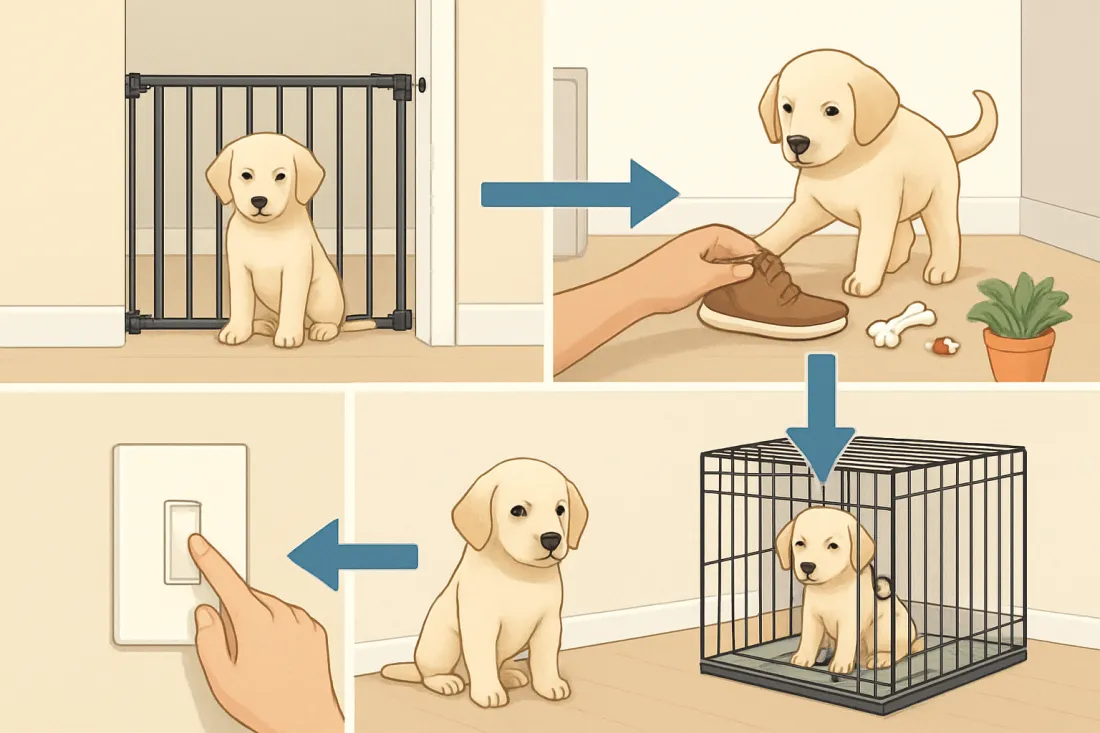
To pet proof a home for a new puppy, you need to do three things in a set order: 1. Limit where the puppy can go at first (gates, closed doors, crate or playpen). 2. Scan each allowed area from “puppy eye level” and remove or block anything chewable, swallowable, poisonous, or breakable. 3. Set a daily safety routine before you leave or go to bed so hazards do not creep back in. If you do this room by room—kitchen, living areas, bedrooms, bathroom, then yard or balcony—you dramatically cut the risk of vet emergencies, ruined furniture, and house‑training setbacks. This guide walks through a practical process for U.S. homes and rentals, with a comparison table, checklists, and a simple routine you can follow even when you are exhausted from puppy duty.
Why puppy-proofing matters for safety, training, and your sanity
Puppies explore the world with their mouths and paws. That curiosity is good for development but dangerous in a typical home. Thoughtful puppy-proofing supports three big goals of responsible pet ownership:
- Prevent injuries and poisoning – Common U.S. hazards include human medications, cleaning products, chocolate, xylitol sweetener, grapes and raisins, batteries, and electrical cords. Many emergencies happen in seconds when a puppy is unsupervised.
- Protect your home and belongings – Shoes, remote controls, rugs, baseboards, and furniture legs are prime chew targets. Blocking access and giving legal chew options saves money and stress.
- Make training easier – A controlled, safe space makes house‑training, crate training, and basic manners much smoother. Fewer temptations mean fewer chances for your puppy to rehearse bad habits.
You will also hear rules of thumb like the 3‑3‑3 rule and the 7‑7‑7 rule for puppies:
- 3‑3‑3 rule (common guideline) – Many trainers describe the first 3 days, 3 weeks, and 3 months as key adjustment periods. Expect your puppy to be overwhelmed at first, then start to settle, then really show their personality. Puppy-proofing reduces stress during each stage.
- 7‑7‑7 rule (another guideline) – Some training programs talk about exposure in sets of 7 (for example, different surfaces, sounds, or people) over time. A safe, controlled home base is what lets you add new experiences without overwhelming your puppy.
These are not strict scientific rules, but they are useful reminders: your puppy needs time, structure, and a safe environment more than anything else.
Room-by-room puppy-proofing checklist for kitchen, living room, bedroom, and bathroom
Use this section as a practical checklist. You do not need to do everything at once; focus first on the rooms your puppy will spend the most time in.
Kitchen: high‑risk zone for food and chemicals
The kitchen is one of the most dangerous rooms for a puppy because of food, trash, and cleaning supplies. Kitchen puppy-proofing checklist
- Use a lidded, heavy, or inside‑cabinet trash can so your puppy cannot tip it over or raid leftovers.
- Move toxic foods (chocolate, onions, garlic, grapes, raisins, alcohol, sugar‑free gum or candy with xylitol) into upper cabinets or the fridge.
- Store cleaning products (sprays, bleach, oven cleaner, dishwasher pods) in a cabinet with a child lock or out of reach.
- Keep plastic bags, food wrap, and foil in drawers or high cabinets to prevent suffocation or ingestion.
- Use stove knob covers or remove knobs if your puppy could jump and bump them.
- Do not leave hot pans, knives, or glassware near the counter edge.
- Block access to dishwasher and oven doors when open so your puppy cannot climb in or lick sharp utensils.
- Wipe up spills immediately, especially oil or sugary liquids that can attract licking and cause stomach upset.
If your kitchen is open‑plan, consider a baby gate or playpen to keep your puppy out except during supervised times.
Living room: cords, clutter, and chewable decor
Living rooms and family rooms are where puppies often roam and nap, so they need special attention. Living room puppy-proofing checklist
- Hide or cover electrical cords using cord covers, cable management boxes, or by routing them behind furniture.
- Secure TVs and heavy furniture to the wall to prevent tipping if a puppy jumps or pulls on them.
- Move remote controls, game controllers, and phones to high shelves when not in use; batteries and plastic pieces are dangerous if chewed.
- Pick up small items like coins, hair ties, Lego bricks, and jewelry that can be swallowed.
- Choose a sturdy, washable rug or use a cheap sacrificial rug during house‑training.
- Place houseplants out of reach, especially if you are not sure whether they are toxic to dogs.
- Use puppy gates to block stairs or rooms that are not yet safe.
- Provide a designated puppy zone with a bed, safe chew toys, and water so your dog has a clear “yes” area.
Bedroom: clothing, cords, and sleep setup
Bedrooms often become quiet retreat spaces for puppies, but they also contain tempting chew items. Bedroom puppy-proofing checklist
- Keep shoes, socks, and underwear in closets or drawers; many dogs love to swallow fabric, which can cause blockages.
- Use laundry baskets with lids so dirty clothes are not accessible.
- Secure or hide phone chargers and lamp cords near the bed.
- Remove pill bottles, cosmetics, and lotions from nightstands.
- Check under the bed for forgotten items like earplugs, tissues, or wrappers.
- Decide where the puppy will sleep at night (crate in bedroom, crate in another room, or playpen) and set it up before arrival.
- If you allow the puppy on the bed later, wait until house‑training is reliable and jumping up and down is safe for their joints.
Bathroom: trash, medications, and water hazards
Bathrooms contain many concentrated chemicals and small items. Bathroom puppy-proofing checklist
- Use a lidded trash can or keep it inside a cabinet; tissues, floss, and sanitary products are dangerous if swallowed.
- Store medications, vitamins, and supplements in a cabinet, not on the counter.
- Keep razors, blades, and tweezers out of reach.
- Close the toilet lid to prevent drinking or falling in.
- Store shampoos, soaps, and cleaners in closed cabinets.
- Hang towels and bath mats where they cannot be shredded or eaten.
If your home has a laundry room, treat it like a bathroom: secure detergents, pods, fabric softeners, and keep the washer and dryer doors closed.
Yard, balcony, and entryway safety for U.S. homes and rentals
Outdoor areas can be wonderful for puppies, but they add new risks. The goal is to create a secure, supervised space rather than a place where the puppy roams unsupervised.
Yard safety checks for houses and townhomes
Fence and escape routes
- Walk the entire fence line and look for gaps, loose boards, or spots where a small puppy could squeeze under.
- Check gates for secure latches; consider adding a secondary clip or lock if children or delivery people use the gate.
- Block off spaces under decks, sheds, or stairs where a puppy could crawl in and get stuck.
Plants, lawn, and chemicals
- Identify any thorny or potentially toxic plants and either fence them off or remove them.
- Store fertilizers, weed killers, and pesticides in a locked shed or high shelf; follow product labels about pet re‑entry times.
- Pick up sticks, rocks, and yard debris that a puppy might chew or swallow.
Other yard hazards
- Secure or cover pools, hot tubs, and ponds when not in use; puppies can tire quickly in water.
- Check for sharp objects like nails, wire, or broken glass, especially in older yards.
- Provide a shaded area and fresh water if your puppy will spend time outside in warm weather.
Balcony and patio safety for apartments and rentals
For many U.S. renters, the balcony or small patio is the main outdoor space.
- Inspect balcony railings for gaps; if a puppy’s head or body can fit through, use mesh or plexiglass barriers (check your lease before attaching anything).
- Block access to stairs or open edges with a gate or playpen panels.
- Remove or secure potted plants and heavy planters that could be knocked over.
- Do not leave grills, lighter fluid, or charcoal within reach.
- Provide a non‑slip surface if the balcony floor gets very hot or slippery.
- Never leave a puppy unsupervised on a balcony, even for a few minutes.
If you are in a rental, also think about protecting the property itself—using rugs, washable runners, and temporary barriers. For a broader view on rental safety, you can also review a dedicated pet safety checklist for renters in the US.
Common household toxins and dangerous items for U.S. puppies
You do not need to memorize a long list of chemicals, but you should know the main categories that are risky in a typical U.S. home.
Everyday foods that can be dangerous
- Chocolate – Dark and baking chocolate are especially risky.
- Grapes and raisins – Even small amounts can be harmful to some dogs.
- Onions, garlic, chives, and leeks – Often found in leftovers and sauces.
- Alcohol – Including beer, wine, cocktails, and unbaked dough with yeast.
- Xylitol‑sweetened products – Sugar‑free gum, some candies, some peanut butters, and some baked goods.
- Fatty table scraps – Grease, bacon fat, and rich leftovers can trigger stomach upset.
Medications and personal items
- Human prescription medications – Pain medications, antidepressants, heart and blood pressure drugs, and others can be dangerous even in small amounts.
- Over‑the‑counter pain relievers – Many common pills are not safe for dogs.
- Vitamins and supplements – Especially those containing iron or high doses of certain minerals.
- Nicotine products – Cigarettes, vapes, nicotine gum, and pouches.
- Batteries – From remotes, toys, and key fobs; they can burn the mouth and stomach if chewed.
Cleaning and home products
- Concentrated cleaners and disinfectants – Store securely and keep pets away from wet floors until dry.
- Dishwasher and laundry pods – Bright colors and squishy texture attract puppies.
- Bleach and drain cleaners – Highly corrosive if ingested.
- Rodent and insect poisons – Baits and traps can be attractive to dogs.
- Essential oils and diffusers – Some oils are not safe for pets, especially in high concentrations.
If your puppy eats something questionable, call your veterinarian or a pet poison hotline right away. Keep your vet’s emergency number saved in your phone and posted on the fridge.
Crate and confinement area setup for a safe start
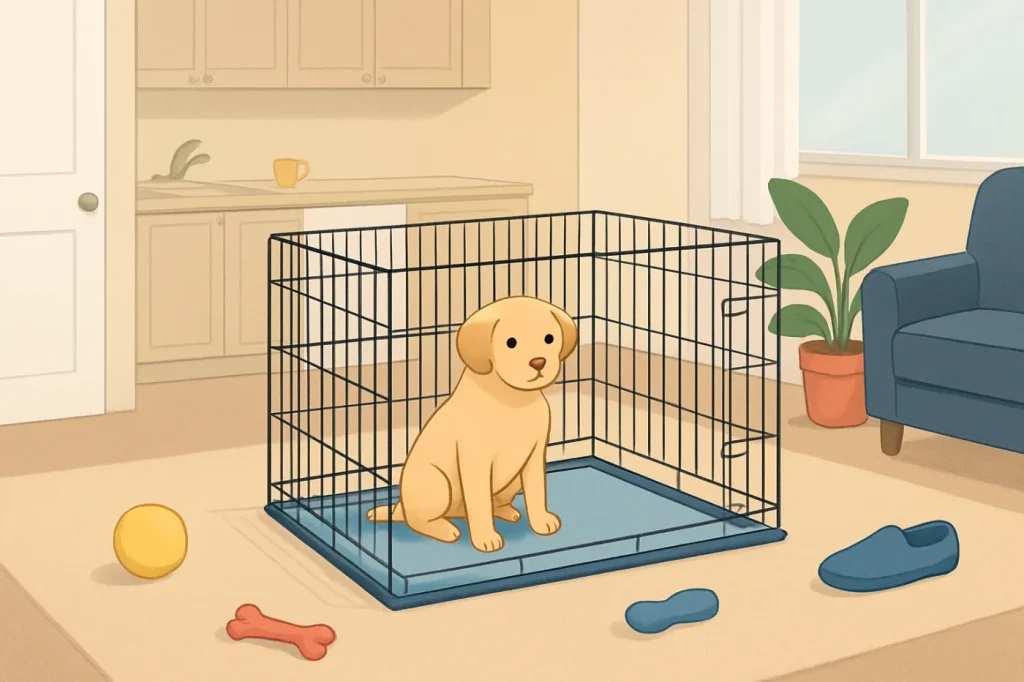
A crate or playpen is not just a training tool; it is a core part of puppy-proofing. Used kindly, it keeps your puppy safe when you cannot supervise and helps with house‑training.
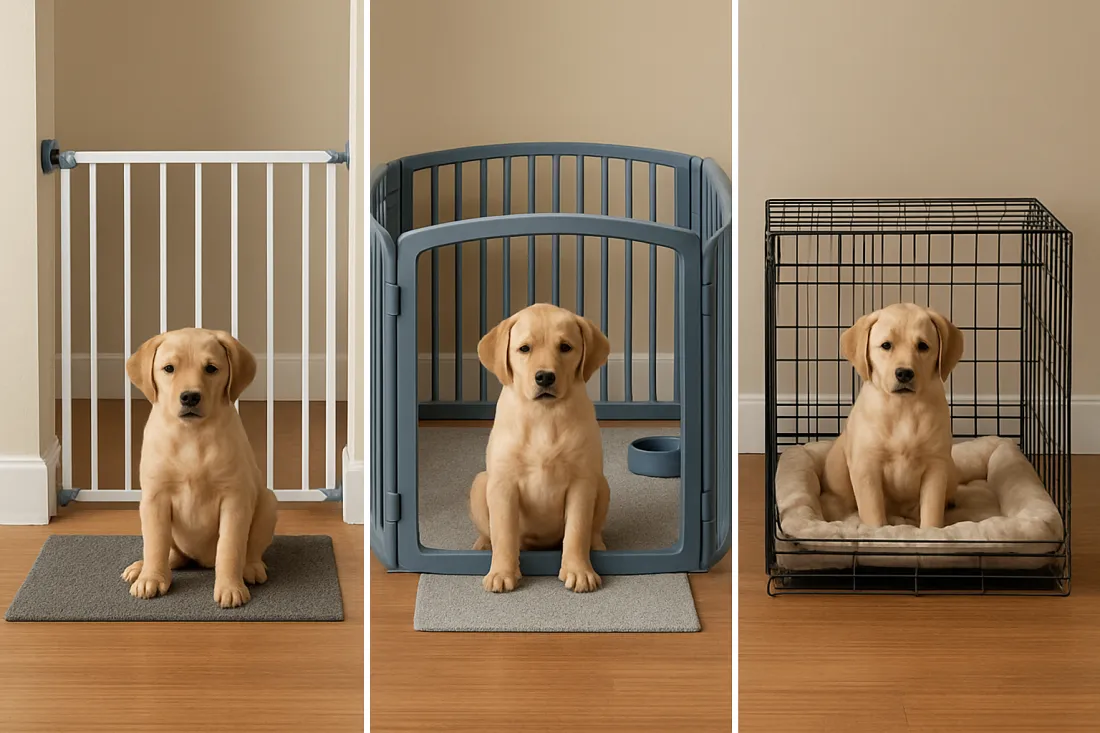
Choosing between crate, playpen, and gated room
Use this comparison table to decide what fits your home and puppy best.
| Option | Best for | Pros | Cons |
|---|---|---|---|
| Crate | Nighttime sleep, short alone times, travel | Cozy den‑like space, great for house‑training, portable, easy to keep very safe | Limited room to move; must be introduced gradually so puppy does not feel trapped |
| Playpen | Daytime when you are home but busy | More space for toys and water, can be set up in living area, easier for some puppies than a crate | Some puppies learn to climb or push it; needs supervision at first |
| Gated puppy‑safe room | Homes with extra space and easy‑to‑clean floors | Feels more natural, good for gradual freedom, can include crate inside | More surfaces to chew or soil; harder to fully puppy‑proof |
Many owners use a combination: crate for sleep and short absences, playpen or gated area when they are home but cannot watch every second.
Step‑by‑step crate and confinement setup
Follow this simple algorithm to set up a safe confinement area:
- Pick the location – Choose a quiet spot where the family spends time (for example, corner of the living room or bedroom). Avoid direct sun, drafts, and loud appliances.
- Choose the right size crate – Your puppy should be able to stand up, turn around, and lie down comfortably, but not have so much space that they can toilet in one corner and sleep in another. If you have a large‑breed puppy, use a crate with a divider panel so you can expand it as they grow.
- Make it comfortable, not cluttered – Add a washable bed or mat and one or two safe chew toys. Avoid blankets or stuffed toys if your puppy tends to shred and swallow fabric.
- Introduce the crate gradually – Feed meals near and then inside the crate, toss treats in, and let the puppy explore with the door open. Start with very short closed‑door sessions while you sit nearby.
- Pair crate time with good things – Give a special chew or food puzzle only in the crate so your puppy builds a positive association.
- Use a consistent routine – Take the puppy outside to potty, then into the crate for a nap. Over time, this pattern supports house‑training.
Never use the crate as punishment. The goal is for your puppy to see it as a safe, predictable place to relax.
Before-you-leave-the-house puppy safety routine
Even a well‑puppy‑proofed home can become risky if people leave out food, cords, or small items. A quick routine before you leave or go to bed keeps things under control. 5‑minute pre‑departure safety checklist
- Secure the puppy’s area – Decide where the puppy will stay (crate, playpen, or gated room) and set it up with water, a safe chew, and a comfortable bed.
- Remove food and trash access – Clear counters of food, push in chairs, close pantry doors, and make sure trash cans are closed or behind doors.
- Scan for small objects – Walk through the puppy’s zone and pick up coins, toys, cords, hair ties, and anything that could be swallowed.
- Check doors, windows, and gates – Confirm that exterior doors and yard gates are latched and that windows in the puppy’s area are closed or securely screened.
- Turn off or secure appliances – Unplug loose cords where possible, and make sure hot appliances (irons, space heaters) are off and out of reach.
- Provide a potty break – Take the puppy outside or to the designated potty area right before you leave to reduce accidents.
Doing this consistently builds a habit so you are less likely to miss something on a busy morning.
First 48 hours with a new puppy: survival and safety tips
The first two days can feel overwhelming. Focus on a few priorities instead of trying to train everything at once.
- Limit freedom – For the first 48 hours, keep your puppy mostly in their crate, playpen, or on a leash attached to you. This prevents accidents and lets you observe their habits.
- Stick to a simple schedule – Rotate between potty breaks, short play sessions, meals, and naps. Young puppies may need to go out every 1–2 hours during the day.
- Introduce one or two rooms only – Start with the main living area and the potty route. Add more rooms later once puppy-proofed.
- Expect broken sleep – Nighttime potty trips are normal. Keep them calm and boring: outside, potty, praise, back to bed.
- Keep visitors limited – Too many new people at once can overwhelm a puppy. Let them settle first.
- Watch for stress signs – Shaking, hiding, refusing food, or constant pacing can mean your puppy is overwhelmed. Offer quiet time and a safe space.
If you live in an apartment, you may also want to plan how you will handle elevator rides, hallways, and noise from neighbors. For more detail on bathroom routines in small spaces, see guidance on house training a puppy in an apartment.
Typical puppy-proofing mistakes and how to avoid them
Even careful owners miss things. Here are common mistakes and better alternatives.
- Relying on “no” instead of management – Simply scolding a puppy for chewing or exploring does not remove the temptation. Use gates, crates, and storage to prevent access, then reward good choices.
- Giving too much freedom too soon – Letting a puppy roam the whole house makes accidents and chewing more likely. Expand their territory slowly as they prove they can handle it.
- Underestimating chewing power – Many puppies can destroy “tough” toys or beds. Supervise new items and remove anything that breaks into small pieces.
- Forgetting vertical spaces – Small dogs and agile breeds can jump onto sofas, chairs, and low tables. Keep hazards off all reachable surfaces, not just the floor.
- Leaving windows or balcony doors cracked – A determined puppy can push through a weak screen. Use secure latches and do not rely on screens alone.
- Assuming the yard is safe because it is fenced – Puppies can squeeze through small gaps or dig under fences. Inspect regularly, especially after storms or yard work.
If you want a broader home‑wide view beyond just puppies, you can also look at a general pet safety checklist for the home and adapt it to your dog’s age and habits.
Room-by-room puppy-proofing checklist you can copy
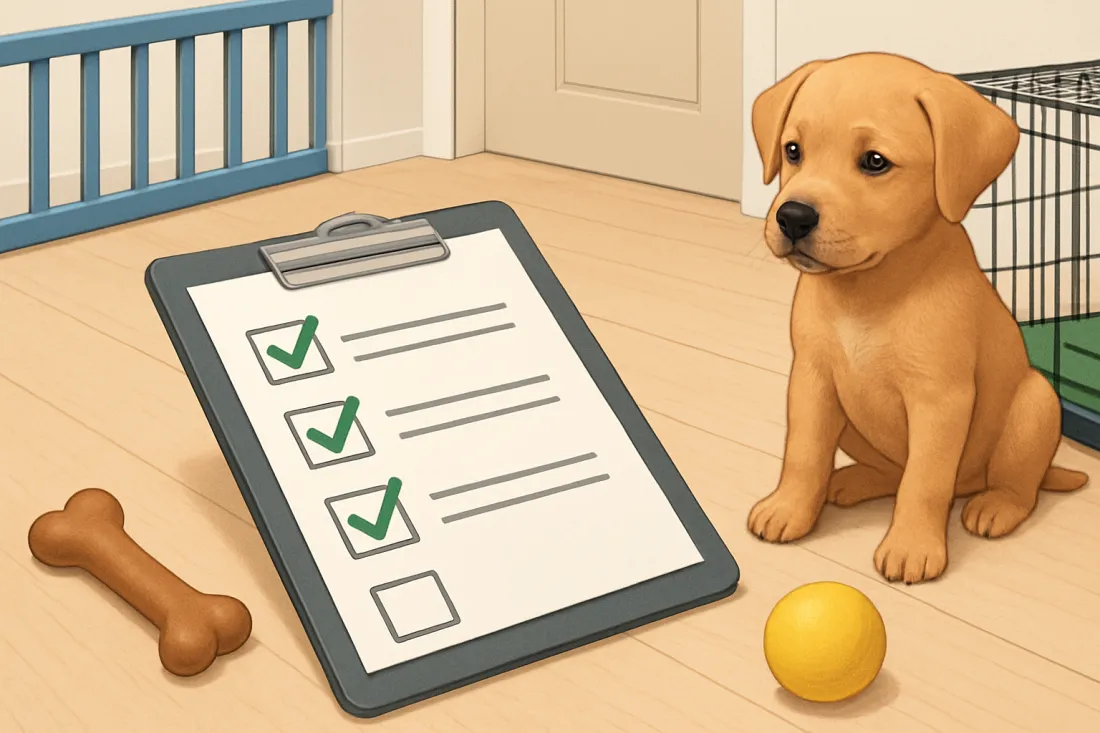
Use this condensed checklist as a quick reference when you walk through your home. You can copy it into a note on your phone and tick items off. Whole home
- Decide puppy’s allowed rooms for the first month.
- Install baby gates or set up a playpen.
- Choose crate location and set it up with bed and toys.
- Store medications, cleaners, and chemicals in closed cabinets.
- Hide or cover electrical cords in puppy areas.
- Post vet and emergency numbers in a visible place.
Kitchen
- Secure trash in a lidded or inside‑cabinet bin.
- Move toxic foods to high cabinets or fridge.
- Lock or child‑proof cabinet with cleaning supplies.
- Keep counters clear of food and knives near edges.
- Block access to dishwasher and oven when open.
Living room / family room
- Hide cords and secure TV and heavy furniture.
- Remove small swallowable items from floors and low tables.
- Place houseplants out of reach.
- Set up puppy bed and toy area.
- Block stairs or off‑limits rooms with gates.
Bedroom
- Put shoes and clothes in closets or lidded hampers.
- Remove medications and cosmetics from nightstands.
- Secure phone chargers and lamp cords.
- Decide where the puppy sleeps (crate, bed, or playpen) and prepare it.
Bathroom / laundry
- Use lidded trash cans or keep them in cabinets.
- Store medications, razors, and cleaners in cabinets.
- Close toilet lids.
- Keep laundry detergents and pods out of reach.
- Close washer and dryer doors.
Yard / balcony
- Inspect fences, gates, and railings for gaps.
- Block access under decks and stairs.
- Store lawn chemicals and tools securely.
- Remove sharp objects and dangerous debris.
- Provide shade and water for outdoor time.
FAQ about pet proofing a home for a new puppy
How do I house proof my home for a puppy?
Start by limiting your puppy to one or two safe areas using gates, a crate, or a playpen. Then get down at puppy level and look for anything they could chew, swallow, or get tangled in—cords, small objects, trash, shoes, and plants. Store chemicals and medications in closed cabinets, secure trash cans, and block access to stairs and unsafe rooms. Finally, set a daily routine to tidy hazards before you leave or go to bed.
What is the 3 3 3 rule for puppies?
The 3‑3‑3 rule is a common guideline that says many puppies need about 3 days to start recovering from the stress of a new home, 3 weeks to begin to settle into a routine, and 3 months to feel fully comfortable and show their true personality. It is not a strict rule, but it reminds you to be patient and keep the environment calm, structured, and safe during those early months.
How do you survive the first 48 hours with a new puppy?
Keep things simple: limit your puppy’s space, follow a basic schedule of potty breaks, short play sessions, meals, and naps, and use a crate or playpen so you are not chasing them constantly. Prepare your home in advance, have cleaning supplies ready for accidents, and plan for interrupted sleep. Avoid big outings or lots of visitors; focus on bonding, gentle handling, and a predictable routine.
What is the 7 7 7 rule for puppies?
Some trainers use a 7‑7‑7 style guideline to encourage structured exposure to new experiences, such as aiming for a variety of surfaces, sounds, and friendly people over time. The exact numbers vary, but the idea is to introduce new things gradually while keeping your puppy feeling safe. Puppy-proofing your home is the foundation that lets you add these experiences without overwhelming them.
Can I leave my puppy free in the house while I am gone?
For most young puppies, full freedom while you are away is not safe. They can chew cords, eat dangerous items, or have accidents. Use a crate, playpen, or gated puppy‑safe room when you are out, and only expand freedom slowly as your dog matures and proves they can be trusted.