
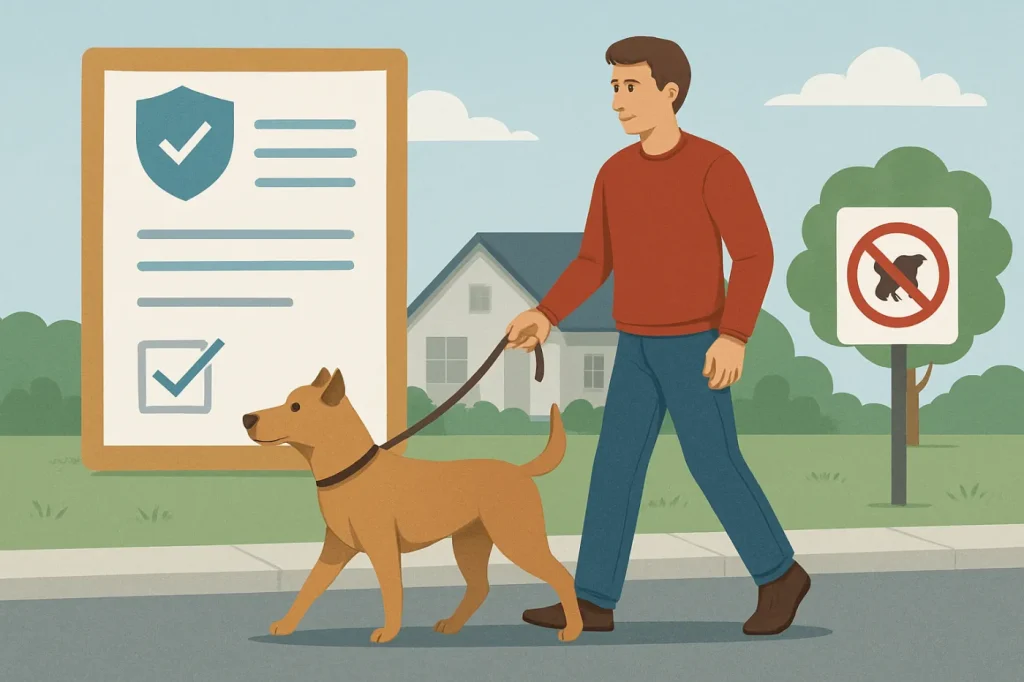
Owning a dog in the United States means taking on both legal duties and day‑to‑day responsibilities to keep your pet, your neighbors, and your community safe. You are generally expected to:
- Follow local laws on licensing, vaccinations, and leashes
- Prevent your dog from harming people, other animals, or property
- Provide humane care: food, water, shelter, exercise, and vet care
- Respect neighbors by controlling barking, roaming, and waste
>
The details vary by state, county, and city, so you always need to confirm local rules. this guide explains the main types of laws and responsibilities, how they differ, and how to stay compliant wherever you live or travel in the US.
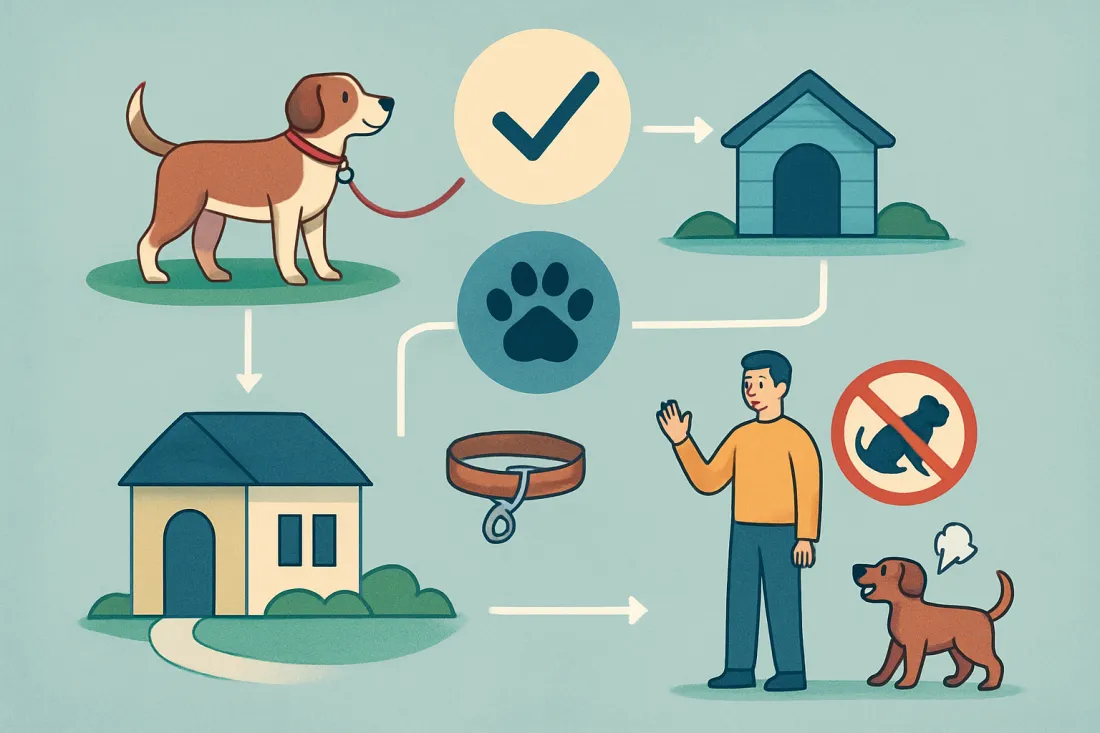
Legal duties vs ethical responsibilities for US dog owners
Dog ownership comes with two overlapping sets of obligations:
- Legal responsibilities – rules that can be enforced by fines, citations, or even criminal charges in serious neglect or attack cases.
- Ethical responsibilities – what a considerate, responsible owner does to protect their dog’s welfare and be a good neighbor, even when the law is silent.
Common legal responsibilities across the US
While exact requirements differ by location, many US communities expect dog owners to:
- License their dog with the city or county, often renewed annually or every few years.
- Keep rabies vaccinations current and be able to show proof if asked by animal control or a vet.
- Follow leash or restraint rules in public spaces and sometimes on private property that is not fully fenced.
- Provide basic care – adequate food, water, shelter, and veterinary attention when needed.
- Prevent nuisance behavior such as excessive barking, roaming, or repeated waste left on others’ property.
- Take responsibility for damage or injury caused by their dog, including bites and property damage.
Ethical responsibilities that go beyond the law
Even when something is not strictly illegal, it can still be irresponsible. Ethical dog ownership usually includes:
- Choosing a dog you can realistically care for in terms of size, energy level, and lifespan.
- Providing mental stimulation and exercise so your dog is not frustrated or destructive.
- Training and socializing your dog so they can handle everyday situations safely.
- Planning for emergencies (evacuations, illness, or financial setbacks) so your dog is not abandoned or neglected.
- Being proactive with neighbors – sharing your contact information, addressing concerns early, and apologizing and making things right if your dog causes a problem.
Legal rules set the minimum. Ethical responsibilities are about doing what is fair to your dog and your community, even when no one is watching.
Key US legal requirements: licensing, rabies shots, and leash rules
Most US dog owners will encounter three core legal topics: licensing, rabies vaccination, and leash or restraint laws. The exact rules are local, but the patterns are similar.
Dog licensing basics
Many cities and counties require dogs over a certain age (often a few months old) to be licensed. Typical elements include:
- Where to license – city hall, county animal control, or an online portal.
- What you need – proof of current rabies vaccination, your contact details, and sometimes proof of spay/neuter.
- Renewal – often every 1–3 years, depending on your area and the rabies vaccine schedule.
- Why it matters – a license tag helps reunite you with a lost dog and shows animal control that your dog is vaccinated.
Penalties for not licensing can include fines or additional fees if your dog is picked up by animal control.
Rabies vaccination requirements
Rabies is a serious public health concern, so US jurisdictions commonly require dogs to be vaccinated against rabies and to keep that vaccination up to date. Expect:
- Age requirements – puppies are usually vaccinated once they reach a certain age, then receive boosters on a schedule set by your vet and vaccine type.
- Proof of vaccination – a certificate or record that may be needed for licensing, boarding, grooming, or travel.
- Stricter rules after a bite – if your dog bites someone, proof of rabies vaccination can affect what kind of quarantine or observation is required.
Because rules can change, confirm current rabies requirements with your vet or local animal control.
Leash and restraint laws
Leash laws are mostly set at the city or county level. Common patterns include:
- On-leash in public – many areas require dogs to be on a leash of a certain maximum length when off your property, except in designated off‑leash areas.
- Under control on private property – some places require that dogs be confined by a fence, tether, or other means so they cannot roam off your property.
- Special rules for parks and trails – some parks are fully on‑leash, some have off‑leash hours or zones, and some ban dogs entirely.
To understand how leash rules apply where you live or walk your dog, you can review dog leash laws and safety tips by state and then confirm details with your local city or county.
Local ordinances: barking, waste, and breed or size limits
Beyond the big three (licensing, rabies, leashes), many US communities have local ordinances that affect everyday dog ownership.
Noise and barking rules
Most cities and counties have general noise or nuisance rules that can apply to dogs. Typical features:
- Quiet hours – some areas set specific times (often nighttime) when excessive noise is not allowed.
- “Nuisance barking” definitions – repeated, prolonged barking that disturbs neighbors can lead to warnings or citations.
- Complaint-based enforcement – animal control or law enforcement usually respond when neighbors file complaints.
Ethically, it is better to address barking early with training, enrichment, and management rather than waiting until someone complains.
Dog waste pickup rules
Many US communities require owners to pick up dog waste on sidewalks, in parks, and on other people’s property. You may see signs or dispensers with bags, but you are expected to bring your own. Failing to pick up after your dog can lead to fines and quickly damages neighbor relationships.
Breed, size, and number restrictions
Some local governments, landlords, or homeowners’ associations place limits on:
- Number of dogs per household – for example, a maximum of two or three dogs in a residential home.
- Dog size – especially in apartments or condos, where dogs above a certain weight may be restricted.
- Specific breeds or “types” – certain areas or private communities may restrict or ban particular breeds or mixes.
These rules can be controversial and are not uniform across the US. Before adopting a dog, especially a large or commonly restricted breed, check your city ordinances, lease, and HOA rules so you do not end up in a situation where your dog is not allowed.
Renting or living in an HOA: pet policies, deposits, and assistance animals
If you rent or live in a community with a homeowners’ association, you will usually face an additional layer of rules on top of public laws.
Typical rental and HOA pet rules
Common private rules include:
- Pet deposits or fees – many landlords charge a refundable deposit or non‑refundable fee for pets.
- Size, breed, or number limits – leases and HOA documents often specify what is allowed.
- Leash and common‑area rules – dogs may need to be leashed in hallways, elevators, and shared yards.
- Designated pet areas – some communities provide specific relief areas and require waste pickup.
Violating these rules can lead to warnings, fines, or even eviction or HOA penalties, so read all documents carefully before bringing a dog home.
Service animals vs emotional support animals
US law treats different types of assistance animals differently. The details can be complex, but the basic distinctions are:
- Service animals – dogs that are individually trained to perform specific tasks for a person with a disability (for example, guiding, alerting, or assisting with mobility). They generally have broader access rights in housing and many public places.
- Emotional support animals (ESAs) – animals that provide comfort by their presence but are not trained to perform specific tasks. Housing providers may have different obligations toward ESAs than toward pets, but ESAs usually do not have the same public access rights as service animals.
If you believe you qualify for a service animal or ESA, or if you are a landlord or HOA board member facing a request, consider consulting a legal or housing professional to understand current rules and documentation requirements in your area.
Travel and public spaces: parks, trails, beaches, and dining
Taking your dog out into the community brings additional responsibilities. Rules can change from one park or business to the next, so always check posted signs.
Parks, trails, and beaches
Common patterns you may see:
- Dog‑friendly vs no‑dogs areas – some parks or beaches allow dogs everywhere, some only in certain zones, and some not at all.
- On‑leash vs off‑leash – even within the same park, some trails or fields may be off‑leash while others are strictly on‑leash.
- Seasonal rules – beaches may allow dogs only during certain months or times of day.
- Permit or tag requirements – some off‑leash parks require a special permit or proof of vaccination.
Always carry waste bags, water, and a leash, even in off‑leash areas, and remove your dog if they are stressed, aggressive, or not responding reliably to recall.
Outdoor dining and businesses
Many US restaurants and cafes with patios choose to allow dogs, but policies vary:
- Business choice – even if local health rules allow dogs on patios, each business can set its own policy.
- Behavior expectations – dogs are typically expected to stay under the table or at your side, not block walkways, and remain quiet and under control.
- Indoor access – in many places, only service animals are allowed inside food service areas.
When in doubt, call ahead or check the business’s posted rules before bringing your dog.
Liability basics: bites, damage, and insurance considerations
As a dog owner, you are generally responsible for what your dog does. Liability rules can be complex and vary by state, so this section focuses on general patterns and practical steps.
Dog bites and injuries
States handle dog bite liability in different ways. Some focus on whether the owner knew the dog might be dangerous; others impose responsibility more broadly. Regardless of the legal standard where you live, you should assume that:
- You may be held financially responsible if your dog bites or injures someone.
- You may face additional consequences if your dog has a history of aggression or if you ignored leash or containment rules.
- Authorities may require special measures (such as muzzling, secure fencing, or training) if your dog is labeled dangerous or potentially dangerous.
If your dog bites someone, seek medical help for the injured person, exchange contact information, provide proof of rabies vaccination, and consider contacting a lawyer to understand your rights and obligations.
Property damage
Dogs can also cause property damage, such as:
- Chewing or scratching doors, walls, or flooring in a rental unit
- Damaging landscaping or fences
- Knocking over bicycles, outdoor furniture, or other items
In many situations you will be expected to pay for repairs or replacement. Landlords often use pet deposits or fees to cover some of this risk.
Homeowner’s and renter’s insurance
Some homeowner’s and renter’s insurance policies cover certain dog‑related liability claims, while others exclude specific breeds or types of incidents. Practical steps include:
- Reviewing your current policy to see whether dog‑related incidents are covered.
- Asking your insurer about any breed‑related restrictions or coverage limits.
- Considering additional liability coverage if you have a large dog, multiple dogs, or frequent visitors.
Because policies vary widely, confirm details directly with your insurer rather than assuming you are covered.
Neighbor etiquette and preventing conflicts
Many dog‑related disputes never reach a courtroom but can still damage relationships and lead to complaints or involvement from animal control. Good etiquette and early communication can prevent most problems.
Common friction points with neighbors
- Excessive barking – especially at night or when you are away.
- Roaming dogs – loose dogs can frighten people, chase children, or cause traffic hazards.
- Uncollected waste – dog waste left on lawns, sidewalks, or shared spaces.
- Uncontrolled greetings – dogs that jump on people or other dogs without permission.
Practical etiquette tips
- Share your contact info with immediate neighbors so they can reach you quickly if there is a problem.
- Address barking with training, exercise, and management (for example, closing blinds, using white noise, or hiring a dog walker if your dog barks when alone).
- Secure your yard with appropriate fencing and gates that latch properly.
- Always ask before approaching another dog and keep your dog close when passing others.
- Apologize and make amends if your dog damages something or frightens someone.
If a conflict escalates, consider mediation or professional help (such as a trainer or behavior consultant) before it turns into a legal dispute.
Comparing key responsibilities: legal minimum vs best practice
The table below compares common legal requirements with higher‑standard, best‑practice behavior for responsible dog owners.
| Area of responsibility | Typical legal minimum | Best‑practice responsible ownership | Risks if you only meet the minimum |
|---|---|---|---|
| Identification | License tag where required | License tag, ID tag with phone, and microchip with current contact info | Harder to recover a lost dog; higher shelter fees or risk of rehoming |
| Vaccinations | Current rabies shot as required locally | Rabies plus core vet‑recommended vaccines and regular wellness checks | Higher disease risk for your dog and others; stricter measures after bites |
| Leash and control | On‑leash where mandated; basic containment at home | Reliable recall, appropriate equipment, and avoiding crowded or stressful situations | Increased chance of fights, bites, or traffic incidents; potential legal claims |
| Care and welfare | Basic food, water, shelter, and emergency vet care | Quality diet, daily exercise, mental enrichment, training, and preventive vet care | Behavior problems, health issues, and possible neglect complaints |
| Neighbor relations | Not violating nuisance or noise ordinances | Proactive communication, fast response to concerns, and consistent cleanup | Ongoing tension, complaints to authorities, and potential fines |
| Legal awareness | Knowing only the most obvious rules (like rabies shots) | Checking local laws when you move or travel; updating knowledge regularly | Unintentional violations, surprise fines, or forced changes in housing or routine |
How to look up dog laws in your state and city
Because dog laws are highly local, you need a simple process to confirm rules where you live or travel. A practical approach is:
- Start with state‑level overviews – use resources that summarize US pet laws every dog owner should know and then drill down to your state.
- Check your city or county website – search for terms like “animal control,” “dog license,” “pet ordinances,” or “nuisance barking.”
- Call local animal control or the non‑emergency police line – ask about licensing, leash rules, and nuisance or dangerous dog rules.
- Review your lease or HOA documents – look for sections labeled “pets,” “animals,” or “nuisance.”
- Ask your vet – they often know local rabies and licensing requirements and can point you to official sources.
Repeat this process whenever you move, add a new dog, or plan extended travel with your pet.
Decision checklist when you move or travel with your dog
Use this checklist before changing homes or taking your dog on a trip.
Before you move to a new home
- Confirm that dogs are allowed at the new address (rental or HOA rules).
- Check for breed, size, or number limits that might affect your dog.
- Look up local licensing and rabies requirements for your new city or county.
- Update your dog’s microchip registration with your new address and phone number.
- Schedule a vet visit if your dog needs updated vaccines or health records.
- Plan secure containment at the new home (fencing, gates, or indoor setup).
- Introduce yourself to immediate neighbors and share your contact details.
Before you travel with your dog
- Confirm that your destination (hotel, rental, or friend’s home) allows dogs and check any size or breed rules.
- Review local leash and park rules at your destination; resources on US leash laws and safe dog walking etiquette can help you prepare.
- Ensure your dog’s rabies and other key vaccines are current and carry proof.
- Pack ID tags, a copy of vet records, and enough medication and food for the trip.
- Plan rest stops and safe walking routes where dogs are allowed.
- Check transportation rules (airline, train, or bus) if you are not driving.
- Have a backup plan if your dog becomes ill or anxious while traveling.
Common mistakes US dog owners make with laws and responsibilities
Understanding typical pitfalls can help you avoid preventable problems.
- Assuming rules are the same everywhere – moving across town or into a new county can change licensing, leash, and nuisance rules.
- Relying on verbal assurances – always get pet permissions and policies in writing from landlords or HOAs.
- Ignoring early behavior issues – growling, snapping, or lunging can escalate if not addressed with training or professional help.
- Skipping ID updates – a microchip with an old phone number is almost as bad as no microchip.
- Letting dogs roam “just this once” – many serious incidents happen when a dog slips out for a short, unsupervised time.
- Waiting until after a complaint to address barking or waste issues, instead of proactively managing them.
When to seek legal or professional advice about your dog
Most dog issues can be handled with good communication and training, but some situations call for expert help.
Consider legal advice when
- Your dog has bitten or seriously injured a person or another animal.
- Your dog has been labeled dangerous or potentially dangerous by authorities.
- You are facing eviction, fines, or forced removal of your dog due to breed, size, or HOA rules.
- You are involved in a dispute over ownership of a dog (for example, after a breakup or move).
- You receive legal papers or are threatened with a lawsuit related to your dog.
Consider professional behavior or training help when
- Your dog shows aggression, fear, or anxiety that you are not sure how to manage.
- Barking, destruction, or house‑soiling continues despite basic training.
- You are adding a new dog or baby to the household and want to prevent problems.
- You feel overwhelmed or unsure how to meet your dog’s exercise and mental needs.
Early help is almost always easier and less expensive than waiting until a problem becomes serious.
FAQ about dog ownership laws and responsibilities in the US
What are the legal responsibilities of a dog owner?
Legal responsibilities vary by state and city, but most US dog owners are expected to license their dog where required, keep rabies vaccinations current, follow leash and containment rules, provide basic care (food, water, shelter, and vet attention), prevent nuisance behavior like excessive barking or roaming, and take responsibility for injuries or damage caused by their dog. Always confirm the exact rules with your local animal control or city website.
What is the 3‑3‑3 rule for dogs?
The “3‑3‑3 rule” is a common guideline used by many trainers and shelters to describe how dogs often adjust after adoption: roughly 3 days to start decompressing, 3 weeks to begin learning the routine, and 3 months to feel truly settled. It is not a law, but it is a helpful reminder to be patient and give your new dog time, structure, and gentle guidance.
What is the 7‑7‑7 rule for dogs?
The “7‑7‑7 rule” is another informal guideline some trainers use to describe stages of adjustment or training milestones over longer periods. The exact meaning can vary, but like the 3‑3‑3 rule, it is not a legal standard. It is simply a way to think about gradual progress and to avoid expecting instant perfection from a dog.
What are the six basic responsibilities of pet ownership?
Different organizations list responsibilities in slightly different ways, but six core responsibilities many experts emphasize are: (1) providing food and water, (2) ensuring safe shelter and a secure environment, (3) arranging veterinary care and preventive health, (4) offering exercise and mental stimulation, (5) training and socializing your pet, and (6) following laws and community rules while being considerate of neighbors.
How can I make sure I am following dog laws in my area?
Check your city or county website for animal control or pet ordinances, confirm state‑level rules through reliable summaries, ask your vet about vaccination and licensing requirements, and review your lease or HOA documents for private pet rules. When you are unsure, call local animal control or a non‑emergency city line and ask specific questions about licensing, leashes, barking, and the number or type of dogs allowed.